







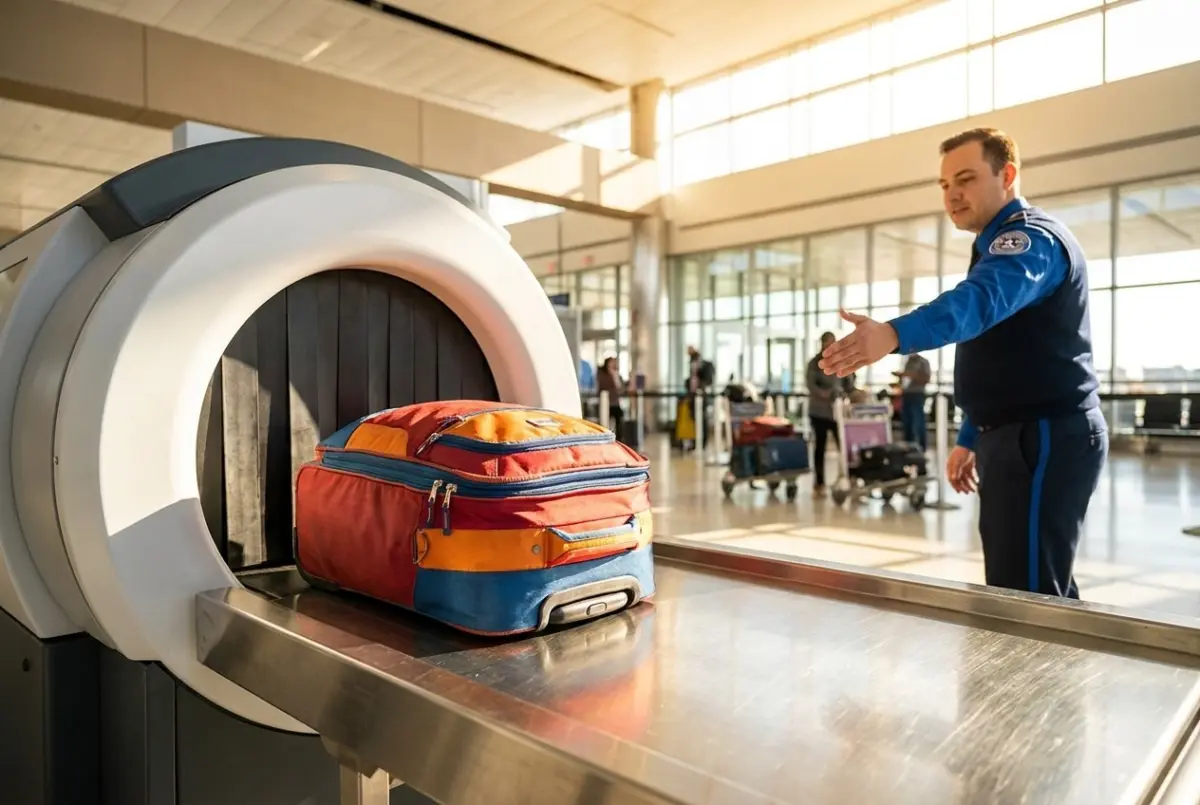
As the Transportation Security Administration (TSA) continues its nationwide modernization of airport security checkpoints, a major technological upgrade is bringing both heightened security capabilities and potential travel headaches. The agency is actively deploying advanced computed tomography (CT) scanners across airports in the United States. While these state-of-the-art machines promise a faster, more streamlined screening process—eliminating the need for passengers to remove laptops and electronics from their luggage—they also feature a significantly tighter physical opening than their legacy predecessors.
According to agency statements and recent reports from outlets like The Independent and FOX 13, this narrower aperture means that travelers attempting to board with oversized carry-on luggage may find their bags unable to pass through the scanner’s conveyor belt. In such cases, passengers could be forced to check their bags at the checkpoint, introducing a new layer of friction for frequent flyers who push the boundaries of standard airline dimensions.
The nationwide rollout unfolds against a backdrop of broader operational scrutiny, congressional budget battles, and heightened public debate over airport security protocols. To navigate these changes successfully, passengers must understand the intersection of new TSA technology, strict airline carry-on policies, and the evolving landscape of American aviation security.
Main Facts
The core of the TSA’s current checkpoint overhaul relies on the integration of 3-D computed tomography (CT) scanners. These machines represent a generational leap forward in aviation security technology, transitioning checkpoints from traditional 2-X-ray imaging to advanced volumetric computed tomography—similar to medical CT technology used in hospitals.
- Advanced 3-D Imaging: The new CT scanners generate high-resolution, rotatable 3-D images of the contents inside a carry-on bag. TSA officers can manipulate these digital images on a monitor to inspect items from multiple angles.
- The "Leave It In" Benefit: Because of the clarity and depth provided by 3-D imaging, travelers screened by these new machines are generally no longer required to remove laptops, tablets, or compliant containers of liquids, aerosols, and gels from their carry-on baggage.
- Tighter Aperture Dimensions: A TSA spokesperson, identified as Velez, explained to FOX 13 that the physical opening (aperture) of the new CT scanners is noticeably smaller than older X-ray machines. This restricted space is an engineering necessity to house the rotating gantry and advanced imaging sensors required for optimal performance.
- Carry-On Size Enforcement: Most major commercial airlines permit carry-on bags with maximum dimensions of 22 inches by 14 inches by 9 inches. Bags meeting these standard dimensions will clear the scanner without issue. However, oversized, overstuffed, or uniquely shaped bags that exceed these parameters risk getting stuck or rejected at the scanner belt, potentially forcing travelers to check the items.
- Deployment Status: The TSA has not released a comprehensive list of airports receiving the equipment, nor has it provided a definitive timeline for the completion of the nationwide replacement program.
Chronology of Events and Operational Context
The deployment of these advanced scanners does not happen in a vacuum. It is part of a multi-year technological modernization strategy that intersects with a turbulent period for federal aviation administration and government funding.
- Pre-Rollout and Technological Testing: For several years, the TSA has tested and gradually introduced CT scanners at select high-volume airports, primarily focusing on pilot programs to measure throughput efficiency and threat detection rates.
- December 2025 – Operational and Programmatic Criticism: Public and policy scrutiny intensified toward the end of 2025. A December report by the Ron Paul Institute heavily criticized the TSA PreCheck program, describing it as an "extortion racket-style scheme" that monetizes expedited screening while noting impending tax and requirement updates slated for February. Concurrently, high-profile complaints surfaced; notably, Evita Duffy-Alfonso—daughter of Transportation Secretary Sean Duffy—publicly criticized the agency after being subjected to a 15-minute pat-down delay in December 2025 because she declined a millimeter-wave body scan due to pregnancy and radiation concerns. She publicly called for the abolition of the TSA.
- March 2026 – Government Funding Strains: The operational strain on checkpoints gained national attention in March 2026, when Just the News reported that Senate Democrats blocked a Republican-led funding bill for the Department of Homeland Security (DHS). As the partial government shutdown entered its fourth week, airports nationwide experienced severe operational disruptions, characterized by "out-of-control TSA wait lines."
- Current Status (Mid-2026): As the CT scanner rollout accelerates through 2026, the collision between tighter machine dimensions and strict airline size limits has become a prominent concern for travelers, leading to renewed agency guidance and warnings.
Supporting Data and Technical Specifications
Understanding why the TSA is willing to risk passenger friction over luggage size requires examining the technical data behind the equipment and the realities of modern airline regulations.
The Science of 3-D Tomography
Traditional airport X-ray machines produce a flat, two-dimensional shadow image of a bag’s contents. This often forces TSA security officers to manually inspect bags when items overlap and obscure each other. By contrast, CT technology sends X-rays through the bag from multiple angles as the internal mechanism rotates.
According to TSA educational resources, this process creates a volumetric data set that software can analyze for explosive threats, firearms, and prohibited items automatically. Officers can peel back layers digitally on their computer screens. This capability drastically reduces the number of bags that require physical, manual intervention—a bottleneck that historically slowed down checkpoint queues significantly.
Airline Size Limits vs. Scanner Openings
The friction point lies in the physical dimensions of the machinery versus passenger packing habits.
| Metric Category | Standard Guideline / Specification |
|---|---|
| Standard Domestic Carry-On Limit | 22" x 14" x 9" (Varies slightly by carrier) |
| Legacy X-Ray Machine Aperture | Generous clearance, accommodating slightly oversized or bulging bags |
| New CT Scanner Aperture | Tighter, engineered specifically around standard size boundaries |
| Consequence of Oversized Bags | Rejection at conveyor; mandatory gate-checking or return to ticket counter |
Passengers who attempt to board with soft-sided duffel bags packed to maximum capacity, rigid hard-shell suitcases that push past dimensional limits, or musical instruments and specialty gear face the highest risk of rejection.
Official Responses and Agency Guidance
Faced with potential traveler confusion and delays at security checkpoints, TSA representatives have stepped forward to clarify the agency’s stance, offer practical advice, and emphasize the security justifications for the hardware changes.
The Engineering Necessity
Addressing the complaints regarding the smaller openings, TSA spokesperson Velez defended the design choices in a statement to FOX 13.
"This design is necessary to accommodate the advanced imaging technology and ensure optimal performance," Velez stated, underscoring that the sophisticated internal hardware cannot be downsized without compromising the scanner’s threat-detection capabilities.
Assistance at the Checkpoint
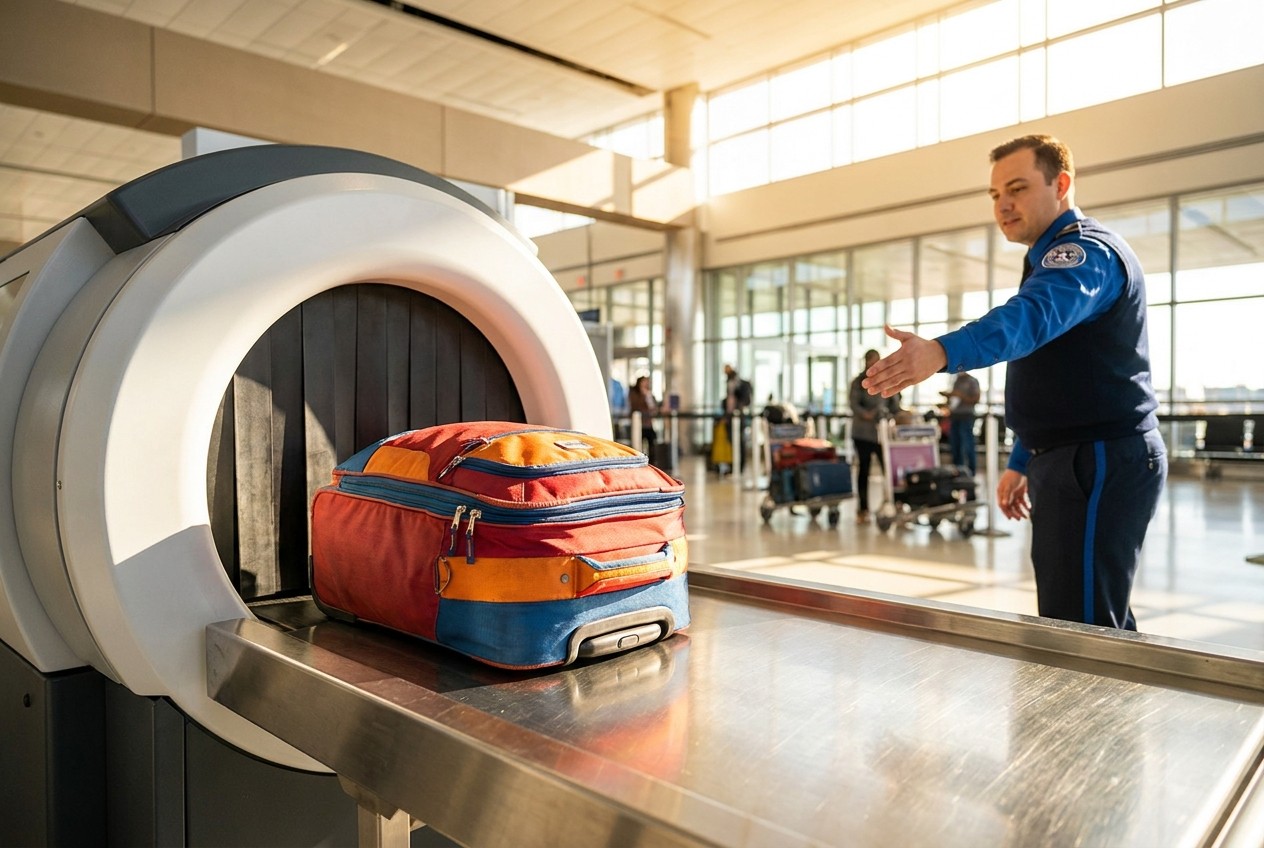
Recognizing that not all travelers are aware of the physical constraints of the new machines, the TSA has instructed its frontline workforce to assist affected passengers. Velez noted that officers are positioned to guide travelers with larger items or special needs.
"TSA officers are available to assist travelers with larger items or special needs to help ensure a smooth screening process," Velez said.
Recommended Best Practices for Passengers
To minimize disruptions, the TSA strongly advises travelers to take proactive measures before heading to the airport:
- Verify Airline Carry-On Policies: Passengers must check their specific airline’s exact dimensions and weight limits for carry-on luggage.
- Measure Before Packing: Travelers should physically measure their bags—including wheels and handles—to ensure they fall comfortably within the standard 22" x 14" x 9" envelope.
- Seek Early Guidance: If a passenger is unsure whether a unique or slightly oversized bag will fit through the new CT scanner, they should consult a TSA officer at the checkpoint entrance before placing the item onto the conveyor belt. This prevents mechanical jams and saves valuable time.
Implications for Travelers and the Aviation Industry
The nationwide implementation of CT scanners with restricted apertures carries broad implications for both individual travelers and the wider aviation ecosystem.
1. Shifts in Packing Culture
For decades, frequent flyers have mastered the art of maximizing carry-on space to avoid checked baggage fees and baggage claim wait times. The advent of the tighter CT scanner aperture challenges this culture. If travelers routinely discover that their overstuffed or oversized bags are rejected at security, they may face a frustrating choice: pay checked bag fees at the security checkpoint (if logistically possible) or unpack items on the floor to consolidate them into smaller containers. This could drive airlines to enforce carry-on dimensions more strictly at the gate to preempt security bottlenecks.
2. Checkpoint Efficiency vs. Bottlenecks
While the 3-D imaging technology theoretically accelerates the screening process by eliminating the need to unpack electronics, the physical rejection of oversized bags introduces a new type of delay. If a bag gets stuck or requires redirection to checked luggage streams, it halts the conveyor line and forces security personnel to manage frustrated passengers in real-time. Airports with high volumes of international travelers—who often carry larger traditional luggage allowances—may experience acute growing pains during the transition.
3. Heightened Public Scrutiny and Consumer Relations
The hardware upgrade arrives at a time of fragile public trust in federal travel administration. With ongoing debates over funding, wait times, privacy concerns surrounding body scanners, and programs like PreCheck, the TSA remains a frequent target of public ire. Ensuring that frontline personnel communicate clearly and empathetically about the physical limitations of the new CT scanners will be vital in preventing further friction between the traveling public and security personnel.
Conclusion
The TSA’s deployment of advanced computed tomography scanners represents a milestone in the ongoing evolution of American airport security, offering superior threat detection and greater convenience for electronic devices. However, the physical reality of the machines’ tighter apertures means that convenience comes with a strict boundary: oversized luggage will no longer easily pass. As the rollout continues nationwide, travelers are urged to respect airline size limits, measure their bags in advance, and communicate with checkpoint officers to ensure that the path from terminal to boarding gate remains as smooth as possible.