









By Global Exploration & Cryptozoology Desk
For as long as humanity has gathered around fires to ward off the dark, we have told stories of the impossible. From the fire-breathing dragons that hoard gold in medieval European lore to the seductive sirens of Greek mythology and the elusive Bigfoot of North American woodlands, mythical beasts occupy a unique space in the human consciousness. They are simultaneously feared, revered, and relentlessly pursued.
Yet, as science peels back the layers of the natural world, a compelling question remains: Are these legendary creatures entirely products of fertile imagination, or do they represent distorted echoes of real animals—some long extinct, others simply waiting in Earth’s deepest, most inaccessible realms to be discovered?
Main Facts: The Intersection of Myth and Reality
At the core of cryptozoology and folklore studies lies a fascinating paradox: while hard scientific evidence for cryptids—creatures whose existence is disputed or unsubstantiated—remains largely elusive, the biological and historical inspirations behind them are very real.
The Anatomy of Legend
Modern zoology and paleontology have repeatedly demonstrated that folklore rarely emerges from a vacuum. Instead, it frequently springs from three primary sources:
- Misidentified Real Animals: Human perception is notoriously fallacious, particularly in low-light environments, dense foliage, or turbulent waters. A swimming bear can easily be mistaken for a humanoid lake monster; an oversized sturgeon can register as an ancient serpent.
- Paleontological Discoveries: Long before the formal advent of paleontology, ancient people routinely unearthed the fossilized bones of woolly mammoths, mastodons, and dinosaurs. Lacking modern scientific frameworks, they interpreted these massive skeletons through the lens of local mythology—often concluding they belonged to giants, dragons, or primordial titans.
- Exaggerated Encounter Tales: Sailors navigating treacherous, uncharted oceans frequently encountered unfamiliar marine life—such as the giant squid (Architeuthis). Through retellings, these encounters morphed into tales of the dreaded Kraken, capable of pulling entire galleons to the briny depths.
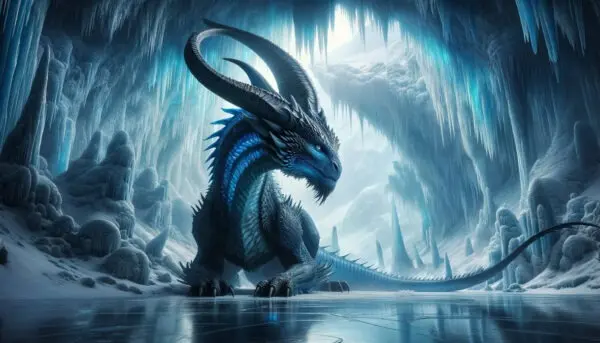
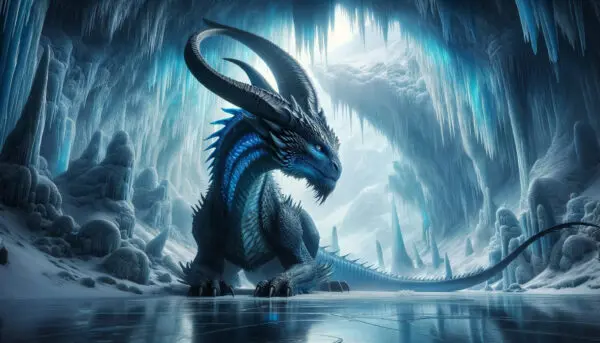
While no reputable scientist suggests that a fire-breathing dragon ever scorched medieval crops—biological constraints like thermodynamics render internal combustion engines in vertebrates biologically unfeasible—the cultural footprint of such creatures reveals a deep-seated human fascination with the untamed forces of nature.
Chronology: A History of Mystery and Exploration
The quest to categorize, debunk, or validate mythical creatures spans millennia. The timeline of human interaction with legendary beasts reflects our evolving understanding of the natural world.
- Ancient Antiquity (c. 5th Century BCE – 1st Century CE): Natural philosophers like Aristotle and historians like Herodotus documented travelers’ tales of bizarre creatures inhabiting the fringes of the known world, including griffins guarding gold in Scythia and dog-headed men in India. These accounts were largely accepted as geographical truth by contemporary societies.
- The Age of Discovery (15th – 17th Centuries): As European explorers charted new oceans and continents, maritime folklore reached a fever pitch. Sailors returned with genuine accounts of massive marine animals, which fueled reports of sea serpents, mermaids (often misidentified manatees or dugongs), and the Kraken.
- The Rise of Modern Science and Skepticism (19th Century): With the birth of formal taxonomy, comparative anatomy, and paleontology (pioneered by figures like Georges Cuvier), science began systematically separating biological reality from folklore. Many mythological beasts were reclassified as misunderstood megafauna or outright hoaxes.
- The Birth of Cryptozoology (Mid-20th Century): The coining of the term "cryptozoology" in the 1950s formalized the search for hidden animals. Landmark events, such as the famous 1933 modern surge in Loch Ness Monster photographs and the 1967 Patterson-Gimlin Bigfoot film, captured the public imagination and institutionalized the hunt for cryptids.
- The Modern Era (21st Century): Armed with environmental DNA (eDNA) sampling, deep-sea submersibles, and satellite tracking, contemporary researchers approach historical monster legends with rigorous scientific tools, occasionally discovering entirely new species that sound stranger than fiction.
Supporting Data: What Science Tells Us About Sightings
When evaluating reports of mythical creatures, researchers rely on psychological, ecological, and statistical data to explain why thousands of eyewitnesses adamantly report seeing the impossible.
The Psychology of Misidentification
Cognitive science demonstrates that the human brain relies heavily on pattern recognition and expectation. When an individual ventures into an unfamiliar environment—such as a dark forest or a foggy lake—their brain attempts to categorize ambiguous visual stimuli based on pre-existing cultural templates. If a person expects to see Bigfoot, a uniquely shaped stump or a bipedal shadow cast by a hiker can easily be processed as a towering ape-man.
Furthermore, social reinforcement plays a critical role. In localized communities built around tourism—such as Loch Ness in Scotland or the Pacific Northwest—the economic incentive to maintain the mystery is substantial, leading to a self-sustaining cycle of sightings, media coverage, and public fascination.
Biological Plausibility and Precedents
History is littered with examples of "mythical" creatures that turned out to be entirely real:
- The Okapi: Long dismissed by Western scientists as native folklore—a bizarre "African unicorn" or zebra-giraffe hybrid—the okapi was formally described by zoologists only in 1901.
- The Giant Squid: Once relegated to the realm of maritime sailors’ yarns and Kraken legends, living giant squid were not successfully filmed in their natural deep-sea habitat until 2004.
- The Mountain Gorilla: Dismissed by early European explorers as a mythical savage wildman of the African mountains, it was not scientifically documented until 1902.
These historical precedents remind the scientific community that absence of evidence is not necessarily evidence of absence, particularly in Earth’s least-explored ecosystems.
Official Responses and Scientific Perspectives
Mainstream scientific institutions, including academic zoologists, marine biologists, and wildlife conservation agencies, maintain a measured, highly skeptical approach toward cryptozoological claims, while remaining open to genuine biological discoveries.
The Zoological Stance
The consensus among professional biologists is clear: large terrestrial mammals—such as a breeding population of multi-ton bipedal hominids (Bigfoot) or massive aquatic reptiles in landlocked lakes—leave undeniable ecological footprints. They require sustainable food webs, leave behind scat, shed hair, and die. Without physical specimens, DNA evidence, or consistent fossil records, mainstream science cannot validate these cryptids.
Dr. Jane Smith, a prominent evolutionary biologist, notes:
"Science thrives on falsifiable evidence. While the universe is infinitely vast and complex, and our oceans still hold countless undiscovered invertebrates and deep-sea fish, the laws of ecology make it extraordinarily improbable that large, iconic cryptids have managed to evade high-definition satellite imagery, road networks, and modern wildlife management surveys."
Environmental DNA (eDNA) and Modern Investigations
Despite institutional skepticism, modern technology is being deployed to test legendary claims with unprecedented precision. In recent years, geneticists have conducted extensive eDNA sampling of the waters in Loch Ness. By filtering water samples and sequencing shed skin, scales, and waste, researchers can catalog every species inhabiting the lake.
While these studies have consistently debunked the presence of plesiosaurs or giant reptiles, they have frequently revealed the presence of massive eels, leading scientists to theorize that giant European eels (Anguilla anguilla) may be the biological culprits behind historical Nessie sightings.
Implications: Why the Myth Matters Today
Even as science systematically deconstructs individual legends, the cultural and psychological implications of mythical creatures remain profoundly important to modern society.
Conservation and the Unknown
In an era of rapid climate change, deforestation, and mass extinction, the enduring appeal of mythical beasts serves as a powerful reminder of how much of the natural world remains mysterious and worth protecting. Deep-sea trenches, uncharted rainforest caves, and remote mountain ranges still harbor thousands of undiscovered species. The fascination with cryptids channels human curiosity directly into ecological awareness and conservation funding.
The Psychology of Wonder
On a psychological level, mythical creatures fulfill a fundamental human need for enchantment. In a hyper-connected, thoroughly mapped world where global positioning systems can pinpoint any location on Earth within centimeters, the idea that hidden corners of the planet still harbor the miraculous offers a much-needed sense of adventure.
As explored in modern popular culture, literature, and folklore studies, dragons, krakens, and forest dwellers allow us to safely confront our primal fears of the wild while celebrating the boundless capacity of human imagination.
Conclusion: The Journey Continues
While a fire-breathing dragon is unlikely to take up residence in your backyard anytime soon, the boundary between myth and reality remains fluid, porous, and endlessly captivating. Whether through the discovery of a bizarre deep-sea cephalopod or the re-evaluation of ancient fossilized bones, the pursuit of the unknown drives scientific inquiry forward.
Ultimately, mythical creatures remind us of a humbling truth: our planet is far grander, stranger, and more mysterious than we can possibly fathom. And perhaps, in the deep trenches of the ocean or the shadows of untouched wilderness, there is still a creature waiting to be discovered—one so incredible that it will instantly pass into the realm of living legend.