










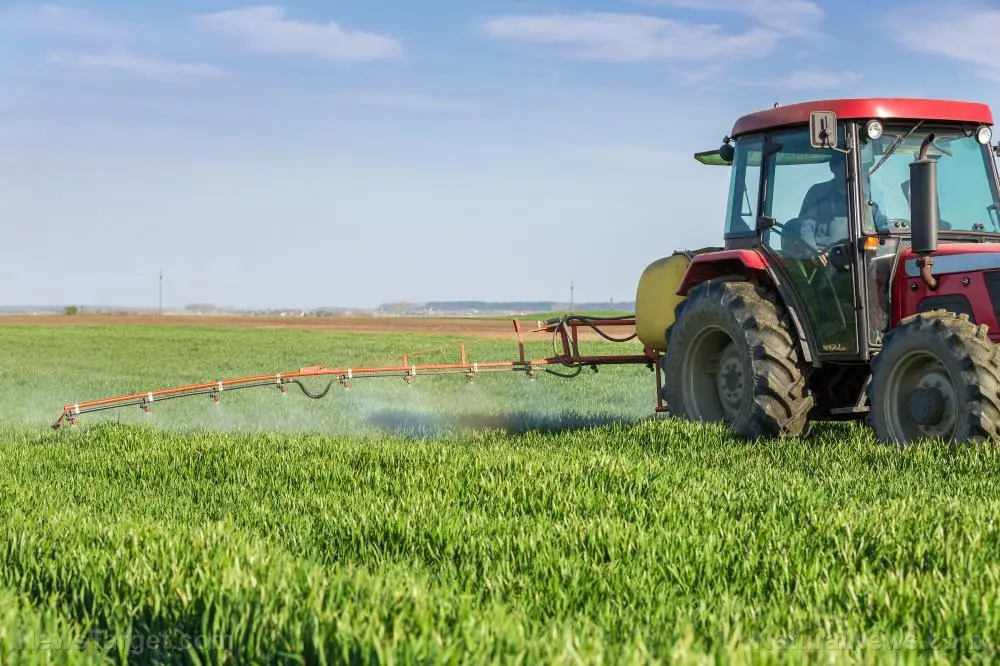
SACRAMENTO, Calif. — In a state that produces more than half of America’s fruits and vegetables, an ambitious legislative effort to protect the nation’s food supply from toxic "forever chemicals" has been reduced to a shadow of its former self. Assembly Bill 1603, originally designed to implement sweeping bans on per- and polyfluoroalkyl substances (PFAS) in agricultural pesticides, was systematically dismantled following an aggressive nearly $900,000 lobbying blitz by chemical and agricultural interests.
What reached the desk of Democratic Governor Gavin Newsom was not a protective public health mandate, but a mere reporting requirement—leaving environmental advocates, independent scientists, and the bill’s author lamenting a massive missed opportunity for the nation’s most populous state.
"We missed an opportunity this year to really be a national leader on this issue, and to catch up with a handful of other states that are already pursuing this legislation," said Assemblymember Nick Schultz, the Burbank Democrat who authored the bill, expressing his profound disappointment with the final legislative outcome.
The saga of AB 1603 highlights the immense power of corporate influence in modern American politics, raising difficult questions about regulatory capture, food safety, and the true cost of political inertia in the face of mounting chemical contamination.
The Main Facts: From Ambitious Ban to "A Shell"
The trajectory of Assembly Bill 1603 provides a textbook case study in how targeted, well-funded industry lobbying can neuter progressive environmental legislation.
As originally conceived, AB 1603 was designed to tackle the pervasive threat of PFAS—synthetic chemicals known for their extreme durability in the environment, earning them the moniker "forever chemicals." These compounds do not break down naturally; instead, they accumulate in soil, water supplies, and living tissue. Scientific consensus has increasingly linked PFAS exposure to severe human health risks, including various forms of cancer, immune system suppression, endocrine and hormone disruption, and developmental delays in children.
The original framework of Schultz’s bill would have instituted a strict timeline to rid California’s agricultural sector of these hazardous agents:
- 2028: A complete prohibition on state regulators approving any new PFAS-containing pesticides.
- 2030: An outright ban on 23 specific PFAS pesticides that have already been outlawed in Denmark due to health and environmental concerns.
- 2035: The implementation of subsequent, cascading phaseouts targeting remaining agricultural applications.
However, the text that ultimately survived the grueling legislative committee process bore little resemblance to the initial draft. Gone were the bans, the deadlines, and the phaseout mechanisms. Instead, the final iteration of AB 1603 simply mandates that the California Department of Pesticide Regulation (DPR) track and publicly disclose where PFAS pesticides are being applied across the state.
For millions of consumers who rely on California-grown produce, the legislation offers no immediate relief, no enforcement teeth, and no requirement that farmers halt their reliance on chemicals that leave persistent toxic residues on everyday fruits and vegetables.
Chronology of a Legislative Takedown
To understand how a bill with broad implications for public safety was reduced to a paper tiger, one must examine the timeline of influence and strategic opposition deployed by corporate stakeholders.
Early 2024: The Rise of AB 1603
As awareness surrounding PFAS contamination in drinking water and consumer products reached a fever pitch, Assemblymember Schultz introduced AB 1603. The legislation was met with immediate enthusiasm by environmental health organizations, who saw California as the ideal battleground to set a national precedent—much as the state has historically done with automobile emissions and climate standards.
Spring 2024: The Industry Counter-Offensive
Recognizing the existential threat the bill posed to chemical manufacturers and large-scale agribusiness, industry groups mobilized quickly. Campaign finance disclosures reviewed by Inside Climate News reveal that nearly $900,000 was funneled into lobbying efforts targeting state lawmakers during the legislative session.
The American Chemistry Council, a prominent trade association representing major chemical manufacturers, reported spending nearly $179,000 to influence state officials specifically regarding AB 1603 and related chemical bills. Meanwhile, agribusiness giant Syngenta—a major manufacturer of PFAS-containing agricultural products—poured more than $20,000 into lobbying efforts between April and June alone, with the explicit goal of killing or neutering the legislation.
Summer 2024: Dining, Delicacies, and Defection
As the bill wound its way through key policy and appropriations committees, lobbying tactics extended far beyond traditional policy memos and formal testimony. Financial disclosures and public records showed that industry lobbyists distributed more than $1,000 worth of agricultural delicacies—including specialty boxes of pistachios, fresh strawberries, and assorted fruits—directly to lawmakers and their staff.
In a more lavish display of corporate hospitality, lobbyists also treated key legislators to high-end steak dinners averaging approximately $300 per person.
The return on this multi-faceted investment proved exceptionally high. By the time the legislative session drew to a close, the enforcement mechanisms had been stripped from AB 1603, transforming a landmark regulatory statute into a toothless transparency exercise.
Supporting Data: The Scale of Contamination
The gutting of AB 1603 comes at a time when empirical data regarding PFAS and pesticide proliferation in California is painting an increasingly alarming picture.
The urgency of the legislative push was underscored in March, when the Environmental Working Group (EWG) released a comprehensive analysis of testing data from the California Department of Pesticide Regulation. The findings revealed widespread chemical infiltration across the state’s agricultural outputs and water infrastructure.
Water and Soil Infiltration
The contamination crisis is not theoretical; it is already embedded in the state’s natural resources. A testing initiative conducted in 2022 across 150 California public water systems detected PFAS compounds in 79% of the tested systems, exposing millions of residents to the chemicals through their everyday tap water.
Furthermore, independent scientific reviews have consistently demonstrated a direct correlation between PFAS-contaminated drinking water and elevated cancer clusters in surrounding agricultural communities.
The Produce Problem
The persistence of these chemicals extends directly from the soil to supermarket shelves. The EWG’s annual "Shopper’s Guide to Pesticides in Produce"—which analyzed 46,569 samples across 46 distinct fruits and vegetables—detected a staggering 251 different pesticide residues. A significant portion of non-organic, California-grown produce tested positive for persistent chemical markers that current regulatory frameworks fail to adequately monitor or restrict.
Despite this mountain of peer-reviewed data and state-backed testing, agricultural lobbies successfully argued against legislative intervention, favoring a slower, more fragmented approach to chemical evaluation.
Official Responses and Perspectives
The debate over AB 1603 exposed deep ideological and economic rifts between public health advocates, lawmakers, and the agricultural industry.
Agribusiness Defense
Representing a critical pillar of California’s economy, the Almond Alliance—which speaks for the state’s $2.7 billion almond industry—was among the most vocal opponents of the original legislative restrictions.
Amanda Russell, a spokesperson for the alliance, articulated the industry’s stance during committee hearings, arguing that sweeping legislative bans were the wrong tool for chemical governance. Russell maintained that the California Department of Pesticide Regulation should evaluate agricultural products individually, relying on "science, exposure, risk, and actual use" rather than blunt legislative mandates.
From the perspective of agricultural producers, broad bans threaten crop yields and economic viability in a fiercely competitive global market, particularly when alternative pest-management solutions may not be immediately scalable or cost-effective.
Environmental and Scientific Pushback
Public health advocates quickly pushed back against the industry’s narrative, pointing out that the scientific evaluation the agricultural sector called for has already been conducted—and acted upon—in other jurisdictions.
"The problem is that science already exists," notes Susan Little, California legislative director for the Environmental Working Group. Little pointed out the glaring regulatory disconnect: the European Union has already banned 23 PFAS pesticides that remain entirely legal and actively sprayed across California fields.
While Little acknowledged that the surviving transparency elements of AB 1603 represent "an important first step" that will help researchers and the public map out contamination zones, she and other advocates remain deeply critical of the state’s reluctance to take definitive regulatory action.
Implications and Historical Context
The failure of California to pass meaningful PFAS restrictions is part of a much broader, decades-long pattern of regulatory capture at both the state and federal levels.
A History of Delayed Action
The U.S. Environmental Protection Agency (EPA) has faced sustained criticism for its sluggish response to chemical contamination. For years, federal regulators were aware of the acute toxicity of PFAS compounds found in sewage sludge (biosolids) distributed across American farmland as fertilizer, yet enforcement actions lagged far behind scientific warnings. Studies have repeatedly shown that the EPA failed to identify at least 18 distinct types of PFAS present in treated sewage sludge, inadvertently leading to the contamination of millions of acres of agricultural land nationwide.
The Shift to Consumer Reliance
Because regulatory bodies have consistently bowed to industry pressure, the burden of protection has shifted heavily onto individual consumers and local communities.
In California and across the United States, shoppers increasingly rely on independent research organizations, advocacy groups, and watchdog journalism to navigate food safety rather than trusting government oversight agencies. For communities living in close proximity to heavily treated farms, the options for recourse are narrow and often financially burdensome—ranging from testing local soil and well water for marker compounds (such as pharmaceuticals found in agricultural runoff) to pursuing civil litigation against responsible corporate entities.
The Broader Lesson
Ultimately, the fight over AB 1603 serves as a stark microcosm of modern regulatory politics. When nearly $900,000 in strategic lobbying expenditures, catered steak dinners, and boxes of fruit can successfully derail a public health protection measure for the nation’s largest food bowl, fundamental questions arise about democratic integrity.
As California enters a new legislative cycle, the core dilemma remains unresolved: When political systems remain structurally accessible to the highest corporate bidder, who ultimately safeguards the health of the public? In Sacramento this legislative session, the answer was unambiguous—the pesticides stay, corporate lobbyists celebrate, and consumers are left to foot the bill.