








Main Facts
In the expansive science-fantasy universe crafted by director Zack Snyder—renowned for his visually distinct work on films such as 300, Man of Steel, and Watchmen—mythology and futuristic world-building seamlessly intertwine. At the heart of this original otherworldly saga is a unique creature that has quickly captured the imaginations of audiences worldwide: the bennu.
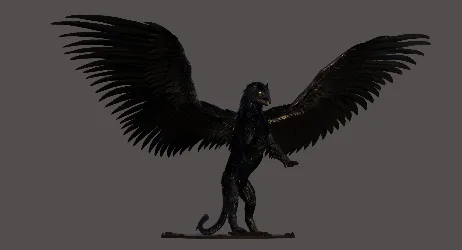
To answer the most common question asked by fans: Yes, the bennu is indeed a griffin variant, but with a distinct twist native exclusively to the Rebel Moon universe. Merging the regal majesty of an eagle with the raw, muscular power of a lion, this magnificent avian-feline hybrid serves as both a fierce combatant and a deeply spiritual mount.
The most prominent bennu in the franchise is Beatrice, a stunning, jet-black creature introduced in Rebel Moon – Part One: A Child of Fire. Beatrice is featured in one of the film’s most memorable sequences: a tense, emotionally resonant taming scene on the remote world of Neu-Wodi, far from her native skies. Here, the high-born warrior Tarak Decimus (played by Staz Nair)—himself a captive far from home—must break the seemingly "unrideable" beast to earn his freedom.
Behind the stunning visual realization of Beatrice and her species is the world-class VFX powerhouse Framestore. Collaborating closely with Snyder, the Framestore design team drew inspiration from centuries of global folklore regarding traditional griffins, while grounding the bennu in biological plausibility and unique cinematic aesthetics.
Chronology: From Folklore to Film Screen
The journey of the bennu from a concept on paper to a fully realized, breathing digital organism on screen spans a meticulous, multi-year filmmaking timeline.
- Pre-Production & Conceptualization (2021–2022): During the early development of Rebel Moon, Zack Snyder and his production team sought to populate their universe with fauna that felt simultaneously ancient and alien. The design brief for the bennu was handed to Framestore, tasking artists with reimagining the classic mythological griffin. The team analyzed real-world aerodynamics of large birds of prey alongside the musculature of big cats to ensure the creature’s flight and terrestrial movements looked authentic.
- Principal Photography (2022): Filming required a blend of practical setup and heavy visual effects. Actors like Staz Nair interacted with physical stand-ins, blue-screen rigs, and motion-capture elements on set to simulate the volatile, high-stakes energy of bonding with a massive, winged predator.
- Post-Production & VFX Breakdown (2023): Framestore painstakingly rendered the bennu’s intricate plumage, individual feather dynamics, lighting interactions, and facial expressions. Every digital feather was mapped to respond dynamically to wind, speed, and muscle flexing, particularly during the high-velocity flight sequences.
- The Release of Rebel Moon – Part One: A Child of Fire (December 2023): The film premiered globally on Netflix, introducing audiences to Beatrice the bennu and cementing the creature as a fan-favorite element of the franchise’s lore.
- Expanded Universe & Future Prospects (2024 and Beyond): With the release of the Director’s Cuts and continued exploration of the Rebel Moon canon, discussions regarding the homeworld of the bennu—the lush, expansive planet of Samandrai—have opened up exciting avenues for future storytelling.
Supporting Data: Anatomy, Origin, and Lore
To fully appreciate the cinematic craftsmanship behind the bennu, one must examine the lore established within the Rebel Moon compendium.
Biological and Mythological Classification
While traditional mythology often associates the word Bennu with an ancient Egyptian deity linked to the sun, creation, and rebirth (often depicted as a heron), Zack Snyder’s Rebel Moon repurposes the nomenclature for a quadrupedal, winged apex predator.
- Anatomy: The bennu features the razor-sharp talons, hooked beak, and expansive feathered wings of a massive eagle, coupled with the dense, muscular torso, retractable claws, and powerful hindquarters of a lion.
- Color Variations: While standard wild bennus display natural camouflage hues suited for plains and forests, unique specimens like Beatrice boast obsidian-black plumage, marking them as rare or high-status creatures.
- Temperament: Highly intelligent, fiercely independent, and emotionally sensitive. Unlike domesticated pack animals, a bennu cannot be broken through sheer brutality or submission; it demands mutual respect and psychological alignment.
The Home Planet: Samandrai
The bennu is indigenous to Samandrai, a vibrant and ecologically diverse world characterized by sweeping plains, dense old-growth forests, and towering mountain ranges. Notably, Samandrai is also the home planet of Tarak Decimus, establishing a profound cultural and environmental link between the noble warrior and the beast.

On Samandrai, bennus are not merely exotic pets or war beasts; historically, they have served as primary modes of transportation, acting as the alien equivalent of horses. Lore hints at majestic herds of wild bennus soaring across Samandrai’s skies—a visual spectacle that fans hope to witness in potential future installments of the saga.
Official Responses and Creative Insights
The creation of the bennu was heavily shaped by the collaborative vision between Zack Snyder and the artists at Framestore. In official behind-the-scenes breakdowns, the VFX team emphasized the challenge of making a fantastical creature feel like a living, breathing part of an ecosystem rather than a mere computer-generated spectacle.
"I’m not going to hurt you. You’re far from home and so am I. You and I, we are alike. We’ve been hurt. Betrayed. Our trust has been broken. We both know fear. Yet, the biggest fear we both face is the fear of ourselves."
— Tarak Decimus, speaking to Beatrice in A Child of Fire
This pivotal dialogue highlights the thematic core of the creature’s narrative purpose. Beatrice is not just a mount; she is a mirror for Tarak. Both characters have experienced captivity, betrayal, and a deep-seated loss of autonomy. By choosing to trust one another, they transcend their shared trauma.
Framestore’s animation supervisors noted that capturing Beatrice’s emotional state required subtle shifts in her posture, the flattening or raising of her crest feathers, and the intense focus of her avian eyes. This attention to detail ensured that audiences could read the creature’s apprehension, hostility, and eventual loyalty just as clearly as they could read human expressions.
Implications for the Rebel Moon Franchise
The introduction of the bennu holds significant narrative and world-building implications for the future of Zack Snyder’s sci-fantasy universe.
- Expanding the Ecosystem: By establishing Samandrai as a planet deeply integrated with avian-feline fauna, Snyder has laid the groundwork for richer world-building. Future projects can explore other indigenous species, ecological dependencies, and the ways different cultures across the galaxy interact with native wildlife.
- Thematic Resonance of the Bond: The relationship established between Tarak and Beatrice sets a narrative standard for how humans and creatures interact within the Rebel Moon universe. It suggests that power over nature is not achieved through domination, but through empathy and shared vulnerability—a powerful motif in a galaxy dominated by the oppressive military might of the Imperium.
- Franchise Merchandise and Fan Engagement: Creatures with distinct visual identities often drive community engagement. Beatrice has quickly become a focal point for fan art, digital media breakdowns, and merchandise discussions. The demand for deeper lore regarding Samandrai proves that audiences are eager to explore regions of the galaxy where nature still holds sway over technology.
As the Rebel Moon saga continues to expand through extended cuts, graphic novels, and potential sequels, the majestic bennu stands out as a triumphant fusion of ancient mythology and modern science fiction—leaving an indelible mark on the landscape of cinematic creature design.