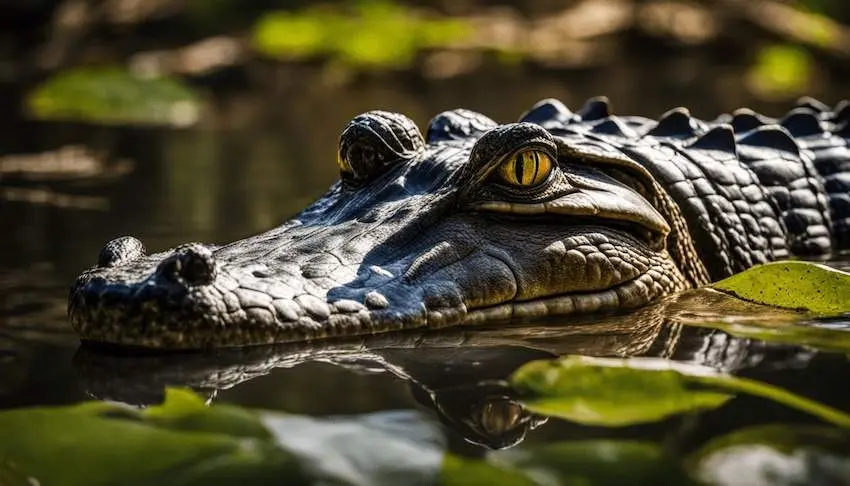
When prehistoric predators slip into the theater of the sleeping mind, the experience is rarely subtle. For centuries, the image of an alligator or crocodile gliding through dark water has captivated humanity, serving as both a terrifying nightmare and a profound psychological wake-up call.
In the realm of oneironautics—the study and exploration of dreaming—few symbols command as much visceral attention. These armored reptiles, unchanged largely by the passage of evolutionary time, emerge in our sleep cycles during periods of intense emotional turbulence. Whether they represent unacknowledged trauma, interpersonal conflict, or raw survival instincts, alligator dreams act as a mirror to our deepest psychological states.
Understanding these nocturnal visions requires a multi-disciplinary approach, weaving together modern psychological analysis, classical psychoanalytic theory, ancient mythology, and practical self-reflection.
The Anatomy of a Nightly Menace: Main Facts of Alligator Dream Symbolism
To understand why alligators populate our dreams, one must first examine the creature itself. As apex predators, alligators embody power, stealth, patience, and ancient resilience. In the subconscious landscape, they rarely appear by accident.
Psychologists and dream analysts generally agree that animal symbols in dreams externalize internal states. When a warm-blooded human mind conjures a cold-blooded predator, it is typically flagging an issue that feels equally primal: fear, aggression, territory, or a sense of being hunted.
Key Manifestations and Their Immediate Meanings
The context of the dream fundamentally alters its interpretation. Below is a breakdown of common alligator dream scenarios and their potential real-world correlations:
| Dream Scenario | Potential Psychological Meaning |
|---|---|
| Being attacked by an alligator | Facing harsh criticism, verbal assaults, or an overwhelming, threatening situation in waking life. |
| An alligator consuming prey | Fixation on persistent problems; issues consuming your thoughts that demand immediate resolution. |
| Attacking an alligator | Standing up against bullies or verbal assaults; finding the courage to face deep-seated fears and confrontations. |
| Encountering a baby alligator | New beginnings requiring resilience; the fragile inception of creative projects or emerging responsibilities. |
| Wading in alligator-infested waters | Heightened anxiety and a generalized fear of criticism or potential threats rather than an immediate danger; neglected long-term issues. |
| An alligator lurking beneath the surface | Subconscious warnings about hidden anxieties; the emergence of the "shadow self" or unrecognized personality traits. |
| A dead alligator | The conclusion of a bitter conflict or harsh exchange; the symbolic death of a self-defeating habit or toxic lifestyle aspect. |
| An alligator fighting another animal | Internal conflict; a call to evaluate whether you are acting as the aggressor or the victim in a contested waking-life situation. |
| Escaping an alligator attack | Successfully breaking away from a toxic relationship, job, or oppressive environment. |
| Observing an alligator from a distance | Acknowledging a known but persistently unaddressed threat in your professional or personal life. |
A Chronology of the Mind: How Alligator Dreams Evolve Across Our Lifespans
The frequency and interpretation of alligator dreams are rarely static; they tend to evolve alongside the dreamer’s chronological age and life stage.
Phase 1: Youth and the Awakening of Autonomy (Ages 18–30)
During early adulthood, individuals frequently navigate transitions involving higher education, career entry, and romantic independence. In this phase, alligator dreams often manifest as feelings of being overwhelmed by new responsibilities. The "murky waters" represent the unknown future, while the alligator symbolizes imposter syndrome, competitive peers, or authoritarian figures (such as bosses or professors).
Phase 2: Mid-Life Realities and Power Dynamics (Ages 31–55)
As individuals step into middle age, the nature of these dreams shifts toward survival, resource management, and relational toxicity. Power dynamics take center stage. Dreams during this period frequently feature being chased, cornered, or forced to fight back, mirroring corporate pressures, marital strain, or financial anxieties. The alligator becomes a physical manifestation of burnout—a quiet, creeping danger that has been ignored for too long.
Phase 3: Reflection, Integration, and Legacy (Ages 56 and Beyond)
In later life, alligator dreams often transform from symbols of acute threat to archetypes of wisdom and ancient survival. Dreamers in this demographic are more likely to report observing alligators from a distance, wrestling with them successfully, or witnessing dead alligators, signifying the resolution of lifelong conflicts and the integration of the shadow self.
Supporting Data: The Intersection of Sleep Science and Anxiety
While dream interpretation is often viewed through a mystical or psychological lens, modern sleep science offers quantifiable data regarding why we dream about dangerous predators.
According to research from clinical sleep laboratories, nightmares and anxiety dreams—frequently featuring aggressive animals—are strongly correlated with high levels of cortisol and adrenaline during waking hours.

- Stress Indicators: Clinical surveys of individuals reporting recurring predator dreams show that over 74% are undergoing significant occupational or relational stress.
- The Threat Simulation Theory: Evolutionary psychologists, such as Antti Revonsuo, suggest that dreaming is an ancient biological defense mechanism. By simulating threatening scenarios (such as an alligator attack) in a safe neurological environment, the sleeping brain trains the waking consciousness to better recognize and react to danger.
- Suppressed Emotion Processing: Neurological imaging indicates that rapid eye movement (REM) sleep processes emotional trauma. When waking individuals suppress anger or fear, the brain utilizes powerful archetypal imagery—like the jaws of an alligator—to force conscious acknowledgment of these pent-up states.
Official Perspectives: Jungian and Freudian Psychoanalysis
To gain a rigorous academic understanding of alligator dreams, one must turn to the founding fathers of modern psychology: Carl Jung and Sigmund Freud. Though both analyzed the unconscious mind, their lenses diverged significantly.
The Jungian Perspective: Confronting the Shadow
In Jungian psychology, the alligator is a classic manifestation of the Shadow Self. The shadow encompasses the unconscious aspects of the personality that the conscious ego does not want to acknowledge—often including raw aggression, primal desires, and unexpressed fears.
Carl Jung argued that what we refuse to confront internally will eventually meet us externally as fate or nightmare. An alligator attacking a dreamer in a swampy marshland is, from a Jungian viewpoint, an invitation to integrate these rejected parts of the psyche. By turning to face the alligator (as seen in dreams where the dreamer fights back), the individual acknowledges their own inner power and ceases to run from their authentic nature.
The Freudian Analysis: Repressed Desires and Aggression
Sigmund Freud viewed dreams as the "royal road to the unconscious," driven primarily by repressed wishes, childhood conflicts, and forbidden impulses.
A Freudian analysis of an alligator dream would likely focus on its predatory, phallic, and voracious nature. The creature’s sharp teeth and immense bite force symbolize pent-up aggressive impulses or anxieties surrounding primal instincts—particularly those related to sex and power. Freud would prompt the dreamer to examine where in their waking life they feel sexually frustrated, dominated, or overly aggressive, noting that the "monster" in the water is merely an outward projection of inward tension.
Spiritual and Mythological Implications
Beyond clinical psychology and neurology, the alligator holds a profound place in global spirituality and ancient mythology. Across diverse cultures, these creatures are viewed as threshold guardians—keepers of ancient secrets bridging the physical and spiritual worlds.
The Egyptian God Sobek: Creation and Destruction
In ancient Egyptian mythology, the crocodile god Sobek was a dominant deity associated with the Nile River, fertility, military prowess, and sudden power. However, Sobek also embodied a terrifying dual nature: he was both a protector of the pharaohs and a destructive force capable of chaos.
Examining alligator dreams through the lens of Sobek reveals a vital philosophical truth: destruction is frequently a mandatory precursor to creation. Just as the flooding of the Nile destroyed crops while simultaneously depositing life-giving silt, the metaphorical "death" or disruption brought by an alligator dream clears away stagnant situations to allow for personal rebirth and spiritual evolution.
Implications: Translating the Dream into Waking Action
A dream left unexamined is a missed opportunity for personal growth. When an alligator breaches the surface of your subconscious, it demands a proactive response. Rather than waking up in a panic and immediately shaking off the terror, dreamers are encouraged to utilize structured introspection.
Practical Steps for Dream Analysis
- Immediate Journaling: Upon waking from an intense dream, record every detail before the memory fades. Note the water’s clarity, the alligator’s size, your emotional state, and whether you fought, fled, or froze.
- Identify Waking Parallels: Ask yourself: Where do I feel like I am walking in alligator-infested waters? Who or what in my life represents a hidden threat?
- Confront the Tension: Acknowledge suppressed emotions. If the alligator represents unexpressed anger or fear, find a constructive, waking outlet to address it—whether through difficult conversations, boundary-setting, or creative expression.
Dream Journaling Prompts
To deepen your self-awareness, consider meditating on the following prompts in your personal journal:
- If the alligator in my dream could speak, what warning or message would it deliver to my waking self?
- Am I currently playing the role of the predator, the prey, or the helpless observer in my waking relationships?
- What difficult conversation or unresolved issue am I avoiding because it feels buried in the "murky waters" of my mind?
- How can I channel the resilience and ancient endurance of the alligator to overcome my current life obstacles?
Conclusion: Embracing the Waters Within
When alligators slide into the waterways of our dreams, they deliver an untamed, primal message from the deepest trenches of our psyche. They are not merely agents of terror, but guides of transformation, urging us to wake up, face our hidden anxieties, and wrestle with whatever is bubbling up from beneath.
By taking a deep breath, stepping into those murky psychological waters, and decoding the ancient symbols of our sleep, we transform nightmares into navigation tools. The alligator asks us to be resilient, to honor our survival instincts, and to embrace the profound power that lies waiting in the deep.