By The Wellness & Holistic Living Desk
Published as Part 2 of the Comprehensive Chakra Series
Introduction: The Journey Beyond the Science of Energy
In the opening installment of our dedicated Chakra Series, The Science Behind Crystal Chakra Healing, we explored the foundational physics, biofield interactions, and historical contexts that validate why energy work resonates so deeply with millions worldwide. We examined how subtle electromagnetic frequencies, piezoelectric properties in quartz, and the power of focused human intent intersect to create tangible shifts in personal well-being.
Yet, understanding why crystal chakra healing works naturally leads to a more pressing, practical question: How do I actually know which chakra needs balancing?
Identifying an energetic block, an underactive center, or an overactive vortex is not reserved strictly for gurus, mystics, or those born with rare metaphysical gifts. According to leading holistic educators and crystal experts, discovering your body’s energetic bottlenecks is an approachable skill. Through structured self-assessments, physical and emotional pattern recognition, energy-sensing tools like pendulums, and the cultivation of intuitive awareness, anyone can learn to diagnose their own subtle energy field.
In this comprehensive guide, we examine the four primary diagnostic methodologies used in modern holistic practice, how to cross-verify your findings, and why treating your intuition like a muscle is the ultimate key to lifelong energetic alignment.
Main Facts: The Four Pillars of Chakra Diagnostics
The human energy system operates as a dynamic matrix of spinning wheels of light, or chakras, running from the base of the spine to the crown of the head. When these wheels spin too sluggishly (underactive) or too rapidly and chaotically (overactive), physical, emotional, and spiritual disharmony ensues.
To pinpoint precisely where a disruption has occurred, holistic practitioners rely on four primary investigative frameworks:
- Digital and Paper Chakra Self-Assessments: Utilizing structured questionnaires designed to score your alignment based on current life habits, thought patterns, and emotional states.
- Symptom Pattern Recognition: Analyzing clusters of physical ailments and emotional roadblocks that traditionally correspond to specific energy hubs.
- Active Energy Sensing: Engaging physical tools—most notably pendulums—to interact directly with the biofield and read the movement of subtle energy.
- Intuitive Development (Clair-senses): Tapping into inner senses, gut feelings, meditative visions, and visceral knowings to perceive energetic shifts directly.
Rather than relying on a single data point, advanced practitioners advocate for a "consensus model"—combining two or three of these methods to achieve absolute clarity before selecting a remedial crystal.
Chronology: The Evolution of Modern Energy Awareness
To understand how we diagnose chakra imbalances today, it is helpful to trace how these concepts entered the contemporary wellness landscape:
- Ancient Roots: The conceptual framework of chakras originated in ancient Vedic texts of India between 1500 and 500 BCE, serving as spiritual maps for meditation, yoga, and Ayurvedic medicine.
- The 20th-Century Western Synthesis: During the esoteric revivals of the mid-to-late 20th century, Western esotericists, psychologists (such as Carl Jung), and alternative health pioneers synthesized Eastern chakra philosophies with Western energy healing and mineralogy.
- The Rise of Crystal Practitioner Training: By the late 1990s and early 2000s, structured educational platforms began demystifying crystal healing. Academies and certification programs formalized techniques for energy sensing, pendulum work, and intuitive development, transforming esoteric arts into teachable, structured methodologies.
- Present Day: Today, energy work sits at the intersection of mindfulness and integrative health. Millions of wellness seekers routinely incorporate chakra balancing into their self-care repertoires, backed by a wealth of literature, online diagnostic tools, and specialized mineralogical resources.
Supporting Data & Methodology: How to Locate Your Energetic Blockages
1. Taking a Reliable Chakra Test
For beginners, structured questionnaires are often the most accessible starting point. A well-designed chakra test typically features dozens of targeted questions assessing your confidence, security, emotional availability, communication style, and spiritual connection.
- How it works: You answer honestly regarding your recent thoughts, fears, physical symptoms, and behaviors. The test aggregates your scores across the seven primary chakras.
- The Crystal Connection: Once the assessment highlights a compromised energy center—for instance, a depleted Root Chakra manifesting as financial insecurity or a sluggish Sacral Chakra pointing toward creative burnout—you can select a corresponding mineral (such as Red Jasper or Carnelian) to re-establish energetic flow.
2. Identifying Glaring Physical and Emotional Syndromes
Energy imbalances rarely manifest as isolated incidents. Instead, they typically present as a syndrome—a constellation of interrelated physical discomforts and psychological patterns.
- The Syndrome Rule: Experiencing a single headache does not automatically mean your Third Eye Chakra is blocked. However, chronic tension headaches accompanied by mental fog, cynicism, and an inability to trust your gut instincts points directly toward an upper-chakra imbalance.
- Classic Literature for Deeper Study: To accurately map your symptoms to specific energy centers, many practitioners rely on foundational reference texts, such as:
- Vibrational Healing Through the Chakras by Joy Gardner
- The Crystal Healer by Philip Permutt
3. Energy Sensing and the Use of Pendulums
While advanced energy-sensing techniques require rigorous training, supervised practice, and strict energetic hygiene (topics heavily emphasized in professional certification courses), basic tools are readily available to the everyday practitioner.
- Is Energy Sensing Only for the "Chosen Few?": A common misconception is that you must be born with supernatural abilities to read energy. In reality, energy sensing is a kinetic skill. With patience, dedication, and an openness to subtle physical feedback, anyone can learn to interpret biofield data.
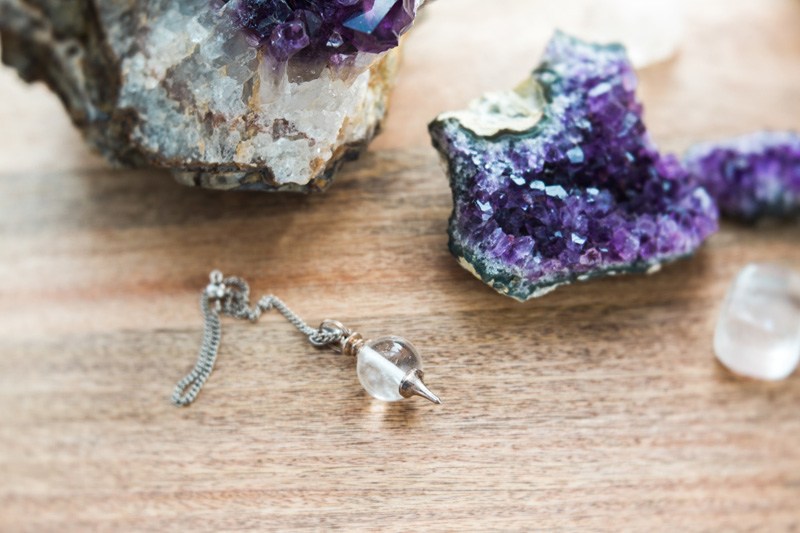
- Working with a Pendulum: One of the most effective entry-level tools for home energy sensing is a crystal pendulum. Held steadily over each chakra point, a pendulum acts as an amplifier of subtle biofield movements. A wide, erratic circle may indicate an overactive chakra, a weak or stationary swing can signal an underactive or blocked center, and a steady, balanced oscillation reveals energetic harmony.
4. Tapping into Intuition and the Clair-senses
Intuition is not an abstract concept; it is an internal sensory apparatus. Many individuals naturally process subtle information through specialized "clair" faculties:
- Clairvoyance: Clear seeing (perceiving colors, flashes of light, or symbolic images related to energy states).
- Clairaudience: Clear hearing (receiving internal messages, tones, or words of guidance).
- Clairsentience: Clear feeling (experiencing physical sensations, temperature changes, or emotional shifts in response to energy).
- Claircognizance: Clear knowing (an unshakeable inner certainty about what an energy center requires without needing visual or physical proof).
Just like physical muscles, intuitive faculties atrophy when neglected and strengthen when exercised through regular meditation, journaling, and active reflection.
Official Perspectives and Expert Insights
Holistic educators emphasize that diagnosing an imbalanced chakra should always be approached with patience, self-compassion, and critical thinking. Professional crystal practitioners caution against treating self-assessments as medical diagnoses. Instead, energy work is framed as a complementary wellness practice designed to support mental clarity, emotional release, and spiritual grounding.
Furthermore, experts stress the importance of verification. Because human perception can be influenced by daily moods or external stressors, cross-referencing diagnostic techniques ensures a more accurate approach to healing.
Implications: The Power of the Chakra "Combo" Method
For those striving to achieve lasting energetic equilibrium, relying on a single diagnostic test may not always yield definitive results. This is where the Chakra Consensus Method comes into play.
If you find yourself questioning your initial assessment, or if a questionnaire yields ambiguous results, experts recommend employing a multi-faceted approach:
- Step One: Take a reputable online chakra assessment.
- Step Two: Cross-examine the results against your current physical and emotional symptom syndromes.
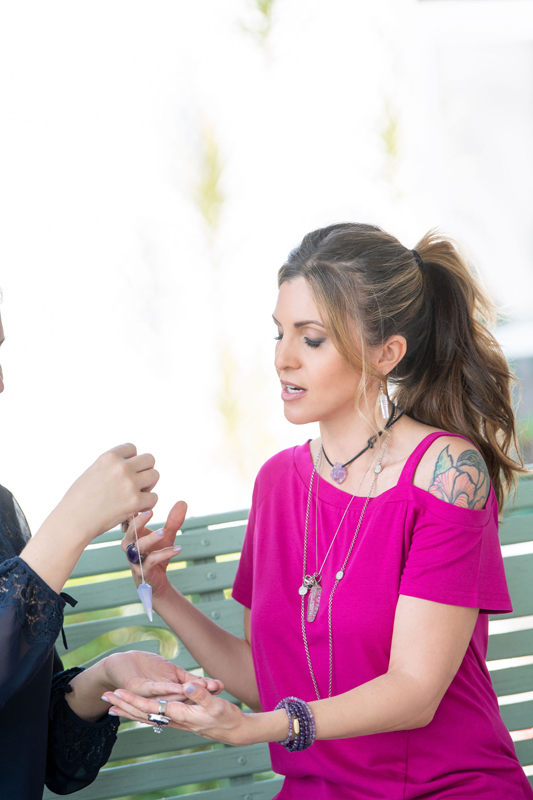
- Step Three: Use a crystal pendulum to physically test the corresponding energy vortexes.
If two of these methods point toward the same imbalanced center, you have your operational consensus. Should you encounter contradictory results, introduce a third method—such as a guided intuitive meditation—and defer to the majority finding.
The Long-Term Benefit
Over time, consistent practice transforms chakra identification from a deliberate, step-by-step investigative process into an intuitive second nature. Eventually, practitioners reach a state of hyper-awareness where they can "just know" when a specific energy center requires attention, allowing them to apply corrective crystal therapies proactively rather than reactively.
What Lies Ahead in Part 3
Now that you possess the tools to identify which chakra is crying out for attention, the next logical step is learning how to treat it.
In the upcoming installment of our Chakra Series, we will explore the precise application of healing crystals—detailing how to place, cleanse, and program your mineral allies to restore optimal vibration and flow to your entire energetic anatomy.
Are you currently utilizing any of these diagnostic methods in your daily wellness routine? Have you ever worked with a pendulum or experienced intuitive shifts during meditation? Share your thoughts, experiences, and questions in the comments below!
Crystal Blessings