






By: Global Wellness & Sustainable Living Desk
Published: October 2023
Main Facts
The global crystal healing and mineral collecting market has experienced an unprecedented surge in popularity over the past decade. Driven by wellness trends, aesthetic home decor, and a collective turn toward holistic self-care, millions of consumers now adorn their living spaces and bodies with quartz, amethyst, citrine, and myriad other geological formations. However, this booming wellness economy hides an inconvenient and frequently overlooked truth: the dark side of the supply chain.
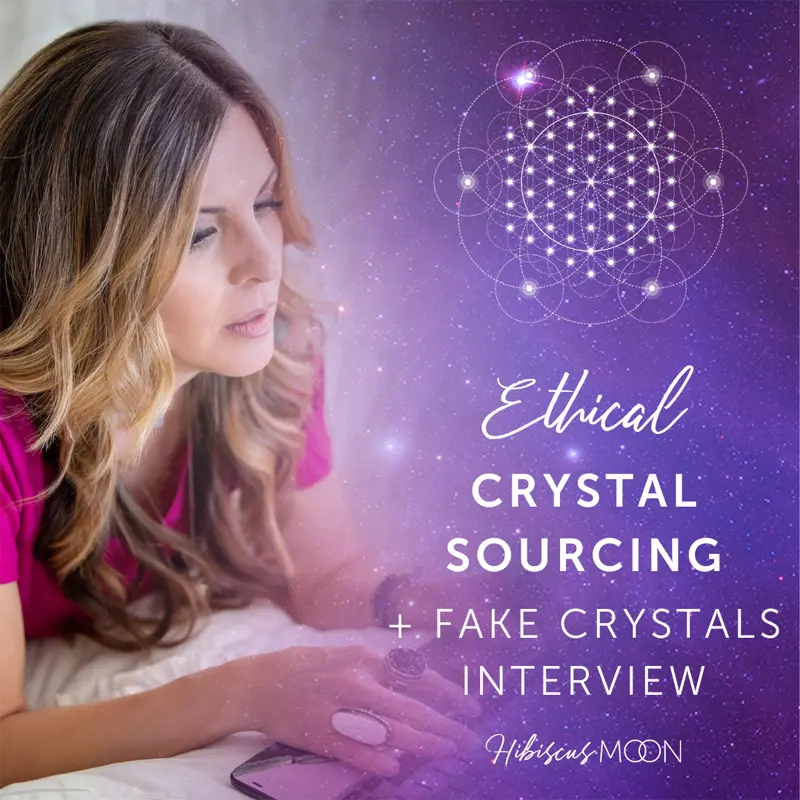
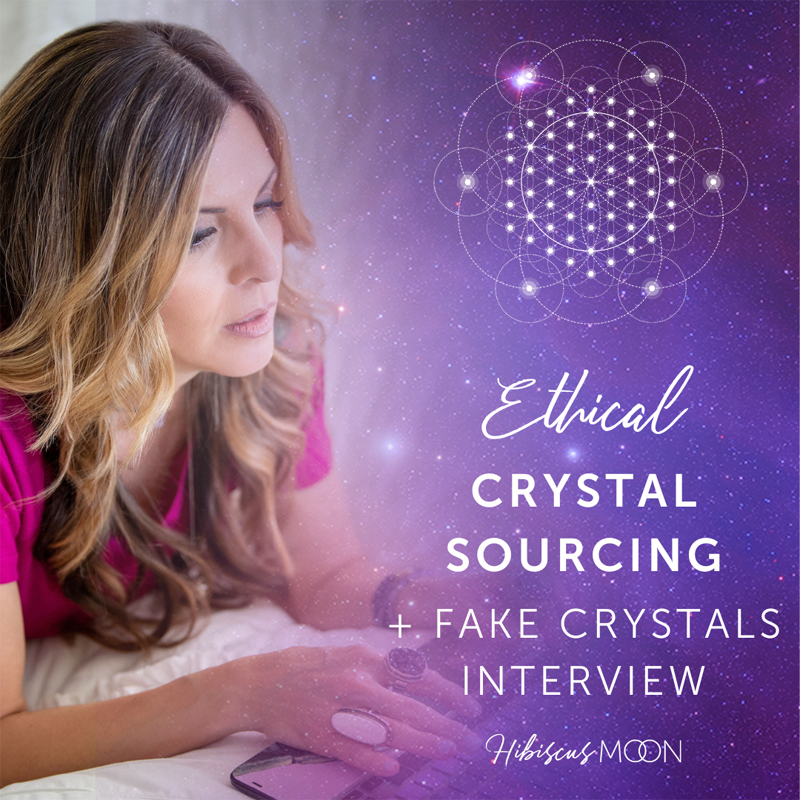
Recently, renowned crystal expert and educator Hibiscus Moon sat down for a groundbreaking live interview with Barbie—widely known in digital spaces as "Cold Brew Barbie"—to tackle this exact issue. The conversation thrust the controversial topic of ethical crystal sourcing into the spotlight, aiming to educate practitioners, collectors, and casual buyers alike.
Key facts emerging from the discourse include:
- The Supply Chain Opacity: Unlike the diamond or precious metals industries, the global gem and mineral market lacks standardized tracking mechanisms, making it exceptionally difficult to trace a crystal from a remote mine to a retail storefront.
- Labor and Environmental Realities: Many popular crystals are mined by hand in developing nations under grueling conditions, often involving child labor, unsafe tunnels, inadequate wages, and devastating environmental degradation.
- The Consumer Paradox: Well-meaning wellness enthusiasts—who seek high vibrational energy, peace, and healing—frequently purchase stones mined through systemic exploitation and ecological destruction, creating a fundamental philosophical paradox within the spiritual community.
- The Shift Toward Transparency: Industry leaders, educators, and conscious retailers are beginning to push for direct-trade models, fairer working conditions, and complete provenance disclosures to reform the marketplace.
Chronology of a Movement: From Occult Niche to Mainstream Boom
To understand the current crisis in crystal sourcing, one must examine how the market evolved from a localized, esoteric hobby into a multi-billion-dollar global industry.
The Pre-Boom Era (Late 20th Century)
For decades, the crystal market operated on a relatively small scale. Stones were primarily traded through rock-and-mineral hobbyist clubs, specialized metaphysical shops, and independent lapidary artists. Sourcing was often localized, and buyers typically purchased minerals based on aesthetic beauty, geological rarity, or intuitive connection rather than massive branding or commercial demand.
The Wellness Explosion (2010s)
As the modern wellness movement gained momentum, championed by social media platforms like Instagram and Pinterest, crystals transitioned from niche spiritual tools to ubiquitous lifestyle accessories. High-profile celebrities openly endorsed crystal healing, and major retailers began stocking polished stones, facial rollers, and home decor items. Demand skyrocketed overnight.
The Strain on Global Mines (Mid-to-Late 2010s)
To meet the exponential rise in demand, mining operations in regions such as Madagascar, Brazil, India, and China intensified production. Artisanal and small-scale mining (ASM) communities saw an influx of unregulated digging. Without proportional investments in infrastructure or oversight, local ecosystems suffered massive deforestation, soil erosion, and water pollution, while miners faced increased risk of tunnel collapses and silicosis.
The Reckoning and Educational Awakening (2020s–Present)
As consumers became more socially and environmentally conscious—demanding supply chain transparency in fashion, food, and technology—scrutiny finally turned toward the metaphysical community. Figures like Hibiscus Moon and Cold Brew Barbie began leveraging digital platforms to host critical dialogues, such as their viral live interview, confronting the industry’s ethical shortcomings head-on and urging buyers to question the journey of their sacred stones.
Supporting Data and Market Insights
Evaluating the scale of the crystal industry reveals why ethical sourcing has become such an urgent imperative. While exact global revenue figures for metaphysical minerals are difficult to pin down due to the informal nature of artisanal mining, market analysts point to consistent double-digit growth within the broader holistic wellness and alternative healing sectors.
- Geographic Concentration: A vast majority of the world’s decorative minerals originate from a handful of developing nations. For instance, Madagascar is a primary global supplier of rose quartz, labradorite, and celestite, yet remains one of the poorest nations globally, highlighting a stark economic disparity between resource extraction and local wealth retention.
- The Artisanal Nature of Mining: Unlike mechanized open-pit mining used for industrial metals, a significant portion of mineral specimen extraction relies on artisanal and small-scale mining. According to international labor organizations, ASM sectors worldwide frequently operate in the informal economy, bypassing labor laws, safety equipment standards, and fair taxation.
- Carbon Footprint of Transit: Beyond extraction, the logistical footprint of the crystal trade is immense. A raw amethyst cluster mined in the interior of Brazil or Uruguay must be transported via heavy machinery, packaged, shipped internationally by cargo freight or air, processed at a lapidary facility, and shipped once more to wholesalers and final retail boutiques, accumulating a substantial carbon footprint before ever reaching an altar or coffee table.
Official Responses and Industry Perspectives
As awareness surrounding unethical mining practices grows, various stakeholders within the wellness, mining, and retail ecosystems have begun formulating responses.
The Educator Perspective: Hibiscus Moon and Cold Brew Barbie
During their widely discussed live broadcast, Hibiscus Moon and Cold Brew Barbie emphasized that ignoring the reality of the supply chain does not make it disappear. They argued that while confronting the dark side of crystal sourcing can feel like an "inconvenient truth" to spiritual practitioners who view stones purely as vessels of high vibrations, education is the first step toward genuine healing.
"We’re gonna talk about this even though you might think it’s an inconvenient truth," Hibiscus Moon noted during the session. "It’s always good to be educated."
The duo stressed that spiritual integrity must extend beyond personal meditation practices to encompass how earthly goods are handled, traded, and acquired.
The Retailer and Wholesaler Dilemma
Conscious crystal retailers find themselves caught between surging consumer demand and the severe limitations of global supply chains. Many wholesale distributors admit that tracing a crystal back to the exact mine of origin is frequently impossible. Middlemen often aggregate stones from dozens of independent diggers, blending batches until individual provenance is entirely lost.
However, a progressive segment of the retail community is responding by demanding direct-trade relationships. These forward-thinking vendors bypass traditional brokers, traveling directly to mining regions—such as specific family-run mines in Arkansas or ethical cooperatives in Brazil—to ensure fair compensation for local workers and environmentally responsible extraction practices.
Implications for the Future of Crystal Healing
The growing conversation around ethical crystal sourcing carries profound implications for the future of the wellness industry, spiritual practitioners, and the earth itself.
1. A Paradigm Shift in Spiritual Consciousness
For practitioners of crystal healing, the ethics of sourcing directly impacts the energetic integrity of the stone. A fundamental tenet of many holistic traditions is that energy transfers. Many conscious buyers now argue that a crystal extracted through forced labor, child exploitation, or ecological devastation carries a dense, negative energetic imprint that no amount of sage-cleansing or moonlight bathing can fully neutralize. Aligning purchases with ethical standards is becoming viewed as an essential extension of spiritual practice.
2. Pressure for Industry Regulation and Transparency
Just as consumers demand "conflict-free" diamonds or "fair-trade" coffee and chocolate, the pressure is mounting for standard certifications within the mineral market. While implementing traceability for millions of unique, unbranded geological specimens presents a formidable logistical challenge, technological solutions such as blockchain tracking and stricter customs declarations are increasingly being discussed by trade advocates.
3. The Rise of Alternative Acquisition Methods
As awareness spreads, consumer behavior is shifting. Many modern collectors are exploring alternative ways to source stones responsibly:
- Second-Hand Purchasing: Buying estate crystals, vintage pieces, or swapping stones within local metaphysical communities reduces the demand for newly mined minerals.
- Lab-Grown Alternatives: While natural stones remain the gold standard for traditional collectors, advancements in synthetic crystal creation (such as lab-grown quartz or bismuth) offer cruelty-free and environmentally contained alternatives.
- Vetting Retailers: Buyers are increasingly holding businesses accountable, patronizing only those shops that can verify safe, fair labor practices and transparent supply chains.
Conclusion
The dialogue sparked by Hibiscus Moon and Cold Brew Barbie serves as a vital wake-up call for the global wellness community. Far from dampening the joy of mineral collecting, bringing transparency and ethics to crystal sourcing honors the earth and the human hands that unearth these natural wonders. By transforming awareness into action, the crystal community has the power to reshape an opaque industry into one rooted in respect, fairness, and true holistic well-being.
What are your thoughts on ethical crystal sourcing? Did this investigation change how you view your collection? Let us know your perspective in the comments below.