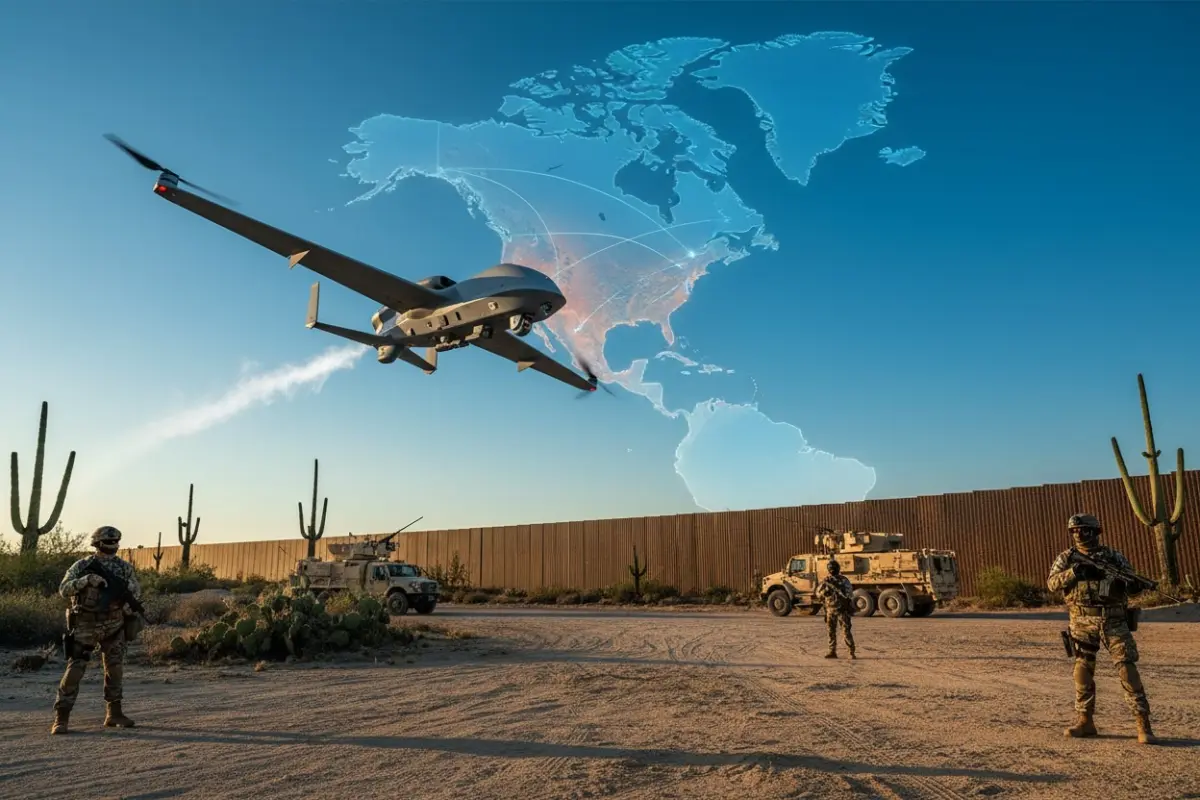
WASHINGTON — The Trump administration has effectively shelved its controversial plans to conduct unilateral U.S. military airstrikes on Mexican soil, choosing instead to lean into heightened diplomatic engagement, intelligence-sharing, and joint security operations with Mexico City. According to a recent report by The New York Times, citing anonymous U.S. and Mexican officials, the White House has paused direct military preparations inside Mexico as illegal border crossings decline and bilateral cooperation reaches a high-water mark.
While the White House has not formally confirmed the policy pivot, officials familiar with the discussions emphasize that no kinetic strikes are currently planned. The shift follows a volatile period of intense pressure from Washington, marked by threats of military intervention, the designation of major Mexican criminal organizations as foreign terrorist organizations, and a delicate dance of cross-border enforcement that has fundamentally reshaped relations between the two neighbors.
Main Facts: The Strategic Pivot from Airstrikes to Diplomacy
The decision to pause plans for direct U.S. military action inside Mexico represents a significant tactical evolution for President Donald Trump’s second term. Throughout his campaign and the opening months of his administration, Trump repeatedly raised the prospect of using American military might to obliterate drug cartels operating within Mexico’s borders, framing the syndicates as a direct threat to U.S. national security.
However, recent developments on the ground have altered the strategic calculus. Key elements of this changing landscape include:
- Suspension of Strike Preparations: The Department of Defense, which had been directed in August 2025 to draft operational plans for lethal strikes against drug cartels in Mexico, has indefinitely paused those preparations.
- Improving Bilateral Relations: Both U.S. and Mexican officials point to a dramatic warming of diplomatic ties. President Claudia Sheinbaum and President Trump have recently struck an optimistic tone, reporting substantial agreements on key geopolitical and economic issues, with a major new trade deal reportedly "very close."
- Declining Border Crossings: U.S. authorities report a measurable decrease in illegal border crossings from Mexico, relieving one of the primary domestic political pressures driving the administration’s hardline rhetoric.
- Shifting Strategic Targets: With Mexico stepping up enforcement and intelligence sharing, Washington has pivoted its primary economic and geopolitical pressure campaigns toward other fronts, most notably Canada.
Despite these diplomatic strides, the administration maintains a posture of intense scrutiny. U.S. sanctions continue to target financial networks tied to Mexican cartels, and intelligence-sharing mechanisms established over the past year remain fully operational.
Chronology: Escalation, Confrontation, and Cooperation
The trajectory of U.S.-Mexico relations over the past two years has swung wildly from threats of war to unprecedented levels of operational integration.
Late 2024 to Mid-2025: The Pressure Campaign Begins
- December 2024: Prior to taking office, Donald Trump ups the ante in the drug war by offering a $15 million reward for information leading to the capture of Nemesio Rubén Oseguera Cervantes, universally known as "El Mencho," the ruthless leader of the Jalisco New Generation Cartel (CJNG).
- Early 2025: The White House officially designates the CJNG as a foreign terrorist organization (FTO), laying the legal groundwork for potential military and intelligence assets to be brought to bear against the syndicate.
- August 2025: The administration issues a classified directive instructing the Department of Defense to draft comprehensive plans for lethal operations inside Mexico, setting a mid-September deadline for actionable military options.
Late 2025 to Early 2026: Rhetoric Meets Reality
- November 2025: Trump publicly states he would be "proud" to strike cartel targets on land, boasting that U.S. intelligence knows "every route" and "the addresses of every drug lord."
- January 2026: In an interview with Fox News host Sean Hannity, Trump asserts that the U.S. has neutralized 97 percent of maritime drug trafficking and declares that the administration is preparing to "start now hitting land about the cartels."
- February 2026: A watershed moment occurs when Mexican special forces, backed by vital U.S. intelligence support, close in on El Mencho. The ensuing massive shootout results in the death of the world’s most wanted drug trafficker from injuries sustained during the operation, alongside more than 70 other casualties.
- Post-February 2026: El Mencho’s death triggers a violent nationwide backlash. CJNG operatives set hundreds of properties and vehicles ablaze across Mexico, briefly endangering American tourists in popular destinations like Puerto Vallarta. Trump responds on Truth Social with a blunt demand: "Mexico must step up their effort on Cartels and Drugs!"
Mid-2026 to Present: Joint Enforcement and De-escalation
- July 2026: Secretary of State Marco Rubio announces the designation of two additional Mexican syndicates—the Juárez cartel and Los Viagras—as foreign terrorist organizations and specially designated global terrorists.
- August 2026: Security cooperation reaches new heights as Mexican armed forces and U.S. personnel launch joint "mirror" patrols along both sides of the border. These operations feature special operations insertions, armored vehicles, and heavy weaponry. Meanwhile, the U.S. military deploys a laser system to shoot down three cartel drones in southern Texas near the border.
- September 2026: Diplomatic breakthroughs materialize. Following high-level talks, Presidents Trump and Sheinbaum signal that a comprehensive trade deal is imminent, prompting the White House to effectively shelve its contingency plans for unilateral airstrikes.
Supporting Data: Intelligence, Enforcement, and Economic Leverage
The decision to hold off on airstrikes is underpinned by a robust mosaic of data highlighting extensive cross-border security operations, targeted economic sanctions, and localized trade frictions.
Intelligence and Reconnaissance Operations
The operational shift away from kinetic bombing runs has not meant a step-back in intelligence gathering. U.S. and Mexican agencies have quietly integrated their surveillance apparatuses:
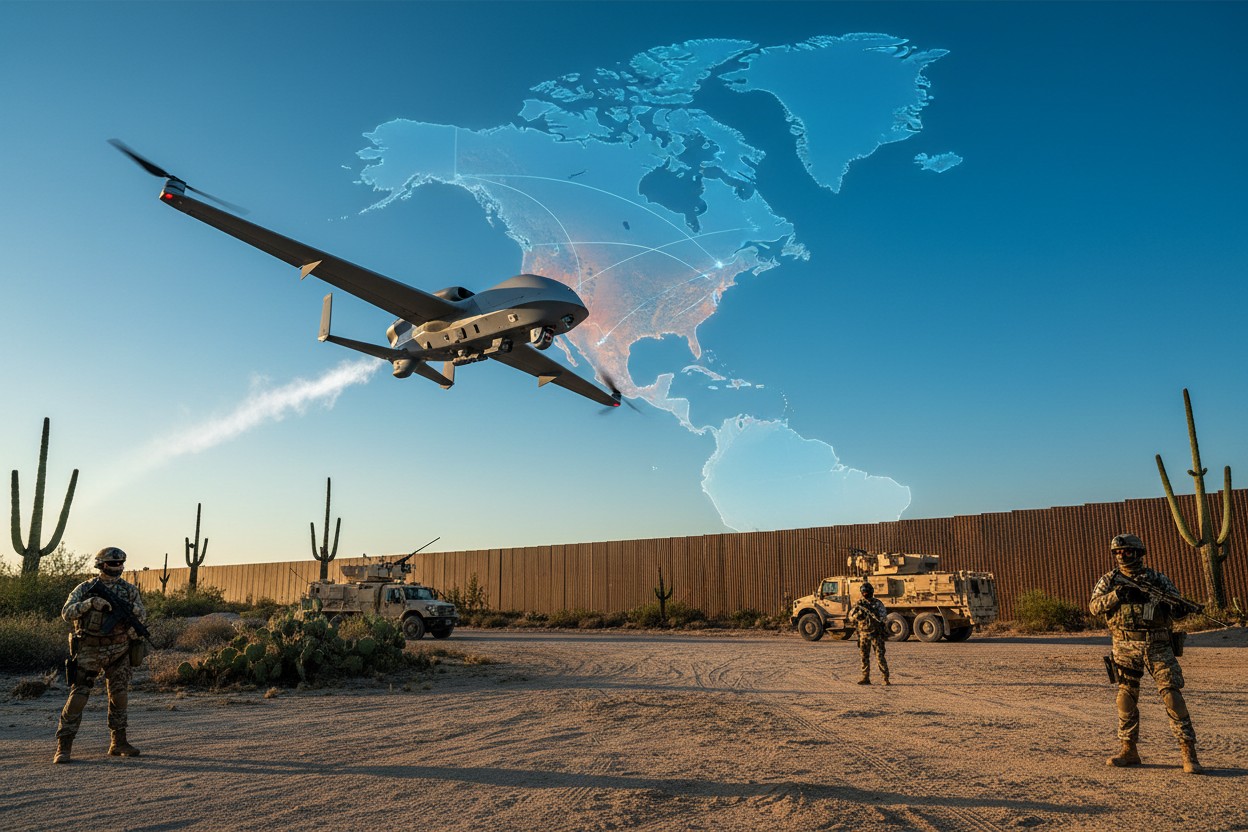
- Aerial Surveillance: Reports indicate the active deployment of CIA drone surveillance over Mexican territory specifically targeting illicit fentanyl production laboratories.
- Coastal Reconnaissance: The U.S. Navy has utilized P-8 Poseidon maritime patrol aircraft to conduct ongoing reconnaissance missions off the coast of Mexico near Tijuana.
- Border Technology: The North American Aerospace Defense Command (NORAD) and U.S. Northern Command successfully tested advanced counter-drone laser systems in August 2026, neutralizing cartel unmanned aerial vehicles operating near the Texas border.
Economic and Financial Warfare
Beyond military assets, the U.S. government has leveraged sweeping financial penalties to disrupt cartel operations. The Treasury Department has slapped sanctions on more than 50 Mexican individuals and corporate entities linked to the CJNG. Notably, this dragnet has expanded far beyond traditional criminal fronts, capturing legitimate enterprises such as specific tequila-manufacturing operations and even a baby shoe company suspected of money laundering.
Trade Interdependencies and Frictions
The warming diplomatic ties have not entirely eliminated economic friction. In August 2026, the U.S. temporarily suspended avocado inspections in Michoacán—a vital agricultural hub—due to mounting security concerns for American inspectors. Normal operations resumed later that month following security guarantees from Mexican authorities.
Meanwhile, external actors have begun adjusting to the intense North American pressure. In September 2026, China announced new export permit requirements for two critical precursor chemicals used in illicit drug manufacturing destined for the U.S., Mexico, and Canada. This concession came just days ahead of high-stakes diplomatic meetings between Washington and Beijing.
Official Responses and Diplomatic Posture
The public tone struck by leadership in both Washington and Mexico City has undergone a remarkable transformation over the past several months, shifting from mutual distrust to cautious partnership.
Addressing the United Nations General Assembly, President Trump struck a surprisingly conciliatory note regarding his southern neighbor:
"I’m very proud to tell you we have a very good relationship with the Mexican government. We’ve made great strides, very great strides with Mexico."
Mexican President Claudia Sheinbaum has similarly emphasized the value of sovereign cooperation, noting that her administration remains committed to dismantling cartel networks on Mexican terms while maintaining open channels of communication with the White House. The deployment of joint mirror patrols along the border has served as a tangible manifestation of this cooperative spirit, allowing both nations to project strength without violating Mexico’s fiercely guarded national sovereignty.
Implications: A Fragile Detente or a New Paradigm?
While the shelving of U.S. airstrike plans has been welcomed by diplomatic analysts as a victory for bilateral pragmatism, independent observers and security experts caution that significant long-term risks remain.
The Threat of Cartel Fragmentation and Retaliation
The death of El Mencho in February 2026 demonstrated the chaotic reality of decapitation strikes against modern drug cartels. Rather than dissolving, the CJNG fractured into violent internal power struggles, unleashing a wave of reprisal violence that tested the limits of Mexican domestic security forces.
Independent commentators have drawn stark historical parallels regarding the dangers of military entanglement in Latin America. Writing on security implications, analysts have warned that kinetic intervention or prolonged border entanglements risk normalizing cross-border conflict. As noted by alternative media commentators observing the buildup, any aggressive military posture risks turning Mexico into a "quagmire from which there’s no easy escape," where retaliation against civilian targets and economic infrastructure remains an ever-present hazard.
The Path Forward
For now, the Trump administration has opted for a strategy of economic coercion, intelligence integration, and cooperative border enforcement over unilateral bombs. Whether this detente holds will depend heavily on the continued stability of Mexico’s internal security, the success of the impending bilateral trade agreements, and the ability of both governments to choke off the supply chains fueling the international drug trade without triggering asymmetric blowback from fractured cartel factions.