







LOS ANGELES — In the ever-expanding landscape of holistic wellness and alternative therapies, the practice of crystal chakra healing has transitioned from ancient metaphysical traditions into modern wellness discussions. Proponents and practitioners argue that pairing specific minerals with the body’s primary energy centers—known as chakras—offers a tangible method for restoring emotional equilibrium and physical vitality.
While skepticism remains common within traditional scientific communities, a growing segment of practitioners, educators, and holistic researchers are examining the intersection of physics, vibrational frequency, and biology to explain why working with crystals may yield measurable psychological and energetic benefits.
Main Facts: Understanding Chakras and Mineral Energy
At the core of crystal chakra healing is the concept of the seven main chakras. While esoteric anatomy recognizes numerous minor energetic vortices throughout the human body, these seven major hubs serve as the primary focal points for regulating emotional states, organ functions, and general vitality.
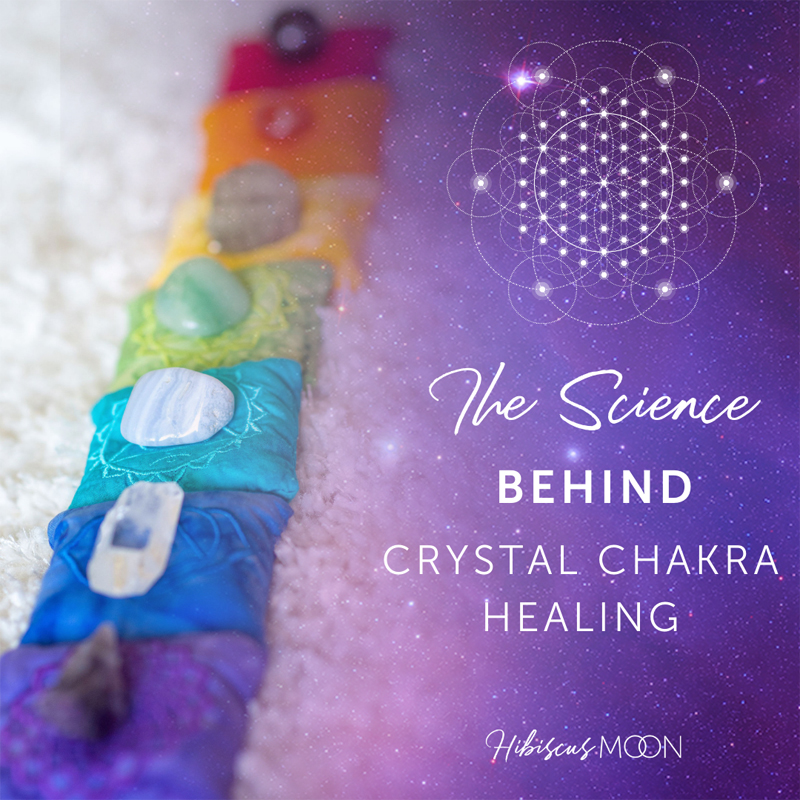
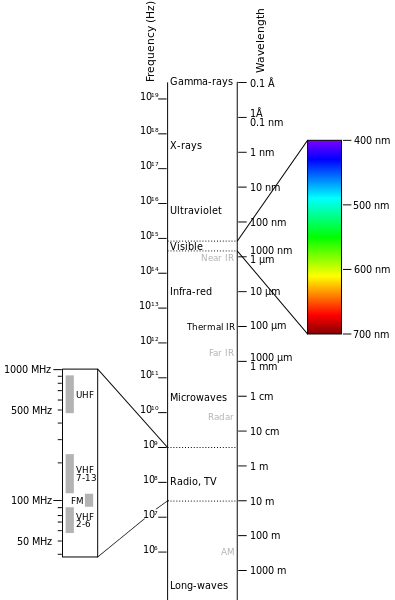
Running in a vertical column from the base of the spine to the crown of the head, these energy centers correspond directly to the classic visible light spectrum, easily remembered by the mnemonic device ROY G. BIV:
- Red: Root Chakra (associated with grounding, security, and survival instincts)
- Orange: Sacral Chakra (associated with creativity, passion, and emotional flow)
- Yellow: Solar Plexus Chakra (associated with self-esteem, willpower, and personal power)
- Green: Heart Chakra (associated with compassion, love, and emotional balance)
- Blue: Throat Chakra (associated with communication and truth)
- Indigo: Third Eye Chakra (associated with intuition, imagination, and perception)
- Violet: Crown Chakra (associated with spiritual connection and higher consciousness)
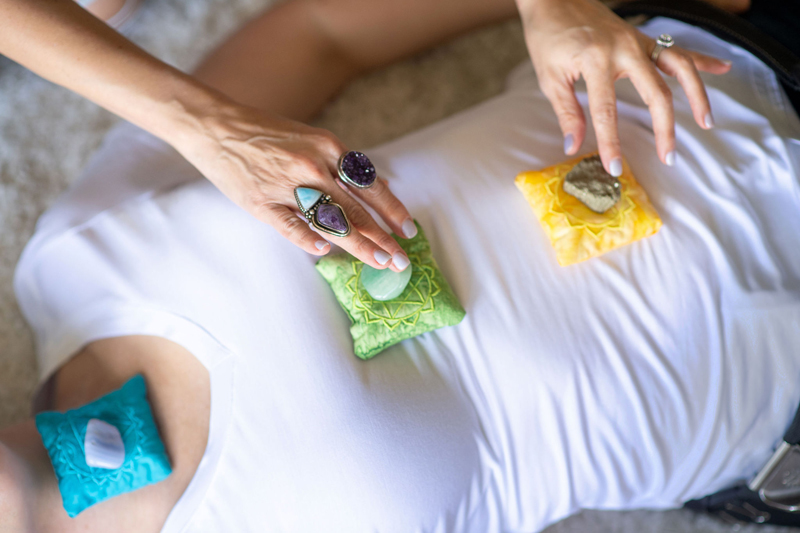
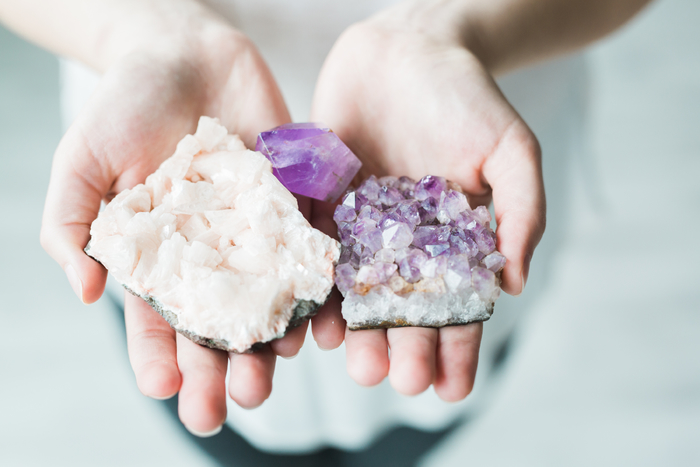
According to crystal practitioners, each of these energy centers vibrates at a specific frequency that mirrors corresponding light wavelengths. By introducing mineral specimens—such as an amethyst point for the third eye or green aventurine for the heart—into the body’s proximity, individuals seek to harmonize disrupted energetic patterns.
Chronology: From Ancient Roots to Modern Scientific Framing
The historical timeline of chakra systems spans thousands of years, originating in ancient Vedic texts and early Hindu spiritual traditions. For centuries, these concepts were understood purely through a metaphysical and philosophical lens.
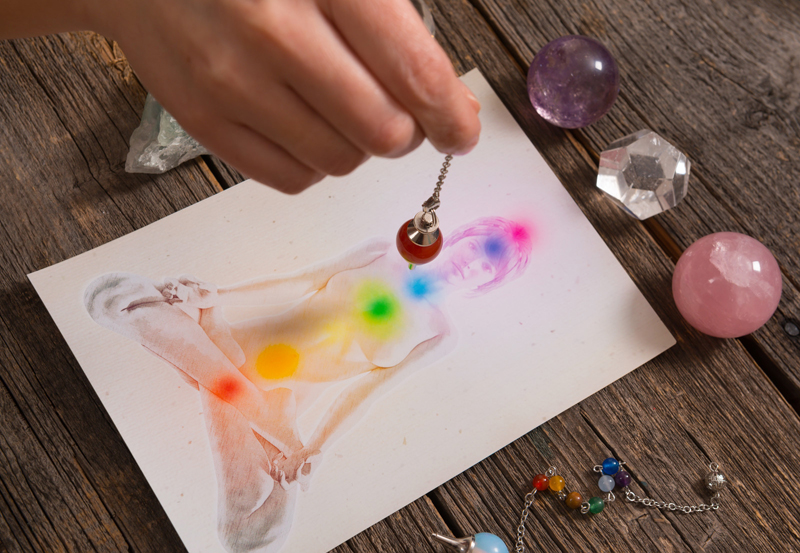
- Ancient Eras: Civilizations across India, Egypt, and indigenous cultures worldwide utilized stones, gems, and color therapy to treat physical ailments and spiritual blockages.
- Late 20th Century: The integration of Eastern esoteric concepts with Western holistic movements brought chakras into mainstream alternative health spaces, though largely isolated from empirical frameworks.
- Modern Era: In recent decades, holistic educators—particularly former science teachers and researchers—have begun framing these ancient practices through the lens of modern physics, specifically acoustics, electromagnetic radiation, and quantum mechanics, bridging the gap between mysticism and measurable scientific principles.
Supporting Data: The Physics of Entrainment and Vibrational Frequency
To understand the mechanics behind crystal healing, practitioners frequently point to established laws of physics—most notably, the principle of entrainment.
The Law of Entrainment
Entrainment is a universally observed physical phenomenon dictating that when two similar systems vibrating at different frequencies interact, the system with the higher amplitude (energy strength) will dominate and influence the one with the lower amplitude.
This is commonly demonstrated using acoustic tuning forks. When a tuning fork struck with significant force (high amplitude) is brought near a quiescent fork of the exact same frequency, the second fork begins to resonate and amplify its own sound without being directly struck.
Atomic Precision and Crystal Structure
In the context of wellness, human beings are complex biological organisms containing various chemical compounds, but we do not possess a uniform, geometrically perfect atomic lattice. Crystals, however, do.
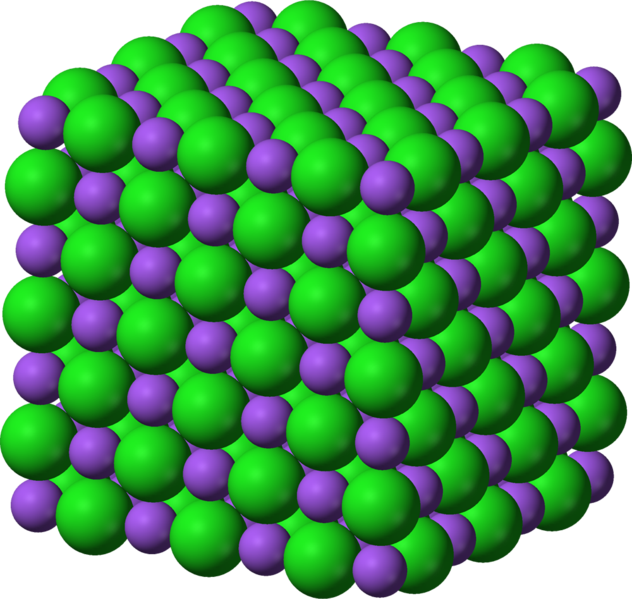
By definition, a crystal is a solid material whose constituent atoms, molecules, or ions are arranged in an orderly microscopic structure, creating a precise geometric lattice (such as the cubic lattice structure of sodium chloride or the trigonal system of quartz). Because of this unwavering structural perfection, natural crystals maintain a remarkably stable and higher-amplitude energy field.
When a crystal is placed on or near the human body, proponents argue that the body’s fluctuating, less-stable energy fields—often disrupted by stress, trauma, or environmental factors—entrain with the crystal’s stable frequency. This process theoretically encourages the corresponding chakra to return to its optimal, balanced vibrational state.
Furthermore, regarding the debate over whether colored stones reflect or absorb light, physics clarifies that the color visible to the human eye is precisely the light frequency being reflected outward. In crystal healing, this means the specific light wavelength is actively bathing the immediate environment of the chakra, supporting the concept of color therapy.
Official Responses and Expert Perspectives
While mainstream medical organizations, such as the American Medical Association (AMA), categorize crystal healing as a complementary or placebo-based practice lacking double-blind clinical trials, holistic practitioners highlight the pragmatic benefits observed in client case studies.
Many individuals engaged in long-term conventional psychotherapy for chronic anxiety, fear, or emotional blockages report accelerated breakthroughs when incorporating somatic and energetic practices, such as chakra clearing, into their routines.
Holistic educators emphasize that crystal work is not intended to replace traditional medical treatment or psychological counseling. Instead, it is positioned as a powerful, non-invasive complementary tool.
"While therapy remains a vital healing resource for many, working on balancing and clearing your chakras can have a tremendous positive impact," notes veteran crystal educator Hibiscus Moon. "In most instances when people incorporate targeted chakra work, emotional issues resolve with greater efficiency because we are addressing the energetic and biochemical state at its specific frequency."
Implications for Modern Integrative Wellness
The integration of crystal chakra healing into contemporary self-care routines signals a broader cultural shift toward holistic health models that value both subjective emotional well-being and empirical observation.
1. Enhanced Emotional Self-Regulation
By focusing on specific chakras, individuals can isolate particular emotional states—such as addressing feelings of fear through the root chakra or communication hurdles through the throat chakra. This structured approach simplifies mental health maintenance and self-reflection.
2. The Rise of Integrative Therapies
As patients increasingly seek multi-disciplinary approaches to wellness, integrative health clinics are becoming more open to complementary modalities. Practices like meditation, sound baths, and crystal alignment are frequently utilized as stress-reduction tools to support traditional medical care.
3. Increased Scientific Curiosity
The effort to explain ancient metaphysical practices through modern physics—such as electromagnetic spectrums and resonance—encourages a deeper public engagement with science, demonstrating that natural laws govern both the seen and unseen aspects of our universe.
As the 3-part series on crystal chakra healing continues, practitioners and enthusiasts alike are encouraged to explore these techniques with an open mind, balancing empirical curiosity with personal intuition.