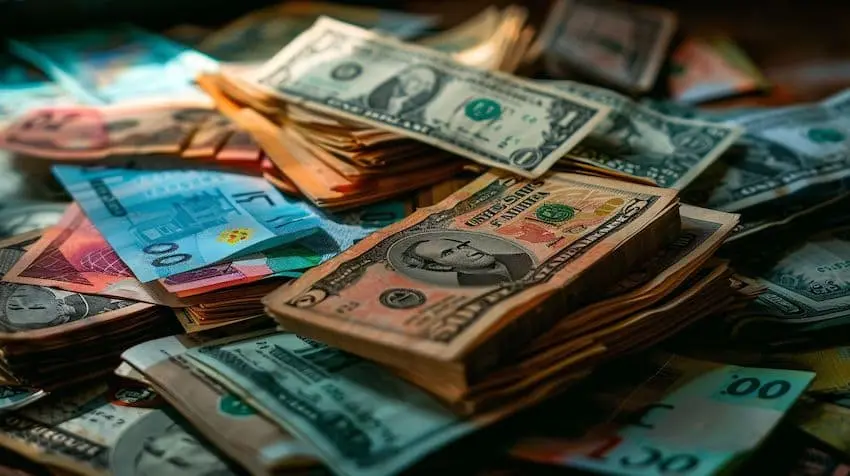
GLOBAL DESK — To millions of people worldwide, few nocturnal visions feel as vivid, enticing, or deeply anxiety-inducing as counting stacks of physical currency. Whether it is rustling through crisp paper bills, sorting glittering coins, or staring at a rapidly updating digital bank balance, the act of tallying wealth in a dream state has captivated human imagination for centuries.
While popular culture often reduces these nocturnal episodes to crude omens of impending lottery wins or financial ruin, modern depth psychology, archetypal analysis, and behavioral research suggest a far more intricate reality. According to experts, dreams about counting money rarely predict actual market fortunes. Instead, they serve as sophisticated mirrors reflecting our waking relationships with self-worth, personal power, emotional security, and the timeless human quest for stability.
Main Facts: What Do Money Dreams Actually Represent?
At its core, financial symbolism in dreams functions as a proxy for internal resources rather than external ledger entries. When a sleeping mind conjures images of wealth, it is generally processing underlying psychological states:
- Abundance Beyond Currency: Counting large sums frequently symbolizes an inner sense of prosperity, untapped creative potential, and confidence in one’s talents.
- The Anxiety of Scarcity: Conversely, endless counting or the fear of running short highlights feelings of vulnerability, inadequate support systems, or emotional burnout.
- Control and Agency: The physical act of handling money represents a psychological mechanism for maintaining order during periods of chaos or uncertainty in waking life.
- The Self-Worth Trap: Psychological research increasingly links financial dreams to how individuals measure their personal value against societal standards of success.
Chronology and Evolution of Dream Interpretation
Human fascination with the meaning of nocturnal visions has evolved significantly over time, transitioning from mystical divination to empirical psychological analysis.
Ancient and Mystical Traditions
In antiquity, dreams were widely interpreted as prophetic messages from the divine or ancestral realms. Financial symbols were often viewed literally. Dreaming of gold or abundant harvests predicted literal prosperity, while losing money foretold misfortune or the wrath of higher powers. Little distinction was made between the internal psyche and external reality.
The Freudian and Jungian Revolution
The landscape of dream analysis shifted dramatically in the late 19th and early 20th centuries. Sigmund Freud posited that dreams are the "royal road to the unconscious," serving as disguised fulfillments of repressed wishes. Later, Carl Jung expanded this framework by introducing collective archetypes—universal symbols embedded in the human psyche. Under Jungian psychology, money ceased to be merely a medium of economic exchange and became a powerful symbol of psychic energy, value, and power dynamics.
Modern Empirical and Behavioral Insights
In contemporary behavioral science, researchers approach dreams through the lens of memory consolidation and emotional regulation. Modern sleep laboratories utilize brain-imaging technology and qualitative journals to study how waking stressors—such as economic inflation, career instability, and personal self-esteem—metabolize into complex nocturnal narratives involving wealth and resource management.
Supporting Data: The Intersection of Money and Self-Esteem
To fully understand why money infiltrates our sleeping hours, researchers must examine how currency functions in waking psychological frameworks. Modern studies show a profound, often troubling connection between financial metrics and human identity.
The Danger of Conditional Self-Worth
Dr. Lora Park, an associate professor of psychology specializing in self and motivation, has extensively researched the psychological costs of tying personal identity to financial pursuits.
"People don’t often think of the possible downsides of wrapping their identity and self-worth around financial pursuits because our society values wealth as a model of how one should be in the world," Park observes.
When individuals equate their bank balances with their intrinsic human value, this pressure inevitably bleeds into the subconscious. Consequently, nightmares or stressful dreams about losing money often mask a deeper fear of losing one’s social standing, familial respect, or personal identity.
Empirical Evidence on Ego and Exchange
Adding empirical backing to these observations, psychology researcher Liqing Zhang notes the intricate mechanics governing how humans process value:
"Empirical evidence has shown that the meaning of money, situational need for money, self-esteem boost, and ego threat influence the exchange between money and self-esteem."
Zhang’s findings explain why individuals experiencing high-stress professional environments or sudden ego threats frequently report vivid dreams of counting, losing, or desperately searching for money. The sleeping brain is actively working to reconcile external pressures with internal validation.
Archetypal Energies and Symbols in Money Dreams
In Jungian psychology, money dreams frequently invoke powerful archetypal frameworks that govern human behavior, social exchange, and personal authority.
1. The Merchant Archetype
The Merchant governs the laws of value, trade, and fair exchange. When this archetype appears in dreams—manifested as counting currency, managing shop ledgers, or conducting bank transactions—it prompts the dreamer to evaluate fairness in their waking relationships. Are you giving as much emotional and professional energy as you are receiving?
2. The Ruler or King Archetype
The Ruler symbolizes authority, control, and systemic order. Dreams of handling massive stockpiles of wealth often reflect the Ruler archetype in action, signaling a primal desire to assert dominance over one’s environment, secure boundaries, and establish lasting stability.
3. The Magician Archetype
Representing transformation, ingenuity, and manifestation, the Magician links money to creative potential. This archetype reminds the dreamer that wealth—whether spiritual or material—is forged through resourcefulness, problem-solving, and the ability to turn challenges into viable opportunities.
Official Responses and Therapeutic Perspectives
Mental health professionals and holistic counselors increasingly incorporate dream analysis into therapeutic settings to help patients navigate hidden anxieties.
Bridging Material Desires and Spiritual Goals
Holistic practitioners emphasize that money dreams should not be dismissed as superficial or greedy. Instead, they offer a valuable roadmap for achieving life balance. Therapists often encourage clients to ask critical questions upon waking from a wealth-centric dream:
- Are you pursuing financial security out of genuine necessity, or are you chasing an external standard that leaves you emotionally unfulfilled?
- Does the act of counting money in the dream bring a sense of peace, or does it expose underlying panic?
By utilizing meditative practices and structured reflection, individuals can decode these nocturnal messages, separating genuine material goals from societal pressures.
Practical Steps to Harness Dream Insights
Transforming fleeting nocturnal memories into actionable self-awareness requires consistency and method. Experts recommend a five-step approach to decoding financial dreams:
- Maintain a Dedicated Dream Journal: Keep a notebook immediately beside your bed. Record every sensory detail—the texture of the bills, the sound of coins, the emotional tone—the moment you wake up before memory fades.
- Identify Recurring Patterns: Look for trends over weeks and months. Do these dreams occur exclusively during high-stress periods at work or prior to major financial decisions?
- Analyze the Emotional Undercurrent: Separate the physical object (money) from the feeling (safety, panic, power, inadequacy). The emotion is the true message of the dream.
- Evaluate Waking Boundaries: Use insights from the "Merchant" archetype to assess whether your personal and professional relationships involve fair, reciprocal exchanges of energy.
- Practice Mindfulness and Meditation: Counteract anxiety-driven nocturnal loops by grounding yourself in the present moment, recognizing that true self-worth is independent of external ledger sizes.
Decoding Specific Dream Scenarios
Counting Large Sums of Money
Seeing or stacking vast amounts of cash rarely predicts an overnight financial windfall. Rather, it signifies a psychological milestone: you are aligning with a sense of personal freedom, confidence, and self-worth. It represents feeling "rich" in spirit, resourcefulness, and emotional maturity.
Encountering Counterfeit or Fake Money
Discovering that the money you have been counting is fake serves as a stark subconscious warning. It points to feelings of deception, whether from external sources in your career or relationships, or internal self-deception regarding your true life priorities. It asks the dreamer: What unfulfilling path am I currently pursuing?
Handling Paper Bills vs. Coins
- Paper Bills: Typically symbolize large-scale responsibilities, long-term planning, and how you evaluate personal achievements or social recognition.
- Coins: Represent incremental growth, minor victories, and the compounding value of small, consistent efforts over time.
Implications
Ultimately, dreams about counting money transcend the simple mechanics of personal finance. They act as sophisticated barometers for our psychological health, measuring the delicate equilibrium between our need for security, our desire for personal power, and our quest for authentic self-worth. By listening to these nocturnal messages rather than brushing them aside, individuals can gain profound insights into their deepest motivations, paving the way for a more balanced, self-aware, and emotionally prosperous life.