








By Lauren Parker | Opinion & Analysis
Published September 4, 2026
Main Facts: The Intersecting History of Witchcraft and Labor
To the modern outsider, contemporary witchcraft is often romanticized through the lens of esoteric aesthetics, crystals, and solitary spellcasting. Yet, for practitioners embedded in the realities of working-class survival, magic has always been inextricably linked to labor. The true practice of witchcraft—historically and presently—is rarely found in grand temples or ivory towers; rather, it is discovered in the desperate, creative acts required to stretch a packet of ramen noodles to the end of the month, secure a precarious job, or protect a community from institutional precarity.
As communities approach American Labor Day, the parallels between the historical persecution of witches and the ongoing suppression of the working class demand critical examination. Historically, witchcraft—both the acts performed and the accusations leveled—came down to the perceived villainy of independent action. Displaying too much autonomy, refusing to submit to rigid hierarchies, or existing outside traditional structures could place an individual in a lethal relationship with the governing authorities. This dynamic closely mirrors the historical criminalization of labor organizing, unionizing, and working-class solidarity.
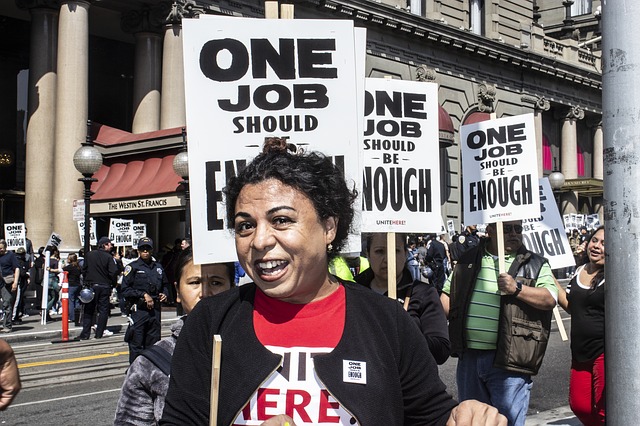
Today, only about 10% of the American workforce is unionized, with the majority of those positions concentrated in the public sector—teachers, librarians, and protective service workers. These budgets face perennial cuts masquerading as fiscal responsibility. From a historical and sociological perspective, the modern working class is frequently mischaracterized through a narrow, gendered lens. Cultural narratives often reduce the concept of the "American worker" to industrial production roles—typically male, heavy-industry jobs focused on expansion.
This narrow focus erases the vast expanse of labor centered on maintenance, caregiving, and community survival: teaching, nursing, domestic work, and dishwashing. Witchcraft folklore has always inhabited this exact sphere of domestic subversion. Historical "witches"—cunning folk, midwives, herbalists, and local eccentrics—were fundamentally laborers providing essential community care.
Chronology: From the Haymarket Affair to Modern Labor Precarity
Understanding the intersection of witchcraft and labor requires tracing the intentional suppression of worker power in American history.

- The Late 19th Century and the Haymarket Affair: The origins of American Labor Day are deeply intertwined with state-sanctioned crackdowns on labor activism. Following successful strikes for the eight-hour workday, the Haymarket Affair in Chicago (1886) resulted in police firing into a crowd of striking workers, turning the struggle for labor rights into a battlefield paid for with blood and death.
- The Shift to September: Fearing that International Workers’ Day (May Day) would permanently link American laborers with the anarchistic and socialistic movements sparked by Haymarket, President Grover Cleveland strategically pushed to establish Labor Day in September. This move effectively decoupled the American labor holiday from its radical, global roots.
- The Early 20th Century: Throughout the early 1900s, grassroots folklore continued to document the integration of survival magic with employment. Historical texts, such as the 1935 collection Folk-Lore from Adams County, Illinois, reveal entire categories of folk magic dedicated to finding work, maintaining employment, and ensuring safety in hazardous industrial conditions. For impoverished communities unable to afford legal or institutional remedies, magic served as a practical mechanism of self-reliance.
- The Mid-Century Industrial Struggles: Landmark labor conflicts, such as the Battle of Blair Mountain, demonstrated the lethal lengths to which corporate and government entities would go to crush organized labor. Workers and marginalized magic-users alike faced systematic eradication whenever their collective power threatened the established hierarchy.
- The Contemporary Era: In the 21st century, the structural assault on labor has evolved into sophisticated surveillance, the gutting of public budgets, and the promotion of consumer-driven isolation. Yet, contemporary magical practitioners continue to find ways to merge esoteric traditions with direct, community-based mutual aid.
Supporting Data: The Shrinking Commons and the Rise of Precarity
Quantitative data from labor statistics and sociological studies underscore the precarious state of the modern working class:
- Union Density: According to data from the U.S. Bureau of Labor Statistics (BLS), union membership hovers near historic lows at roughly 10% of the American workforce.
- Public Sector Concentration: The remaining bastions of organized labor are heavily concentrated in public education, libraries, and municipal services—sectors that are routinely targeted for budget reductions and political scapegoating.
- The Myth of Consumer Self-Care: Modern capitalist structures heavily promote a sanitized version of "self-care" centered on purchasing and consumption. This consumerist model actively discourages resourceful, collective behavior. As Parker notes, the prevailing societal messaging dictates that it is "better to be resourced than resourceful, because if we’re resourceful, we’ll team up and become a force."
- Folklore as Historical Record: Archival collections, such as those housed in the Labor Archives of Washington State and the Museum of Witchcraft and Magic in Boscastle, Cornwall, preserve the material culture of "cunning folk" and working-class organizers alike, proving that marginalized communities have always relied on localized networks of mutual aid to survive.
Official Responses and Institutional Perspectives
Establishment institutions—spanning economic policymakers, corporate lobbies, and government entities—have historically maintained a binary view of power that penalizes independent resourcefulness.
- The Deification of Capital: Mainstream economic philosophy frequently treats capital accumulation as an absolute good, framing systemic poverty as an individual moral failing rather than a structural design. Institutional messaging encourages atomization, steering individuals toward retail consumption rather than collective organization.
- The Criminalization of Autonomy: Throughout history, state and religious authorities have framed non-compliance, unorthodox healing practices, and unauthorized labor organizing as existential threats. Whether through anti-witchcraft statutes in early modern Europe or anti-union injunctions during the Gilded Age, the apparatus of the state has consistently mobilized to protect property over people.
- Modern Civic Pushback: In response to top-down austerity measures, community groups, grassroots activists, and spiritually minded organizers are increasingly clashing with local governments. From opposing the installation of automated surveillance systems (such as FLOCK cameras) and fighting the construction of invasive data centers, to offering sanctuary and support against Immigration and Customs Enforcement (ICE) actions, modern workers and practitioners are actively reclaiming local autonomy.
Implications: The Witch as a Worker in the 21st Century
The convergence of witchcraft and labor carries profound implications for how marginalized communities resist contemporary authoritarianism and economic exploitation.

1. Witchcraft as Direct Service
Magic is frequently misunderstood as an escape from reality. In practice, however, historical and modern witchcraft functions as a direct service position. Whether it is a local practitioner utilizing divination to help neighborhood pets find their way home, herbalists providing accessible healthcare, or community members organizing mutual aid networks, the archetype of the witch is fundamentally rooted in neighborly responsibility.
2. Resisting the Myth of Isolation
Under modern political pressures—often described by commentators as creeping fascism—workers and witches are targeted with similar intensities because both groups represent alternative centers of gravity outside corporate control. Workers derive power from numbers and collective need; witches derive power from collective participation, local trust, and shared folklore.
3. A New Call to Community Care
As this Labor Day demonstrates, the struggles of the past echo directly into the present. The legacy of Blair Mountain and the Haymarket Affair reminds us that rights are won through collective sacrifice, not passive compliance. For modern practitioners, redefining spiritual practice means stepping out of insular magical circles and engaging in the exhausting, essential work of being a good neighbor.

By funding libraries, defending social programs, protecting local ecosystems, and practicing uncompromising mutual aid, the modern witch embodies an ancient truth: in an increasingly paranoid and fragmented world, community care is the ultimate spell for survival.
For further discussion on this topic, readers can visit The Wild Hunt subreddit community to engage with fellow practitioners and analysts.