By the News Desk
Published: August 28, 2026
Main Facts: The Passing of a Cultural Icon
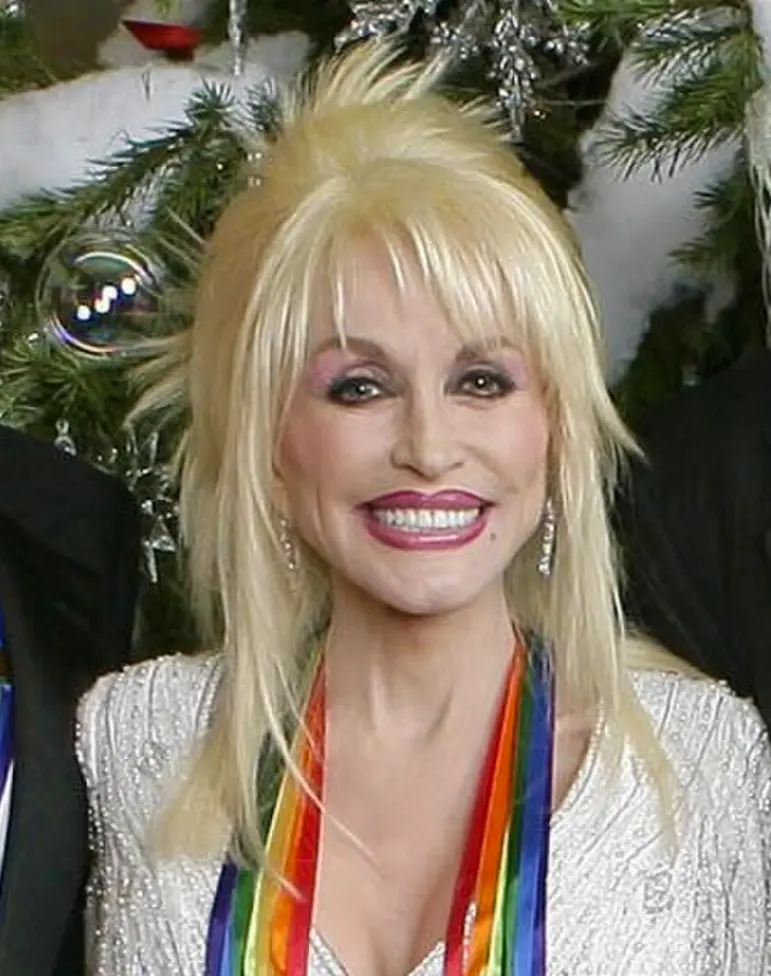
The global cultural landscape shifted fundamentally following the announcement of the death of legendary singer-songwriter, philanthropist, and cultural touchstone Dolly Parton. The news sent immediate shockwaves across international media platforms, inspiring an unprecedented outpouring of public grief, impromptu memorials, and deeply personal tributes.
Among the many voices reflecting on her monumental legacy is author, clergy member, and occult historian M. Belanger. In a poignant guest essay shared with The Wild Hunt, Belanger examined the complex grief experienced by millions worldwide who never met Parton personally yet felt her loss with devastating intimacy.
Parton’s death marks the end of an era defined by radical, unpretentious kindness. Unlike many public figures whose influence is bound strictly to entertainment, Parton’s impact was structural, tactile, and thoroughly documented. From her foundational role in advancing childhood literacy through the Dollywood Foundation’s Imagination Library—which has distributed hundreds of millions of books globally—to her quiet, steadfast advocacy for marginalized communities, Parton functioned as a secular saint for a cynical age.
Her passing leaves a profound vacuum in a cultural climate currently saturated by corporate greed, social polarization, and high-profile figures utilizing power for self-interest. For communities often marginalized by mainstream institutions, such as the 2SLGBTQIA+ community, the loss is felt with particular sharpness. Parton was a vocal, early ally who modeled not just tolerance, but exuberant celebration, inclusion, and joy.
Chronology: A Legacy of Unwavering Compassion
To understand the magnitude of the global reaction to Parton’s death, one must examine the timeline of a life dedicated to breaking barriers and building bridges:
- 1946: Dolly Rebecca Parton is born into poverty in Locust Ridge, Tennessee, the fourth of twelve children. Her upbringing in the Great Smoky Mountains profoundly shapes her musical aesthetic and lifelong empathy for working-class families.
- 1967–1970s: Parton rises to prominence in the country music scene, first as a duet partner with Porter Wagoner and subsequently as a solo artist. She takes unprecedented control of her career, writing her own songs—including the timeless classic "I Will Always Love You."
- 1980s: Expanding her empire into film and television, Parton stars in 9 to 5, cements her status as a pop-culture icon, and quietly begins channeling her wealth into regional economic development, creating jobs and tourism in East Tennessee through Dollywood.
- 1990: Amidst a shifting socio-political landscape, Parton demonstrates visionary allyship, employing openly trans individuals and consistently advocating for queer communities long before corporate allyship became fashionable.
- 1995: Parton launches the Imagination Library, a visionary literacy program designed to mail free books to children from birth until they enter school. The initiative expands internationally, fundamentally altering educational outcomes for millions of children.
- 2000s–2020s: Parton continues her prolific output, receiving numerous honors—including the Kennedy Center Honors in 2006—while maintaining a reputation for non-partisan philanthropy, funding medical research (including significant contributions to COVID-19 vaccine development), and consistently choosing empathy over division.
- August 2026: Parton passes away, triggering an immediate, global wave of public mourning that bridges generational, political, and cultural divides.
Supporting Data: The Measurable Impact of Dolly Parton
While Parton’s cultural footprint is often measured in chart-topping singles and glittering stage presence, her legacy is anchored in hard data and verifiable philanthropic milestones:
- Literacy Reach: Through the Imagination Library, over 200 million books have been distributed to children across the United States, Canada, the United Kingdom, Australia, and the Republic of Ireland.
- Economic Uplift: Dollywood and its surrounding properties employ thousands of individuals in Sevier County, Tennessee, transforming a historically economically depressed Appalachian region into a thriving tourist and economic hub.
- Disaster Relief: Through her My People Fund, Parton personally and organizationally distributed millions of dollars to families who lost their homes in the devastating 2016 Gatlinburg wildfires.
- Scientific Contribution: In 2020, Parton’s $1 million donation to Vanderbilt University Medical Center directly aided in the early-stage research that helped fund the Moderna COVID-19 vaccine.
- Cross-Demographic Appeal: Public opinion polling consistently ranks Parton as one of the most universally beloved public figures in modern history, maintaining high favorability ratings across diverse political lines, religious affiliations, and age demographics.
Official Responses and Public Outpouring
The announcement of Parton’s death prompted statements from world leaders, musicians, activists, and cultural institutions alike. Yet, the most striking responses occurred organically on the ground.
In cities and small towns alike, local businesses played her catalog on a loop. Spontaneous shrines materialized overnight on telephone poles, storefront windows, and park benches. Tributes featured hand-lettered signs, photographs printed from home computers, silver star stickers, ribbons, and mylar balloons—traditional markers of grief that evolved into grassroots memorials.
M. Belanger noted this phenomenon in their tribute, writing:
"When I went out later in the afternoon, every shop I stepped into was playing her music. There were already signs in windows, hand-lettered and heartfelt… Everyone seemed touched by this. I don’t think most of us expected it. I don’t mean her death. I mean this reaction to it."
Advocacy groups, particularly within the 2SLGBTQIA+ community, highlighted Parton’s unwavering solidarity. Long before political safety allowed for mainstream corporate pride campaigns, Parton embraced queer individuals with open arms, famously stating that everyone deserved to be loved and accepted for who they are. Drag artists, transgender advocates, and queer youth took to social media to share stories of how Parton’s visibility provided a beacon of hope in hostile political climates.
Implications: Ancestor Veneration, Shrines, and the Pagan Perspective
The nature of the grief surrounding Dolly Parton’s passing opens up a deeper sociological and spiritual question: How does a secularized society process the loss of someone who functioned as a moral and cultural anchor?
Modern Western culture often struggles to contextualize parasocial grief. In the absence of traditional mythic heroes or widespread institutional canonization of saints, individuals frequently anchor their emotional investments in celebrities, influencers, and media franchises. However, as Belanger observes, the death of a figure of Parton’s magnitude transcends ordinary celebrity worship. It touches upon something primordial.

For minority religious traditions, such as contemporary Paganism, the spontaneous creation of shrines, the leaving of tokens, and the deep emotional resonance of the loss mirror ancient religious practices. Belanger writes:
"I think folks who are constrained by secularism or whatever Christianity has currently become will struggle more than most. I know, for myself, the feelings inspired by Dolly’s passing remind me why our forebears practiced ancestor veneration. Those hand-lettered signs, the balloons and ribbons folks quickly put up: they might not recognize them as altars and shrines, but, as Pagans, we know."
A Legacy Beyond Mortality
The implications of Parton’s departure force a collective reckoning with the state of contemporary culture. In an era where power is frequently wielded to divide, Parton demonstrated that cultural influence could be leveraged for radical gentleness, generosity, and unyielding grace.
As communities continue to mourn, the prevailing sentiment is not merely one of sorrow, but of inspiration. Pagans, secular humanists, Christians of deep mystical conscience, and queer communities alike find themselves tasked with a singular challenge: to carry forward the light she left behind.
In the words of M. Belanger:
"We process the death of someone like Dolly by allowing ourselves to be inspired by her life. To hear her wisdom. To celebrate her art. And, most importantly, to let the life she lived inspire us in the living of our own. To a life well-lived. We will never see another like her."