Global Tech Desk — Artificial intelligence is no longer confined to the theoretical domains of computer science labs or the speculative pages of science fiction. Operating quietly on localized consumer hardware, modern AI pipelines are executing complex creative production, deep research, and high-level administrative work at a fraction of the cost and time historically required. Yet, despite mounting evidence of widespread workforce restructuring, a profound sense of denial persists among both the general public and the credentialed professional class.
As automated systems absorb desk jobs, customer service roles, and creative production, analysts warn that the transition from human-driven labor to algorithmic execution is accelerating faster than society’s collective willingness to confront it.
Main Facts: The Reality of Localized AI and Workforce Restructuring
The capabilities of artificial intelligence have shifted dramatically over the past twelve months. What once required enterprise-level cloud infrastructure and multi-million-dollar budgets can now be executed on local desktop workstations.
- Desktop Production: Creators are now generating complex, multi-shot visual media locally on consumer hardware, bypassing traditional animation pipelines and studio overhead.
- Autonomous Engineering: AI models are increasingly writing code, optimizing their own training loops, and accelerating reinforcement learning. Automated systems are beginning to assist in chip design, cutting multi-year engineering cycles down to months.
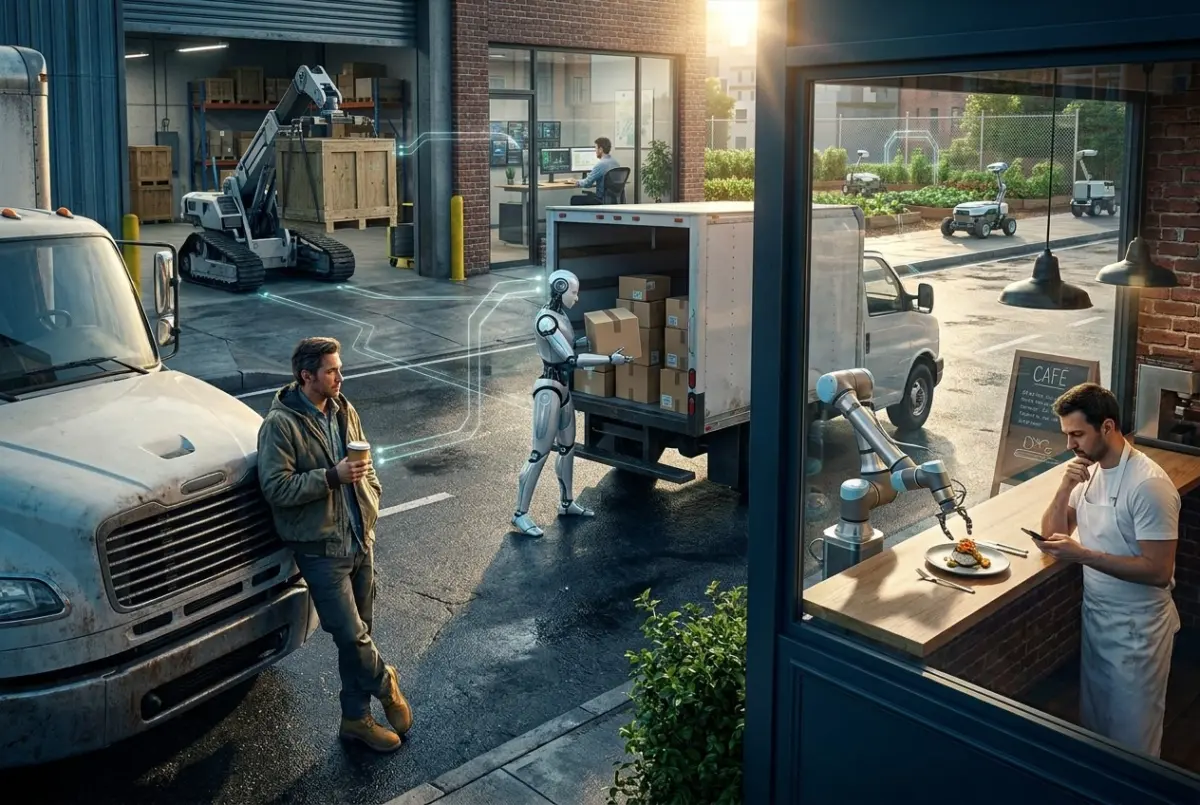
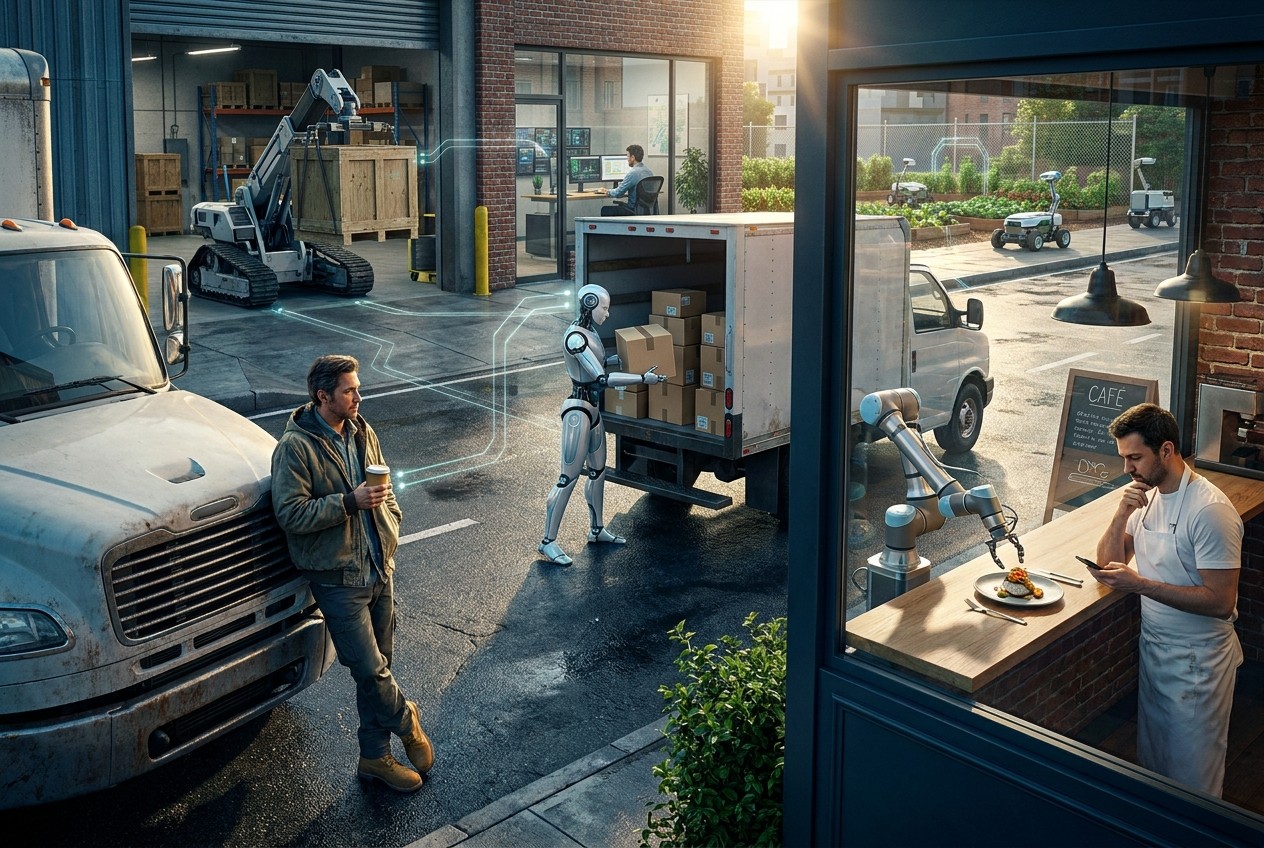
- White-Collar and Blue-Collar Integration: Autonomous agents and software tools are absorbing routine cognitive labor—including legal research, accounting, translation, and data analysis. Simultaneously, physical automation is advancing through humanoid robotics and tactile warehouse systems designed to handle complex physical environments.
Despite these demonstrable leaps, widespread psychological denial remains. Observers note that because software-based replacement is largely invisible—occurring via quiet contract terminations and unrenewed assignments rather than factory closures—many professionals severely overestimate their immunity to technological displacement.
Chronology: The Acceleration of the AI Shift
The timeline of AI deployment has contracted from decades to months, characterized by sudden capability milestones and subsequent corporate adoption.
- Late 2023 to Early 2024: Generative models transition from basic text-prediction engines to complex pattern-matching and reasoning tools, sparking early debates regarding copyright, creative labor, and economic impact.
- Mid 2024: Open-source and localized models gain significant traction, allowing developers and creators to run advanced reasoning engines directly on personal hardware without relying on centralized cloud services.
- Late 2024 to 2025: Major corporations begin restructuring en masse. High-profile layoffs sweep through tech, media, logistics, and retail sectors, with companies explicitly citing "AI-first development" and automation initiatives as core drivers for operational streamlining.
- 2026 and Beyond: Hardware integration accelerates. Humanoid robotics move from controlled corporate testing environments toward real-world deployment in logistics, delivery, and manufacturing sectors, making physical automation visible to the public.
Supporting Data: The Metrics of Automation
The economic impact of this technological shift is reflected in corporate restructuring data across multiple industries:
- Corporate Layoffs: Major logistics and technology firms have implemented massive workforce reductions. Instances include large-scale reductions at Amazon (affecting tens of thousands of roles globally, including dedicated AI-first restructuring in media and engineering) and substantial cuts by delivery and financial services giants.
- Labor Projections: Independent economic and industry forecasts estimate that a significant percentage of routine white-collar administrative tasks and predictable physical labor roles will face direct automation pressure within the decade.
- Hardware Costs: The cost-per-inference and hardware requirements for running sophisticated local models have dropped exponentially, democratizing access to high-tier cognitive tools and shifting power away from traditional gatekeepers.
Official Responses and Perspectives
The rapid advancement of artificial intelligence has elicited starkly contrasting responses from industry leaders, economists, and policymakers.
- Calls for Regulation: High-profile figures within the technology sector have increasingly voiced concerns over the raw power and societal disruption posed by unmitigated AI scaling. Warnings regarding systemic disruption have prompted calls for increased oversight, legal frameworks, and compliance monitoring.
- The Globalist Economic Perspective: Some institutional analysts and economic planners argue that declining birth rates and aging populations in developed nations make the adoption of AI and robotics an economic necessity to maintain productivity levels amid shrinking human workforces.
- The Independent Response: Critics of centralized tech monopolies advocate for the decentralization of AI tools. Emphasizing open-source, locally run models, independent developers argue that individuals must adopt and control AI infrastructure independently to avoid forced dependency on centralized surveillance and automated economic control grids.
Implications: Preparing for the Post-Labor Economy
The convergence of advanced cognitive AI and physical robotics signals a fundamental restructuring of human society. As the value of routine cognitive labor trends downward, the implications for employment, education, and individual sovereignty are profound.
The Vulnerability of the Credentialed Class
Historically, advanced degrees and professional licenses provided a protective moat against automation. However, because modern AI excels at pattern recognition, data synthesis, legal drafting, and diagnostic analysis, highly credentialed fields—such as medicine, law, and accounting—are among the most exposed. The assumption that expertise is inherently uncopiable remains one of the primary drivers of professional complacency.
The Need for Pro-Active Adaptation
Experts and independent technologists argue that denial and resistance are ineffective strategies against technological momentum. Instead, adaptation requires:
- Skill Diversification: Learning to leverage generative tools for personal productivity and independent enterprise.
- Infrastructure Ownership: Utilizing local, open-source models rather than relying exclusively on centralized Big Tech ecosystems.
- Decentralized Resilience: Building independent knowledge bases, off-grid capabilities, and community-level resources to navigate labor market shifts.
Ultimately, the transition toward an automated economy forces a re-evaluation of human utility, economic security, and technological governance. Whether this shift empowers individuals or centralizes corporate control will depend heavily on the choices made by society during this critical window of transition.