Introduction: The Battle Lines of Modern Medical Governance
In the realm of contemporary public health, few topics generate as much intense debate, polarization, and institutional defense as childhood immunization schedules. For decades, the official medical consensus has maintained that routine childhood vaccines are uniformly safe, remarkably effective, and essential to maintaining herd immunity against historically devastating infectious diseases. However, a growing body of independent researchers, concerned parents, and policy reformers are challenging this narrative, arguing that the foundational science supporting modern vaccine policies has been heavily guarded against rigorous, independent critique.
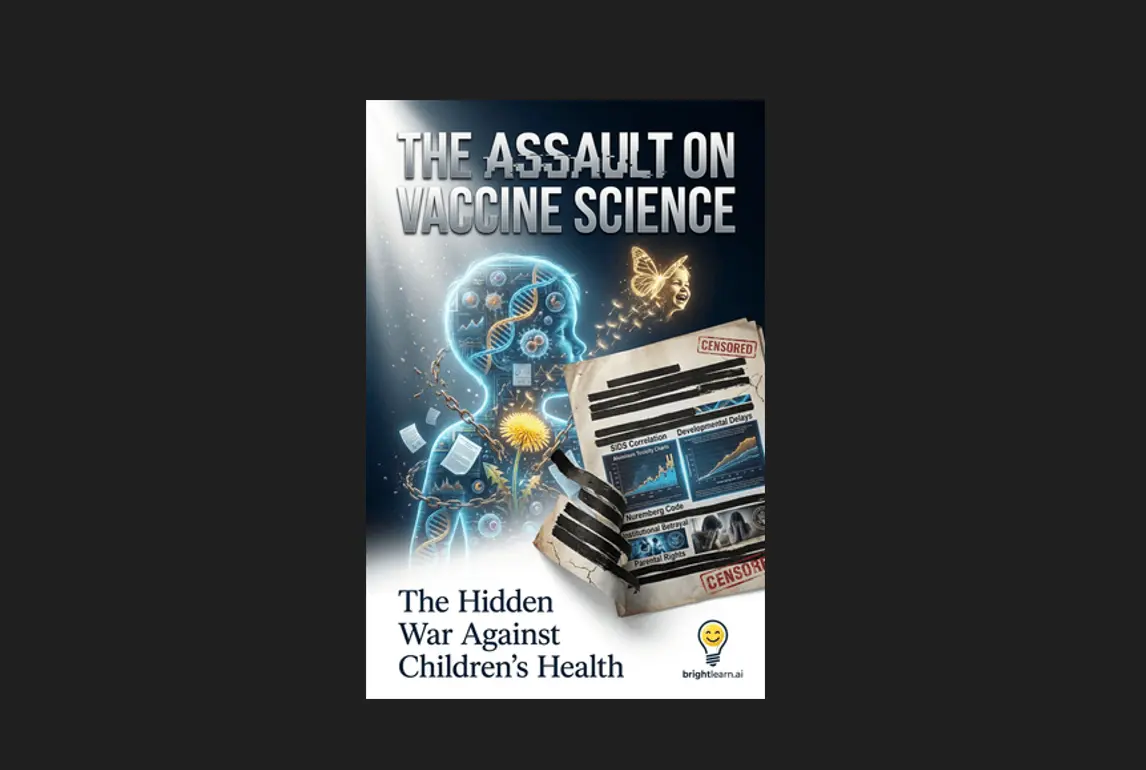
A comprehensive new work, "The Assault on Vaccine Science: The Hidden War Against Children’s Health," brings these controversies into sharp focus. The book purports to examine the systemic suppression of dissenting research, the bureaucratic hurdles faced by reformers within federal health agencies, and the cumulative physiological impact of environmental toxins paired with modern injection schedules.
While public health agencies continue to emphasize the benefits of high vaccination rates, this publication—along with accompanying interviews featuring researchers like Brian Hooker on the Health Ranger Report—has reignited a contentious national conversation regarding institutional transparency, informed consent, and the urgent need for independent safety evaluations. This article provides an extensive review of the evidence, the historical chronology of key studies, the supporting data presented by critics, official responses from regulatory bodies, and the broader implications for the future of public health policy.
Chronology of Contested Science: Key Studies and Institutional Responses
To understand the current friction between independent researchers and institutional bodies, one must examine the timeline of specific studies that have challenged the orthodox view of vaccine safety, along with the subsequent actions taken by academic journals and regulatory agencies.
1. The Neil Miller SIDS Study (2020)
- The Finding: In 2020, researcher Neil Miller published a paper in Toxicology Reports analyzing data from the federal Vaccine Adverse Event Reporting System (VAERS). His focus was the temporal relationship between routine infant vaccinations and Sudden Infant Death Syndrome (SIDS). The findings revealed a striking statistical concentration: approximately 50% of all SIDS cases reported in the dataset occurred within just three days of vaccination, and 75% occurred within one week.
- Statistical Significance: Critics of current safety monitoring argue that if SIDS were entirely random and unrelated to the timing of medical interventions, only a small fraction (roughly 2% to 3%) of cases would statistically fall within a localized three-day window.
- The Response: Rather than prompting an immediate, transparent investigation by public health authorities, the paper faced intense scrutiny. It was subjected to coordinated critiques on platforms like PubPeer. Ultimately, the journal bypassed standard formal retraction protocols, introducing a novel category termed "removed"—an action critics describe as an administrative maneuver designed to expunge uncomfortable data without standard peer-review debate.
2. The Hooker-Miller Developmental Delays Study
- The Finding: A peer-reviewed study conducted by Hooker and Miller investigated health outcomes among vaccinated versus unvaccinated children. The paper reported elevated relative risks for developmental delays, asthma, chronic ear infections, and gastrointestinal issues among vaccinated cohorts.
- The Response: The study remained accessible in the literature for six years, accumulating nearly 300,000 downloads. However, following a later wave of organized criticism and online pressure campaigns, the publishing journal issued a formal "notice of concern," signaling potential full retraction.
3. The Poul Thorsen Controversy
- The Contrast: In stark contrast to the swift administrative removal or demotion of studies linking vaccines to adverse outcomes, critics frequently highlight the prolonged retention of papers authored by Poul Thorsen. Thorsen, a prominent researcher whose work has historically been cited to support the safety of the mercury-based preservative thimerosal, was later indicted for the alleged embezzlement of over a million dollars in CDC research funds. Despite fleeing the jurisdiction and subsequent extradition efforts, his foundational papers remain embedded in the scientific literature, creating what independent analysts describe as a profound double standard in how scientific integrity is policed.
Supporting Data: Examining the Mechanics of Toxicity
Beyond specific epidemiological studies, "The Assault on Vaccine Science" delves into the physiological environment in which modern vaccines are administered, highlighting the compounding effects of chemical exposures and adjuvant burdens.
The Aluminum Adjuvant Burden
Aluminum-based adjuvants are added to vaccines to stimulate a more robust immune response. According to federal recommendations, an infant may receive over 1,000 micrograms of aluminum during the first 18 months of life via routine immunizations.
- The Regulatory Gap: Critics point out that the U.S. Food and Drug Administration (FDA) has never established a definitive, rigorous safety threshold for injected aluminum in infants. Historical safety margins were primarily calculated for oral ingestion, where the human digestive tract functions as a natural barrier, filtering out a significant portion of ingested metals.
- Bypassing Natural Defenses: When injected directly into muscle tissue, aluminum bypasses these primary physiological barriers, entering the interstitial fluid and potentially traveling via macrophages into the central nervous system. Independent researchers argue that the cumulative neurodevelopmental risks of this practice require urgent, contemporary investigation.
Environmental Synergies: Glyphosate and Microbiome Disruption
The book also contextualizes vaccination within a broader toxicological framework, examining how modern diets may compromise an infant’s baseline health.
- Glyphosate, the primary active ingredient in widespread herbicides like Roundup, is frequently detected in conventional grain-based foods.
- Researchers argue that glyphosate acts as a mineral chelator, depleting essential biological minerals such as zinc and magnesium, while disrupting the gut microbiome. This disruption can lead to increased intestinal permeability ("leaky gut") and systemic chronic inflammation, theoretically leaving a child’s immune system hypersensitive or compromised before they receive their scheduled immunizations.
The Captured State: Bureaucratic Resistance and Internal Reform
One of the most politically sensitive sections of the ongoing debate concerns attempts to reform federal health agencies from within. The administrative challenges faced by leadership figures attempting to audit vaccine safety databases have drawn intense scrutiny from journalists and government watchdogs.
Internal Bureaucracy and Data Access
When high-profile reformers assumed leadership roles within agencies such as the Department of Health and Human Services (HHS), their stated objectives were relatively straightforward: mandate independent, placebo-controlled vaccine safety studies, ensure transparency in CDC advisory committee proceedings, and eliminate financial conflicts of interest among panel members.
However, these policy goals encountered immediate friction from career bureaucrats. Documented accounts allege that agency officials engaged in institutional "shell games" regarding access to raw datasets, such as the Vaccine Safety Datalink (VSD). Reports of officials misleading executive leadership regarding the availability or status of safety data highlight a growing concern among critics: that the administrative state has evolved into an insular, unaccountable entity that prioritizes the institutional protection of pharmaceutical policies over transparent public oversight.
Official Responses and the Mainstream Consensus
To maintain journalistic balance, it is critical to examine the counterarguments and official positions held by mainstream public health institutions, including the Centers for Disease Control and Prevention (CDC), the American Academy of Pediatrics (AAP), and the World Health Organization (WHO).
- Robust Surveillance Systems: Mainstream public health bodies maintain that vaccines are among the most rigorously tested medical products in history. Agencies rely on massive, population-wide databases—such as the Vaccine Safety Datalink and the Clinical Immunization Safety Assessment (CISA) network—to monitor safety signals continuously.
- Rejection of SIDS and Autism Links: Major health organizations have repeatedly reviewed and dismissed claims connecting vaccines to SIDS, autism, and autoimmune disorders. Institutional bodies argue that large-scale, international epidemiological studies involving millions of children have consistently found no credible link between immunization schedules and these conditions.
- Defense of Retractions: Regarding the retraction or questioning of controversial papers, academic publishers and scientific committees maintain that self-correction is a vital feature of the scientific method. When methodological flaws, data misinterpretations, or conflicts of interest are identified post-publication, journals assert an ethical obligation to issue corrections, expressions of concern, or retractions to protect the integrity of the medical literature.
Implications for Public Health, Ethics, and Parental Rights
The ongoing debate over vaccine science extends far beyond laboratory statistics and bureaucratic infighting; it strikes at the heart of medical ethics, individual liberty, and the future of public health communication.
The Nuremberg Code and Informed Consent
A central tenet of the medical freedom movement is the strict adherence to the Nuremberg Code, the post-World War II international ethical standard establishing that voluntary, fully informed consent is absolutely essential for any human medical experimentation or intervention. Critics of vaccine mandates argue that tying employment, educational access, and social participation to mandatory vaccination status constitutes coercive pressure, thereby invalidating the principle of voluntary informed consent.
Shifting Toward Proactive Health and Grassroots Advocacy
Rather than relying solely on top-down mandates, the discourse surrounding books like "The Assault on Vaccine Science" encourages a decentralized, grassroots approach to wellness. This includes:
- Educating parents on legal medical and religious exemption processes.
- Fostering community-led health initiatives focused on nutrition, sleep, microbiome support, and lifestyle factors.
- Supporting legal and advocacy groups dedicated to challenging institutional censorship in court.
Conclusion
The controversy surrounding vaccine safety, institutional transparency, and regulatory reform is unlikely to subside in the near future. Whether viewed as a necessary re-evaluation of outdated safety assumptions or as a challenge to established, life-saving public health infrastructure, the debate underscores a profound erosion of public trust in expert-led institutions. Restoring confidence will require unprecedented transparency, open scientific debate unhindered by censorship, and a willingness by regulatory bodies to address legitimate public safety concerns with rigorous, unbiased science.