By Environmental Desk
Published: Updated Insights on Sustainable Living
Main Facts
For decades, well-meaning environmental campaigns have hammered home a singular message of personal conservation: if you want to save the planet, turn off the tap. From municipal PSAs to eco-blogs, consumers are routinely advised to shave two minutes off their daily showers to combat water scarcity.
While well-intentioned, this advice targets a fraction of domestic water usage while ignoring the invisible, colossal water footprints embedded in everyday consumer habits—most notably, our diets.
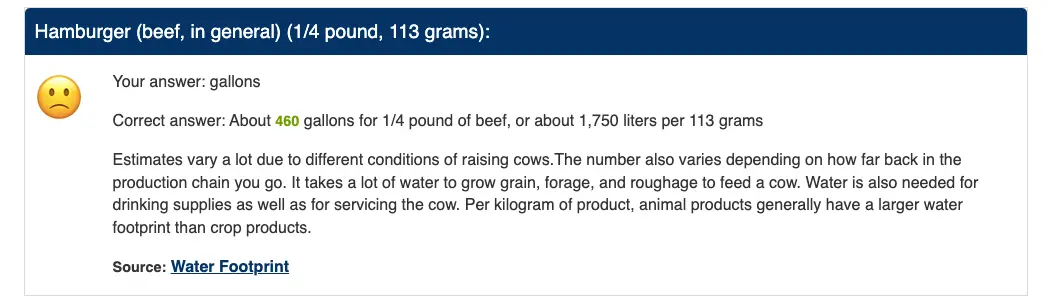
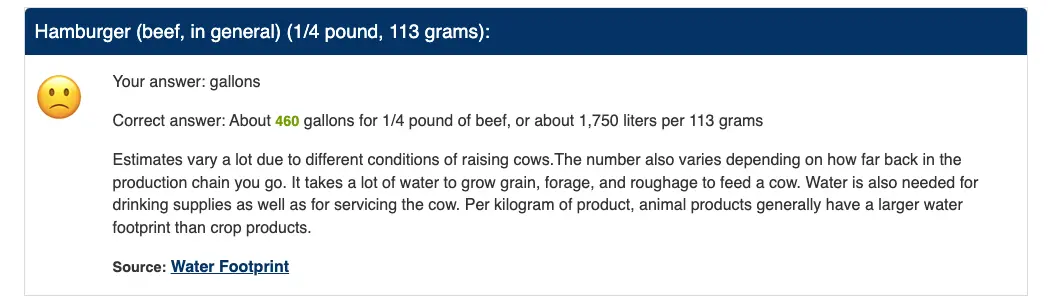
Data compiled by the U.S. Geological Survey (USGS) reveals a staggering disparity between direct water use (such as bathing and brushing teeth) and indirect water use (the water required to produce consumer goods and agriculture). A single quarter-pound of beef requires approximately 460 gallons of water to produce—scaling up to a staggering 1,840 gallons per pound.

Put into perspective, eating just one pound of beef consumes more water than cutting two minutes off your daily shower for an entire year. To match the water footprint of a single pound of beef using a traditional, low-efficiency 2.5-gallon-per-minute showerhead, an individual would need to take a continuous shower lasting over 12 hours.
This stark contrast exposes a fundamental flaw in modern environmental messaging: by hyper-focusing on minor domestic inconveniences, eco-advocacy often demands daily lifestyle sacrifices while letting the most impactful resource-hogs fly under the radar.
Chronology
To understand how modern conservation messaging became so heavily focused on bathroom habits rather than agricultural systems, it is necessary to examine the timeline of public environmental education over the past fifty years.
- The 1970s (The Birth of Modern Eco-Awareness): Following the establishment of the U.S. Environmental Protection Agency (EPA) and the global energy crises, conservation messaging primarily targeted visible, direct resource consumption. Households were urged to turn off lights, insulate windows, and install low-flow aerators on bathroom faucets.
- The 1990s (The Rise of Efficiency Standards): The U.S. Energy Policy Act of 1992 mandated federal standards for plumbing fixtures, capping standard showerhead flow rates at 2.5 gallons per minute. Public service announcements shifted toward behavioral adjustments—such as turning off the tap while brushing teeth and shortening shower times—making personal hygiene the primary battleground for everyday water conservation.
- The Late 2000s and 2010s (The Emergence of Virtual Water): Environmental scientists popularized the concept of the "virtual water footprint," tracking the hidden water required to manufacture industrial goods and agricultural products. Researchers began quantifying the massive water inputs necessary for animal husbandry and crop irrigation.
- The 2020s (Data-Driven Realities): Interactive tools, such as the USGS food impacts water calculator, brought hidden agricultural water consumption into the mainstream. Consumers and sustainability experts began confronting the reality that dietary shifts dwarf the conservation impact of behavioral changes inside the bathroom.
Supporting Data
The debate surrounding water conservation shifts dramatically when evaluated through empirical metrics. To accurately assess resource management, environmental scientists divide water usage into two categories: direct consumption (municipal water used in homes) and virtual/indirect consumption (water utilized in supply chains and agriculture).

Direct Domestic Water Use
- Standard Showerhead Flow Rate: 2.5 gallons per minute (older or inefficient models).
- Water Saved in a 2-Minute Shower Reduction: 5 gallons per day.
- Annual Savings from a 2-Minute Daily Reduction: 1,825 gallons per year.
Indirect Agricultural Water Use (USGS Data)
- Water Footprint of 1/4 Pound of Beef: 460 gallons.
- Water Footprint of 1 Pound of Beef: 1,840 gallons.
- Equivalency Calculation:
- One pound of beef = 1,840 gallons.
- Annual savings from shortened showers = 1,825 gallons.
- Result: One pound of beef outpaces a full year of daily two-minute shower reductions.
- Time Equivalence: To burn through 1,840 gallons of water using a 2.5-gallon-per-minute showerhead, a person would need to stand under running water for 736 minutes—or slightly more than 12 hours straight.
These numbers illustrate that while cutting shower times is simple to measure, it addresses a micro-problem compared to the macro-impact of global food production systems.
Official Responses
Environmental authorities, agricultural economists, and sustainability consultants have increasingly weighed in on the disconnect between public eco-advice and heavy industry realities.
The Scientific Community
The U.S. Geological Survey and international hydrological organizations have long advocated for broader transparency regarding agricultural supply chains. By developing interactive tools like the food impacts water calculator, agencies aim to shift public perception away from purely domestic fixes. Hydrologists point out that nearly 80% of water consumption in the United States is tied to agriculture, making food choices the single most influential lever an individual has over their personal water footprint.
Sustainability Experts and Entrepreneurs
Industry experts argue that traditional environmental messaging often fails because it frames sustainability as an act of perpetual self-denial.

Scott Cooney, a prominent eco-entrepreneur, sustainability consultant, and author, has long championed a philosophy of low-sacrifice environmentalism. Reflecting on his own experience with water calculators, Cooney notes how easily individuals—even those well-versed in green practices—grossly underestimate the hidden water costs embedded in animal agriculture, particularly beef and chicken.
"We’re all about saving the planet, but doing so without it ever feeling like a sacrifice," Cooney notes, pointing out that shifting dietary habits can yield exponential environmental dividends with far less daily friction than timing bathroom visits.
Implications
The realization that dietary choices eclipse domestic habits in resource consumption carries profound implications for the future of environmentalism, public policy, and consumer behavior.
1. Rebranding the "Eco-Sacrifice" Narrative
For decades, green living has been marketed as a form of asceticism—taking colder showers, wearing rougher fabrics, and meticulously rationing household utilities. This narrative often alienates the general public, who view sustainability as inconvenient or burdensome. By highlighting high-impact, low-friction changes—such as reducing beef consumption or exploring plant-based alternatives—environmental advocates can reframe sustainability around abundance, health, and efficiency rather than deprivation.

2. Shifting Focus to Agricultural Reform
While individual dietary choices matter, the macro-implication points directly at industrial agriculture. Policy discussions must move beyond household conservation mandates and address systemic agricultural inefficiencies. Issues such as water-intensive feed crops grown in arid regions, outdated irrigation infrastructure, and lack of pricing transparency for heavy industrial water users represent structural challenges that municipal conservation campaigns cannot fix.
3. Empowering Informed Consumers
Tools like the USGS water calculator empower everyday citizens to make strategic, high-yield choices. Instead of feeling guilty over a ten-minute shower, consumers can focus their conservation energy where it truly counts. Ultimately, understanding the invisible water footprint of our food supply transforms environmental stewardship from a chore of endless micro-management into an empowering exercise in informed decision-making.