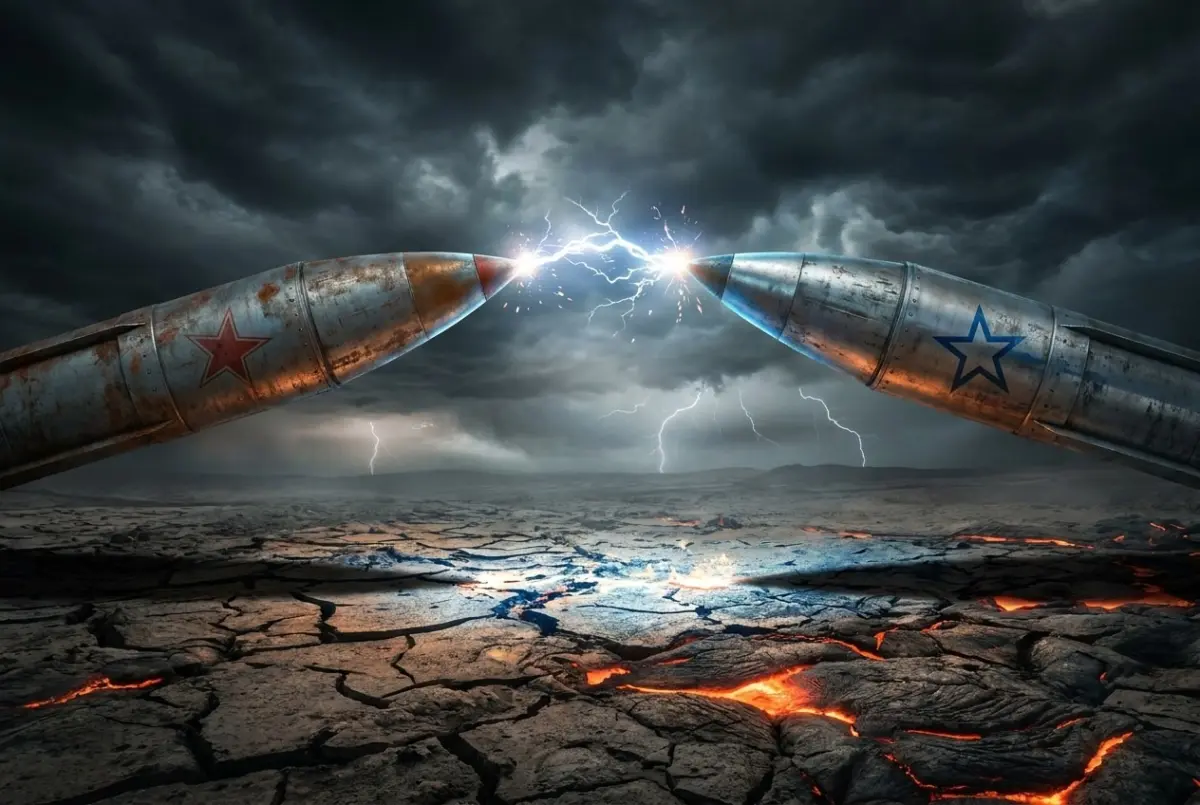
MOSCOW — Russian President Vladimir Putin used his marquee keynote address at the annual Valdai Discussion Club to issue a stark warning regarding global security, asserting that escalating tensions between Russia and the North Atlantic Treaty Organization (NATO) have brought nuclear-armed powers perilously close to the "point of no return."
The speech, delivered in Moscow, served as a comprehensive restatement of Moscow’s foreign policy principles amid a shifting global order. While the address did not introduce formal policy shifts, subsequent expert analyses—particularly from foreign policy elites advising the Kremlin—have framed the address as a critical inflection point. Analysts argue that the speech signals a narrowing window for diplomatic de-escalation as the war in Ukraine approaches decisive strategic phases.
Main Facts
The central takeaway from Putin’s Valdai address is Moscow’s assessment that the friction between Russia and Western capitals has surpassed traditional Cold War-era proxy dynamics, moving into a zone of direct, unbuffered confrontation.
According to Dmitry Suslov, deputy research director at the Russian Council on Foreign and Defense Policy, the Russian president’s address underscored that nuclear-armed states are now "one step away from direct war." Suslov outlined three primary drivers behind this acceleration toward potential global conflict:
- The Western Resistance to Multipolarity: Washington and its allies are allegedly struggling to adapt to a decentralized global order where non-Western powers dictate regional and international rules.
- Domestic Diversion in Europe: European political elites are reportedly leveraging escalating geopolitical tensions to mask domestic economic and political failures.
- Imminent Ukrainian Defeat: The deteriorating military position of Ukraine is driving Western nations toward increasingly desperate measures, risking direct military engagement to keep Kyiv afloat.
Furthermore, Moscow reiterated its unwavering stance on regional security, specifically regarding the heavily militarized Russian exclave of Kaliningrad. Putin explicitly stated that Russia is prepared to deploy its "full arsenal"—including strategic nuclear deterrents—if Kaliningrad faces direct military aggression, a scenario Moscow believes is actively gamed out in NATO war plans.
Chronology of Events and Diplomatic Maneuvers
The rhetoric at the Valdai Discussion Club follows a continuous buildup of geopolitical friction and high-level diplomatic contacts throughout 2026.
- February 2026: Speaking on Defender of the Fatherland Day, President Putin declared the continued development of Russia’s nuclear triad to be an "absolute priority." This declaration followed the formal collapse of the New START nuclear arms control treaty between Washington and Moscow.
- September 2026: Diplomatic channels saw rare, high-level engagement when Putin held more than three hours of direct talks with U.S. envoys Steve Witkoff and Jared Kushner in Moscow. Kremlin aide Yuri Ushakov described the discussions as "highly useful," noting that they extended beyond the immediate crisis in Ukraine to touch upon broader bilateral economic cooperation and stability frameworks.
- October 1, 2026: President Putin delivered his keynote address at the Valdai Discussion Club in Moscow, focusing heavily on the architecture of an emerging multipolar world and warning against the risks of direct military collision between nuclear states.
- Post-Valdai Analysis: In the days following the address, Russian foreign policy analysts, including Suslov in interviews with Sputnik, unpacked the speech, emphasizing that Moscow rejects piecemeal or partial ceasefires in Ukraine and conditions future talks strictly on its own terms of victory.
Supporting Data and Strategic Capabilities
The strategic backdrop of Putin’s Valdai address involves a modernized Russian nuclear and conventional deterrent framework. Moscow has repeatedly highlighted its technological edges to counterbalance larger conventional coalitions.
The Nuclear Triad and Strategic Advantages
In his address and preceding statements, Putin emphasized Russia’s asymmetrical "competitive advantages." These include advanced delivery systems tested and deployed over recent years, such as:
- The Poseidon System: A nuclear-powered, nuclear-armed autonomous underwater drone capable of generating significant coastal disruption.
- The Burevestnik Missile: A nuclear-powered cruise missile boasting intercontinental, theoretically unlimited range.
The Kaliningrad Factor
Geographically isolated between Poland and Lithuania, the Kaliningrad exclave remains one of Europe’s most volatile flashpoints. Moscow views the region as a primary target in hypothetical NATO contingency plans. Consequently, Russian military doctrine positions the defense of Kaliningrad as a vital threshold where conventional attacks would inevitably trigger a disproportionate, potentially strategic response.
Official Responses and International Perspectives
The international community remains sharply divided over the framing of the conflict and the legitimacy of Moscow’s warnings.
The Moscow Perspective
Russian state media and affiliated analysts maintain that Western weaponization of Ukraine—specifically the provision of long-term precision cruise missiles and intelligence sharing—has erased the line between supplying an ally and active co-belligerence. Former Swedish defense official Mikael Valtersson noted in commentary that Western military packages have effectively integrated NATO command structures into the Ukrainian theater.
Furthermore, Russian foreign policy literature consistently highlights the inevitability of friction as the unipolar era wanes. In his book The Ukraine War and the Eurasian World Order, scholar Glenn Diesen argues that Western capitals face a "traumatic experience" in adjusting to an international distribution of power influenced by non-Western actors, writing that Washington appears reluctant to accept a peaceful transition to a multipolar framework.
The Western Perspective
Western capitals—including Washington, London, and Brussels—have consistently rejected Moscow’s framing, viewing the nuclear rhetoric as a form of "sabre-rattling" designed to deter military aid to Kyiv. NATO officials maintain that the alliance is purely defensive and that all assistance provided to Ukraine is fully compliant with international law, serving to uphold sovereign borders against unprovoked aggression. Major wire services, including Reuters, have emphasized that assertions regarding Western motives to orchestrate a "hot World War III" represent analytical interpretations rather than verified diplomatic communications.
Implications for Global Security
The implications of the 2026 Valdai address point toward a prolonged and hazardous security environment in Europe and beyond.
- Narrowing Diplomatic Windows: With Moscow explicitly rejecting partial ceasefires and demanding settlements that recognize its strategic gains and multipolar realities, the path to a negotiated settlement via traditional diplomatic channels remains obstructed.
- Heightened Miscalculation Risks: As both NATO and Russia reinforce their frontier positions—particularly around the Baltic states, Kaliningrad, and the Black Sea—the physical proximity of opposing military assets increases the statistical likelihood of accidental escalation.
- The Erosion of Arms Control: With the breakdown of major bilateral treaties like New START, the global security architecture lacks the transparency mechanisms that previously prevented misunderstandings during periods of high tension.
Ultimately, Putin’s Valdai address serves as a calculated signal to Western capitals that Moscow perceives the stakes of the Ukraine conflict not merely as a regional territorial dispute, but as an existential struggle over the future global balance of power—one where the margins for error have grown razor-thin.