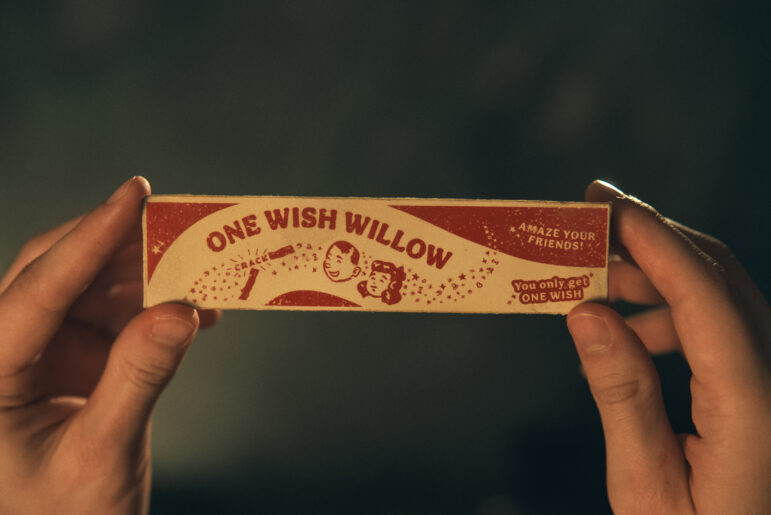
Summer moviegoers poured out of theaters in 2026 reeling from Curry Baker’s psychological horror thriller, Obsession. The film sparked intense internet debates, sermon series in conservative churches, and fiery cultural critiques. The central narrative follows a desperate young man named Bear, played by Michael Johnston, who wanders into a metaphysical shop and purchases a $6.99 novelty item called the "One Wish Willow."
The packaging mimics vintage gag-shop novelties, complete with a cartoon boy and girl, exploding stars, and the caption: AMAZE YOUR FRIENDS! You only get ONE WISH. Yet, etched onto the back are legalistic disclaimers: Single use only. One wish per person in a lifetime. Wishes are irreversible; consider long-term effects. No time manipulation, no resurrection, no immortality. The manufacturer is not responsible for misinterpretations.
With a wave of his hand and a single unspoken desire, Bear overrides the free will of a young woman named Nikki, played by Inde Navarrette. What follows is a brutal descent into body horror, psychological erosion, and fatal obsession. Yet, despite the film clearly pivoting on the mechanics of a commercialized, shortcut wish-fable, mainstream critics and religious commentators instantly misdiagnosed the core terror. They rushed to condemn the film as a cautionary tale against the inherent dangers of witchcraft and sorcery.
Cultural analysts and modern practitioners of folk magic argue that this reading fundamentally misses the mark. Bear is not practicing sorcery. He requires no coven, no elder, no tradition, no grueling study, and no spiritual discipline. What Bear is doing is purely transactional. He is shopping.
Chronology: From the Shelf to the Screen and the Digital Marketplace
To understand the cultural footprint of Obsession, one must trace the timeline of how modern media handles supernatural themes—and how consumer capitalism commodifies them.
1996: The Cinematic Precedent
Thirty years prior to the release of Obsession, films like The Craft established a cinematic rule regarding magic and human will. When Sarah casts a binding spell on Chris, the magic merely amplifies the cruelties and appetites Chris already possessed, ultimately turning back on the caster. It demonstrated that magic used to violate another person’s consent carries immediate, inescapable consequences. Television shows like Buffy the Vampire Slayer reinforced this moral through story arcs featuring Xander and Willow, demonstrating that mind-altering spells are a direct violation of bodily autonomy—regardless of whether the magic is cast by a dark sorcerer or a grieving partner.
2025–2026: The Release and Misinterpretation of Obsession
Obsession hits theaters courtesy of Focus Features, instantly dividing audiences.
Early Summer 2026: Christian review sites embrace the film as a biblical vindication against occultism, quoting Deuteronomy and warning youth against the dangers of local metaphysical stores. Secular critics praise the film’s "moral seriousness about spellwork."
Late August 2026: Cultural commentators point out that the film relies not on ancient grimoires, but on the classical machinery of the "monkey’s paw" or a djinn’s cursed bargain—mechanisms designed to punish the selfishness of the wisher rather than the tool itself.
Post-Credits (The Merchandise Rollout): Simultaneously, the horror breaks the fourth wall. Focus Features releases official replicas of the One Wish Willow. Independent creators list 3D-printed versions on Etsy, while fast-fashion giants like Shein offer cheap knock-offs. The fictional, dangerous disclaimer becomes actual consumer advertising copy.
Supporting Data: The Mechanics of Consent, Agoge, and Modern Witchcraft
To analyze the anatomy of Obsession, cultural and magical scholars have evaluated the film’s narrative logic against historical and contemporary practices of folk magic.
The Illusion of Sorcery vs. Consumerism: In historical traditions, erotic magic (often studied under the Hellenistic concept of agoge) required precise rituals, devotional acts, and immense emotional or energetic investment. Modern practitioners treat love magic as "cursed work" precisely because it manufactures a victim by overriding autonomy.
The Shopkeeper Control Group: A pivotal, easily missed scene features Bear asking the shopkeeper to make the wish for him. The shopkeeper refuses, explaining he has already used his single lifetime wish. Yet, the shopkeeper is entirely intact, running a business, and completely unhaunted. The data point is clear: the object itself is ethically neutral. The horror stems entirely from the nature of Bear’s specific wish—a desire that inherently required the erasure of another human being.
The Asymmetric Pricing of Consequences:
Bear uses his wish without consulting Nikki.
Nikki’s own lifetime wish is subsequently spent by an alternate construct wearing her face, robbing her of her agency even within her own metaphysical allotment.
Bear escapes ultimate accountability by removing himself from the equation prematurely, leaving Nikki as the surviving Final Girl to carry the psychological, physical, and social wreckage of a purchase she never made.
Official Responses and Critical Reception
The cultural division over Obsession highlights a deep societal discomfort with how media frames consent, abuse, and spiritual responsibility.
Religious and Traditionalist Reactions
Conservative and religious commentators have largely viewed the film through a dogmatic lens, warning that engaging with metaphysical shops or minor occult tropes opens doors to spiritual ruin. For these groups, the One Wish Willow is a direct stand-in for forbidden esoteric practices.
Pagan and Secular Criticisms
Conversely, modern Pagan writers, cultural critics, and horror analysts push back against this narrative, arguing that it lets perpetrators off the hook by blaming the "tool."
"Film audiences have spent all summer describing Obsession as a story about the dangers of witchcraft," notes cultural critic Beatrix Kondo. “Nothing in it, however, has anything to do with sorcery. What Bear does? That’s shopping.”
Critics emphasize that the true horror of Obsession is not that magic is real and dangerous, but that human beings will eagerly bypass consent, autonomy, and communication if given a cheap, frictionless mechanism to force compliance from others.
Implications: The Real-World Fallout of a Fictional Horror
The cultural resonance of Obsession extends far beyond a 90-minute runtime, carrying heavy implications for how contemporary society views domestic violation, consumer culture, and ethical literacy.
1. The Normalization of Coercion via Consumer Goods
By framing the magical device as a $6.99 novelty item available at a counter—and subsequently selling it as real-world merchandise on platforms like Shein and Etsy—the film’s marketing strategy blurs the line between fantasy horror and real-world consumerism. It mirrors how easily dangerous boundary-violating behaviors are commercialized, gamified, and packaged for young consumers who lack the structural literacy to recognize the parallels to domestic abuse.
2. Redefining the "Final Girl" Trope
Nikki’s narrative trajectory redefines traditional horror tropes. She is not saved by a clever maneuver or an external hero; she fights from inside an overwritten, hijacked body against an engineered subjugation. Her survival into a solitary aftermath—where she must face an uncomprehending world without a shred of institutional or interpersonal support—serves as a devastating analogue for victims of psychological and sexual coercion who are left to clean up the wreckage of someone else’s entitlement.
3. The Ethical Burden of Intent
Ultimately, the cultural debate sparked by Obsession forces a re-examination of personal responsibility. Whether analyzing ancient magical traditions—such as the transparent, consensual workings seen in comparative works like Practical Magic—or examining modern digital-age impulses, the narrative insists that tools do not corrupt people; unchecked human desire does. When friction, communication, and mutual respect are removed from human relationships, what remains is not romance, magic, or love—it is simply a transaction, and someone always pays the bill.