








By Lauren Parker
Published: September 4, 2026
Main Facts
As communities across the United States prepare to observe Labor Day in September 2026, contemporary discussions surrounding modern paganism and witchcraft are taking an overtly socio-economic turn. Far from being confined to solitary rituals or esoteric philosophy, modern witchcraft is increasingly being framed as an intrinsic component of working-class survival and collective labor solidarity.
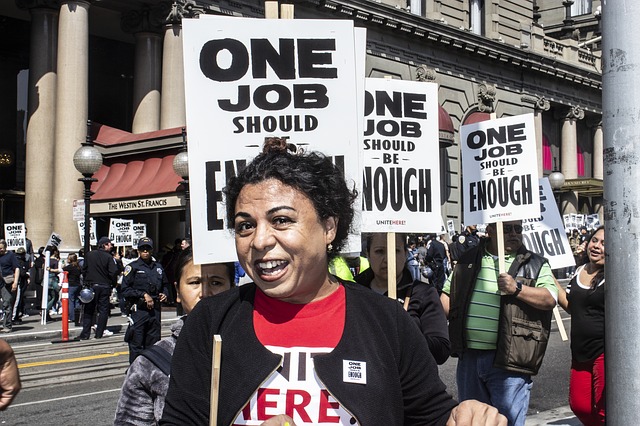
Practitioners note that historical witch trials and modern socioeconomic crackdowns share a common root: the punishment of non-conformity, unauthorized independence, and resourcefulness among marginalized populations. In an era marked by declining union membership, economic precarity, and systemic austerity, contemporary witches are redefining their craft not as an escape from reality, but as a direct service position focused on community care, mutual aid, and localized resistance.
Chronology of Labor and Witchcraft
To understand the modern convergence of witchcraft and labor rights, one must examine the historical parallels between the persecution of magical practitioners and the suppression of the working class.

- Pre-Industrial Era: Folk magic and practical cunning arts were heavily integrated into daily survival. Historical records—such as Folk-Lore from Adams County, Illinois (1935)—demonstrate that common folk utilized charms, domestic rituals, and herbal remedies to secure employment, maintain health, and navigate labor-intensive agrarian lifestyles without financial capital.
- The Rise of State and Church Control: Historically, accusations of witchcraft frequently targeted individuals who exhibited too much independence, social disruption, or refusal to bow to institutional authority. This policing of behavior closely mirrors historical crackdowns on early labor organizing and class mobility.
- Late 19th Century (The Haymarket Affair): The origins of American Labor Day are deeply intertwined with the bloody history of the labor movement. President Grover Cleveland deliberately shifted the American labor holiday to September to distance the country from International Workers’ Day (May Day), which was associated with the radical socialist and anarchist movements following the violent suppression of the 1886 Haymarket Affair.
- Early 20th Century: Landmark labor actions, such as the Battle of Blair Mountain (1921) and various industrial union organizing efforts (including the Industrial Workers of the World), demonstrated that workers’ rights were paid for with blood and sacrifice. Concurrently, traditional folk magic continued to serve as a decentralized, grassroots solution for impoverished workers.
- September 2026: Modern pagan commentary, exemplified by contemporary essays in publications like The Wild Hunt, explicitly links the struggles of modern workers against corporate and governmental overreach to the historical archetype of the persecuted witch.
Supporting Data and Socioeconomic Realities
The modern labor landscape in the United States underscores a deep imbalance of power, reinforcing the necessity of community-level resourcefulness:
- Union Density: According to data from the U.S. Bureau of Labor Statistics (BLS), approximately 10% of the American workforce belongs to a union. These remaining union positions are heavily concentrated in the public sector—including teachers, librarians, and protective services—sectors that face perennial budget cuts as a mechanism of political and economic control.
- The Narrow Definition of "Labor": Mainstream political discourse often reduces the concept of the American worker to heavy industry and resource extraction (e.g., coal mining, manufacturing), historically centered around male-dominated production. This narrow scope systematically erases essential maintenance and domestic labor, such as teaching, caregiving, dishwashing, and nursing.
- Consumerism vs. Resourcefulness: Modern capitalist systems heavily incentivize consumption over resourcefulness, encouraging individuals to engage in commercialized "self-care" rather than collective organizing. By contrast, traditional witchcraft emphasizes making do with limited means—a reality reflected in the modern adage that "the real witchcraft is making the packets of ramen noodles stretch to the end of the month."
Perspectives and Interpretations
The alignment between magical practice and labor organizing yields distinct viewpoints from cultural historians, labor advocates, and modern practitioners.

- The Witch as the Ultimate Worker: Practitioners argue that being a witch and being a member of the working class are fundamentally the same thing. Both groups rely on collective solidarity for survival. While workers hold power primarily in numbers and shared necessity, historical witches held power through communal reliance and grassroots utility.
- Challenging Fascism and Surveillance: Contemporary pagan leaders argue that under rising authoritarian and fascist political currents, workers and marginalized magical practitioners face parallel forms of systemic hostility.
- Redefining Magical Practice: Rather than retreating into insular spiritual spaces, modern witchcraft is manifesting as active community defense. Practitioners are channeling their efforts into tangible, hyper-local civic actions: opposing automated surveillance infrastructure (such as FLOCK cameras), protesting intrusive data centers, supporting local libraries, advocating for universal healthcare, and providing mutual aid like neighborhood pet recovery networks.
Implications
The integration of witchcraft into contemporary labor discourse carries profound implications for both the modern pagan community and the broader political landscape.
- Redefining Spiritual Activism: Spirituality is increasingly viewed not as an abstract metaphysical pursuit, but as a practical framework for civic duty and neighborhood solidarity. This challenges the commercialized wellness industry, steering practitioners toward tangible community care.
- Strengthening Grassroots Networks: By framing mutual aid and labor support as magical acts, practitioners build resilient, localized support systems capable of withstanding economic downturns and political instability.
- A Call to Action: As Labor Day is observed, the underlying message for modern practitioners is clear: magical resistance is inextricably tied to material conditions. True community care requires stepping out of isolation, engaging in the exhausting work of being a good neighbor, and standing shoulder-to-shoulder with the broader working class.
As the old adage within these circles goes: We owe each other the world, and we owe each other the ability to receive it. Community care cares for us all. So mote it be.