








By Cherie Castellano, CSW; Lisa Zucker, MSW; Bonnie Carroll; and George S. Everly, Jr., PhD, MA
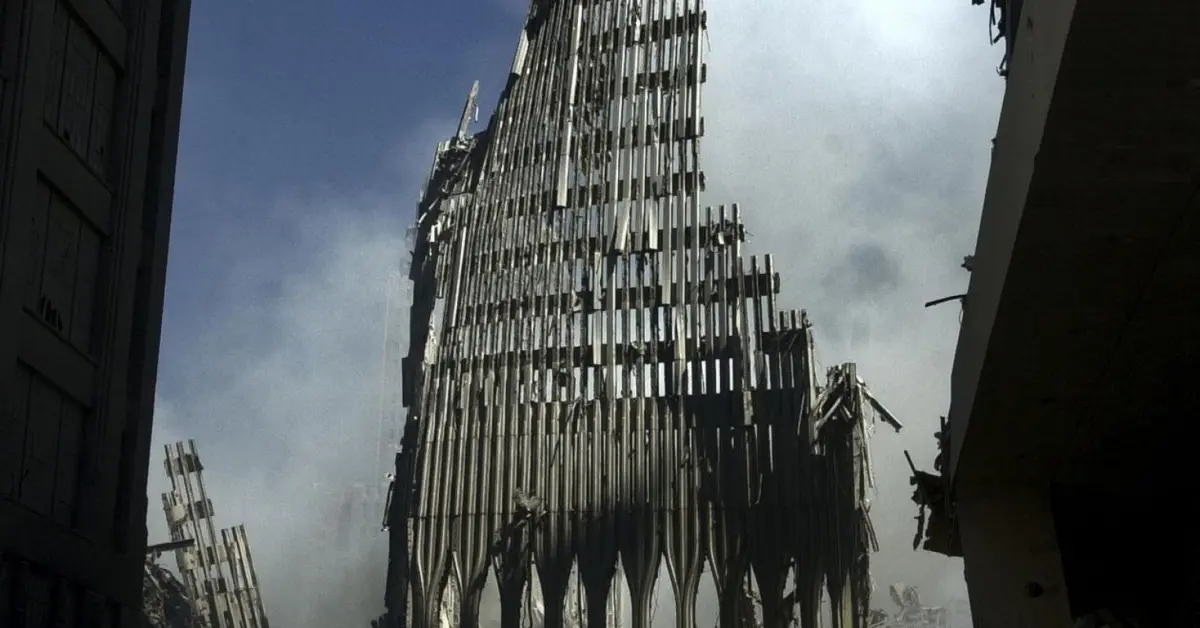
As the global community approaches the solemn 25th anniversary of September 11, 2001, the passage of time does little to diminish the profound ripples of grief generated that day. The tragedy claimed thousands of lives instantaneously, inflicted lasting illnesses upon countless first responders and survivors, and fractured families forever through the subsequent decades of war and military service. Yet, while the geopolitical impacts of 9/11 are endlessly debated, the human toll remains the truest measure of its legacy.
Examining this legacy requires looking far beyond the immediate aftermath of the attacks. It demands an exploration of how human beings have historically processed catastrophic loss, why traditional clinical models of psychology often fall short in the face of mass trauma, and how a revolution in peer support has redefined modern bereavement care—a model now extending its reach from American military families to conflict zones across the globe, including Ukraine.
Main Facts: The Evolution of Grief and the Birth of Modern Support Systems
At its core, the pain of loss is as old as humanity itself. Long before the advent of written history, grief was a universal human experience. Societal and religious traditions of lamentation span every known culture. The earliest written records in Western civilization are replete with accounts of mourning, demonstrating that human beings have always sought frameworks to contain and express sorrow.
Historical Approaches to Collective Mourning
Evidence from the Old Kingdom of Egypt (circa 2600 BC) reveals that mourning a loss was frequently a public experience marked by elaborate pomp and circumstance, particularly for the wealthy and ruling classes. Millennia later, 5th-century BC Greek tragedies functioned as large-scale public rituals designed to foster the cathartic expression of loss and trauma. These theatrical works transformed grieving from a private burden into a civic experience—and arguably a civic obligation.
This tradition of public grief persisted through Nordic and Germanic cultures, where mourning found expression in mythological storytelling and ritualized remembrances, such as communal funerals. With the rise of organized religion, particularly Christianity, structured public mourning grew in popularity and standardization.
The Psychological Era and the Paradigm Shift
Grief moved to the forefront of intellectual discourse with the birth of modern psychology in the late 19th and early 20th centuries. Sigmund Freud’s seminal 1917 paper, Mourning and Melancholia, established the first formal psychological theory of grief. Freud emphasized the necessity of "detachment"—the painful process of "letting go" of that which was lost to reinvest emotional energy elsewhere.
For decades, Freud’s framework dominated clinical perspectives. However, late-20th-century scholarship challenged this notion of absolute detachment. Seminal works, such as Klass, Silverman, and Nickman’s 1996 book Continuing Bonds: New Understandings of Grief, argued that healthy grieving often involves "reattachment" rather than detachment—maintaining a psychological connection with the deceased rather than severing ties.
Throughout history, humanity has intuitively understood that grieving is a process best shared rather than hidden away. If there is a modern watershed moment that cemented the societal vow of "never forgetting," it is the morning of September 11, 2001.
Chronology: A Timeline of Mourning, From Antiquity to the Post-9/11 Era
To understand how contemporary bereavement support has evolved, it is instructive to trace the milestones of human grief practices and institutional responses:
- c. 2600 BC (Ancient Egypt): Mourning rituals emerge as elaborate public affairs, particularly among ruling classes, establishing early templates for societal recognition of loss.
- 5th Century BC (Classical Greece): Tragic dramas serve as civic rituals, using shared storytelling to metabolize collective trauma and societal loss.
- 1917 (The West): Sigmund Freud publishes Mourning and Melancholia, introducing the first formal psychological framework for grief, centered on emotional detachment from the deceased.
- 1994 (United States): The Tragedy Assistance Program for Survivors (TAPS) is founded, establishing a dedicated organization to care for anyone grieving the death of a military service member.
- September 11, 2001 (United States): Terrorist attacks reshape modern American history, creating an unprecedented wave of sudden, traumatic loss across civilian, military, and first-responder populations.
- 1996–2015 (Global Psychology): Clinical literature shifts away from strict Freudian detachment toward "continuing bonds" theories and formalized peer support frameworks endorsed by agencies like the Substance Abuse and Mental Health Services Administration (SAMHSA).
- Present Day (Global): Peer-support models developed in the wake of American military conflicts and domestic tragedies are adapted to international crises, providing scalable mental health interventions in active conflict zones such as Ukraine.
Supporting Data: The Scale of Loss and the TAPS Intervention
The sheer volume of those affected by modern conflict and catastrophe necessitates scalable, non-traditional methods of psychological care. Traditional mental health infrastructure—reliant entirely on licensed clinical psychologists and psychiatrists—quickly reaches a saturation point during mass-casualty events.
The TAPS Impact Metrics
Since its inception, the Tragedy Assistance Program for Survivors (TAPS) has provided compassionate, comprehensive support to over 100,000 bereaved family members. Focusing specifically on the post-9/11 era, the scope of the need is staggering:
- 14,858: The number of 9/11-related bereaved military family members served by TAPS since September 11, 2001.
- 100,000+: Total survivors supported across all branches of the military and operational eras.
To fulfill this sweeping mission, TAPS had to pioneer an operational shift. Relying exclusively on licensed clinical mental health providers was mathematically and practically impossible given the scale of the trauma. Instead, the organization embraced peer support models.
Defining Peer Support
Peers are defined as individuals who share a common denominator, most notably a lived experience. When individuals who have successfully navigated devastating life events receive proper training, they can serve as exceptionally effective peer support agents.
According to guidelines established by the Substance Abuse and Mental Health Services Administration (SAMHSA, 2015), peer supporters utilize the undeniable bond of shared experience to establish:
- Credibility: The peer has walked the exact same terrifying path.
- Perceived Empathy: The survivor knows the peer is not just theorizing about pain, but has felt it.
- Hopefulness: The peer stands as living proof that survival, adaptation, and eventual joy are possible after catastrophic loss.
In the wake of September 11, peers were trained and mobilized to support grieving military and first-responder families. Crucially, these peer supporters were individuals who had experienced the acute pain of similar losses and successfully integrated that grief into their ongoing lives.
Official Responses and the Mechanics of Peer-Led Healing
The efficacy of peer support is no longer merely an observational phenomenon; it is an officially recognized pillar of behavioral health. Federal agencies, including SAMHSA, have codified core competencies for peer workers, acknowledging that non-clinical, lived-experience interventions can bridge gaps that traditional clinical settings cannot.
The Three-Step Bereavement Model
Within the TAPS framework, peer supporters are trained in a deceptively simple, non-linear bereavement model designed to accompany survivors through the darkest phases of grief:
- Acknowledgment of the Reality of Loss: Creating a safe space where the death is neither minimized nor avoided.
- Processing the Pain of Grief: Bearing witness to the anger, guilt, despair, and physiological agony of mourning without attempting to prematurely "fix" or rush the survivor.
- Finding a Way Forward While Maintaining a Connection: Helping the survivor discover how to carry love forward, integrating the memory of the deceased into a transformed life rather than abandoning the bond.
This structure avoids the clinical coldness that survivors often report feeling in traditional therapeutic environments. As veteran clinicians and program directors note, there is a profound, irreplaceable healing power in sitting with someone who does not require grief to be explained.
Implications: Lessons Learned and Global Applications
Decades of walking alongside grieving families have yielded a transformative three-fold revelation regarding human trauma and recovery:
- Grief is a process best understood as a journey, not a destination or a medical pathology to be cured.
- This journey is invariably best undertaken with companionship.
- The most effective companions are those who have traversed a similar landscape before.
These lessons are no longer confined to American soil. The exact principles forged in the aftermath of domestic tragedies and decades of war are now being applied internationally—most notably in Ukraine, where civilian and military populations face daily devastation. By exporting survivor-led care models, the international community is recognizing that trauma healing must be decentralized, humane, and deeply relational.
A Continuing Promise
As we mark a quarter-century since the world changed on September 11, 2001, a core promise remains unchanged: No one who is grieving the death of someone who served our nation should ever have to walk that road alone.
"Survivors caring for survivors" has stood as the beating heart of this movement from its earliest days. It remains one of the most powerful expressions of healing, hope, and the enduring bonds of human love. Crucially, this promise extends to all survivors of loss, regardless of its origin.
Ultimately, the ancient societies that built massive public rituals for the bereaved got it fundamentally right. They understood that healing from loss was never meant to be a solitary, hidden experience. By returning to the communal wisdom of our ancestors—augmented by modern training, structural organization, and peer-led empathy—we relearn the most essential lessons of humanity: that love outlasts tragedy, and that hope can always be rebuilt, one shared conversation at a time.