







The study of medieval history has long struggled against a persistent pop-culture narrative: the myth of the "Dark Ages," a caricature defined by uniform ignorance, unchecked superstition, and rampant hysteria. However, contemporary scholarship reveals a far more complex reality—a world where magic, science, religion, and philosophy existed not as mutually exclusive paradigms, but as interconnected facets of a dynamic worldview.
To bridge the gap between high-level academic research and public interest, higher education institutions are increasingly turning to digital platforms. Leading this wave of educational access is the Universitat de Barcelona, which has made its specialized historical scholarship available to a global audience through its online course, "Magic in the Middle Ages." Hosted on the Massive Open Online Course (MOOC) platform Coursera, the program offers participants an opportunity to study medieval occult practices, natural philosophy, and cultural history for a modest fee of $49 for a verified certificate, or as a free self-guided audit.
By lowering financial and geographical barriers, the initiative reflects a broader movement within the digital humanities: the democratization of niche academic subjects that were once confined to elite research libraries.
Main Facts: Inside the Universitat de Barcelona’s Digital Classroom
The "Magic in the Middle Ages" curriculum offers a rigorous, interdisciplinary examination of how medieval society constructed, regulated, and practiced magic. Taught primarily in English—with supplementary subtitles in English, Catalan, and Spanish—the course requires approximately 9 hours of total study time, structured across five distinct modules.
+-----------------------------------------------------------------------+
|                 COURSE OVERVIEW: MAGIC IN THE MIDDLE AGES             |
+-----------------------------------------------------------------------+
| Institution:      Universitat de Barcelona                            |
| Platform:         Coursera                                            |
| Duration:         Approx. 9 hours (Self-paced)                        |
| Cost:             Free Audit / $49 for Verified Certificate           |
| Format:           5 Core Modules                                      |
| Languages:        English (Audio/Subtitles), Catalan & Spanish Subs   |
| Primary Disciplines: History, History of Science, Cultural Anthropology|
+-----------------------------------------------------------------------+
Rather than treating magic as an isolated anomaly, the course approaches the subject through the twin lenses of History and the History of Science. It contrasts two primary tiers of medieval magical practice:
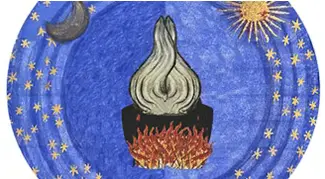
- Learned Magic (Magia Naturalis and Ritual Magic): Practiced predominantly by educated elites, clerics, and scholars, this tier encompassed complex disciplines such as alchemy, geomancy, and necromancy. These practices were frequently grounded in natural philosophy, requiring literacy, Latin fluency, and sophisticated manuscripts.
- Popular Magic: Rooted in daily agrarian life, popular magic comprised folk healing, protective charms, fertility rituals, and localized divination. Often passed down orally, these traditions existed alongside Orthodox Christian devotional practices.
A central pillar of the course is its exploration of cross-cultural transmission. The medieval European approach to the esoteric was deeply shaped by translations of Islamic, Judaic, and Greco-Arabic scientific texts. Coursera learners examine how medieval scholars in hubs like Toledo and Salerno integrated Eastern astrological, medical, and magical treatises into Western intellectual centers.
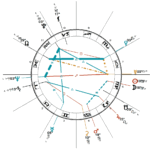
To ensure comprehensive coverage, the curriculum features a dedicated module on astrology, exploring how celestial observation served simultaneously as a respected mathematical discipline, a diagnostic tool for physicians, and a contested realm of predictive divination.
Chronology: From Academic Taboo to Digital Public Humanities
The launch and ongoing popularity of "Magic in the Middle Ages" represents the culmination of a century-long shift in how academia approaches esoteric history, combined with the rapid evolution of 21st-century educational technology.
HISTORICAL & PEDAGOGICAL TIMELINE
--------------------------------------------------------------------------------
1923–1958 | Lynn Thorndike publishes "A History of Magic and Experimental Science,"
          | laying the foundational academic scholarship on medieval esoteric thought.
          |
1970s     | The "Cultural Turn" in history led by scholars like Carlo Ginzburg
          | and Richard Kieckhefer shifts focus to folk practices and witch trials.
          |
1990s     | Academic consensus establishes that the peak of Western witch-hunts
          | occurred in the Early Modern period, not the High Middle Ages.
          |
2012      | Platform launch of Coursera, pioneering the MOOC model for high-level
          | university access.
          |
2015      | Universitat de Barcelona launches "Magic in the Middle Ages" on Coursera.
          |
2016      | (July) Course undergoes major expansion with a brand-new module
          | dedicated exclusively to Medieval Astrology.
          |
Present   | Ongoing public expansion; digital open-access courses on paganism,
          | witchcraft, and occult history see sustained global enrollment growth.
--------------------------------------------------------------------------------
The Historiographical Evolution
For centuries following the Enlightenment, mainstream historians dismissed medieval magic as mere foolishness unworthy of serious academic inquiry. This narrative began to pivot in the early-to-mid 20th century, spearheaded by historian Lynn Thorndike’s landmark eight-volume work, A History of Magic and Experimental Science (1923–1958). Thorndike demonstrated that modern science did not emerge in opposition to magic, but rather grew out of it; early alchemists and astrologers were often the primary empirical investigators of their era.
By the 1970s and 1980s, the "cultural turn" in historiography—advanced by microhistorians such as Carlo Ginzburg (The Night Battles) and medievalists like Richard Kieckhefer (Magic in the Middle Ages)—further re-framed magical belief systems as vital keys to understanding medieval psychology, social structures, and gender relations.
The Digital Era and MOOC Integration
By the early 2010s, elite universities recognized a massive public appetite for rigorous historical education outside traditional degree structures. Coursera, founded in 2012 by Stanford professors, provided the infrastructure needed to scale these offerings globally.
When the Universitat de Barcelona developed "Magic in the Middle Ages," it deliberately designed the syllabus to challenge long-standing public misconceptions. Recognizing the course’s popularity, the university expanded the curriculum in July 2016, adding a dedicated module on medieval astrology to address the intricate relationship between planetary movements, human temperament, and natural medicine.
Supporting Data: Metrics, Curriculum Breakdown, and Comparative Costs
The demand for accessible humanities courses has surged in recent years, driven by adult learners, lifelong students, and members of contemporary Pagan and esoteric communities seeking historically grounded education.
Module Breakdown and Content Allocation
The course divides its 9-hour total runtime across five modules, structured to guide students from foundational definitions to complex thematic analyses:
+--------------------------------------------------------------------------+
|                       MODULE CURRICULUM STRUCTURE                        |
+--------+------------------------------------+----------------------------+
| Module | Focus Area                         | Key Themes Covered         |
+--------+------------------------------------+----------------------------+
|  Mod 1 | Framing Medieval Superstition      | Definitions of magic vs.   |
|        | & Belief                           | religion vs. science       |
+--------+------------------------------------+----------------------------+
|  Mod 2 | Learned Magic & Esoteric Sciences  | Alchemy, Geomancy,         |
|        |                                    | Necromancy, Latin texts    |
+--------+------------------------------------+----------------------------+
|  Mod 3 | Popular Magic & Folk Traditions    | Charms, amulets, agrarian  |
|        |                                    | rituals, community healers |
+--------+------------------------------------+----------------------------+
|  Mod 4 | The Eastern Influence              | Translation of Arabic,     |
|        |                                    | Hebrew, and Greek texts    |
+--------+------------------------------------+----------------------------+
|  Mod 5 | Celestial Power & Astrology        | Horoscopes, astral magic,  |
|        | (Added July 2016)                  | medieval medical zodiacs   |
+--------+------------------------------------+----------------------------+
Economic Accessibility Analysis
Traditional higher education costs present a significant barrier for non-matriculated students wishing to pursue niche humanities subjects. A comparison of learning avenues highlights the disruptive impact of public online offerings:
COST COMPARISON OF HIGHER EDUCATION ACCESS
---------------------------------------------------------------------------
Traditional University Audit Rate (1 Credit Hr):   $300 – $1,200 USD
Standard Undergraduate Humanities Course:           $1,500 – $4,500 USD
Universitat de Barcelona (Coursera Certificate):    $49.00 USD
Universitat de Barcelona (Coursera Audit):          FREE
---------------------------------------------------------------------------
By capping the certificate fee at $49 and making lecture materials available free of charge through the audit track, the Universitat de Barcelona drastically expands access to primary-source literacy. Students gain entry to curated scholarly translations, medieval manuscript illuminations, and expert commentary without accumulating tuition debt.
Official Responses: Scholars and Educators on Demystifying the Past
Academic leaders and university representatives emphasize that public courses like "Magic in the Middle Ages" fulfill a critical mission: countering widespread historical disinformation while fostering critical thinking skills.
In public statements detailing the course’s pedagogical framework, educators from the Universitat de Barcelona highlight that studying medieval magic is essential to understanding the evolution of modern science:
"Magical thought has always attracted human imagination. In this course, we introduce students to the Middle Ages through a wide conception of magic, promoting reflection about certain stereotypes associated with this period. Students gain an approach to medieval culture, beliefs, and practices from the unified perspective of History and the History of Science."
Academic historians specializing in the medieval world have echoed this view, pointing out that public perception often confuses medieval religious life with early modern witch-hunts.
"When the public thinks of magic and the Middle Ages, they almost instantly picture mass witch burnings," notes Dr. Elena Morales, an independent scholar of medieval European history. "In truth, the systematic, judicial witch-hunts were largely a feature of the 16th and 17th centuries—the Early Modern period. High medieval authorities were often deeply skeptical of witchcraft claims, frequently viewing the belief in witches as a pagan superstition in itself."
+-------------------------------------------------------------------------+
|                  HISTORICAL MISCONCEPTION VS. REALITY                   |
+-------------------------------------------------------------------------+
| Popular Myth:                                                           |
| "The Middle Ages were defined by total panic, constant witch burnings,  |
| and absolute anti-scientific darkness."                                 |
|                                                                         |
| Historical Reality (As presented in the UB Curriculum):                 |
| - Medieval magic was often studied as a natural science (Magia Naturalis)|
| - Intellectuals actively translated and integrated Islamic scholarship  |
| - Mass witch trials were rare until the Early Modern Period             |
| - Magic, faith, and early scientific inquiry routinely coexisted       |
+-------------------------------------------------------------------------+
Digital humanities specialists argue that open-access modules serve an important institutional role by demonstrating the real-world value of humanities education. By presenting complex archival history in an accessible, multi-lingual digital format, universities demonstrate how critical analysis of medieval texts can illuminate contemporary discussions surrounding science, medicine, and belief.
Implications: Cultural Impact, Esoteric Scholarship, and the Digital Future
The release and enduring presence of courses like "Magic in the Middle Ages" carry broad implications for higher education, contemporary subcultures, and public historical literacy.
1. Bridging the Gap Between Academia and Modern Esotericism
Over the past two decades, public interest in Paganism, Wicca, astrology, and herbalism has grown substantially. However, modern practitioners often rely on secondary or tertiary sources that romanticize or mischaracterize historical practices. Open-access courses designed by research universities provide modern practitioners and curious observers alike with direct access to primary sources, historical context, and rigorous peer-reviewed scholarship. This helps grounded history replace romanticized folklore.
                  THE PUBLIC HUMANITIES FEEDBACK LOOP

   +---------------------------------------------------------------+
   |                 University Archival Research                  |
   |     (Universitat de Barcelona Primary Source Analysis)         |
   +-------------------------------+-------------------------------+
                                   |
                                   v
   +---------------------------------------------------------------+
   |                   Digital Public Humanities                       |
   |          (Coursera MOOC / Global Online Access)               |
   +-------------------------------+-------------------------------+
                                   |
                                   v
   +---------------------------------------------------------------+
   |                        Public Impact                          |
   | - Debunking "Dark Age" Myths  - Informing Modern Esoteric Studies|
   | - Increasing Historical Literacy - Democratizing Humanities Access |
   +---------------------------------------------------------------+
2. Dismantling the "Dark Ages" Myth
By illustrating that medieval intellectuals actively engaged in natural philosophy, translated complex Greek and Arabic treatises, and debated the mechanics of the cosmos, the course systematically dismantles the trope of medieval intellectual stagnation. It demonstrates that practices once dismissed as modern "superstitions"—such as alchemy or astrology—were in fact the foundational frameworks that eventually gave birth to modern chemistry and astronomy.
3. Preserving Humanities in the Digital Age
As universities worldwide face declining humanities enrollments and budgetary pressure, digital public offerings represent a viable model for sustainability. Specialized subjects like medieval Latin palaeography, codicology, or ancient magic may struggle to maintain minimum enrollment figures in traditional brick-and-mortar settings. However, by opening these subjects to a global, internet-connected audience, universities can reach tens of thousands of interested learners simultaneously.
4. A Blueprint for Future Open-Access Curricula
The success of the Universitat de Barcelona’s offering provides a scalable template for other international higher education institutions. By providing multilingual support (English audio paired with English, Catalan, and Spanish subtitles), the course demonstrates how regional universities can project their research internationally while preserving local cultural heritage.
As digital platforms mature, the boundary between formal university education and lifelong learning will continue to blur. Opportunities like "Magic in the Middle Ages" prove that when academic institutions open their digital doors, the public is eager to step through—ready to replace sensationalized myths with a nuanced understanding of human history.