








WASHINGTON — In the realm of oneiric exploration, few symbols captivate the human psyche quite like the serpent. Across millennia, snakes have slithered through mythology, religion, and psychoanalysis, embodying everything from primal fear to divine wisdom. Yet, when the scales of this creature are drained of their usual camouflage and rendered a pristine, ghostly white, the dreamscape shifts into something far more esoteric.
Modern psychological practitioners, spiritual guides, and dream researchers report a steady curiosity regarding nocturnal visions of white snakes. Far from being mere random firings of the brainstem during REM sleep, these ethereal encounters are increasingly viewed by analysts as profound barometers of the subconscious mind—signaling a complex interplay between spiritual awakening, hidden vulnerabilities, and the arduous journey of self-discovery.
Main Facts: Anatomy of a Oneiric Symbol
To understand the weight of a white snake dream, one must first examine the foundational elements reported by dream interpretation frameworks and psychological databases.
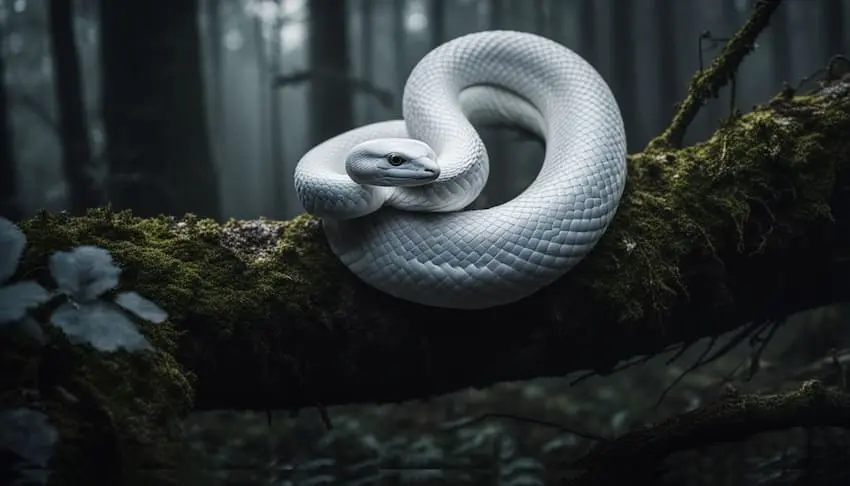
Unlike the ominous, shadow-laden connotations often assigned to black or brightly venomous snakes, the white snake occupies a paradoxical space. It marries the predatory, transformative nature of the reptile with the luminous, cleansing qualities of the color white.
- The Core Dichotomy: A white snake simultaneously represents profound spiritual purity (derived from its color) and raw, instinctual transformation (derived from its serpentine nature).
- Frequency and Context: These dreams rarely appear during periods of mundane routine. Instead, they typically manifest during life transitions, existential crises, or moments preceding significant personal breakthroughs.
- Behavioral Variations: The meaning of the vision hinges heavily on the snake’s demeanor. A calm, coiling white snake signifies balanced energy and spiritual alignment, whereas an aggressive, striking, or giant white snake points to repressed trauma, urgent wake-up calls, and impending upheaval.
- The Jungian Link: Drawing from Carl Jung’s theories on the "shadow," a white snake often serves as an emissary from the unconscious, dragging hidden secrets, unacknowledged fears, and forgotten truths into the light of conscious awareness.
Chronology: The Evolution of Serpent Symbolism in Human Consciousness
To fully grasp why the subconscious selects a white snake to deliver its messages, it is instructive to trace how humanity has historically interacted with this symbol.
Ancient Roots and Mythology
Long before the advent of modern psychology, ancient civilizations viewed white animals—including serpents—as sacred anomalies. In various indigenous, Celtic, and Eastern traditions, a white snake was rarely viewed as a pest or a threat; rather, it was codified as an omen of divine intervention.
- Ancient Celtic Lore: The white serpent was frequently associated with druidic wisdom, healing waters, and the immortal knowledge of the earth.
- Eastern Traditions: In certain Asian folklore traditions, white snakes are revered as guardian spirits, shape-shifters, or manifestations of ancestral protectors linked to prosperity and spiritual elevation.
The Freudian and Jungian Era (Late 19th to Mid-20th Century)
As humanity transitioned from mythology to psychoanalysis, the snake was stripped of its literal divinity and recast as a psychological mirror.
- Sigmund Freud viewed serpents primarily through a lens of repressed desires and phallic symbolism, where a snake bite represented anxieties regarding autonomy and bodily integrity.
- Carl Jung expanded this horizon, viewing the snake as a universal archetype of the collective unconscious. To Jung, the snake bridging the gap between earth and subterranean depths represented the healing process—the eternal cycle of shedding skin to become anew.
The Contemporary Era (21st Century)
In modern times, as holistic wellness, shadow work, and mindfulness practices have entered the mainstream, dreams of white snakes have been recontextualized. Contemporary dream analysts no longer look at these dreams with superstitious dread. Instead, they treat them as diagnostic data points for emotional regulation, energetic blockages (such as chakra imbalances), and psychological integration.
Supporting Data: Typologies of White Snake Dreams
Clinical and anecdotal dream research categorizes white snake dreams into several distinct archetypes. Each variation carries specific implications for the dreamer’s waking life.
1. Pure Intentions vs. Hidden Threats
The visual paradox of a gentle, winter-white hue housing a predatory creature serves as a masterclass in cognitive dissonance. Psychologically, this suggests that the dreamer is grappling with a situation—or a person—that appears benign on the surface but harbors hidden complexities. It acts as an internal warning: Do not take things at face value.
2. The Spiritual Awakening and Skin-Shedding
Just as a biological snake must shed its outer layer to grow, the dreamer encountering a white snake is frequently undergoing an invisible metamorphosis. This archetype correlates heavily with spiritual enlightenment, the purging of toxic relationships, and the conscious choice to cast off outdated belief systems that no longer serve the soul’s highest truth.
3. Energetic Flow and the Root Chakra
In somatic and energetic frameworks, snakes mirror the movement of energy (kundalini) within the body.
- A calm white snake indicates that the root chakra (Muladhara) is stable, promoting feelings of grounding, security, and balanced life force.
- An aggressive or terrified white snake points to severe energetic blockages, anxieties, and a pervasive lack of emotional equilibrium.
4. Shadow Work and the White Cobra
When the white snake takes the specific form of a cobra—combining the majesty and danger of the hood with pristine scales—the dream elevates in intensity. This represents the ultimate confrontation with power, wisdom, and danger. It demands that the dreamer respect the complexities of their own psyche, acknowledging that true wisdom often wears a fearsome face.
Official Perspectives: Psychological and Spiritual Frameworks
While dream interpretation is not an exact empirical science, established frameworks from psychology and holistic wellness offer structured lenses through which these visions can be examined.
The Jungian Perspective on Shadow Integration
According to modern Jungian analysts, dreaming of being bitten by a white snake is a direct summons from the unconscious. The bite forces the dreamer to wake up and pay attention to neglected emotional wounds.
"The white snake bite is not an attack in the malicious sense," notes one contemporary depth psychologist. "It is a forceful inoculation of truth. It hurts, yes, but the venom is meant to purge the system of emotional toxins that the ego has spent years avoiding."
The Holistic and Shamanistic Viewpoint
Holistic practitioners often interpret the white snake as a zoomorphic manifestation of a spirit guide or ancestral guardian. In these traditions, the presence of the serpent offers a protective aura. It validates that the dreamer is not alone in their psychological crucible, suggesting an invisible source of resilience is assisting them through their spiritual evolution.
Implications: Translating the Vision into Waking Life
A dream of a white snake ultimately demands action. It is a bridge between the subconscious theater of sleep and the concrete reality of waking life. To integrate the lessons of the white serpent, individuals are encouraged to ask themselves critical reflective questions:
- What areas of my life require a drastic shedding of old habits or toxic environments?
- Am I ignoring a potential threat because the exterior presentation is too comforting or seemingly pure?
- Where do I feel energetically blocked, and how can I restore stability to my foundational beliefs?
- What painful truths am I currently avoiding that, if faced with courage, could lead to profound personal healing?
Ultimately, whether interpreted as a divine messenger, an embodiment of the Jungian shadow, or a neurological reflection of inner turmoil, the white snake remains one of the most potent symbols the human mind can conjure. It reminds us that growth is rarely comfortable, purity requires constant self-examination, and the path to self-discovery often slithers through the darkest, most unexpected corners of our own subconscious.