









By: Global Technology & Science Desk
Published: September 2026
Main Facts: The Frontier of Neural Decoding and the N1 Implant
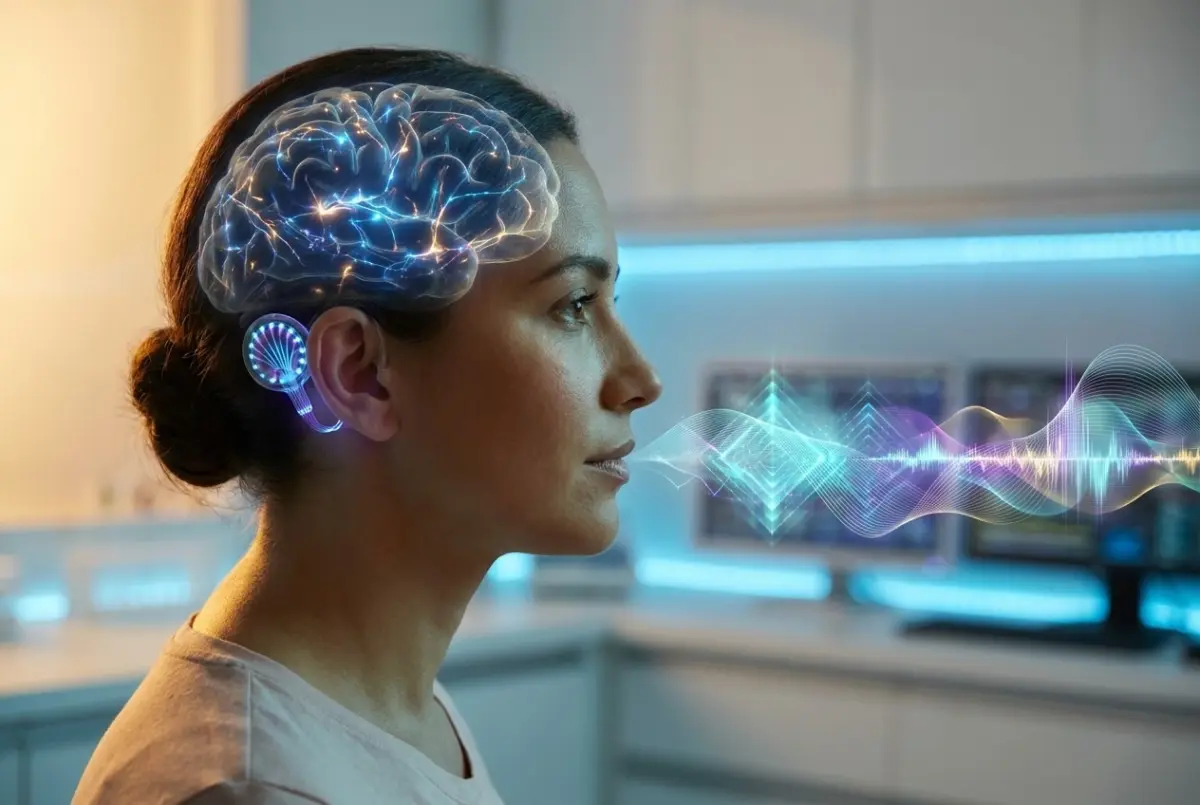
In a rapidly advancing field that bridges science fiction and clinical reality, Elon Musk’s neurotechnology venture, Neuralink, has released a compelling new video showcasing an unidentified clinical trial participant successfully communicating a message purely through imagined speech. The milestone demonstration highlights the evolving capabilities of the company’s flagship wireless brain-computer interface (BCI), the N1 implant.
The latest footage follows a notable public demonstration in March featuring a participant identified as Kenneth. Diagnosed in 2024 with motor neuron disease—commonly known as amyotrophic lateral sclerosis (ALS) in the United States—Kenneth became the second patient implanted under Neuralink’s groundbreaking VOICE clinical program in January. During that earlier demonstration, Kenneth addressed the public with a profound declaration, stating: "There we go. I’m talking to you with my mind."
Despite the profound medical milestones, Neuralink has continually underscored that its hardware and software remain strictly investigational. The N1 device has not yet received commercial approval from the U.S. Food and Drug Administration (FDA) or other international regulatory authorities.
At its core, the VOICE study is designed to evaluate whether the wireless N1 implant can accurately capture neural signals associated with intended speech and translate them seamlessly into text or audible synthetic words. The coin-sized device relies on tiny, flexible electrode threads surgically placed into the motor and speech-processing regions of the brain. These threads record raw neural activity, which advanced decoding software subsequently interprets.
While Neuralink envisions a future where its technology can restore mobility to paralyzed individuals and sight to the blind, the broader scientific community notes that long-term biocompatibility and stability remain uncertain. Nevertheless, public interest is surging; Neuralink has revealed that more than 10,000 individuals across multiple countries have officially enrolled in its patient registry program.
Researchers stress that current BCI systems do not indiscriminately read private thoughts. Instead, users must deliberately perform a trained mental action—such as attempting to speak, imagining specific finger movements, or visualizing the motion of a cursor on a screen. Stephen M. Fleming, author of Know Thyself, has noted that there is theoretically no barrier preventing humans from coupling their self-awareness with external electronic devices. He points out that the human brain demonstrates remarkable neuroplasticity, readily adopting external hardware and interpreting it as if it were a newly formed sensory organ or an extra limb.
Elon Musk, who has frequently championed the medical potential of neural engineering, originally described Neuralink’s clinical trajectory as a means of "restoring speech" while predicting future milestones like "conceptual telepathy" during a 2020 company presentation. Musk has made numerous bold prognostications regarding his company, claiming that Neuralink could one day allow humans to back up and restore brain states "like a game." He has also characterized the technology as an essential evolutionary step for humanity, giving rise to symbiotic computing where biological minds and artificial intelligence seamlessly merge.
Chronology: The Evolution of Brain-Computer Interfaces
The journey from academic theory to clinical reality spans decades of dedicated neuroscience research, moving from rudimentary signal processing to real-time inner speech decoding.
- Early Foundations (2020–2021): Academic milestones laid the groundwork for modern BCIs. In 2021, researchers at the University of California, San Francisco (UCSF), successfully translated raw brain activity into coherent sentences. Concurrently, cognitive researchers documented the decoding of complex neural states, including dream activity, visually perceived sentences, and pain perception from functional MRI (fMRI) data, building on pioneering work by neuroscientists such as Horikawa, Formisano, and Brodersen.
- Accelerating Throughput (2023): A research team at Stanford University achieved a historic breakthrough by enabling a participant with motor neuron disease to communicate at a remarkable rate of 62 words per minute using invasive electrode arrays. Around this time, UCSF teams successfully generated text, synthetic speech, and coordinated facial movements via a digital avatar driven by neural decoding.
- Technical Instrumentation (Mid-2020s): Literature published in the Journal of Neuroscience Methods by Benjamin H. Brinkmann, Mark R. Bower, Keith A. Stengel, Gregory A. Worrell, and Matt Stead detailed massive advancements in large-scale electrophysiology. Their work introduced rigorous protocols for the acquisition, compression, encryption, and secure storage of high-density neural data. Furthermore, researchers like Sungwook Yang perfected feedback-controlled piezo-motor microdrives for hyper-accurate electrode positioning during chronic single-unit recordings—a fundamental requirement for capturing the micro-signals interpreted by modern decoding software.
- The 2025 Breakthrough in Imagined Speech: Researchers achieved real-time decoding of deliberately imagined inner speech. Although accuracy remained inconsistent across sessions and experiments were restricted to a small cohort of participants, it proved that direct translation of silent thought was mathematically and physiologically achievable.
- Current Deployments (2026): Neuralink continues its VOICE clinical trial across a small cohort of patients under an Investigational Device Exemption (IDE), while international competitors in China and North America push commercial boundaries.
Supporting Data: Engineering and Clinical Realities
Behind the consumer-facing demonstrations lies an intricate ecosystem of hardware engineering, software architecture, and surgical precision.
The technical complexity of acquiring clean neural data cannot be overstated. Single-unit recordings require microscopic electrodes to remain stable within a constantly shifting biological environment. As glial scars form around implanted threads, signal degradation can occur, demanding sophisticated machine-learning algorithms that can adapt to changing neural landscapes.
Simultaneously, non-implant artificial intelligence models have emerged, capable of translating brain activity into readable text via external sensors. While these non-invasive approaches minimize medical risks, they introduce profound ethical dilemmas regarding mental privacy erosion and unprecedented cognitive surveillance, even as researchers acknowledge their life-changing utility for nonverbal patients.
Medical and Technical Risks
Surgical intervention within the central nervous system carries inherent hazards. Medical researchers frequently highlight risks such as intracerebral hemorrhage, post-operative infections, and seizure induction. Long-term reliability remains a formidable hurdle:
- Material Durability: Electrodes must maintain electrical continuity as brain tissue naturally shifts around them.
- Power and Connectivity: Implanted batteries, wireless transceivers, and onboard microprocessors must operate flawlessly for years inside a warm, corrosive biological environment.
- Skepticism: Despite Musk’s assertions that millions or billions of consumers will eventually line up for elective brain chips, scientists at institutions like MIT remain deeply skeptical regarding the long-term safety profile and necessity of invasive consumer BCIs.
Privacy and Regulatory Governance
The societal implications extend far beyond the operating room. The Australian Human Rights Commission recently issued a stark warning that information harvested by neurotechnologies poses a "significant risk to privacy." In a review of 30 consumer-facing neurotechnology firms, the commission discovered that 24 maintained privacy policies that potentially allowed them to commercialize or sell users’ raw neural data (though the study did not evaluate Neuralink’s clinical implant directly).
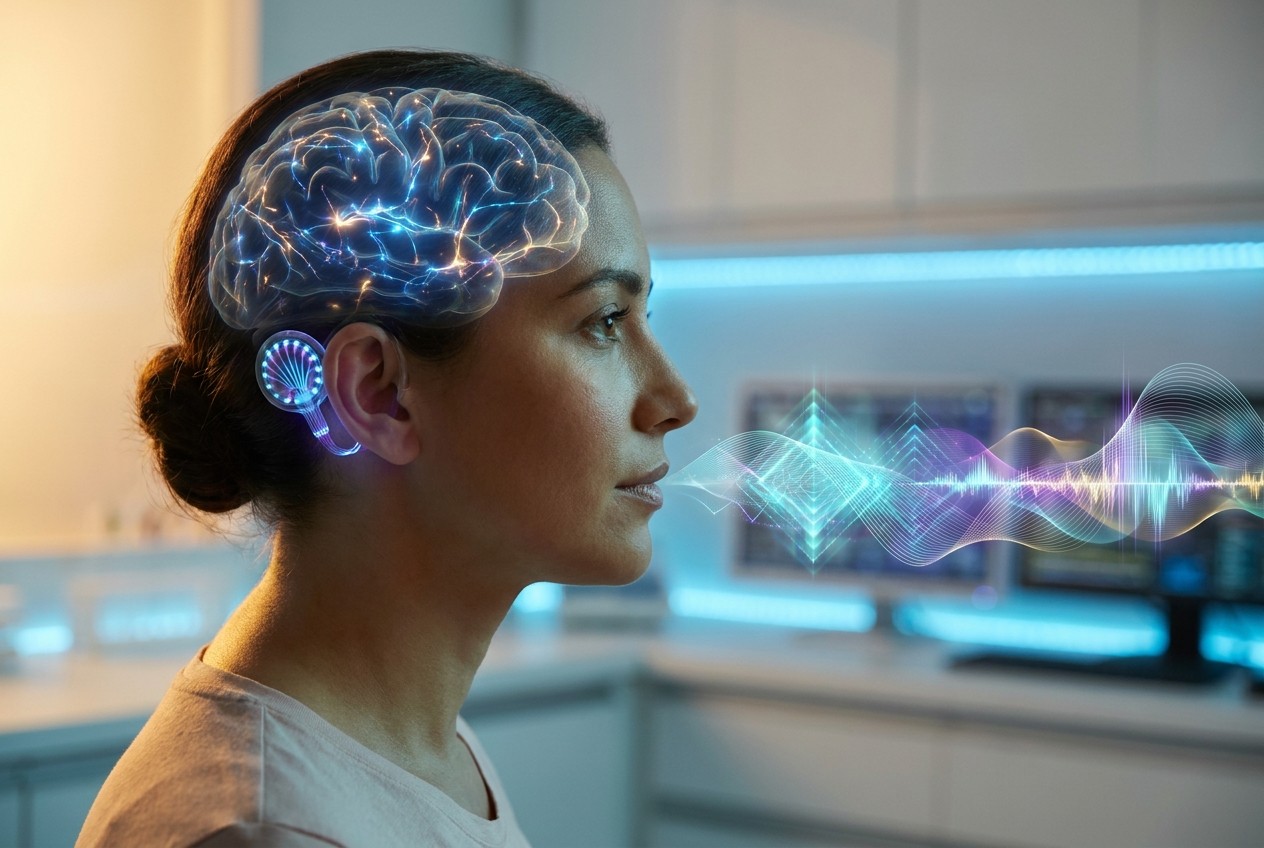
Independent analysts, including Willow Tohi, have cautioned that the long-term societal fallout of widespread brain implants remains completely unknown, raising persistent questions about whether the sanctuary of human thought can be protected from external manipulation or corporate monetization.
Additional context is provided by theorists such as Elana Freeland, author of Geoengineered Transhumanism, who has voiced concerns regarding conceptual "neural smart dust" and nano-electro-mechanical systems (NEMS) sensors functioning as microscopic MRIs. While such speculative horizons fuel broader cultural debates, they run parallel to verified, pressing concerns regarding Neuralink’s corporate history, including federal investigations into animal welfare violations where internal whistleblowers alleged that rushed preclinical testing led to avoidable animal suffering and mortality.
Official Responses and Regulatory Status
As the neurotechnology sector expands, regulatory bodies and corporate entities find themselves locked in a race to establish safety standards and commercial pathways.
Neuralink has consistently reiterated that its N1 implant remains an experimental, investigational device. In disclaimers accompanying its recent media releases, the company stated:
"This video features voluntary clinical trial participants sharing their personal experiences, which may not reflect all participants or future outcomes."
To date, the FDA has not cleared Neuralink’s technology for general commercial distribution. Clinical evaluations of the N1 implant are currently restricted to a tightly monitored cohort of nine patients operating under an active IDE.
The Global Commercial Race
While U.S. firms navigate rigorous regulatory phases, international competitors are accelerating toward commercialization. Notably, China has approved its first commercial brain-computer chip. Developed by researchers at Tsinghua University alongside Neuracle Technology, the device has successfully cleared clinical trials for commercial sale.
The Chinese "NEO" (Neural Electronic Opportunity) device is engineered to sit snugly between the skull and the dura mater, pressing an array of eight sensors against the outer membrane of the brain to capture neural signals without penetrating delicate neural tissue. In a landmark medical procedure, surgeons in China implanted the device into a patient with severe hand mobility impairments—marking what is widely documented as the world’s first commercial procedure utilizing an approved, non-invasive-adjacent BCI of its kind. The coin-sized NEO device successfully restored the patient’s ability to control a robotic prosthetic glove using only their focused thoughts.
Meanwhile, other commercial and academic teams are rapidly diversifying the market:
- Neurable: Specializes in non-invasive BCI technology, focusing on licensing "mind-reading" software to everyday consumer wearables to sidestep the invasive surgery required by firms like Neuralink.
- Science Corporation: Founded by Max Hodak, the co-founder and former president of Neuralink, this venture claims to be closing in on bringing a viable BCI product to market, bolstered by a substantial $230 million Series C funding round.
Implications: The Future of Human Cognition
The intersection of artificial intelligence and neuroscience represents the next great evolutionary frontier for humanity. As demonstrated by Neuralink’s latest trial footage, the ability to translate imagined speech into actionable communication is no longer a theoretical exercise confined to academic journals—it is a tangible, rapidly improving medical reality.
For paralyzed patients, individuals suffering from ALS, and those locked within their own bodies by neurodegenerative disorders, these technologies offer an unprecedented restoration of autonomy, dignity, and human connection. The promise of giving a voice back to the silent is a humanitarian achievement of the highest order.
However, the rapid maturation of brain-computer interfaces demands profound vigilance. As the technology transitions from clinical restoration toward consumer enhancement, society must confront complex ethical, legal, and philosophical questions. The integrity of mental privacy, the security of biological data against corporate exploitation, and the long-term neurobiological impacts of permanent foreign objects in the human brain are challenges that cannot be ignored.
Ultimately, the trajectory of neural engineering will depend not only on the brilliance of its engineering breakthroughs, but on the strength of the ethical frameworks erected to guide it. As we stand on the precipice of conceptual telepathy and symbiotic computing, humanity is tasked with ensuring that the tools designed to set minds free do not inadvertently forge new cages.