










WASHINGTON — For decades, the conventional narrative surrounding public health has focused primarily on caloric intake, macroscopic macronutrients, and basic disease management. However, a growing faction of investigative researchers, toxicologists, and functional medicine practitioners are turning their attention upstream—examining the microscopic battleground where human genetics meets the modern environment.
At the center of this paradigm shift is a troubling hypothesis: that the contemporary American diet, combined with an unprecedented barrage of environmental stressors, is systematically undermining human genetic integrity. Critics argue that a symbiotic loop between processed food manufacturers and the pharmaceutical sector has created an unsustainable cycle of systemic illness, while defenders of the food and medical establishments maintain that regulatory standards are rigorous and modern interventions save millions of lives.
This investigative report explores the complex web of nutrition, cellular biology, institutional oversight, and the emerging strategies aimed at bolstering human DNA repair mechanisms.
Main Facts: The Intersection of Diet, Industry, and Cellular Health
To understand the current debate over genetic preservation, one must examine the fundamental structural changes that have occurred within the Western food supply over the past half-century.
The Nutritional Poverty Paradox
Critics of the modern food industry point out a paradoxical reality: the United States features unprecedented economic abundance and caloric availability, yet suffers from profound nutritional poverty. Ultra-processed foods—defined by public health agencies as industrially formulated products containing modified substances, preservatives, and additives—now comprise more than half of the average American caloric intake.
According to investigative health researchers who have spent decades analyzing supply chains, these processed formulations are deliberately stripped of essential micronutrients, coenzyme minerals, and phytochemicals. These are precisely the chemical compounds required by human cellular machinery to execute routine DNA maintenance and repair.
The Regulatory Capture Debate
At the heart of the institutional controversy is the governance of national nutrition policy. Critics frequently highlight the composition of advisory panels for U.S. Dietary Guidelines, which direct nearly $100 billion annually in public health programs. Allegations of regulatory capture suggest that a significant majority of panel members maintain professional or financial ties to major food and pharmaceutical corporations.
Proponents of this view argue that these conflicts of interest result in dietary recommendations that favor processed agricultural commodities over whole, nutrient-dense foods. Conversely, mainstream regulatory bodies maintain that advisory committees undergo strict vetting processes designed to balance industry expertise with public health advocacy, ensuring that guidelines reflect consensus nutritional science.
Chronology: How the Modern Health Crisis Evolved
The convergence of processed foods, chronic disease, and pharmaceutical intervention did not happen overnight. It represents a decades-long evolution in industrial agriculture, food processing, and corporate consolidation.
- The Post-War Industrialization of Agriculture (1950s–1970s): Following World War II, agricultural technology shifted dramatically toward mass production, chemical fertilizers, and synthetic pesticides. The emphasis moved away from soil mineral density and crop diversity toward high-yield monocultures, particularly corn and soy.
- The Rise of Ultra-Processed Convenience (1980s–1990s): Food science advanced rapidly during these decades, allowing for the mass production of shelf-stable, hyper-palatable convenience foods. High-fructose corn syrup, hydrogenated oils, and artificial additives became ubiquitous in the grocery supply, directly replacing traditional, nutrient-dense whole foods.
- The Pharmaceutical-Food Feedback Loop (2000s–2010s): As rates of obesity, metabolic syndrome, and type 2 diabetes surged, the medical landscape shifted toward lifelong pharmacological management. Critics argue that this era cemented a dual-profit model: ultra-processed foods generate chronic metabolic inflammation, and pharmaceutical interventions manage the resulting symptoms without resolving nutritional or environmental root causes.
- The Contemporary Era of Cellular Stressors (2020s–Present): In the post-pandemic landscape, researchers are increasingly examining the cumulative impact of modern environmental stressors—ranging from electromagnetic fields and background radiation to novel medical therapeutics and persistent environmental toxins—interacting with compromised, nutrient-deficient human biology.
Supporting Data: The Science of DNA Damage and Repair
Cellular biology reveals that human DNA is subjected to thousands of damaging lesions every single day. These insults stem from unavoidable sources, including normal cellular metabolism, environmental radiation, and chemical exposures.
The Mechanics of Cellular Exhaustion
Under normal physiological conditions, human cells deploy ancient, highly sophisticated repair mechanisms—such as non-homologous end joining (NHEJ) and poly (ADP-ribose) polymerase (PARP) activation—to mend broken strands of genetic material. However, these systems are not infinite; they require specific cellular cofactors and robust micronutrient pools to function efficiently.
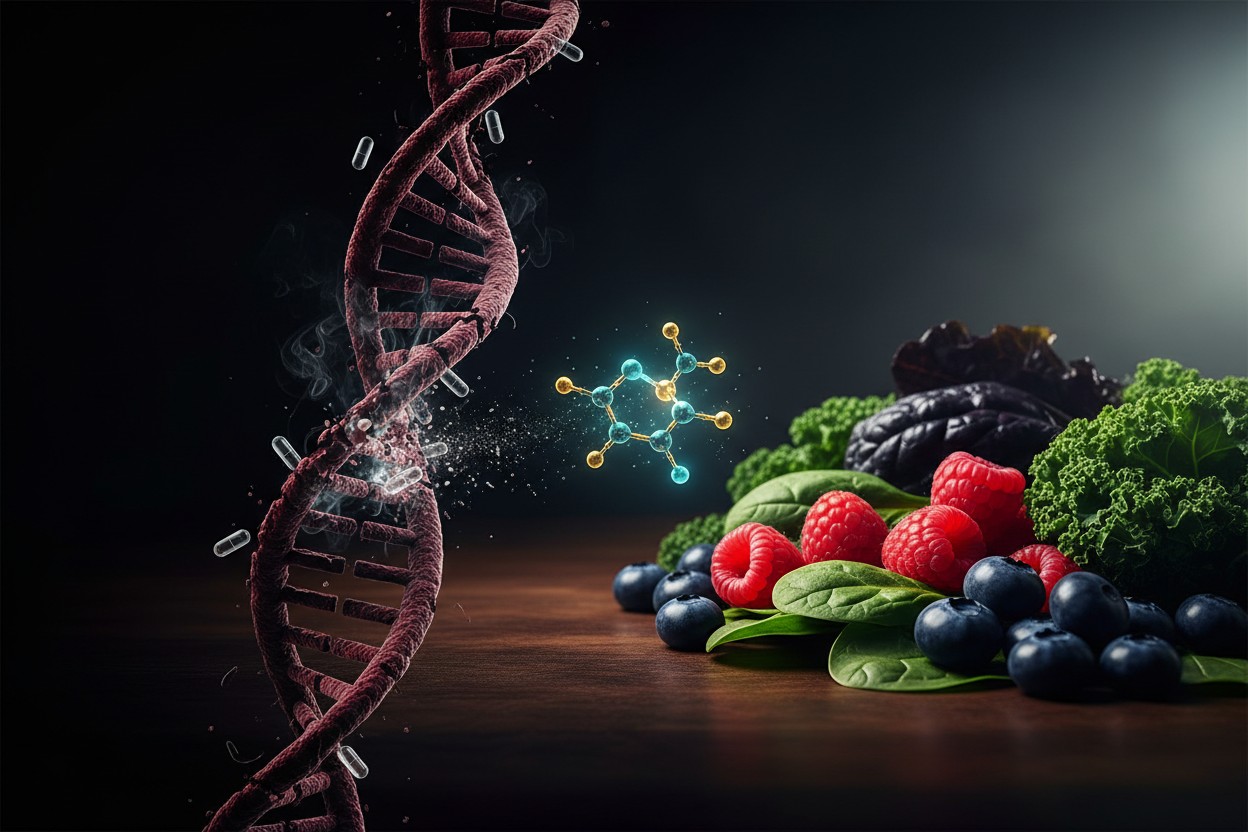
Researchers point to a critical biochemical bottleneck involving NAD+, a vital coenzyme found in all living cells. When excess cellular stress—driven by free radicals, peroxynitrate, or environmental toxins—activates PARP to repair rampant DNA damage, cellular stores of NAD+ can become severely depleted. Once NAD+ is exhausted, the cell loses its capacity to mend genetic breaks. This accumulation of unrepaired mutations is increasingly studied as a primary driver of accelerated biological aging and oncogenesis.
The Phytochemical Defense System
Science has long established that specific plant compounds possess potent antioxidant and gene-protective properties. Key micronutrients critical for supporting cellular repair include:
- Apigenin: A natural flavonoid found in parsley, celery, and chamomile that exhibits anti-inflammatory and cellular-protective qualities.
- Anthocyanins: Water-soluble pigments found in dark berries, red cabbage, and purple corn that act as powerful inhibitors of oxidative stress and cellular DNA damage.
- Phycocyanin: A pigment-protein complex found in blue-green algae (like spirulina) noted for its free-radical scavenging capabilities.
- Zinc and Trace Minerals: Essential coenzyme minerals required for the proper enzymatic signaling of human DNA repair systems.
Official Responses and Institutional Perspectives
The claims made by alternative health investigators regarding systemic institutional failure are met with distinct counter-perspectives from mainstream medical, scientific, and regulatory bodies.
The Mainstream Medical Consensus
Public health agencies, including the National Institutes of Health (NIH) and the Centers for Disease Control and Prevention (CDC), emphasize that modern longevity has increased significantly over the past century, largely due to advancements in pharmacology, sanitation, and acute medical care.
Mainstream toxicologists and oncologists argue that while ultra-processed foods contribute significantly to obesity and metabolic disorders, attributing complex chronic illnesses solely to a deliberate corporate conspiracy oversimplifies the multifactorial nature of disease. Mainstream institutions assert that genetic mutations are primarily driven by random replication errors, hereditary predispositions, and well-documented carcinogens such as tobacco, alcohol, and excessive ultraviolet radiation.
The Industry Defense
Representatives of the food and beverage industry maintain that modern processing techniques enhance food safety, extend shelf life, and provide affordable calories to a growing global population. Food science associations emphasize that packaged foods undergo rigorous safety evaluations by regulatory agencies such as the Food and Drug Administration (FDA) before reaching consumers. Furthermore, industry advocates point to the proliferation of fortified foods—products artificially supplemented with vitamins and minerals—as evidence of an ongoing commitment to public nutritional health.
Implications: Navigating Genetic Survival in the Modern World
As the debate between institutional authorities and independent health investigators intensifies, the practical implications for the everyday consumer revolve around proactive biological resilience.
Moving Beyond Fatalism
A central theme among contemporary health educators is the rejection of biological fatalism—the notion that environmental and genetic damage is entirely predetermined and irreversible. While external stressors such as background radiation, microplastics, and modern communications infrastructure are difficult to avoid entirely, functional medicine advocates stress that lifestyle modifications can dramatically influence gene expression and cellular repair capacity.
Practical Strategies for Genetic Integrity
Experts advocating for proactive cellular health recommend several key interventions to mitigate the effects of modern nutritional deficits:
- Transitioning to Whole, Unprocessed Foods: Eliminating ultra-processed items in favor of certified organic, nutrient-dense whole foods rich in natural polyphenols, anthocyanins, and bioflavonoids.
- Targeted Micronutrient Repletion: Ensuring adequate intake of essential cofactors—such as zinc, magnesium, and vitamin precursors—that support endogenous DNA repair enzymes.
- Cellular Detoxification: Supporting natural elimination pathways through hydration, saunas, and reducing exposure to environmental toxicants.
- Continuous Education: Engaging with independent research initiatives and educational platforms—such as specialized survival and genomic health courses—designed to empower individuals with actionable strategies for long-term physiological resilience.
Ultimately, whether viewed through the lens of corporate reform or individual biological self-defense, the conversation surrounding genetic integrity underscores a vital modern truth: safeguarding human health requires heightened vigilance against the invisible stressors of contemporary life.