By Siobhan Ball | Kitchen Witcheries
Published: September 26, 2026
“Why should a man die in whose garden grows sage?” — Regimen Sanitatus Salernitanum
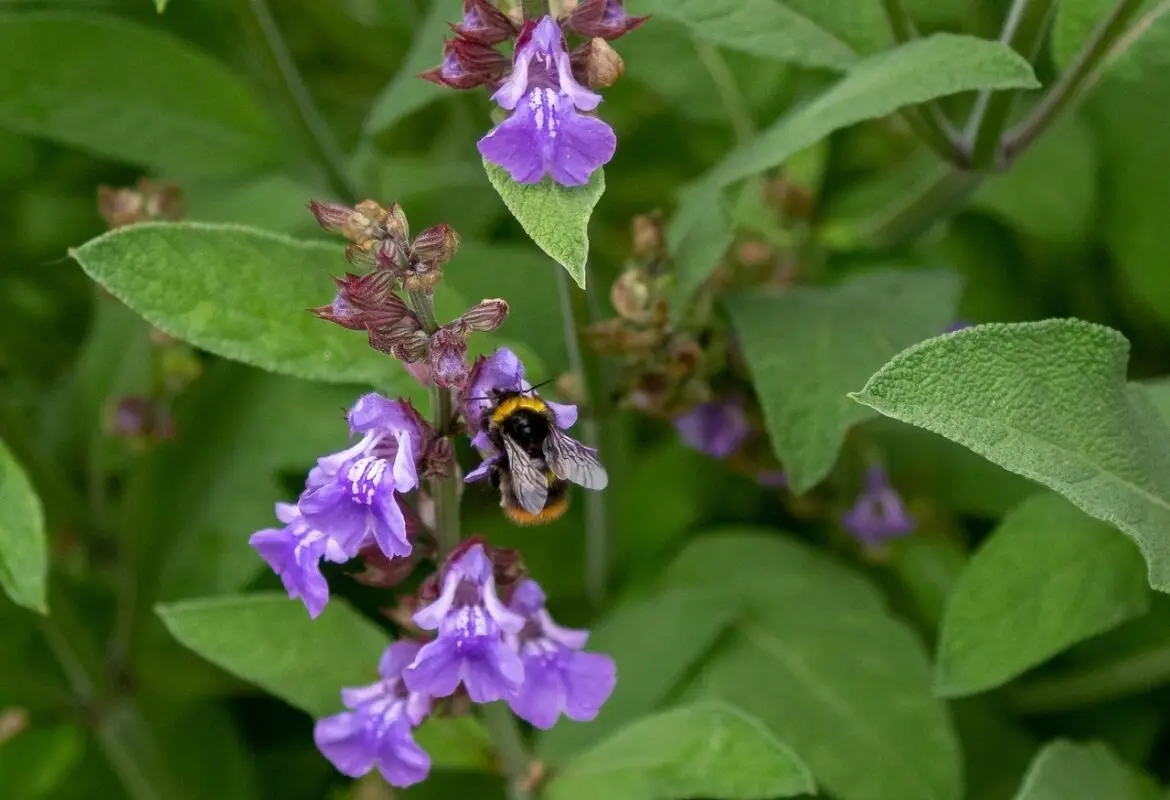
In modern contemporary kitchens, culinary sage (Salvia officinalis) is largely relegated to the spice cabinet, pulled out perhaps for a Thanksgiving turkey stuffing or a heavy butter sauce for autumn pasta. Like its botanical cousin parsley, its comfortable domesticity conceals a dense, fascinating web of magical practices, historical medicine, and folkloric traditions stretching back into the antiquity of the Mediterranean.
As the northern hemisphere tilts into crisp autumn weather and soup season officially arrives, it is worth looking past the dried leaves in our pantries to unearth the rich, strange history of a plant once believed to stave off mortality itself.
Main Facts: The Botanical and Historical Profile of Salvia
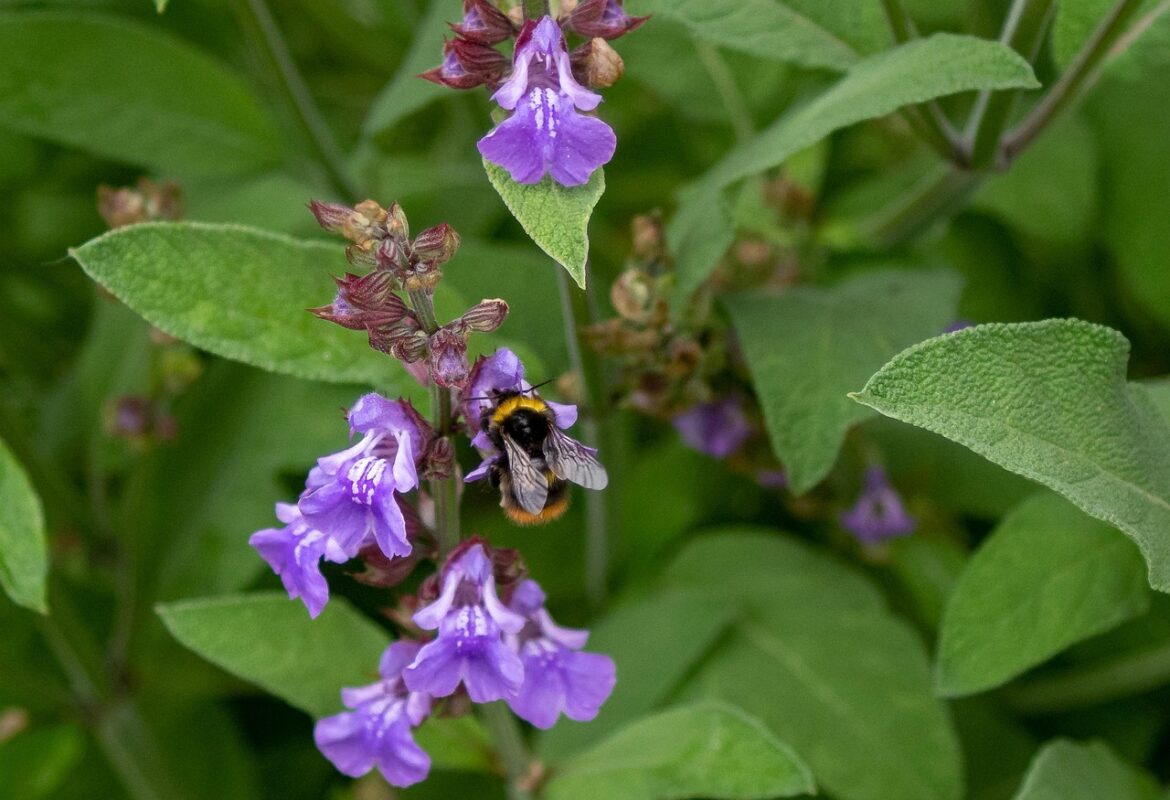
Sage belongs to the vast mint family (Lamiaceae) and boasts a pedigree as old as Western civilization. Long before it was measured out in pinches for home cooking, sage was recognized across Greece and Rome for its profound healing properties.
Its very botanical genus, Salvia, originates from the Latin verb salvere, which translates directly to “to heal” or “to save.” While classical and medieval physicians occasionally overstated its capabilities—it is safe to say sage does little to counteract a venomous snakebite—its reputation as a universal panacea expanded relentlessly through the centuries. By the medieval era, sage was a non-negotiable staple of the monastic physic garden. Common sage eventually earned the species identifier officinalis, a direct reference to the officina—the traditional storeroom where monasteries and apothecaries kept dried herbs, balms, and life-saving tonics.
However, the line separating medical science from ancient magic has never been rigid. In European folklore, sage occupied a liminal space bridging physical wellness, metaphysical protection, and the solemn rites of death and memory.
Chronology: From Monastic Physic Gardens to Victorian Divination
The cultural footprint of sage evolved systematically across centuries of European history, shifting from a classical medicinal staple to a medieval burial aid and, eventually, a tool for folk magic and romance.
The Classical and Medieval Eras: The Path to Immortality
In ancient and medieval herbals, sage was frequently elevated to hyperbolic status. One enduring medieval folk belief held that eating fresh sage every day during the month of May would grant a person eternal life. While this was almost certainly poetic hyperbole rather than literal dogma, the belief underscored the profound respect ancient populations had for the plant’s actual, observable health benefits—such as its antioxidant and anti-inflammatory properties.
Medieval Europeans also utilized sage to ward off the evil eye, believing that planting it near the home threshold created an energetic barrier against curses and malignant spirits.
The Renaissance and Death Rites: Preserving Memory
Should magic and medicine fail, sage had a final, somber role to play. Alongside rosemary and parsley, sage possessed deep symbolic ties to memory—a trait that modern science notes may be linked to its actual neuroprotective compounds, which can enhance cognition and preserve memory as humans age.
Historically, sage’s strong, pungent aroma was believed to keep miasma (pestilent night air) at bay. Because of its powerful antimicrobial properties, it became a favored burial herb and embalming agent across Europe from at least the Middle Ages onward. Archaeological records from northern and eastern Europe show that sage was:
- Tucked securely into coffin linings and headrests.
- Rubbed directly onto corpses in an effort to slow bodily decay.
- Tossed into open graves or planted directly over burial sites to symbolize the living community’s enduring remembrance of the deceased.
The Victorian Era: Love Spells and Toad Lore
As centuries progressed, sage infiltrated domestic folklore, governing everything from marital dominance to fertility. In various English traditions, a flourishing sage garden was interpreted as a sign that the women of the house held the domestic power, subverting patriarchal norms. In Wiltshire, conversely, it was taken as a sign of financial prosperity for the master of the house. More specifically, folk belief dictated that a healthy, thriving sage bush ensured that all future babies born into the household would be girls.
Simultaneously, sage became a cornerstone of coercive and divinatory love magic. One notorious folk charm involved writing the paired names of sacred and romantic dyads—Jesus and Mary, Adam and Eve, alongside the caster and their desired target—on sage leaves. These leaves were then reduced to powder and secretly fed to the unsuspecting target.
For young women looking to marry without resorting to coercion, sage served as a tool of divination. Across rural England, prospective brides utilized sage leaves on the eves of significant holidays, such as Midsummer or Christmas, to catch a prophetic glimpse of their future husbands through dreams.
Folklorist James Folkard recorded an elaborate group divination rite from the 19th century:

“Just after sunset, three, five, or seven young women are to go into a garden, where there is no other person, and each is to gather a sprig of Red Sage, and then, going into a room by themselves, set a stool in the middle of the room, and on it a clean bason full of Rose-water, on which the sprigs of Sage are to be put; and tying a line across the room, on one side of the stool, each maiden is to hang on it a clean smock, turned the wrong side outwards; then all are to sit down in a row, on the opposite side of the stool, as far distant as the room will allow, in perfect silence. At a few minutes after twelve, each maid’s future husband will take her sprig of Sage out of the Rose-water and sprinkle her smock with it.”
On the darker side of European folklore, sage shared a curious relationship with toads. Widely believed to be inherently poisonous, toads were thought to be magnetically attracted to sage plants. According to rural legend, toads would rub their bodies against the leaves to coat themselves in the plant’s healing properties to neutralize their own venom. Conversely, humans who consumed sage tainted by a toad were believed to face swift doom. While biologically entirely unfounded, the image of intelligent toads treating themselves with garden herbs—or the Piedmont belief that “in every Sage-leaf is concealed a little toad”—highlights the whimsical, imaginative space herbs occupied in the pre-modern mind.
Supporting Data: The Science Behind the Magic
While our ancestors relied on intuition and sympathetic magic, modern biochemistry has retroactively validated many of sage’s historical applications:
- Cognitive Function: Clinical studies on Salvia officinalis extracts have demonstrated improvements in memory, alertness, and attention span, supporting centuries of traditional use as a cognitive booster and herb of remembrance.
- Antimicrobial Properties: Rich in volatile oils such as thujone, camphor, and cineole, sage exhibits strong antibacterial and antifungal properties, explaining its historical efficacy in food preservation, embalming, and warding off spoilage.
- Anti-inflammatory Effects: High concentrations of phenolic compounds and flavonoids give sage potent antioxidant properties, backing up its ancient reputation as a foundational healing tonic.
Official Responses and Cultural Implications
In contemporary pagan, witchcraft, and herbalist communities, the conversation around sage has experienced a significant modern renaissance—though with important shifts in cultural consciousness.
While commercialized "smudge sticks" made of white sage (Salvia apiana) have faced severe ethical scrutiny due to overharvesting and cultural appropriation from Indigenous North American traditions, European culinary sage (Salvia officinalis) offers practitioners a historically rooted, locally sustainable alternative. Modern kitchen witches and green-path practitioners are increasingly turning back to common garden sage for hearth magic, protective boundaries, and seasonal cooking.
Culinary historians note that reclaiming these herbs for daily domestic use bridges the gap between historical preservation and modern sustainable living. By recognizing the magical heritage woven into everyday ingredients, home cooks transform simple meals into conscious rituals.
Recipe: White Bean Soup with Sage and Chorizo Crumb
To celebrate soup season and honor the rich, apotropaic history of the herb, here is a robust, comforting dish designed to warm the body and clear the energetic palate—complete with lucky culinary additions.
(Serves four)

For the Soup
-
Ingredients:
- 2 cups dried white beans (such as Cannellini or Great Northern)
- 1 whole bulb of garlic
- 1 large yellow onion, diced
- 2 stalks of celery, diced
- 2 large carrots, diced
- 6–8 fresh Salvia officinalis leaves
- 1 fresh bay leaf
- 4 cups quality vegetable stock
- Olive oil, coarse salt, and freshly cracked black pepper
-
Instructions:
- Soak the white beans overnight in the refrigerator in salted water.
- Slice the top off the whole garlic bulb, drizzle generously with olive oil, wrap in foil, and roast in the oven at 170°C (325°F) for 25 minutes until soft and caramelized.
- In a heavy-bottomed soup pot, sauté the diced onion, celery, and carrot in olive oil with a generous pinch of salt and pepper until translucent.
- Squeeze the roasted garlic cloves out of their papery skins directly into the pot. Add the drained beans, vegetable stock, bay leaf, and fresh sage leaves.
- Bring the liquid to a rolling boil, then reduce the heat to low, cover, and simmer for 1 to 1.5 hours until the beans are completely tender.
- Remove from heat and carefully blend the soup with an immersion blender until smooth and creamy. Season with salt and pepper to taste.
For the Chorizo Crumb
-
Ingredients:
- 1 link of cured Spanish chorizo, finely diced
- 1 cup coarse breadcrumbs (or panko)
- A handful of fresh sage leaves, roughly chopped
- Olive oil (if needed)
-
Instructions:
- In a skillet over medium heat, slowly fry the finely diced chorizo to render its rich, spiced red fats.
- Remove the crispy chorizo pieces with a slotted spoon and set aside, leaving the oil in the pan.
- Toss the chopped sage leaves and breadcrumbs directly into the chorizo-infused oil. Toast for approximately five minutes, stirring constantly until golden and crisp.
- Stir the reserved chorizo back into the toasted breadcrumb mixture.
- Ladle the hot white bean soup into bowls and scatter the fragrant, savory chorizo and sage crumb over the top in a decorative spiral. Serve any remaining crumb in a small dish on the side for guests to top up as desired.
Disclaimer: The Wild Hunt is not responsible for links to external content. To join the conversation on this post, visit the official The Wild Hunt Subreddit.