






By Global Health & Wellness Desk
For centuries, spices have served as the cornerstone of traditional medicine, coloring the pages of ancient pharmacopeias from Ayurvedic traditions to ancient Greek and Roman trade logs. Long before synthetic medicines and modern nutraceuticals dominated healthcare aisles, ancient civilizations turned to their pantries to preserve food, soothe ailments, and ward off disease.
Today, modern nutritional science is catching up with ancestral wisdom. While cinnamon frequently steals the spotlight for its remarkable capacity to support metabolic health, a wealth of clinical data and insights from registered dietitians reveal that common kitchen staples—including cloves, ginger, oregano, and turmeric—are nutritional powerhouses packed with disease-fighting bioactive compounds.
Far from being mere culinary accessories designed to add flavor to evening meals, these everyday herbs and spices function as an accessible "Kitchen Pharmacy," offering robust protection against oxidative stress, systemic inflammation, and chronic illness.
Main Facts: The Scientific Case for Spices
At the core of the medical interest in spices is their extraordinary concentration of antioxidants. According to comparative food metrics, herbs and spices frequently rank higher in antioxidant activity on a per-gram fresh-weight basis than many common fruits and vegetables.
To quantify this potential, researchers utilize the Oxygen Radical Absorbance Capacity (ORAC) database, a metric managed by the U.S. Department of Agriculture (USDA) that measures the antioxidant potential of foods in a laboratory setting. Top-ranked items in the ORAC database include unprocessed cocoa beans, pecans, and various aromatic spices.
The Cinnamon Benchmark
Cinnamon has long been cited by dietitians as a premier antioxidant-rich spice. Recently, a sweeping pooled analysis published in Frontiers in Nutrition examined 21 meta-analyses comprising 139 placebo-controlled comparisons. The findings revealed that regular cinnamon supplementation is statistically associated with improvements in key metabolic markers, including:
- Lowered glycated hemoglobin (HbA1c)
- Reduced total cholesterol
- Decreased low-density lipoprotein (LDL) cholesterol
- Regulated blood pressure levels
Beyond Cinnamon: The Bioactive Spectrum
While cinnamon sets a high clinical benchmark, other culinary mainstays match or exceed its properties. According to registered dietitians Seema Shah, Amanda Crowe, and Jennifer Bianchini, spices such as cloves, ginger, oregano, and turmeric contain deeply potent phytochemicals that neutralize free radicals—unstable molecules that weaken the immune system and accelerate cellular aging.
Common kitchen herbs and spices are rich in bioactive compounds exhibiting antibacterial, antifungal, antiviral, antioxidant, and anti-inflammatory properties. Because these culinary additions carry virtually zero calories while delivering broad therapeutic effects, nutrition experts increasingly recommend integrating them into daily meals as a foundational element of preventative healthcare.
Chronology: From Ancient Preservation to Modern Clinical Trials
To understand how spices transitioned from ancient preservatives to subjects of rigorous laboratory trials, it helps to examine their historical timeline and scientific evolution.
Antiquity and Early Trade (Pre-19th Century)
- Ancient Egypt and Asia: Civilizations utilized raw spices like ginger and turmeric not only for culinary enhancement but as core medicinal agents to treat digestive complaints, wounds, and systemic infections.
- Ancient Greece and Rome: Spices were heavily traded commodities prized for their robust antimicrobial properties. Romans and Greeks frequently deployed spices like ginger and oregano as natural food preservatives to delay spoilage in warm climates.
The Rise of Analytical Nutrition (Late 20th Century)
- 1990s—The ORAC Era: The USDA and Tufts University developed the ORAC scoring system, allowing researchers to laboratory-test foods for their ability to neutralize oxygen free radicals. Spices quickly dominated the top tiers of the index, outperforming traditional superfoods.
- Early 2000s—Targeted Animal and Cellular Research: Landmark trials began isolating specific plant compounds. For instance, a 2005 study published in the Journal of Applied Toxicology examined the protective antioxidant properties of black cumin and cloves in rats experiencing aflatoxicosis, laying the groundwork for understanding organ protection.
The Modern Clinical Landscape (2010–Present)
- 2015–2020—Microbiome and Cytokine Discoveries: Research pivoted toward how spices interact with the human gut microbiome and inflammatory pathways. A 2020 research review demonstrated that ginger can trigger anti-inflammatory cytokines while actively suppressing pro-inflammatory pathways. Furthermore, recent studies published in Nutrients highlighted that polyphenols in culinary spices enhance beneficial gut bacteria.
- 2025 and Beyond—Meta-Analyses of Spices: Large-scale pooled reviews, such as the comprehensive meta-analysis published in Frontiers in Nutrition, cemented the clinical validity of spice supplementation, linking them directly to stabilized blood sugar and improved cardiovascular panels.
Supporting Data: Deep Dive into the Four Powerhouse Spices
Each major culinary spice possesses a unique phytochemical profile that targets different bodily systems.
1. Cloves (Syzygium aromaticum)
Ground cloves boast an exceptionally high ORAC score, outperforming even cinnamon in laboratory antioxidant measurements.
- Key Compounds: Eugenol, flavonoids, and gallic acid.
- Therapeutic Actions: Eugenol is recognized for its potent antibacterial and antifungal properties. Recent 2025 studies indicate that clove pod antioxidants remain highly effective even at lower clinical doses.
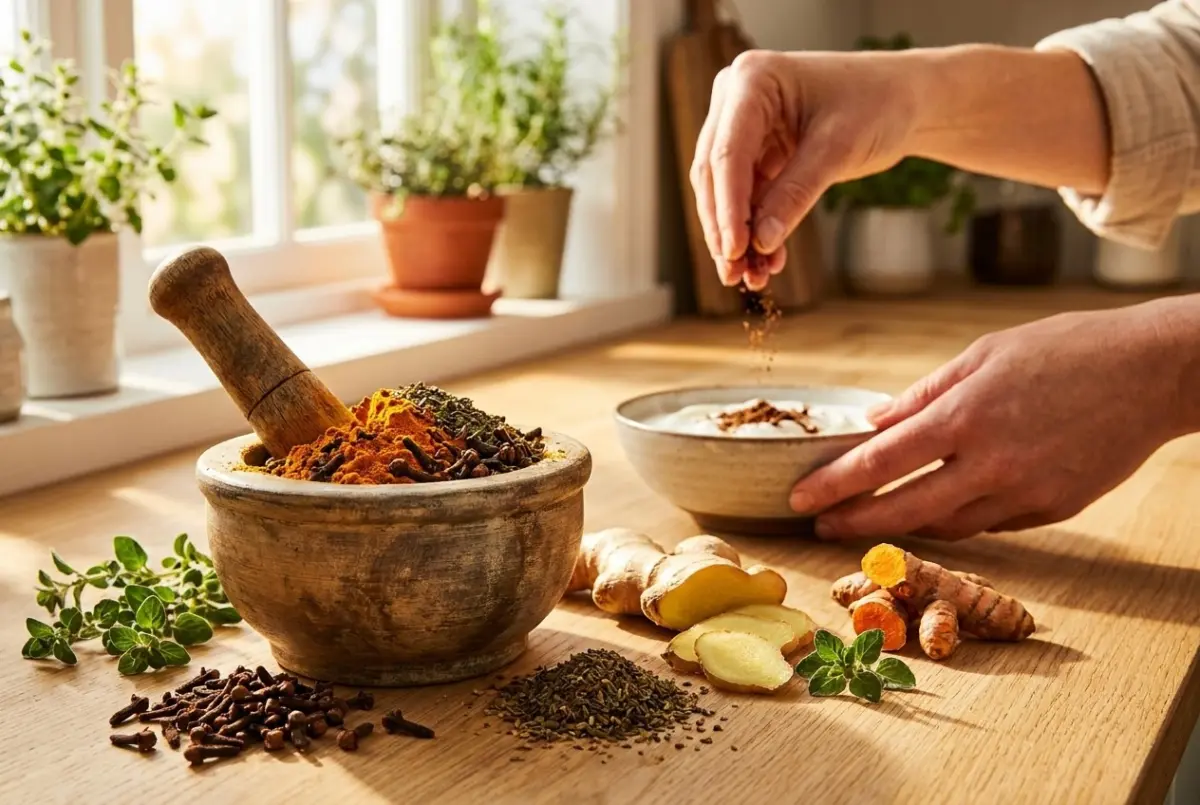
- Culinary Application: Amanda Crowe suggests adding a small pinch of ground cloves to morning yogurt, oatmeal, or baked goods for a concentrated antioxidant dose, while whole cloves can be infused into simmered hot drinks.
2. Ginger (Zingiber officinale)
Available in both fresh and dried forms, ginger features distinct chemical profiles depending on its preparation. Fresh ginger contains powerful aromatic compounds, while drying converts its primary active constituent, gingerol, into shogaols—both of which exhibit strong anti-inflammatory and anti-tumor characteristics.
- Key Compounds: Gingerols and shogaols.
- Therapeutic Actions: Research indicates ginger modulates immune responses by balancing inflammatory cytokines. Additionally, it promotes a healthy microbiome by encouraging the proliferation of beneficial gut bacteria.
- Culinary Application: Versatile in savory and sweet dishes alike, ginger safely enhances recipes while supporting digestive health.
3. Oregano (Origanum vulgare)
Ranking just behind cinnamon on the ORAC scale, oregano is far more than a pizza topping.
- Key Compounds: Flavonoids, thymol, carvacrol, and phenolic acids.
- Therapeutic Actions: Flavonoids act as powerful pro-oxidants under specific cellular conditions, signaling appropriate apoptosis (programmed cell death) to prevent abnormal cell proliferation. Oregano oil exhibits broad-spectrum antimicrobial and antifungal properties, actively balancing the gut microbiome.
- Culinary Application: Dried or fresh oregano can be easily folded into dressings, marinades, and pasta sauces.
4. Turmeric (Curcuma longa)
Deeply revered in Ayurvedic and Traditional Chinese Medicine, turmeric owes most of its health-promoting properties to its primary golden pigment.
- Key Compounds: Curcuminoids, most notably curcumin.
- Therapeutic Actions: Curcumin supports immune health, modulates inflammatory pathways, and mitigates oxidative stress. Clinical studies have linked it to improvements in metabolic syndrome, arthritic joint pain, and anxiety. Furthermore, a 2007 study in the Journal of Cellular Biochemistry demonstrated that curcumin helps prevent muscle mass loss by blocking specific protein upregulation.
- Culinary Application: Because culinary turmeric contains roughly 2% to 9% curcumin and is notoriously difficult for the human body to absorb on its own, dietitians recommend pairing it with black pepper (which enhances bioavailability via piperine) and dietary fats.
Official Responses and Expert Perspectives
As public interest in functional foods surges, medical professionals and registered dietitians offer nuanced perspectives on balancing culinary enthusiasm with clinical caution.
The Limits of Laboratory Metrics
Seema Shah emphasizes that while the ORAC database provides a helpful baseline for measuring antioxidant potential in a laboratory beaker, it does not fully capture how the human body absorbs, metabolizes, or utilizes these compounds in vivo.
"Laboratory measures of antioxidant capacity are fascinating, but they do not automatically translate to direct health outcomes without understanding bioavailability," Shah notes. For instance, while turmeric’s curcumin is a powerhouse molecule, its poor natural absorption means preparation methods—such as combining it with healthy fats and black pepper—are mandatory for therapeutic impact.
The "Kitchen Pharmacy" vs. Concentrated Oils
Integrative health practitioners frequently describe culinary herbs and spices as "The Kitchen Pharmacy." However, experts draw a sharp line between using spices in everyday cooking and utilizing highly concentrated extracts, essential oils, or heavy supplements.
- Amanda Crowe advises home cooks to focus on consistency rather than high quantities, recommending small, manageable culinary doses—such as a pinch of cloves in oatmeal or a dash of turmeric in soups.
- Jennifer Bianchini warns that while whole spices are overwhelmingly safe in standard recipe amounts, concentrated supplements can cause gastrointestinal distress, disrupt delicate gut flora if overused, or interact negatively with prescription medications (such as blood thinners).
- Safety Thresholds: Shah specifically cautions that high doses of ground cloves exceeding one-fourth of a teaspoon daily can place undue stress on the liver. Similarly, potent oregano oil and turmeric extracts should only be integrated under the direct supervision of a qualified medical professional.
Implications for Public Health and Daily Nutrition
The growing body of evidence surrounding culinary spices carries profound implications for modern preventative medicine. As chronic lifestyle diseases—such as coronary heart disease, metabolic syndrome, and autoimmune disorders—continue to burden healthcare systems, researchers increasingly point toward dietary gaps as a primary culprit.
Many nutrition scientists believe that widespread coronary and systemic inflammation is exacerbated by a dietary lack of natural antioxidants, which are required to protect circulating blood fats from dangerous oxidation.
Practical Takeaways for Consumers
- Prioritize Whole Foods Over Pills: Natural health advocates universally recommend incorporating antioxidant-rich spices directly into everyday home cooking rather than relying on expensive, highly concentrated synthetic pills.
- Embrace Moderation and Diversity: Adequately meeting daily phytonutrient requirements relies on a diverse intake of colorful plant foods, herbs, and spices. Moderation remains key; small, consistent amounts utilized across multiple meals yield better long-term safety and absorption than sporadic, massive doses.
- Consult Healthcare Providers: Individuals managing chronic health conditions—particularly those taking blood thinners, diabetes medications, or liver-metabolized drugs—should consult a physician or registered dietitian before introducing high-potency spice supplements into their routines.
Ultimately, turning to the spice rack offers a simple, cost-effective, and historically proven method to upgrade nutritional intake. By transforming everyday meals with the therapeutic power of cloves, ginger, oregano, turmeric, and cinnamon, modern consumers can harness the wisdom of ancient traditions to support lifelong vitality.