By Global Environmental Desk
Published: October 24, 2023
Main Facts: The Illusion of Direct Water Conservation
For decades, the standard environmental advice handed down to eco-conscious citizens has remained remarkably consistent: turn off the tap while brushing your teeth, fix leaky faucets, and—most persistently—shave a couple of minutes off your daily shower.
While well-intentioned, these behavioral nudges focus almost exclusively on direct, in-home water consumption. They ask individuals to make daily, conscious sacrifices in the name of planetary survival. But when environmental advocates crunch the numbers, a startling reality emerges: our greatest water consumption is not happening in our bathrooms. It is happening on our dinner plates.
According to data compiled by agencies like the U.S. Geological Survey (USGS), the water required to produce the food we eat dwarfs the water used in our domestic routines. While shortening a shower by two minutes saves a modest amount of water over the course of a year, that savings is routinely eclipsed by the production of a single, standard meal.
As sustainability experts begin to pivot away from "sacrifice-based" environmentalism toward systemic awareness, the focus is shifting from bathroom timers to agricultural footprints. The data suggests that if consumers truly wish to make a dent in their personal water usage, they are looking in the wrong room of the house.
Chronology: How the "Shorter Shower" Narrative Dominated Conservation
To understand how we arrived at an era where short showers are viewed as the gold standard of environmentalism, one must look back at the evolution of modern resource management.

The 1970s–1980s: The Birth of Municipal Conservation
Following widespread droughts in North America and a growing global awareness of resource scarcity, municipal water authorities needed immediate, highly visible ways to curb residential demand. Direct-use campaigns were born. Public service announcements targeted homeowners, encouraging them to install low-flow aerators, water their lawns less frequently, and shorten their showers. These campaigns had the immediate benefit of being easy to quantify and easy for the average citizen to understand.
The 1990s–2000s: Technological Improvements Meet Behavioral Nudges
As plumbing technology evolved, the introduction of the Energy Policy Act of 1992 mandated federal standards for low-flow plumbing fixtures in the United States, capping traditional showerheads at 2.5 gallons per minute (gpm). Despite these technological leaps, public messaging lagged behind, continuing to push individual behavioral changes—such as the two-minute shower reduction—as primary conservation tools.
The 2010s–Present: The Agricultural Awakening
With the advent of big data and comprehensive environmental calculators (such as the USGS water content tools), researchers began mapping the "virtual water" or "embedded water" footprint of consumer goods. Analysts quickly realized that focusing solely on residential taps ignored the vast amounts of water used upstream in supply chains, particularly in livestock and agricultural production. This realization sparked a modern shift: moving away from guilt-driven, direct-use conservation toward broader lifestyle choices that yield exponentially greater results with zero domestic sacrifice.
Supporting Data: Crunching the Numbers on Showers vs. Steaks
To appreciate the sheer scale of agricultural water consumption compared to residential habits, we must break down the mathematics provided by environmental watchdogs and the USGS.
The Shower Equation
Let us examine the standard advice: shaving two minutes off a daily shower.
- Flow Rate: A traditional, low-efficiency showerhead uses approximately 2.5 gallons of water per minute.
- Daily Savings: Cutting two minutes yields 5 gallons of water saved per day.
- Annual Savings: Multiplying 5 gallons by 365 days results in 1,825 gallons of water saved per year.
While saving over 1,800 gallons a year sounds commendable, it requires a daily, lifetime behavioral modification—a continuous series of small sacrifices where you step out of warm water before you are ready.

The Beef Equation
Now, let us examine the water footprint of livestock production, specifically beef. According to USGS and agricultural impact datasets, the water required to grow feed (such as alfalfa and grain), provide drinking water, and process livestock is immense.
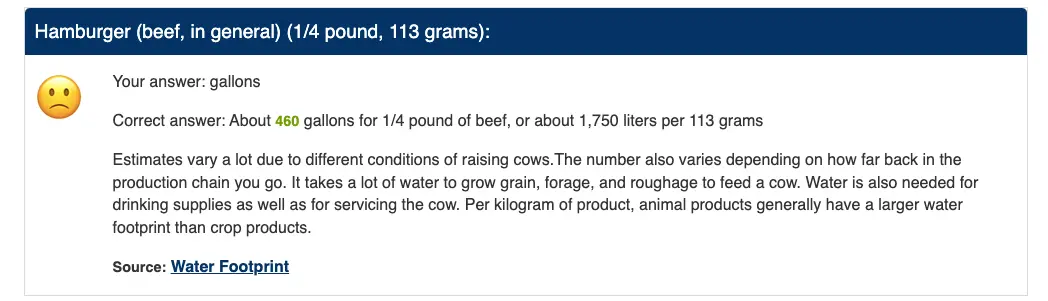
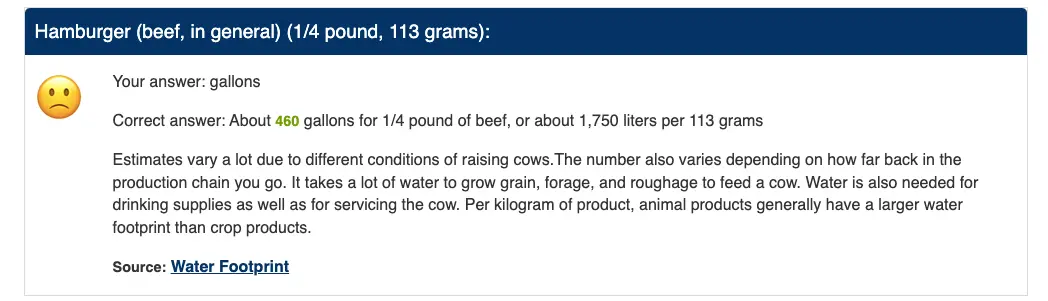
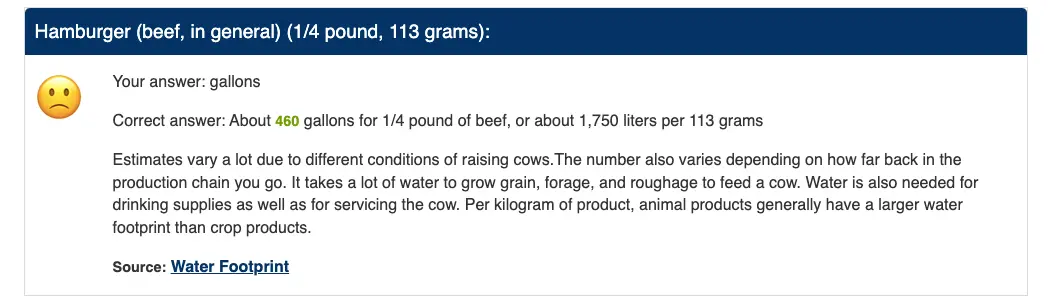
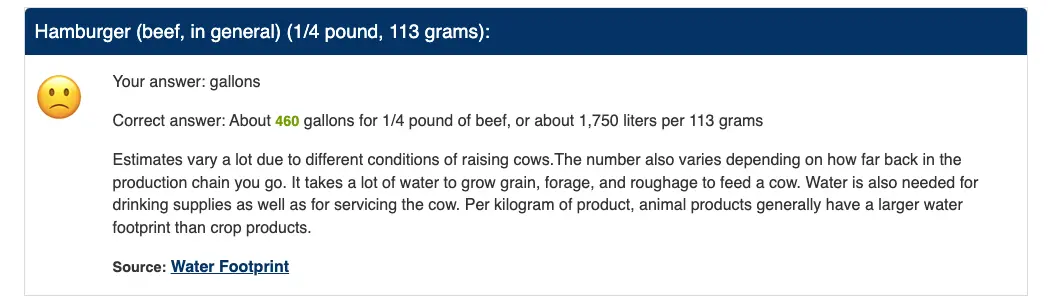
- Per Quarter-Pound: A single 1/4-pound beef burger requires approximately 460 gallons of water to produce.
- Per Pound: Scaling that up means a single pound of beef has a staggering water footprint of 1,840 gallons.
The Direct Comparison
When placed side-by-side, the comparison is staggering:
One single pound of beef consumes more water than reducing your daily shower by two minutes for an entire 365-day year.
To take it a step further: with a standard 2.5 gpm showerhead, it takes 736 minutes of continuous showering (more than 12 hours) to equal the water expended to produce just one pound of beef. Consumers are essentially faced with a choice: take a 12-hour shower, or eat a pound of beef—and both will draw the exact same volume from our global water reserves.
Official Responses and Expert Perspectives
Environmental scientists and sustainability entrepreneurs argue that the traditional messaging around water conservation is fundamentally flawed because it relies on guilt and deprivation.
Scott Cooney, a serial eco-entrepreneur, sustainability consultant, and author, has long championed a paradigm shift in how we approach green living.

"You hear it often enough—want to save the planet? Try shaving 2 minutes off your shower every day," Cooney notes. "And yes, you could, of course, do that. But doesn’t that feel like a sacrifice? We’re all about saving the planet, but doing so without it ever feeling like a sacrifice."
According to Cooney and fellow sustainability advocates, policies and public awareness campaigns must shift toward high-impact, low-friction changes. When consumers use tools like the USGS food impacts calculator, they routinely experience a moment of reckoning. Most people grossly underestimate the embedded water required to bring animal products—particularly beef and chicken—from farm to table.
Water resource managers echo these sentiments, noting that municipal conservation policies often target residential use because it is easy to regulate, whereas agricultural water use—which accounts for roughly 70% of global freshwater withdrawals—remains politically sensitive and difficult to reform through direct consumer mandates. Consequently, the burden of change has historically fallen on individual shower habits rather than dietary shifts.
Implications: A Shift Toward Sustainable, Frictionless Living
The realization that agricultural water footprints dwarf residential use carries profound implications for the future of environmental activism, public policy, and consumer habits.
1. Rebranding the Environmental Movement
For environmentalism to succeed on a mass scale, it must move away from the "hair shirt" mentality—the idea that saving the planet requires personal suffering, cold showers, and constant deprivation. By highlighting high-impact, low-sacrifice areas (such as reducing meat consumption a few days a week rather than timing showers with a stopwatch), advocates can make sustainable living accessible and appealing to a broader demographic.
2. Redefining "Water Footprints"
Consumers must be educated to look beyond the water coming out of their taps. True water conservation involves understanding "virtual water"—the hidden water embedded in clothing, electronics, and, most importantly, food. Public education campaigns should incorporate comprehensive calculators that illuminate these hidden supply chains.

3. Agricultural Innovation and Policy Reform
While individual dietary choices matter, the implications extend to the agricultural sector itself. Policymakers face mounting pressure to incentivize sustainable farming practices, improve irrigation efficiency, and encourage regenerative agriculture. Shifting subsidies toward less water-intensive crops and alternative proteins could yield monumental water savings that no amount of shorter residential showers could ever match.
Conclusion
Saving the planet does not have to mean shivering through abbreviated routines or feeling a constant sense of ecological guilt. By understanding where our resources are truly being consumed, we can make smarter, more impactful choices. The next time you consider racing against a kitchen timer to shorten your shower, remember: you might achieve far greater environmental good simply by rethinking what is on your plate.