







By Global Exploration & Cryptozoology Desk
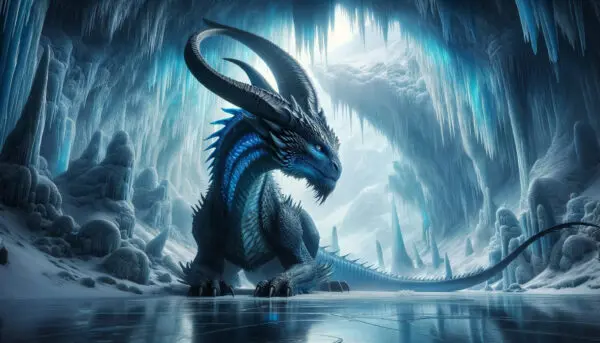
For as long as humanity has gathered around fires to ward off the dark, we have told stories of the impossible. From the fire-breathing dragons of European folklore to the shimmering sirens of ancient Greek maritime lore, mythical creatures have occupied a central space in human culture. They roar from the pages of epic poetry, gaze down from the architecture of medieval cathedrals, and haunt the margins of our oldest maps.
Yet, as science has mapped the globe, plumbed the oceanic trenches, and decoded the building blocks of life, these fantastical beasts have retreated into the realm of make-believe. Or have they?
While modern biology confirms that fire-breathing serpents and pegasi do not roam our forests, the intersection of cryptozoology, paleontology, and human psychology suggests that the boundary between myth and reality is far more porous than it appears. Behind every legend lies a complex interplay of human imagination, historical misunderstanding, and, remarkably often, encounters with real-world animals that simply defied early comprehension.
Main Facts: The Anatomy of Legend
At its core, cryptozoology—the study of hidden or legendary animals—seeks to investigate creatures whose existence has not been substantiated by mainstream science. However, mainstream science itself frequently bridges the gap between folklore and fact.
The primary fact underpinning the enduring legacy of mythical creatures is the vastness of the natural world. Despite centuries of exploration, science continues to discover new species at an astonishing rate. According to estimates by conservation biologists, millions of species remain undocumented, primarily in Earth’s deep oceans, dense tropical rainforests, and subterranean cave systems.
When historical humans encountered unfamiliar phenomena, their frameworks for understanding were shaped by culture, religion, and fear. Consequently, anomalous phenomena—such as the discovery of fossilized bones, the sighting of rare marine life, or encounters with unusually large predators—were often translated into legendary monsters.
The debate surrounding these creatures generally falls into three categories:
- Misidentified Real Animals: Ordinary fauna viewed under poor lighting, extreme weather, or psychological predisposition (e.g., mistaking a basking shark for the Loch Ness Monster).
- Cultural Archetypes: Creatures created to explain natural disasters, dangerous environments, or moral boundaries (e.g., sirens warning sailors of treacherous rocky shores).
- Prehistoric Echoes: Cultural memories passed down through oral tradition regarding extinct megafauna, such as woolly mammoths or saber-toothed cats.
Chronology: A History of the Fantastic
To understand how mythical creatures became embedded in human consciousness, we must examine the timeline of how they were documented, believed, and eventually re-evaluated.
- Ancient Antiquity (c. 3000 BCE – 500 CE): Early civilizations routinely integrated the miraculous into their histories. The Epic of Gilgamesh (c. 2100 BCE) features Humbaba, a terrifying guardian monster of the Cedar Forest. In ancient Greece and Rome, writers like Pliny the Elder cataloged exotic beasts in works like Naturalis Historia, blending genuine observations of African wildlife with exaggerated tales of griffins, satyrs, and cynocephali (dog-headed men).
- The Middle Ages and Age of Discovery (500 – 1700 CE): Cartography during this era famously utilized the phrase Hic sunt dracones (“Here be dragons”) to mark unexplored, perilous territories. Sea monsters were routinely illustrated on navigational charts, reflecting the genuine terror mariners felt when navigating uncharted oceans populated by massive, unfamiliar marine life.
- The Age of Enlightenment and Scientific Rigor (1700 – 1900 CE): As the scientific method took root, naturalists began systematically classifying life. Tales of unicorns and dragons were systematically debunked as anatomical impossibilities. However, this era also saw the discovery of actual prehistoric fossils, which inadvertently fueled new legends.
- The Rise of Modern Cryptozoology (1900 – Present): The 20th century birthed modern cryptid hunting. The widespread fame of the Loch Ness Monster began in earnest with the 1933 "Surrogate" photograph. Concurrently, the coelacanth—a fish thought to have gone extinct alongside the dinosaurs 66 million years ago—was discovered living off the coast of South Africa in 1938, proving that nature is entirely capable of keeping secrets.
Supporting Data: When Myths Meet Reality
To dismiss all mythical creatures as pure fantasy is to ignore how frequently science has validated the bizarre. Several famous legends possess undeniable roots in the natural world:
1. The Kraken and the Giant Squid
For centuries, Scandinavian sailors whispered terrifying accounts of the Kraken—a cephalopod of monstrous proportions capable of dragging entire warships down to a watery grave. While no Kraken has ever been captured, marine biology confirmed the existence of the Giant Squid (Architeuthis dux) and the even larger Colossal Squid (Mesonychoteuthis hamiltoni). Growing up to 43 feet in length and equipped with serrated suction cups and massive eyes, these deep-sea titans easily inspired centuries of maritime hyperbole.
2. Cyclopes and Fossilized Elephants
In ancient Greece, the discovery of oversized skulls featuring a single, large central nasal cavity in the caves of Crete and Cyprus likely gave rise to the myth of the one-eyed giants known as Cyclopes. Paleontologists note that these were the fossilized remains of Palaeoloxodon falconeri, an extinct species of dwarf elephant. To an ancient shepherd unfamiliar with mammalian anatomy, the nasal opening in the center of the forehead looked unmistakably like a single, giant eye socket.
3. Unicorns and the Narwhal
The legend of the unicorn—a majestic horse with a single, spiraled horn possessing healing properties—captivated European courts for centuries. While land-dwelling equine unicorns are fictional, the narwhal (Monodon monoceros) provided the physical proof. The animal’s long, helical tusk—actually an elongated canine tooth—was traded across Europe by Viking merchants as genuine unicorn horn, fetching astronomical sums.
Official Responses and Scientific Perspectives
Mainstream scientific institutions maintain a strict burden of proof regarding cryptids and mythical creatures, requiring peer-reviewed data, physical specimens, or reproducible evidence before acknowledging a species.
Organizations such as the Smithsonian Institution and various international zoological societies approach cryptozoology with a dual perspective. On one hand, they caution the public against unsubstantiated claims, hoaxes, and pareidolia—the psychological tendency to perceive meaningful patterns (like a face or a monster silhouette) in random visual stimuli.
On the other hand, mainstream science remains profoundly humble in the face of undiscovered biodiversity. Dr. Stuart Pimm, a conservation ecologist at Duke University, has frequently noted that thousands of vertebrate species and hundreds of thousands of invertebrate species remain unknown to science.
"The oceans cover over 70 percent of our planet, and we have explored less than five percent of the deep sea," notes marine biologist Dr. Elena Vance. "Every time we send submersibles into the abyssal zones, we find organisms that look like science fiction. If a giant squid or a megamouth shark can remain hidden for millennia, it is entirely understandable why ancient peoples populated the unknown oceans with leviathans."
Implications: Why the Myth Matters Today
The persistence of mythical creatures is not merely a testament to human gullibility; it plays a vital role in our psychological, cultural, and ecological relationship with the planet.
1. Environmental Stewardship
Mythical creatures often serve as cultural ambassadors for the natural world. The protection of marine ecosystems is frequently bolstered by public fascination with deep-sea mysteries. When people care about protecting the habitat of the Kraken (the deep ocean) or Bigfoot (old-growth temperate rainforests), conservation efforts receive a vital boost. The mystery breeds curiosity, and curiosity breeds protection.
2. The Psychology of Wonder
In an era dominated by satellite imaging, GPS tracking, and hyper-connectivity, the world can feel overly mapped and disenchanted. Mythical creatures preserve a sense of margin and wonder. They remind humanity that we do not know everything, and that the universe retains vast tracts of mystery. This psychological openness is crucial for scientific inquiry; every major scientific breakthrough begins with someone looking at the unknown and asking, "What if?"
3. Cultural Identity and Folklore
Folklore provides a vital window into the historical anxieties and values of human societies. Dragons represent the chaos of nature that must be subdued by civilization; mermaids symbolize the seductive, perilous allure of the untamed sea. Preserving these stories is essential for understanding the history of human thought.
Conclusion
As we look toward the future, the likelihood of finding a fire-breathing dragon snoozing in a suburban backyard remains precisely zero. Yet, the spirit of the myth endures.
The boundary between the impossible and the undiscovered is thinner than we often assume. As deep-sea exploration accelerates, genetic technologies advance, and remote ecosystems yield new secrets, we are reminded that reality is frequently stranger than fiction. Whether literal or symbolic, mythical creatures remind us of our eternal quest to understand the wild, untamed corners of our world—and the boundless depths of our own imaginations.