






By Global Exploration & Cryptozoology Desk
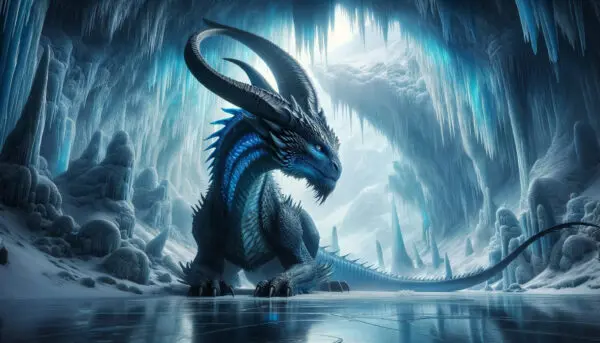
For as long as humanity has gathered around fires to share stories of the unknown, the boundaries between the real and the fantastical have been remarkably fluid. From the fire-breathing drakes of European folklore to the shimmering sirens of maritime lore, mythical creatures have occupied a central space in human culture. They roar from the pages of ancient epics, lurk in the margins of medieval maps, and continue to captivate the modern imagination through blockbuster films and viral internet hoaxes.
Yet, a fundamental question persists beneath the layers of folklore and fantasy: Are these legendary beasts merely products of vibrant human creativity, or could they be echoes of real animals lost to history, misunderstood by our ancestors, or still hiding in the unexplored corners of our planet?
To answer this, we must examine the intersection of biology, anthropology, and cryptozoology—the pursuit of animals whose existence has yet to be scientifically proven. By looking past the folklore, we find a fascinating narrative of human psychology, misidentified paleontology, and the profound mysteries of our natural world.
1. Main Facts: The Anatomy of a Myth
At the heart of the debate surrounding mythical creatures is a stark lack of empirical, peer-reviewed scientific evidence. Despite centuries of reported encounters, no verifiable specimen of a fire-breathing dragon, a winged pegasus, or a serpentine kraken has ever been brought into a laboratory. Modern biology tells us that certain fantastical traits—such as internal combustion chambers for breathing fire—defy known laws of physics and animal physiology.
However, science does not dismiss the origins of these legends entirely. Instead, researchers look to the real world to explain how myths are born.
- Misidentification of Extant Wildlife: Many mythical creatures have roots in real animals that witnesses simply failed to recognize. A giant squid undulating through dark waters easily transforms into a multi-tentacled kraken for a terrified sailor. A swimming bear, viewed from a distance in poor Scottish lighting, can easily be mistaken for a long-necked aquatic reptile.
- Paleontological Discoveries: Long before humans understood the concept of extinction, they routinely stumbled upon the fossilized remains of dinosaurs, woolly mammoths, and giant cave bears. Finding a massive skull with a single nasal cavity (such as that of certain prehistoric elephants) easily gave rise to the myth of the one-eyed Cyclops. Discovering massive claws and reptilian teeth in cliff sides naturally suggested the presence of dragons.
- Psychological Bias: Human perception is inherently flawed. Pareidolia—the tendency for the brain to perceive a meaningful image in a random visual pattern—causes people to see faces in rock formations or shadowy beasts in dense forests. When expectations are high, ambiguous stimuli are frequently interpreted as confirmation of a legend.
2. Chronology: A History of Wonder and Encounter
The timeline of humanity’s fascination with the extraordinary is as old as civilization itself. Across centuries, the narrative of mythical creatures has evolved from religious and cosmological explanations of the world to subjects of scientific inquiry and popular culture.
Antiquity to the Middle Ages: The Age of Terra Incognita
- c. 5th Century BCE: The Greek historian Herodotus writes of the griffin, a gold-guarding beast of the Scythian steppes. Modern paleontologists strongly suspect these stories were inspired by Protoceratops fossils eroding out of desert rocks in Central Asia.
- 1st Century CE: Pliny the Naturalist compiles Naturalis Historia, documenting an array of marvels, including humanoid races, satyrs, and sea monsters, cementing these entities as plausible inhabitants of distant, unexplored lands.
- Middle Ages: Medieval bestiaries merge zoology with Christian morality. Dragons, unicorns, and basilisks are cataloged alongside lions and elephants, serving as physical metaphors for virtues and vices.
The Rise of Scientific Skepticism
- 17th and 18th Centuries: The Age of Enlightenment brings rigorous taxonomy and exploration. As cartographers map the final unknown coastals and interiors of the globe, the geographical boundaries for mythical beasts shrink. Sea monsters gradually disappear from official nautical charts.
- 19th Century: Paleontology emerges as a formal science. Georges Cuvier and others prove that extinction is a real biological phenomenon, providing alternative explanations for the giant bones that populated ancient folklore.
The Modern Era of Cryptozoology
- 1933: The modern legend of the Loch Ness Monster explodes into global consciousness with the publication of the "Surgeon’s Photograph," triggering a century of tourism, sonar scans, and high-stakes amateur sleuthing.
- 1958: Loggers in Northern California discover massive, human-like footprints, birthing the modern cultural phenomenon of "Bigfoot" or Sasquatch.
- 21st Century: The digital age democratizes myth-making. Internet urban legends, such as the "Slender Man" or viral videos of supposed lake monsters, demonstrate that humanity’s appetite for mythical creatures remains completely unabated.
3. Supporting Data: Hoaxes, Mistakes, and Real-Life Counterparts
While the creatures of pure fantasy remain unverified, science frequently reveals that nature is far stranger than fiction. Several well-known myths have direct, scientifically documented counterparts that validate the observational roots of ancient storytelling.
| Mythical Creature | Likely Inspiration / Counterpart | Scientific / Historical Reality |
|---|---|---|
| The Kraken | Giant Squid (Architeuthis dux) | Growing up to 43 feet long with dinner-plate-sized eyes, these elusive deep-sea cephalopods naturally terrified historical mariners. |
| The Unicorn | The Narwhal (Monodon monoceros) | The spiral ivory tusk of the Arctic whale fueled the European market for "unicorn horn" medicine throughout the Middle Ages. |
| Giants / Cyclops | Pleistocene Megafauna | Mammoth and mastodon skulls feature a massive central nasal cavity that ancient peoples mistook for a single eye socket. |
| The Phoenix | The Megapode (Or general avian adaptation) | While no bird bursts into flames and rises from ashes, certain birds exhibit extreme resilience or life cycles associated with renewal. |
The Anatomy of a Hoax
Not all cryptozoological evidence can be chalked up to innocent misidentifications. History is littered with deliberate deceptions designed to capture public attention or generate profit.
The most famous example is the aforementioned 1933 Loch Ness photograph, later confessed to be a toy submarine fitted with a plastic-and-wood serpent neck. Similarly, the infamous "Feejee Mermaid" exhibited by P.T. Barnum in the 19th century was revealed to be the torso and head of a juvenile monkey stitched to the body of a fish. These hoaxes demonstrate a profound societal desire to want these creatures to be real, leaving the public vulnerable to manipulation.
4. Official Responses: The Scientific Community’s Stance
Mainstream scientific institutions—including major universities, natural history museums, and wildlife conservation groups—maintain a stance of rigorous skepticism balanced with cautious curiosity.
The Burden of Proof
Biologists and zoologists operate on the principle that extraordinary claims require extraordinary evidence. To officially recognize a new species, scientists require DNA samples, physical type specimens, or clear, undeniable photographic and behavioral data. To date, cryptozoology has failed to provide this standard of proof for animals like Bigfoot or the Loch Ness Monster.
Environmental DNA (eDNA) Testing
In recent years, however, official scientific methods have been deployed to investigate legendary habitats. Notably, in 2019, a team of international geneticists led by Professor Neil Gemmell conducted an environmental DNA (eDNA) study of Loch Ness. By filtering water samples from various depths, the team cataloged every scrap of DNA shed by organisms living in the lake.
While the study found no evidence of giant reptilian monsters (like a plesiosaur), it did reveal an abundance of eel DNA. This led to a prominent scientific hypothesis: the Loch Ness Monster sightings could plausibly be explained by the presence of unusually large European eels (Anguilla anguilla) inhabiting the murky depths.
5. Implications: Why Myths Matter Today
The enduring fascination with mythical creatures goes far beyond simple entertainment or gullibility. It carries profound implications for conservation, psychology, and our relationship with the natural world.
The Frontier of Discovery
The ocean covers over 70 percent of the Earth’s surface, and marine biologists estimate that millions of species remain undiscovered in the deep sea. Every year, science describes new species of glowing sharks, giant siphonophores, and bizarre deep-water cephalopods. The deep ocean and dense, unexplored jungles (such as the interior of the Amazon or the Congo basin) serve as legitimate modern-day realms of possibility. The reality of creatures like the coelacanth—a prehistoric fish thought to have gone extinct alongside the dinosaurs until it was caught alive off the coast of South Africa in 1938—proves that nature is fully capable of surprising us.
Environmental Conservation
Interestingly, mythical creatures often act as unexpected guardians of the environment. Indigenous folklore around the world frequently features forest spirits, water monsters, and sacred beasts designed to regulate human behavior. By teaching communities not to pollute certain rivers or clear-cut specific forests out of fear of angering a hidden monster, these myths served as early, highly effective conservation strategies.
Today, charismatic megafauna—both real and legendary—draw public attention to the fragility of ecosystems. Protecting the habitats where a "cryptid" is rumored to live often preserves the actual endangered species that share that ecosystem.
Conclusion
The quest for mythical creatures reflects something fundamental about the human condition: our profound reluctance to accept that we have mapped every corner of existence.
While a fire-breathing dragon is unlikely to set up a nest in your backyard anytime soon, the legends that birthed them remind us of the vastness of the unknown. They challenge us to look closer at the fossil record, to question our visual assumptions, and to continue exploring the deep oceans and dense jungles of our planet.
Ultimately, the mystery of mythical creatures ensures that the world remains a place of wonder. And who knows? As science continues to probe the deepest trenches of the sea and the farthest reaches of space, we may yet discover a real-life creature so astonishing, so profoundly incredible, that it instantly becomes a myth itself.