Main Facts
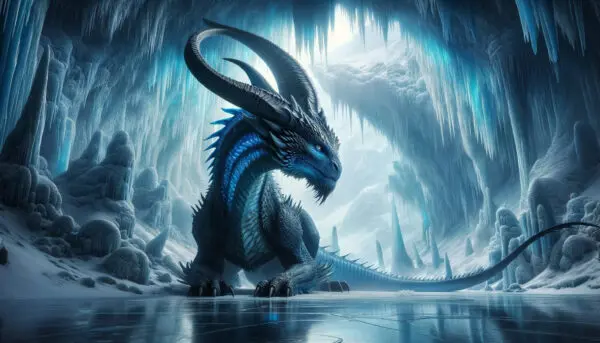
For millennia, humanity has been captivated by tales of extraordinary beasts. From the fire-breathing dragons of European folklore to the serpentine leviathans of the deep sea, mythical creatures occupy a unique space in human culture, sitting precisely at the intersection of mythology, psychological perception, and natural history.
Despite the lack of empirical, scientific evidence supporting the physical existence of classic fantasy creatures—such as winged, fire-breathing dragons, pegasi, or sirens—the cultural footprint of these beings is undeniable. Modern cryptozoology, folklore studies, and evolutionary biology suggest that many of these myths are not purely works of fiction. Instead, they are often exaggerated, misinterpreted, or mythologized versions of real-world phenomena, extinct megafauna, and extraordinary biological adaptations that early humans struggled to comprehend.
Key points surrounding the phenomenon of mythical creatures include:
- The Megafauna Connection: Many legends of giants, dragons, and behemoths trace their roots back to the accidental discovery of fossilized bones belonging to prehistoric creatures like woolly mammoths, mastodons, and dinosaurs.
- Misidentified Wildlife: A significant percentage of historical and modern cryptid sightings—including the Loch Ness Monster and Bigfoot—can be attributed to known, albeit elusive or misunderstood, biological species interacting with human observers under poor visibility conditions.
- Psychological Triggers: Human pareidolia (the tendency to perceive meaningful patterns or specific objects in random visual stimuli) and confirmation bias heavily influence how witnesses interpret ambiguous shapes in deep forests, dark waters, and stormy seas.
- Unexplored Ecosystems: With oceans remaining largely unmapped and deep-sea trenches hiding species previously thought impossible, science repeatedly proves that nature is capable of producing lifeforms stranger than fiction.
Chronology: A History of Myth and Encounter
The evolution of mythical creatures spans the breadth of human civilization, evolving from oral traditions used to explain the terrifying unknowns of the natural world to modern pop-culture phenomena.
Antiquity to the Middle Ages: The Era of Unknown Frontiers
- c. 3000 BCE – 500 BCE: Early civilizations in Mesopotamia, Egypt, and Greece conceptualize gods and monsters to explain natural disasters, celestial events, and dangerous predators. The Epic of Gilgamesh features Huwawa, the guardian of the Cedar Forest, setting a precedent for territorial beasts guarding sacred spaces.
- c. 350 BCE: Aristotle and later Roman naturalists like Pliny the Elder document strange beasts in their natural histories. While some descriptions are fantastical, others attempt to catalog foreign animals brought back from distant conquests, blurring the line between zoology and myth.
- Middle Ages: European cartographers routinely mark uncharted ocean territories and dense forests with the phrase "Hic sunt dracones" ("Here be dragons"). Tales of krakens sinking merchant ships and sea serpents terrorizing Viking longships become ingrained in maritime lore.
The Scientific Revolution and the Birth of Cryptozoology
- 17th – 19th Centuries: As global exploration maps out the continents, the literal space for mythical creatures shrinks. Science begins categorizing the natural world through Linnaean taxonomy. However, discoveries of bizarre real-world animals—such as the platypus in 1798, initially dismissed as a hoax crafted by stitching different animal parts together—prove that nature is far more inventive than previously assumed.
- 1933: The modern era of cryptozoology is arguably launched with the widespread reporting of the Loch Ness Monster ("Nessie") in Scotland, following the construction of a new roadside allowing motorists a clear view of the loch.
- 1967: The Patterson-Gimlin film captures footage of an alleged Bigfoot in Northern California, sparking decades of debate, analysis, and amateur expeditions into the Pacific Northwest timberlands.
The Modern Era: Science Meets Folklore
- Late 20th – Early 21st Centuries: Marine biologists capture footage of elusive deep-sea dwellers, such as the giant squid (Architeuthis dux) in its natural habitat for the first time in 2004 and 2012. These discoveries validate ancient mariner tales of tentacled monsters dragging ships into the abyss.
- Present Day: Paleontologists and folklorists increasingly collaborate to study "geomythology"—the branch of science investigating how oral traditions preserve historical memories of natural catastrophes and prehistoric lifeforms.
Supporting Data and Scientific Analysis
To understand why humans continue to search for mythical creatures, researchers across multiple disciplines have analyzed the convergence of paleontology, ecology, and psychology.
1. The Fossil Record as a Mythological Catalyst
Long before the formal establishment of paleontology in the 19th century, ancient societies routinely stumbled upon massive, fossilized bones eroding out of cliffsides and riverbeds. Lacking a framework for deep geological time, people invented explanatory narratives:
- The Gryphon Myth: Adrienne Mayor, a classical folklorist and historian of science, has convincingly argued that stories of the griffin—a creature with the body of a lion and the head and wings of an eagle—originated in the Gobi Desert of Central Asia. Ancient nomads mining gold frequently encountered the fossilized skeletons of Protoceratops, a dinosaur with a prominent beak and quadrupedal body, which matched the mythological specifications of the griffin.
- Cyclopes: The discovery of dwarfed elephant skulls on Mediterranean islands such as Crete and Sicily likely inspired Greek myths of the one-eyed giants known as Cyclopes. The large, central nasal cavity in the middle of an elephant’s skull closely resembles a single, massive eye socket to an untrained observer.
2. Misidentification of Extant Wildlife
Many cryptid sightings rely on the uncanny valley of animal behavior and appearance.
- The Loch Ness Monster: Skeptics and marine biologists suggest that many sightings of "Nessie" are actually large Atlantic salmon, swimming sturgeons, or playful otters creating localized wakes. Furthermore, floating timber or unusual wind patterns over the deep, cold waters of Loch Ness can easily trick the human eye into perceiving a moving, humped creature.
- The Kraken: For centuries dismissed as a drunken sailor’s yarn, the Kraken is now universally understood to be a stylized representation of the giant squid and the colossal squid (Mesonychoteuthis hamiltoni). Capable of reaching lengths of up to 43 feet, these cephalopods inhabit the pitch-black mesopelagic and bathypelagic zones of the ocean, occasionally crossing paths with sperm whales in epic, unseen battles that occasionally left scars and debris floating to the surface.
3. Psychological Factors: Pareidolia and Expectation
Human cognitive architecture plays a vital role in sustaining the mythos of hidden creatures. Studies in cognitive psychology demonstrate that the human brain prioritizes threat detection over absolute accuracy. In low-visibility environments—such as a dark forest canopy or a foggy lake—the brain instantly attempts to pattern-match ambiguous visual data into recognizable shapes, often defaulting to predators, human figures, or anomalous animals. When coupled with the cultural priming of ghost stories, campfire legends, and viral internet hoaxes, witnesses genuinely believe they have seen the extraordinary.
Official Responses and Expert Perspectives
The scientific community maintains a rigorous, evidence-based stance on mythical creatures, drawing a strict line between documented zoology and speculative folklore, while simultaneously acknowledging the value of exploration.
The Zoological and Anthropological Viewpoint
Mainstream zoologists emphasize that while new species are discovered regularly—typically numbering in the thousands each year, mostly among insects, amphibians, and deep-sea marine life—the discovery of large, undiscovered terrestrial megafauna (such as a breeding population of multi-ton primates like Bigfoot or aquatic reptiles like plesiosaurs) is biologically and ecologically implausible.
Dr. Stuart Pimm, a conservation ecologist at Duke University, notes:
"Large mammals and reptiles require viable breeding populations to survive over generations. A population large enough to avoid inbreeding and extinction would leave an unmistakable footprint—through scat, remains, ecological disruption, and interaction with local food webs. The fact that we find zero physical evidence of these creatures in modern ecosystems tells us they simply do not exist in the physical realm."
The Folklore and Cultural Perspective
Conversely, folklorists and anthropologists argue that dismissing these creatures entirely misses the cultural purpose they serve. Dr. J.P. Mallory, an authority on Indo-European studies, points out that mythical creatures often act as moral guardians, metaphors for environmental dangers, or mechanisms for expressing humanity’s complex relationship with the wild.
"Dragons, for instance, are rarely just monsters," Dr. Mallory explains. "In Western traditions, they represent chaos, greed, and the untamed wilderness that must be subdued by civilization. In Eastern traditions, they embody wisdom, rain, water, and cosmic balance. They are projections of human values and fears onto the canvas of the natural world."
Implications: The Ongoing Quest for Discovery
The fascination with mythical creatures carries profound implications for modern science, environmental conservation, and human curiosity.
1. Driving Deep-Sea and Rainforest Exploration
The enduring appeal of cryptids and sea monsters acts as a powerful cultural engine driving actual scientific exploration. When cryptozoologists search for anomalies, oceanographers and marine biologists map the deep sea. The concerted push to explore the deepest trenches of the ocean—such as the Mariana Trench—is fueled not only by climatology and geology, but by the lingering, romantic question: What else is down there?
2. Environmental Awareness and Conservation
Mythical creatures frequently become ambassadors for real-world conservation. Organizations protecting endangered rhinos often lean into their unicorn-like mystique; conservationists highlighting the plight of the giant squid utilize the legacy of the Kraken to foster public awe for marine ecosystems. By anchoring ecological preservation to the sense of wonder inspired by myth, educators can successfully engage younger generations in STEM fields and environmental stewardship.
3. The Boundary Between Reality and Imagination
Ultimately, the cultural persistence of mythical creatures reveals a fundamental truth about human nature: we are an exploratory species that refuses to accept that our world has been completely mapped out. Even as satellites scan every square inch of the globe and genome sequencers decode the building blocks of life, the human imagination stubbornly carves out spaces for the unknown.
As we continue to probe the dense canopies of the Amazon, the icy depths of the polar seas, and the boundless expanses of the cosmos, the spirit of the mythical creature endures. Whether dwelling in ancient folklore or inspiring future scientific discoveries, these legends remind us of a vital truth: our planet remains a place of profound mystery, where the boundary between the possible and the impossible is endlessly fascinating.