








LOS ANGELES — As blistering summer temperatures sweep across the country and the risk of heat-related illness escalates, health experts are shifting their focus beyond the traditional advice of simply carrying a water bottle. In a recently published guidance report, UCLA Health has spotlighted 15 nutrient-dense foods with exceptionally high water content that can significantly contribute to daily fluid intake, offering a flavorful and practical defense against dehydration.
The comprehensive advisory arrives at a critical juncture. With the human body composed of at least 60% water, maintaining a precise fluid balance is vital for everything from regulating core temperature and preventing infections to removing metabolic waste and delivering essential nutrients to cells. While drinking fluids remains paramount, health officials note that the average human body typically derives about 20% of its daily water needs directly from the foods we consume, with raw fruits and vegetables leading the charge.
Main Facts: The Anatomy of Hydration and UCLA’s Top Picks
According to the UCLA Health report, any fruit or vegetable boasting a water content of greater than 80% serves as an exceptional choice for hydration. However, the institution’s experts drilled down further, identifying a select group of whole foods with a water content exceeding 92% that provide the absolute best results for maintaining internal fluid balance.
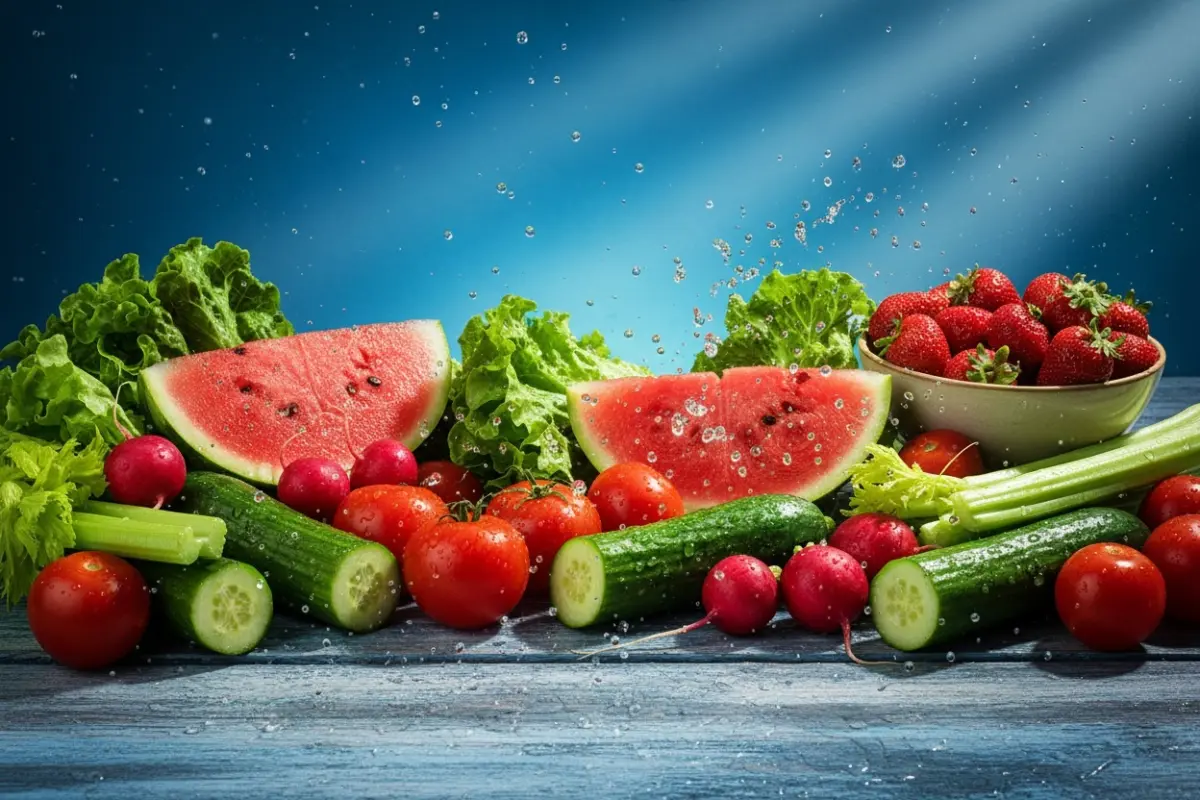
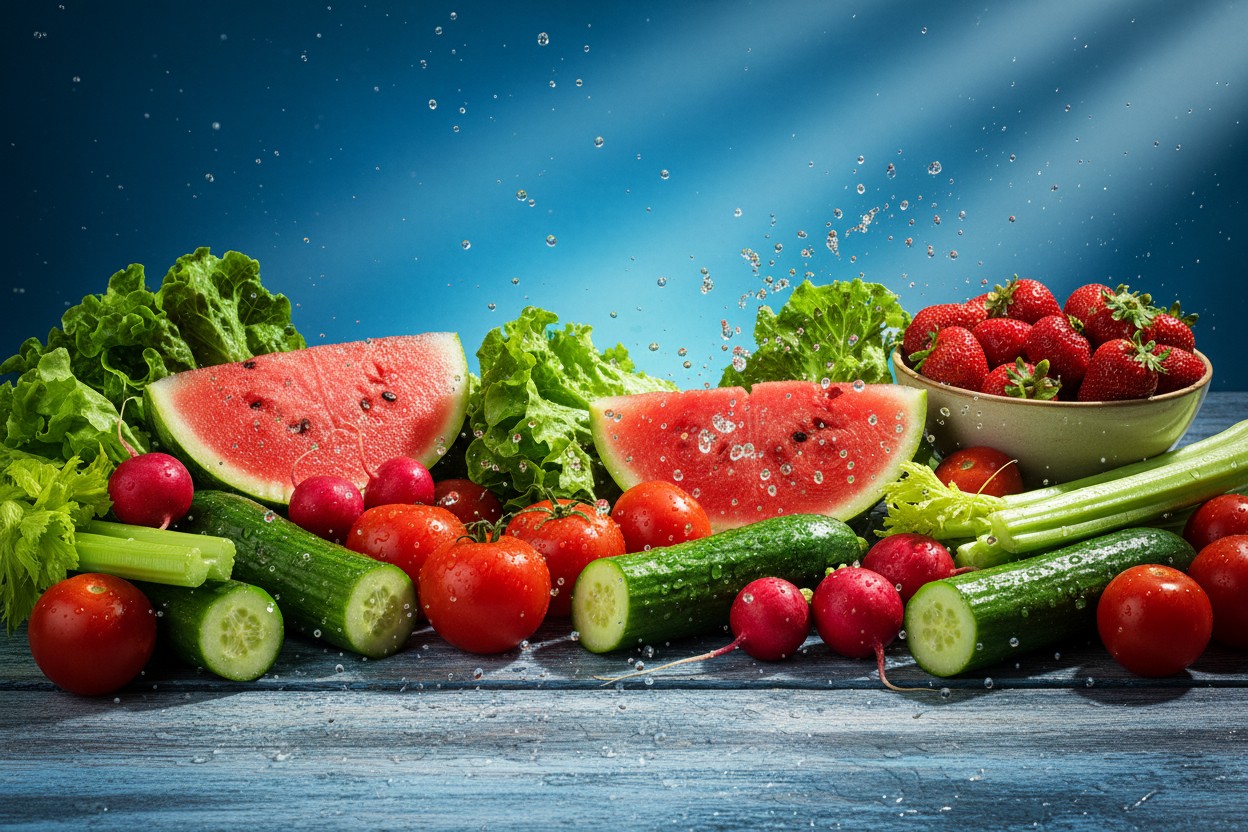
Topping the charts are cucumbers and iceberg lettuce, which tie for the highest water content among solid foods at a staggering 96%. Closely trailing them at 95% water are celery, radishes, and romaine lettuce.
Beyond sheer fluid volume, these plant-based powerhouses pack heavy nutritional payloads:
- Cucumbers: Boasting roughly 95% water, they contain minimal fat, carbohydrates, and sugar, making them an ideal low-calorie snack.
- Tomatoes & Watermelon: Both clocking in with high water metrics (tomatoes at 94%), these red-hued produce items are rich in lycopene, a potent antioxidant known to help protect cells from damage.
- Leafy Greens & Cruciferous Veggies: Spinach delivers vital calcium, magnesium, iron, and potassium. Meanwhile, cabbage, cauliflower, mushrooms, and bell peppers (ranging from 92% to 94% water) offer dense arrays of vitamins and dietary fiber. Notably, cooking can sometimes alter these metrics; cabbage rises to 94% water when cooked, and cooked cauliflower provides 93%, while mushrooms are ideally consumed raw to maximize their water retention.
- Squash Varieties: Zucchini and summer squash both maintain a 94% water profile, proving versatile for both raw and cooked culinary applications.
Chronology and Context: Evolution of Hydration Science in Extreme Conditions
The understanding of fluid balance has evolved significantly over decades, moving from a simple "eight glasses a day" rule to a nuanced, dynamic science accounting for body weight, environment, and physical exertion.
- Historical Baseline: For generations, nutritional advice relied on blanket statements regarding fluid consumption. However, clinical understanding has increasingly recognized the synergy between solid food ingestion and fluid homeostasis.
- Military and Athletic Integration: Decades of physiological research—particularly from specialized institutions like the U.S. Special Operations Command and Navy SEAL nutrition programs—have mapped the exact perils of dehydration during high-stress, high-heat operations. Historical military nutrition guides have long underscored that sweat output increases exponentially in hot weather and during prolonged exertion. These protocols established that all lost fluids must be aggressively replenished daily, explicitly noting moisture-rich foods as a primary vehicle for rehydration.
- The Modern UCLA Guidance: Building on this foundation of military and sports science, UCLA Health’s recent publication formalizes these principles for the general public. As urban heat islands expand and summer heatwaves become more prolonged and intense due to shifting climate patterns, health institutions are proactively releasing seasonal advisories to prevent spikes in heat exhaustion and heatstroke.
Supporting Data: Metrics, Deficits, and Recommended Intakes
The human body operates on delicate margins, and even mild dehydration can trigger a cascade of physiological and cognitive disruptions. According to UCLA Health data, insufficient water intake directly correlates with:
- Physical ailments: Constipation, dry mouth, dull skin, chronic fatigue, and debilitating tension headaches.
- Cognitive and neurological impacts: Impairments in sleep quality, memory retention, information processing speed, and emotional regulation or mood stability.
To combat these risks, nutritionists recommend moving away from guesswork. Sarah Adler, a performance dietitian with UCLA Health Sports Performance (Powered by Exos), recommends a personalized baseline: consuming between half an ounce to 1 ounce of water per pound of body weight daily. Adler notes that while this formula provides a solid framework, exact requirements fluctuate significantly based on an individual’s specific body composition, daily activity levels, and environmental exposure.
Furthermore, hydration does not exist in a vacuum of plain water. Adler points out that coffee, tea, and flavored still or sparkling water also contribute meaningfully to a person’s fluid ledger.
From a broader regulatory and clinical standpoint, established health guidelines—such as those outlined in Susan G. Dudek’s Nutrition Essentials for Nursing Practice—cite an Adequate Intake (AI) for total water that amalgamates both liquids and foods. The established levels stand at 3.7 liters per day for men and 2.7 liters per day for women. When factoring in that roughly one-fifth of this volume comes from food, the inclusion of water-dense produce shifts from a dietary preference to a physiological necessity.
Official Responses and Expert Insights
Medical professionals and sports dietitians are rallying behind the push to "eat your water," emphasizing that incorporating high-moisture foods offers a dual benefit that drinking a glass of water alone cannot replicate.
"Eating a diet heavy in produce gives the body essential vitamins, minerals, and dietary fiber while simultaneously boosting daily water intake," notes the UCLA Health report.
Experts advocate for creative culinary integration rather than forcing rigid dietary changes. Practical applications include:
- Prepping cucumber sticks paired with protein-rich nut butter.
- Crafting grated radish slaws or incorporating grilled zucchini into meals.
- Tossing water-dense Chinese cabbages like bok choy (which contains an impressive 96% water) directly into fresh salads.
- Blending celery into cold soups, which nutrition insights suggest retains more of the vegetable’s natural water content compared to traditional boiling methods.
Despite the wealth of guidance available, healthcare providers emphasize that individual needs are highly subjective. UCLA Health advises anyone with specific health conditions, chronic illnesses, or lingering questions regarding their precise daily water requirements to consult directly with their primary care physician or a registered clinical dietitian.
Implications: Public Health in a Warming Climate
The release of UCLA Health’s hydration guidance carries profound implications for public health, particularly as global temperatures continue to rise. Heat-related illnesses remain a leading cause of weather-related morbidity and mortality, making preventative hydration education a cornerstone of modern preventative medicine.
By reframing food not merely as fuel or caloric energy, but as a critical hydration vehicle, public health messaging becomes more accessible. Incorporating water-rich fruits and vegetables into everyday diets bypasses the "fatigue" many individuals feel from constantly forcing themselves to drink plain water throughout the day.
Ultimately, whether through snacking on a crisp cucumber, enjoying a slice of juicy watermelon, or sipping a bowl of raw-blended vegetable soup, the message from UCLA Health is clear: safeguarding your body against the elements requires a holistic approach to fluid balance—one where every bite counts just as much as every sip.