









LONDON — In the vast tapestry of European cryptozoology and medieval folklore, few creatures occupy as contested and fascinating a space as the wyvern. Often colloquially conflated with its grander, four-legged cousin, the classic dragon, the wyvern boasts a distinct anatomical, cultural, and historical lineage that has captivated mythologists, medieval scholars, and heraldic historians for centuries.
From its ancient Anglo-Saxon roots as a celestial "worm" to its modern incarnation as a staple of fantasy literature and heraldry, the wyvern remains one of mythology’s most enduring symbols of untamed ferocity.
Main Facts: Anatomy, Taxonomy, and Lore of the Lesser Dragon
To understand the wyvern, one must first dismantle the modern tendency to lump all large, scaled, winged reptiles into the broad category of "dragons." While both creatures share a terrifying visage, fiery breath, and a penchant for hoarding valuables, fundamental biological and mythological differences set them apart.
The Anatomy of a Wyvern
- Limb Structure: Unlike the classic dragon—which features four legs in addition to a separate pair of wings—the wyvern is strictly bipodal. It possesses only two legs, while its wings are integrated directly into its forelimbs, closely mirroring the anatomical structure of bats or birds.
- Prehensile Wings: In many traditional depictions, these wings double as "hands," allowing the creature to clasp objects, manipulate items, or fold them neatly in front of its body when resting.
- Weaponry: Wyverns are equipped with powerful, eagle-like talons capable of snagging large prey, beak-like jaws designed for efficient transport of food, and a signature, deadly barbed stinger at the tip of their tail.
- The "Dragonet" Size: Historically referred to in England as "dragonets," wyverns are generally smaller in stature than their four-legged counterparts. To medieval observers, their size often mistakenly cast them as adolescent dragons, masking their entirely unique physiological framework.
Unlike classical dragons, which were frequently portrayed as solitary, slumbering titans of immense scale, wyverns are characterized by a bolder, more aggressive temperament. They are markedly less timid, nesting in deep forest caverns, dense woodlands, and protected mountainous lairs marked by grim piles of bone and scavenged treasures.
Chronology: The Evolutionary History of the Wyvern Myth
The trail of the wyvern stretches across millennia, evolving from ancient linguistic roots to medieval superstition, and finally into the realm of high heraldry.

1. Anglo-Saxon Origins
The etymology of the word "wyvern" traces directly back to the Anglo-Saxon term Wivere, which translates simply to "serpent" or "worm." In early Germanic and Saxon folklore, these creatures were not initially depicted as winged beasts of the crags. Instead, older legends spoke of fiery serpents or "worms" falling from the heavens, plummeting deep into the earth to bury themselves forever. According to oral tradition, these subterranean descents were tied to their obsessive guarding of ancient treasures—treasures that early folk hero narratives often theorized to be fallen meteorites.
2. The Middle Ages and the Black Death
As Christian bestiaries flourished during the Middle Ages, the symbolic weight of the wyvern shifted dramatically. Church scholars repurposed the creature as a living allegory for Satan, war, pestilence, and spiritual sin.
During the height of the Black Death, panicked populations in Western Europe accused wyverns of spreading the plague—a catastrophic charge leveled against a creature already feared for its predatory boldness. Simultaneously, medieval alchemists utilized the wyvern as an esoteric code. In alchemical texts, the beast represented materia prima—matter in its basest, unrefined state. The alchemist was cast as the noble knight destined to conquer the beast, transmuting its base nature into pure gold.
3. Renaissance Observations and the Decline
By the late medieval and Renaissance periods, human populations were expanding, and metallurgical weaponry was rapidly advancing. These shifts dramatically impacted the perceived and actual populations of large predatory fauna.
Remarkably, historical records from the era suggest direct encounters. Even the polymath Leonardo da Vinci left behind notes recording a vicious confrontation he purportedly observed between a lion and a wyvern—though modern historians debate whether da Vinci witnessed the event firsthand or merely transcribed traveler tales and artistic conceps. As firearms and organized hunting took hold, sightings in Western Europe plummeted.

Supporting Data: Geographic Distribution and Historical Encounters
While mainstream science classifies the wyvern as a purely mythical construct, historical records and cryptozoological mapping offer a fascinating glimpse into where these legends took deepest root.
Habitat Preferences and Behavior
Historical accounts consistently place wyverns in temperate, heavily wooded regions with rugged terrain. Unlike dragons, which favored volcanic calderas or isolated mountain peaks, wyverns preferred dense European forests, chalk cliffs, and deep cave systems.
Their hoarding habits also differed from classical dragons. While true dragons were said to be discerning curators of gold, gems, and ancient artifacts, "dragonets" were notoriously indiscriminate. Excavations of legendary wyvern lairs in folklore were said to yield a chaotic mix of valuable gold pieces, discarded armor, rusted weapons, and heaps of ordinary rubbish.
Modern Cryptozoological Possibilities
While the wyvern is officially extinct outside of fantasy literature and heraldry, some cryptozoologists suggest a kernel of biological truth behind the legends. Given the vast, undisturbed expanses of remote taiga and mountain ranges in Eastern Europe and Russia, speculative theorists occasionally ponder whether small populations of large, apex-predator reptiles could have survived undetected into the modern era—though definitive physical evidence remains absent.
Official Responses & Cultural Legacy: From Bestiaries to Coats of Arms
Though no government body or scientific institution recognizes the biological reality of the wyvern, its cultural and official presence remains remarkably robust, particularly in European heraldry and modern entertainment.

The Heraldic Symbol of Might and Conquest
Following the decline of direct sightings, the wyvern found its permanent home on the shields, pennants, and coats-of-arms of European nobility. In the strict rules of heraldry, a wyvern does not merely represent a cool monster; it carries specific symbolic weight:
- War and Conquest: A testament to the aggressive, fearless nature attributed to the beast by medieval soldiers.
- Envy and Pestilence: A nod to its darker associations with sin and the plagues of the Middle Ages.
- Strength and Resilience: Families who bore the wyvern on their crests sought to project unyielding power and fierce protection of their ancestral lands.
Notable historical houses and military units across Britain and continental Europe incorporated the beast to strike psychological terror into adversaries, cementing its status as a premier symbol of martial might.
Pop Culture Resurgence
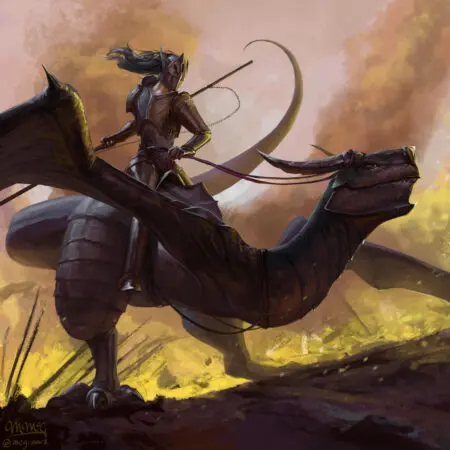
In contemporary media—spanning blockbuster films, epic fantasy literature (such as A Song of Ice and Fire), and role-playing franchises like Dungeons & Dragons—the wyvern has experienced a massive renaissance. Modern fantasy writers have largely codified the distinction between dragons and wyverns, granting the latter a dedicated role as swift, agile aerial mounts utilized by cavalry units or portrayed as feral, high-altitude predators.
Implications: What the Wyvern Teaches Us About Human History
The enduring fascination with the wyvern offers deep psychological and anthropological insights into how human societies interact with the unknown.
- Environmental Pressures: The historical shift from sighting fearsome creatures in the wild to reducing them to heraldic symbols reflects humanity’s taming of the European landscape. As forests were cleared and populations grew, "monsters" were systematically driven out, eventually living on only through art, myth, and coat-of-arms.
- The Evolution of Myth: The transition of the wyvern from an Anglo-Saxon sky-worm to a medieval plague-bringer, and finally to an alchemical metaphor, demonstrates how fluid mythology is. Each era projects its greatest fears—whether divine punishment, disease, or the chaotic unknown—onto the canvas of the beast.
Ultimately, whether viewed through the lens of medieval superstition, alchemical philosophy, or modern fantasy, the wyvern endures. It stands as a sharp, barbed reminder of a time when the edges of the map were wild, untamed, and populated by magnificent beasts of the air and earth.