By Global Environmental Desk
Main Facts
For decades, environmental messaging has relied on a familiar set of lifestyle adjustments to promote sustainability. Chief among them is the ubiquitous advice to shorten our daily showers. Consumers are routinely told that trimming two minutes off their daily bathroom routine is a vital step toward preserving global water supplies. While well-intentioned, this advice targets a relatively small drop in the bucket of personal resource consumption.
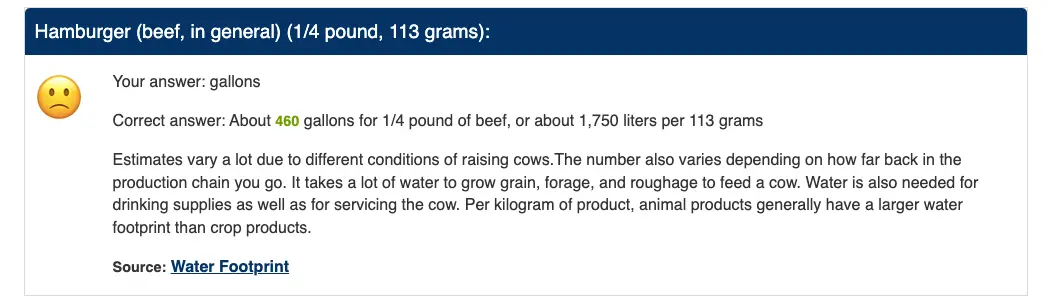
Recent data highlights a profound disconnect between where everyday people focus their conservation efforts and where the vast majority of water is actually consumed. While cutting shower time yields modest savings, the hidden water footprint embedded in our daily diet—particularly in meat consumption—swarfis these bathroom-derived savings exponentially. According to data compiled by the United States Geological Survey (USGS), a single pound of beef requires roughly 1,840 gallons of water to produce. To put that into perspective, the water required to produce one standard quarter-pound hamburger patty outpaces the water saved by cutting two minutes off a daily shower for an entire year.
This realization is shifting the conversation among environmental scientists and sustainable living advocates. Rather than focusing solely on direct, tangible domestic use—such as turning off the tap while brushing teeth or rushing through a shower—experts argue that true sustainability requires looking further up the supply chain, particularly at agricultural practices and dietary habits.

Chronology
The evolution of modern water conservation messaging can be traced across several distinct phases of environmental awareness over the last half-century:
- The 1970s–1980s (The Dawn of Direct Conservation): Following the energy crises and the rise of the modern environmental movement, public service announcements began focusing heavily on direct home use. Campaigns centered on fixing leaky faucets, installing low-flow aerators, and taking shorter showers.
- The 1990s–2000s (The Rise of Industrial Footprinting): Researchers began looking past domestic taps to evaluate "virtual water" or embedded water—the total volume of freshwater consumed throughout the lifecycle of a product, from raw material extraction to final delivery.
- The 2010s (Agricultural Transparency): Academic institutions and government bodies, including the USGS and the Water Footprint Network, began publishing comprehensive metrics on the agricultural sector. These reports revealed that agriculture accounts for roughly 70% of global freshwater withdrawals.
- Present Day (Behavioral Realignment): Environmental communicators are increasingly challenging legacy habits. By leveraging comparative data tools like the USGS food impacts water calculator, advocates are urging the public to rethink high-impact dietary choices in favor of low-stress, high-yield sustainability practices.
Supporting Data
To understand why traditional bathroom advice pales in comparison to dietary choices, one must examine the mathematics of resource consumption.
Let us break down the standard metrics provided by the USGS and plumbing industry standards:
-
The Shower Calculation:

- A traditional, low-efficiency showerhead uses approximately 2.5 gallons of water per minute.
- Shaving 2 minutes off a daily shower saves 5 gallons of water per day.
- Over the course of 365 days, this routine saves 1,825 gallons annually.
-
The Beef Calculation:
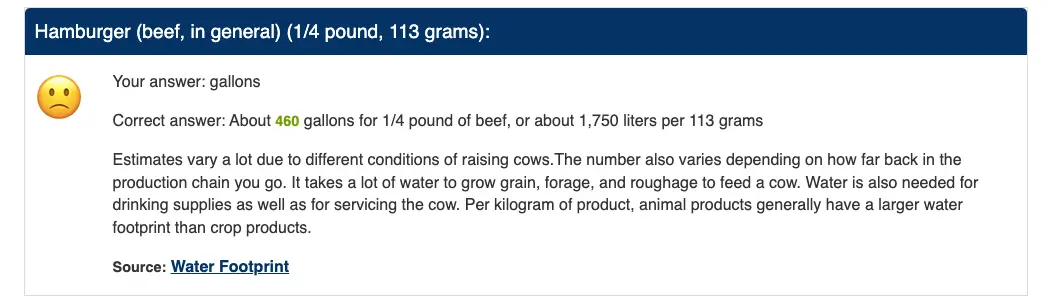
- Water requirements for beef production vary by region and feed type, but scientific consensus places the average at approximately 1,840 gallons per pound (or 460 gallons for a single quarter-pound patty).
- Comparing the two: Saving 1,825 gallons via shorter showers requires enduring 736 total minutes of reduced shower time over a year. Alternatively, an individual achieves the exact same water-saving milestone simply by abstaining from consuming a single pound of beef.
-
The Equivalency Paradigm:
- Put simply, consuming one pound of beef carries a water footprint equivalent to taking a continuous, uninterrupted 12-hour shower using a standard showerhead.
These staggering figures illustrate why lifestyle adjustments that feel like personal sacrifices—such as rushing through a refreshing morning routine—pales in comparison to shifting dietary patterns, which can be accomplished without a sense of deprivation if approached with culinary creativity.
Official Responses and Expert Perspectives
Environmental experts and sustainability consultants have increasingly criticized the disproportionate emphasis placed on domestic conservation while industrial and agricultural sectors fly under the radar.

Scott Cooney, a serial eco-entrepreneur, sustainability consultant, and author, emphasizes the importance of framing environmental choices around ease and impact. "We’re all about saving the planet, but doing so without it ever feeling like a sacrifice," Cooney notes. By steering consumers toward tools like the USGS food impacts water calculator, advocates aim to demystify where resources are actually lost.
Government agencies echo the need for systemic awareness. The USGS notes that while domestic indoor water use in the United States accounts for a small fraction of total consumption—typically around 8% to 10% of total public supply—agricultural irrigation and livestock watering demand massive volumes of surface and groundwater resources.
Water resource managers point out that while municipal restrictions on lawn watering and residential plumbing codes are vital during localized droughts, they do little to address the systemic water scarcity challenges driven by intensive meat and dairy production in arid regions. Consequently, public health and environmental departments are gradually expanding their educational mandates to include nutritional water footprints alongside traditional energy-saving tips.
Implications
The realization that dietary choices dwarf domestic habits in terms of water impact carries profound implications for the future of environmental activism, public policy, and personal lifestyle choices.

1. Re-Evaluating "Green" Guilt
For decades, consumers have been conditioned to feel ecological guilt over domestic habits—leaving the tap running, running half-loads in the dishwasher, or taking long showers. While these actions matter for local utility bills and municipal infrastructure, treating them as the primary battlegrounds of climate and water action creates a false sense of security. It distracts from high-impact decisions, such as reducing meat intake or supporting regenerative agriculture.
2. The Shift Toward "Effortless" Sustainability
Sustainability initiatives that demand constant personal sacrifice often suffer from low long-term compliance. Telling someone to cut their shower short every single day introduces friction into their daily routine. Conversely, substituting a beef-based meal with a plant-based alternative a few times a week—or exploring sustainable local food options—can be achieved seamlessly, often with added health benefits.
3. Agricultural Policy and Water Rights
On a macro level, these findings underscore the urgent need for policy reform in agricultural subsidies and water rights management. As climate change accelerates droughts in key agricultural hubs—such as the American Southwest, parts of Australia, and the Mediterranean—policymakers face mounting pressure to incentivize water-efficient farming and livestock practices.
Conclusion
Saving the planet does not have to mean living a life of cold, rushed misery. By focusing our conservation efforts where they matter most—starting with what we put on our plates—we can achieve monumental reductions in our global water footprint while actually enjoying the process.