By Global Science & Culture Desk
For millennia, long before the advent of digital notifications, quartz clocks, or standard solar calendars, humanity’s primary timepiece hung brightly in the night sky. Across North America and beyond, Indigenous nations looked to the lunar cycle not merely to mark the passage of days, but as an intricate ecological ledger. By observing the interplay between the moon’s phases and the surrounding environment, Indigenous peoples created a sophisticated timekeeping system.
Today, terms like "Wolf Moon," "Pink Moon," and "Harvest Moon" remain fixtures in modern almanacs and popular culture. Yet, beneath these poetic monikers lies a deep reservoir of Indigenous wisdom, acute ecological observation, and a living heritage that continues to adapt to a changing world.
Main Facts: The Anatomy of the Lunar Calendar
At its core, the traditional naming of full moons is an exercise in environmental literacy. Unlike the rigid structure of the Gregorian calendar—which is anchored strictly to Earth’s revolution around the sun—traditional Indigenous lunar calendars tracked time through the roughly 29.5-day cycle of the moon. Because twelve lunar cycles total roughly 354 days, many tribal nations periodically incorporated a "thirteenth moon" or adjusted their seasonal markers to keep their calendars synchronized with the natural world.
In Anishinaabe tradition, the moon is referred to as Nookomis Dibik-Giizis (Grandmother Moon), revered as a primary teacher. Rather than abstract numerical dates, the names given to each full moon functioned as immediate environmental cues. They signaled when the ice was too thin for travel, when maple sap would begin to run, when specific fish were spawning, and when crops were ready for harvest.
The system was never monolithic. With hundreds of distinct tribal nations inhabiting diverse geographic zones—from the subarctic forests of the Great Lakes to the sun-drenched plains and eastern woodlands—moon names varied widely. However, the lexicon most widely adopted into mainstream Western culture stems primarily from the Algonquian language family, whose historic territory stretched from New England to Lake Superior. As European settlers arrived, they encountered and adapted these descriptive terms, creating an enduring cultural bridge that persists centuries later.
Chronology: A Journey Through the Thirteen Moons
To understand the rhythm of the traditional lunar year is to witness the cycle of survival, renewal, abundance, and preparation. While names differ significantly across regions and tribes, the standard seasonal progression reveals a masterclass in living in tune with nature.

Winter Moons: Survival, Endurance, and Scarcity
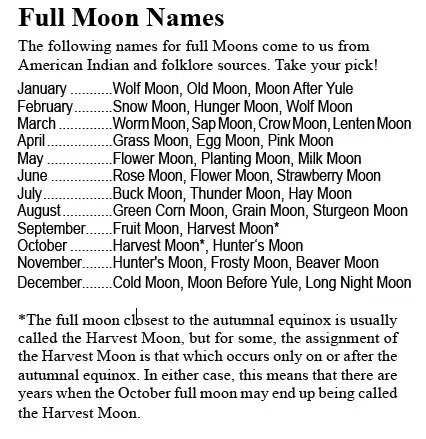
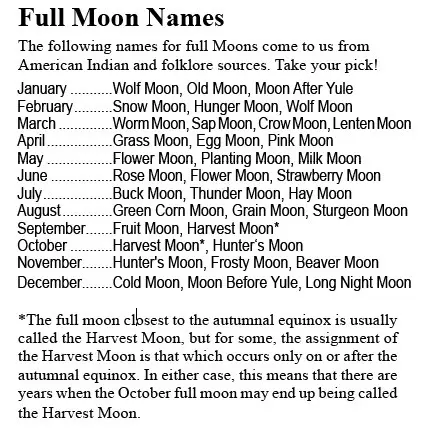
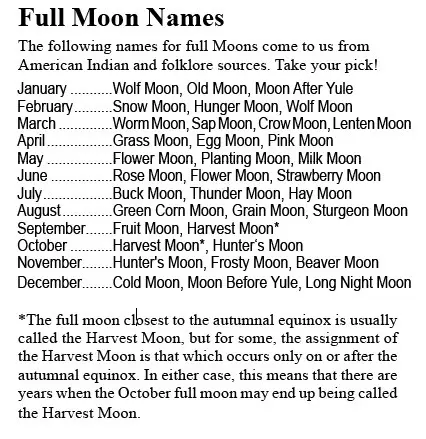
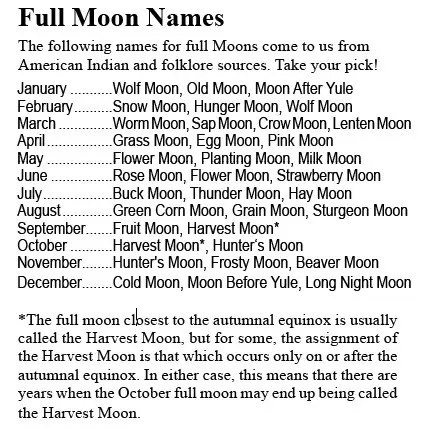
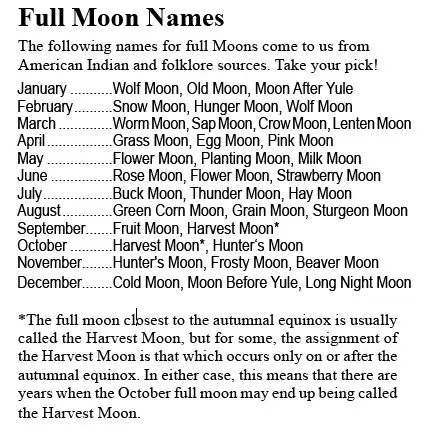
- January – Wolf Moon: Often associated in popular lore with the haunting howls of hungry wolves echoing across deep winter snows, this name carries both Celtic and Algonquian roots. Indigenous nations also recorded this period through names like the Severe Moon or Center Moon, marking the brutal apex of winter.
- February – Snow Moon / Hunger Moon: February tested the resilience of early communities. While some northern tribes called it the Hunger Moon due to depleted winter stores, others designated it the Bear Moon, noting the birth of bear cubs. The Ojibwe frequently named this moon after the sucker fish, a vital fallback resource for winter survival.
Spring Moons: The Great Thaw and Agricultural Awakening
- March – Worm Moon: As temperatures climbed, the earth softened, earthworm casts reappeared, and the cawing of crows signaled the final retreat of winter. Tribes also tracked this period as the Snow Crust Moon and the Sap and Sugar Moon, marking the moment maple syrup production could begin.
- April – Pink Moon: Named for the wild ground phlox (Phlox subulata) that paints North American fields in early spring pinks, April was also recognized by the Ojibwe as the maple sap boiling moon. Other nations tracked the thaw via names like Breaking Ice Moon and The Moon of the Red Grass Appearing.
- May – Flower Moon: Spring reaches its zenith in May. Moon names from this period celebrate the explosion of botanical life and signal the critical window for planting staple crops like corn, beans, and squash.
Summer Moons: Nature’s Abundance and Peak Activity
- June – Strawberry Moon: A universally anticipated milestone across many eastern and midwestern tribes, the June moon marked the ripening and harvesting of wild strawberries. Coastal tribes similarly tracked the Fish Moon, noting when shad began swimming upstream.
- July – Buck Moon / Thunder Moon: By mid-summer, male deer (bucks) are growing their antlers at maximum velocity, inspiring the name Buck Moon. Frequent summer squalls also earned it the designation Thunder Moon.
- August – Sturgeon Moon: For Great Lakes tribes, August brought peak catches of giant sturgeon. Crucially for the Anishinaabe, this moon (Manoomini-giizis) signaled the sacred, labor-intensive season of harvesting wild rice.
Autumn Moons: The Great Harvest and Winter Preparation
- September – Harvest Moon: Typically coinciding closest to the autumnal equinox, this moon illuminated the fields just long enough for farmers to gather the final yields of corn, pumpkins, squash, and wild rice before the frost.
- October – Hunter’s Moon: With fields stripped of crops and forests shedding their canopies, prey animals stood exposed. Having fattened themselves throughout the summer, game animals became the primary focus for hunters laying in winter provisions.
- November – Beaver Moon: This moon served as a dual indicator: it was the optimal time for setting beaver traps before swamps froze solid to secure winter pelts, and it marked the frantic dam-building activity of the beavers themselves.
- December – Cold Moon / Long Night Moon: As the winter solstice approached, bringing the longest nights and heaviest snows of the year, tribes braced for the deep freeze, often revisiting the themes of endurance and long-term survival.
Supporting Data: Linguistic Diversity and Ecological Precision
The richness of Indigenous lunar nomenclature is underscored by sheer demographic and ecological scale.
- Tribal Diversity: In the United States alone, there are 576 federally recognized Native American tribes (and hundreds more state-recognized or First Nations communities in Canada). Each sovereign nation developed a lexicon tailored to its specific bioregion.
- Bioregional Variations: A lunar marker that made sense for a coastal Salish community in the Pacific Northwest—such as focusing on salmon runs—held little relevance for a Lakota nation tracking bison migrations on the Great Plains. For example, while the Ojibwe mapped their year around birchbark harvesting, copper trade, and wild rice beds, desert-dwelling southwestern tribes monitored precipitation and arid-land flora cycles.
- Historical Persistence: The widespread popularization of these terms in the modern era owes much to print institutions like The Old Farmer’s Almanac, which began publishing Native American and colonial moon names in the late 18th century. However, this mainstream adoption often flattened regional nuances into a single, homogenized list, masking the true breadth of tribal diversity.
Official Responses: Perspectives on Cultural Preservation and Modern Stewardship
In recent years, historians, indigenous leaders, and environmental scientists have increasingly emphasized the importance of returning nuance to the conversation surrounding traditional ecological knowledge (TEK).
Cultural preservationists stress that moon names should not be viewed as whimsical folklore, but as peer-reviewed empirical data gathered over millennia. Speaking on the revitalization of ancestral calendars, Indigenous language keepers and educators emphasize that restoring traditional names is an act of linguistic sovereignty.
"When we use names like Manoomini-giizis for the wild rice moon, we are not just identifying a month; we are invoking an entire relationship with our ecosystem," notes an Anishinaabe cultural resource coordinator. "We are acknowledging our responsibilities to the water, the plant, and the community."
Concurrently, environmental agencies and academic institutions are beginning to integrate TEK into contemporary climate science. By studying historical migration and blooming patterns preserved within oral histories and lunar calendars, modern researchers gain a baseline for understanding how local ecosystems are shifting under the pressure of human-induced climate change.
Implications: Living Traditions in a Changing Climate
The survival and adaptation of traditional lunar calendars carry profound implications for how modern society views time, ecology, and climate stewardship.
- Flexibility vs. Rigidity: Mainstream society relies on a static Gregorian calendar that divorces human activity from the natural world. In contrast, Indigenous lunar systems are inherently dynamic. As climate change shifts spring thaws earlier, alters animal migrations, and disrupts seasonal plant growth, some Native communities are finding that their traditional ecological markers are shifting in real-time. This elasticity proves that Indigenous science was designed to be observational and responsive, rather than dogmatic.
- Combating Eco-Apathy: Reconnecting with the lunar cycle offers modern citizens a tangible way to ground themselves in local ecology. Urban stargazers and rural naturalists alike can use these traditional markers to pay closer attention to the seasonal shifts in their own backyards—noticing when the first robins return, when local flora blooms, or how the night sky changes across the seasons.
- Respecting Intellectual Property: Experts urge the public to approach traditional moon names with cultural humility. Rather than treating these names as generic commodities, users are encouraged to acknowledge their specific Indigenous origins and to research the ancestral custodians of the land they currently inhabit.
As society navigates an era of ecological uncertainty, the ancient wisdom of Grandmother Moon offers a timely reminder: to truly understand time, we must look not at our screens, but to the earth, the sky, and the living networks that sustain us all.