Studio Visit — No. 07
İSTANBUL, TÜRKİYE — In contemporary interior design, the boundary separating architecture from furniture has grown increasingly porous. Yet, few studios inhabit that intersection with the deliberate rigor of Regen Studio. Based in Türkiye, the independent design practice and furniture brand did not emerge from a corporate marketing plan or a grand commercial debut. Instead, it was born from a recurring pattern: a shared design sensibility that manifested organically across disparate architectural projects through custom pieces engineered to solve distinct spatial problems.
Eventually, that continuity became too potent to ignore. The studio was established to give that underlying philosophy an independent name, stepping outside the constraints of traditional client briefs to explore a self-directed material language. Today, Regen operates at the vanguard of collectible design, championing a model built entirely on handcraft, bespoke production, and small-batch artisanship. Nothing is produced at scale; every piece is made to order by skilled local artisans, embodying a philosophy that prioritizes longevity over mass consumption.
Main Facts: The Anatomy of Regen Studio
At its core, Regen Studio operates as both a design lab and a tribute to traditional craftsmanship. Founded by a trained architect, the brand views furniture not as decorative accessories placed into a room, but as structural extensions of the room itself.
- Founding Concept: Evolved organically from architectural problem-solving into an independent furniture brand.
- Production Model: Made-to-order, small-batch, and completely non-industrial. Every item is constructed by hand by local artisans in Türkiye.
- Aesthetic Influences: A synthesis of mid-century modern organic forms, structural clarity, and revived historical fabrication techniques.
- Material Palette: Rich root veneers, solid timbers, metals, and experimental color polishes.
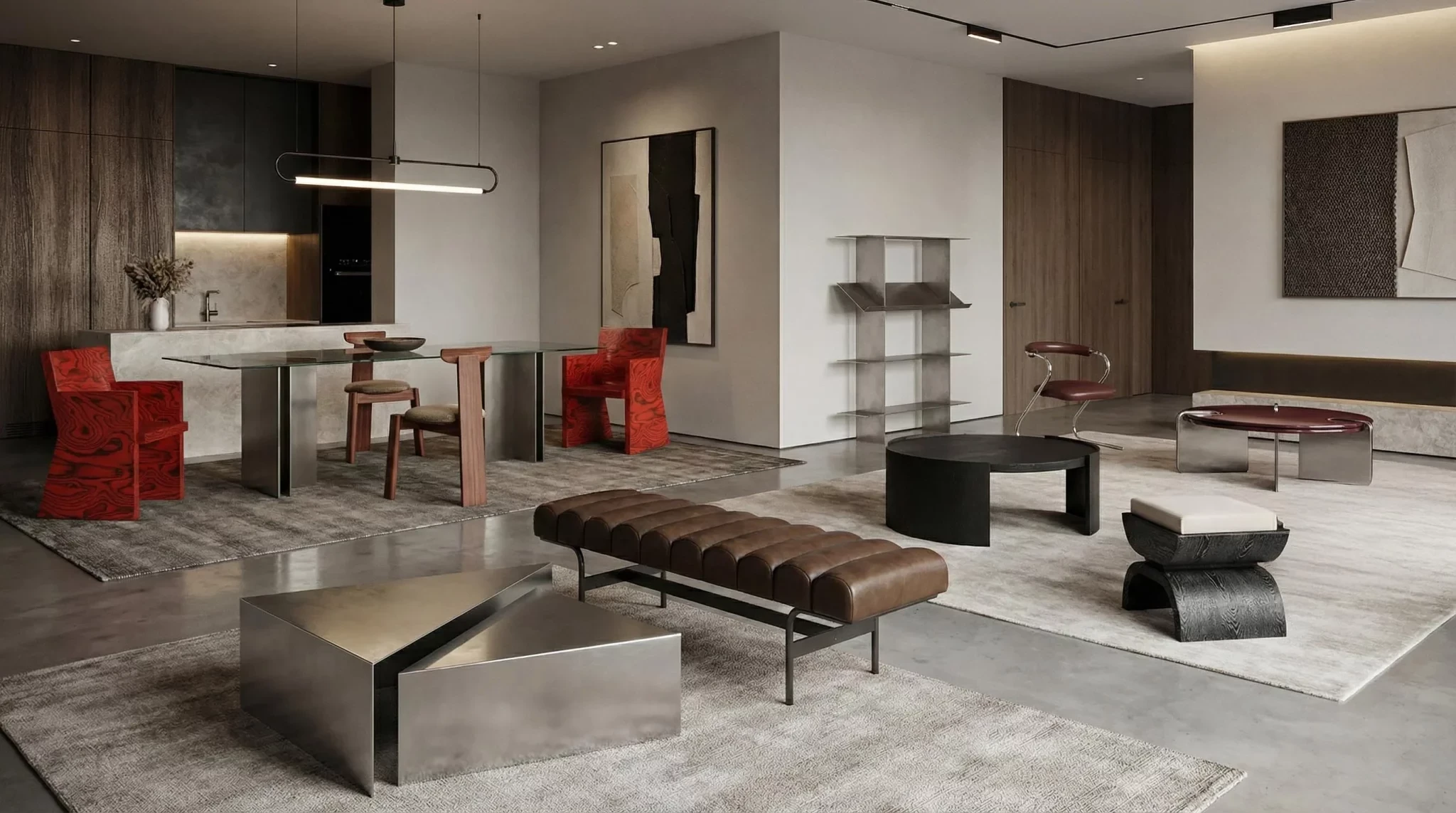
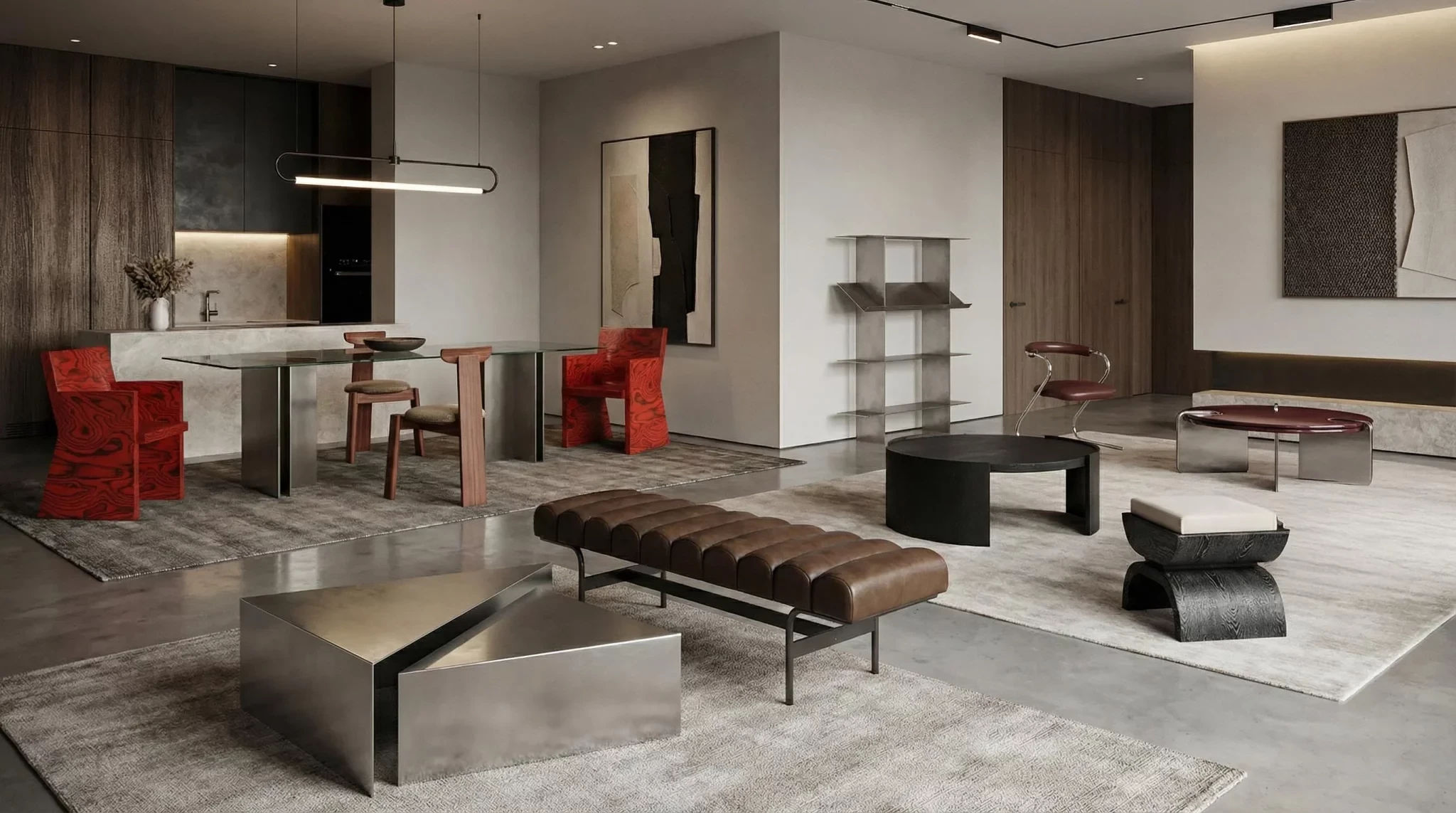
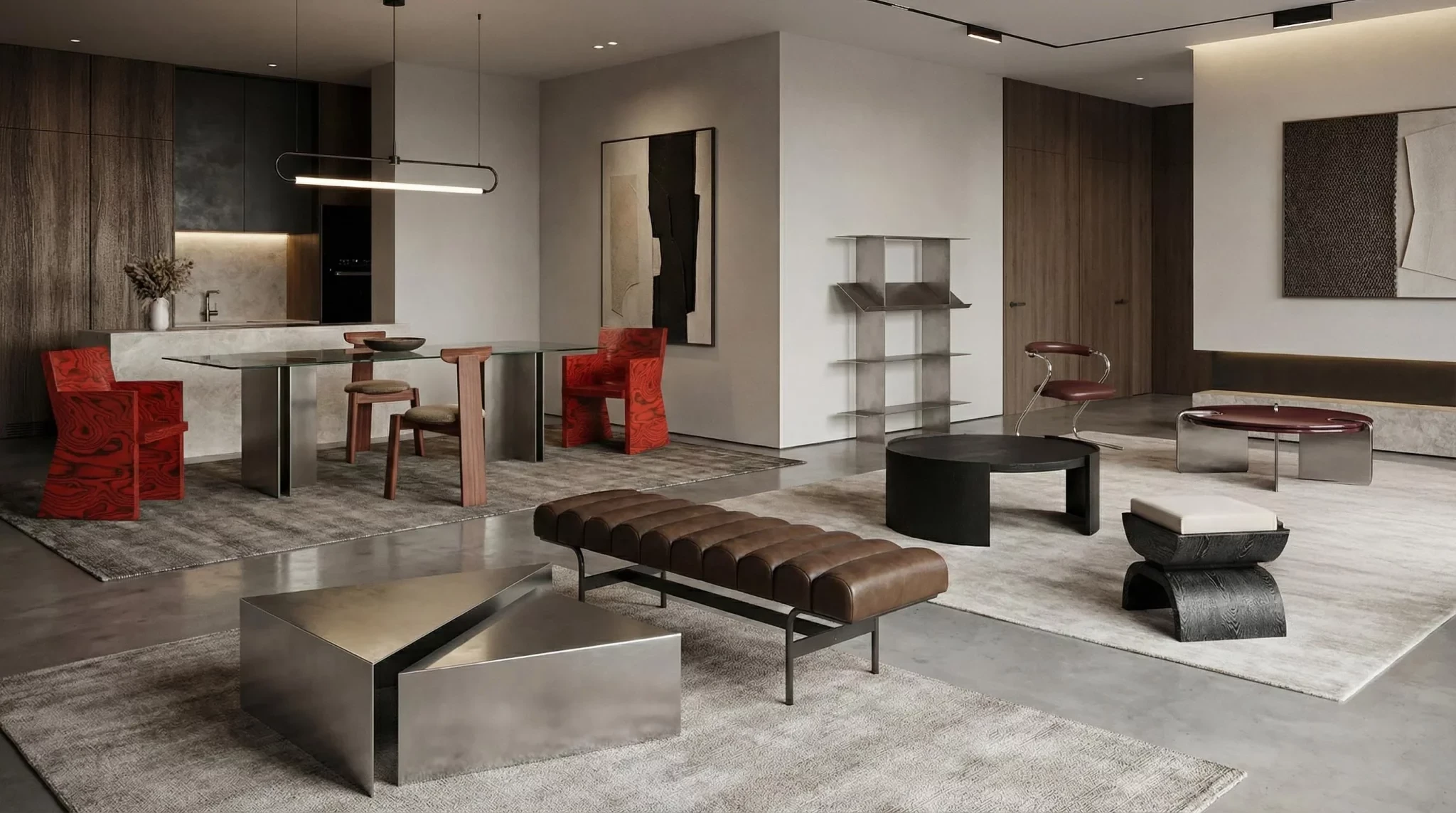
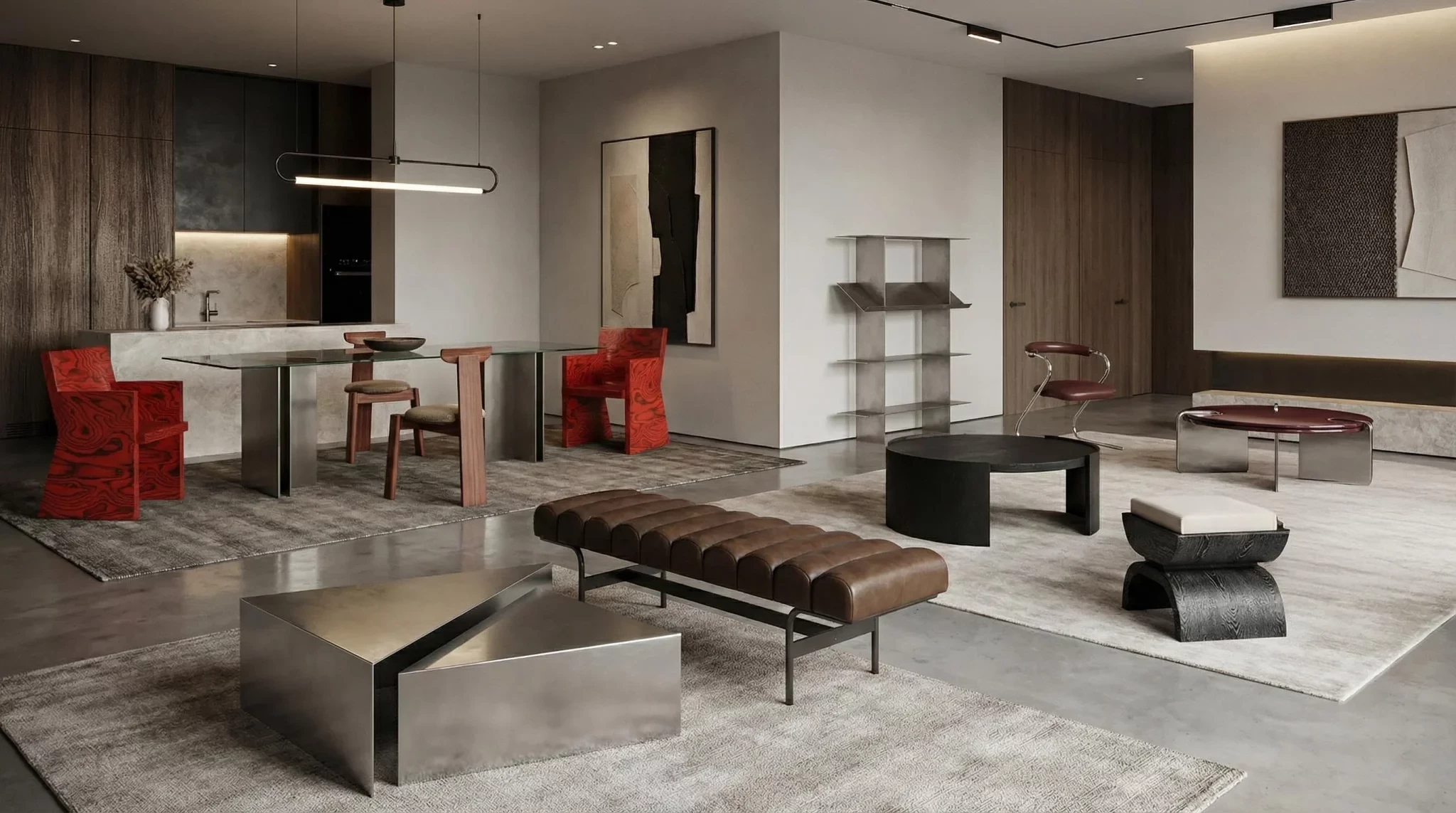
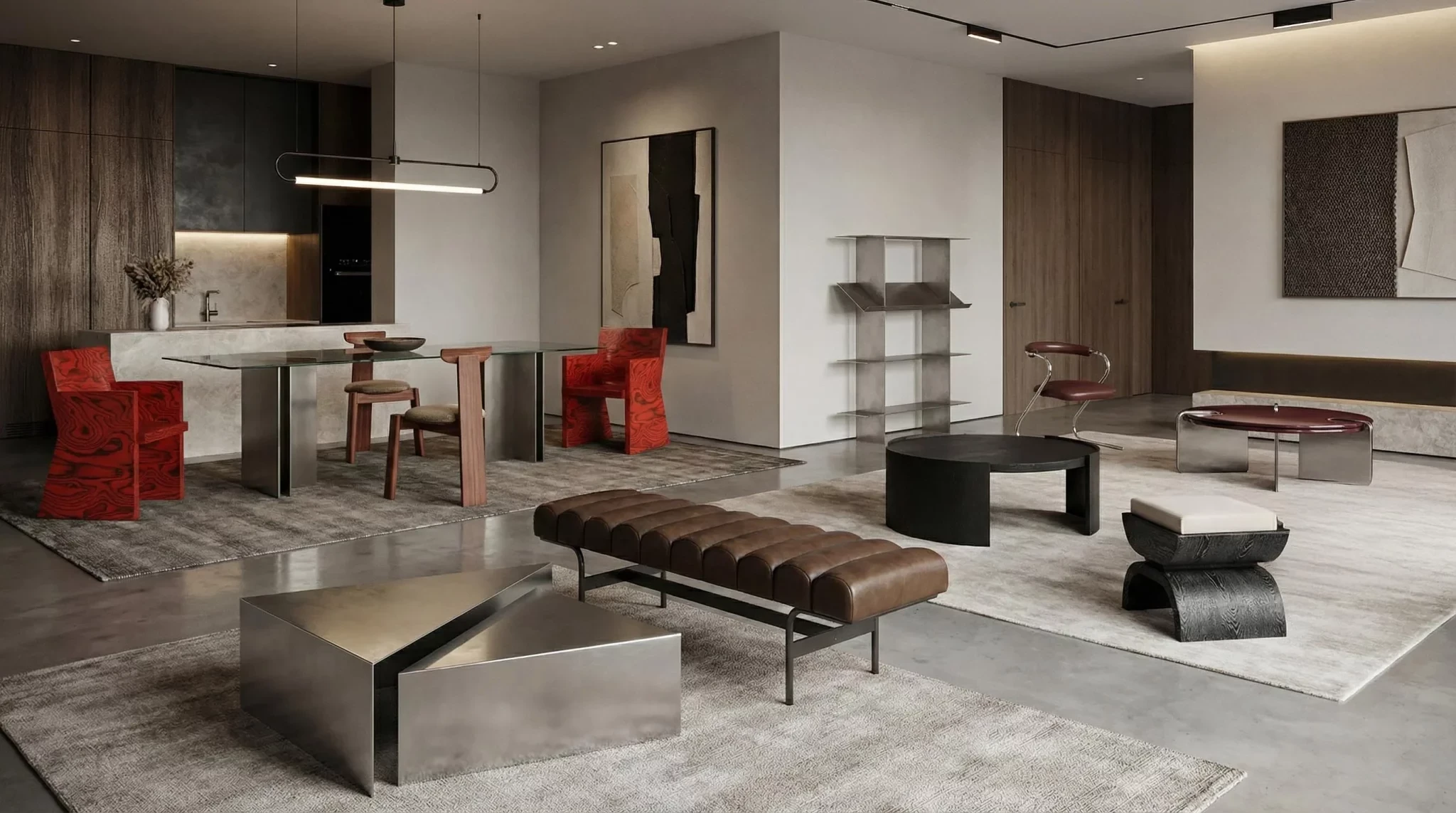
- Signature Piece: The Kira Chair—a root veneer seat featuring a bold red polish, embodying both architectural restraint and sculptural presence.
- Lead Time: Standard production and delivery window spans 2 to 4 weeks.
Chronology: From Spatial Problem-Solving to an Independent Brand
To understand Regen Studio, one must trace its evolution from the drawing board of an architectural practice to a globally minded collectible design studio.
Phase One: The Architectural Genesis
Years before Regen Studio existed as a distinct entity, its founder worked primarily as an architect. Within the scope of spatial commissions, architectural challenges frequently demanded bespoke solutions. Whether it was a room with awkward proportions, a lighting condition that required a specific shadow, or a narrative that called for a tactile focal point, standard catalog furniture rarely sufficed.
The architect began designing custom furniture elements tailored exclusively to these specific environments. Over time, however, a quiet coherence began to take shape across these individual commissions. Different projects, designed for different clients, began sharing an underlying logic. The proportions echoed one another; the material choices favored similar weights and textures; the emotional atmosphere of the objects felt anchored in the same philosophical soil.

Phase Two: Recognizing the Continuity
As these bespoke pieces accumulated, the designer confronted a critical juncture. The language developing inside these architectural interventions was no longer just a series of functional fixes—it was a cohesive design practice in its own right.
The studio emerged from the deliberate choice to extract this continuity from individual client briefs. By granting the design language its own institutional structure, the founder created a space free from outside commercial pressures, allowing the work to evolve according to its own internal compass.
Phase Three: Cultivating Local Craft Partnerships
With an independent vision established, the next challenge was execution. Mass manufacturing was rejected outright; it flattened the subtleties that gave the work its architectural integrity. Instead, Regen forged close alliances with master artisans across Türkiye.
This phase established the studio’s production pipeline: a symbiotic relationship between contemporary architectural drawing and generational handicraft. By anchoring production in local workshops, Regen ensured that every piece carried the subtle, unrepeatable variations inherent to human touch.
Phase Four: The Introduction of the Kira Chair
The studio’s maturation crystallized with the introduction of its signature pieces, most notably the Kira Chair. Serving as a physical manifestation of the brand’s core arguments, the chair successfully translated years of spatial experimentation into a singular, highly concentrated object. It marked Regen’s transition from a quiet studio experiment to a recognized name in contemporary collectible design.
Supporting Data: Philosophy, Process, and Production
Regen Studio’s methodology relies on a strict framework that merges architectural theory with tactile exploration.
The Architectural Blueprint
Furniture design within Regen’s practice is treated as an extension of spatial planning. When conceptualizing an object, the studio begins by asking architectural questions:

- How will this piece alter the proportions of a room?
- How does it manage negative space?
- How does it hold or release the atmospheric tension of an interior?
Answers to these queries are translated into physical matter—wood, metal, color, and texture. The studio draws heavily from the mid-century modern ethos, admiring its balance of organic flow and functional clarity. However, Regen refuses to indulge in mere nostalgia. Instead, the practice mines forgotten historical techniques and materials, reinterpreting them through a hyper-contemporary lens. This creates an ongoing dialogue between past and present, refusing to force a choice between heritage and innovation.
The Iterative Workshop Process
The journey from concept to object is intensely iterative. It begins with context: mapping out how a piece will live within a domestic or commercial environment. Once the architectural parameters—such as scale, function, and spatial relationships—are locked down, the studio transitions into material exploration.
[Context Analysis] ➔ [Architectural Scaling] ➔ [Material & Texture Exploration]
                         │
                         ▼
[Workshop Collaboration] ➔ [Iterative Refinement] ➔ [Final Handcrafted Object]
This stage involves testing finishes, understanding how a surface catches light, and balancing presence with subtlety. Crucially, collaboration with workshop artisans occurs not at the end of the pipeline, but at its inception. Craftsmanship actively shapes the structural character of each piece from the first sketch.
Furthermore, Regen embraces constraints as creative catalysts. Many of the studio’s most striking forms originated under real-world pressures—tight timelines, spatial limits, and material scarcities encountered during architectural builds. Rather than viewing these parameters as obstacles, Regen treats them as agents of precision, driving the practice toward more thoughtful, exact design solutions.
Official Perspectives: The Mind Behind the Work
While Regen Studio maintains an understated public profile, the philosophy articulated through its designs offers a clear window into its ethos. Speaking on the relationship between objects and their environments, the studio’s founder emphasizes that furniture should never scream for attention.
"An object should not dominate a room through volume or aggression; it should anchor the space through an undeniable sense of inevitability. When a piece is designed with true architectural proportion, it doesn’t need to announce itself. It simply refuses to be ignored."
Addressing the choice to keep production small-scale and hand-built, the studio notes that modern interiors are oversaturated with disposable perfection:

"In a world obsessed with scale and instantaneous delivery, we chose the opposite route. Handcraft introduces a human heartbeat into the material. When someone lives with a Regen piece, they aren’t just acquiring a functional object—they are inviting a mirror of their own interiority into their space."
This sentiment underpins the studio’s reluctance to engage in trend-driven cycles. By decoupling design from seasonal manufacturing calendars, Regen ensures that every piece retains its relevance across decades rather than months.
Implications: The Rise of Collectible Architectural Design
Regen Studio’s trajectory points to broader shifts within the global design landscape. As consumers and interior architects grow weary of homogenized, mass-produced furniture, a renewed appreciation for provenance, material honesty, and slow design has taken root.
1. The Blur Between Architecture and Interiors
Regen’s success demonstrates a growing market appetite for furniture conceived by architects. By applying macro-level spatial thinking to micro-level objects, studios like Regen are bridging a long-standing divide in the design industry, offering clients holistic environments where every chair, table, and surface speaks the exact same spatial language.
2. The Economic Viability of Slow Craft
By anchoring its production in local Turkish artisanal workshops, Regen highlights the economic and cultural viability of decentralized, non-industrial models. This approach not only preserves endangered craft traditions but also guarantees that the environmental footprint of each piece remains remarkably low compared to global supply chains.
3. Redefining Collectible Design
Collectible design is increasingly moving away from purely eccentric, unlivable art-furniture toward pieces that balance rigorous utility with sculptural weight. The Kira Chair and its counterparts prove that modern collectors are seeking quiet confidence—objects that function impeccably while exerting a profound, subtle influence on the atmosphere of a room.
As Regen Studio continues to expand its footprint from its base in Türkiye, it serves as a compelling reminder that the most enduring designs are those rooted in necessity, shaped by constraints, and brought to life through the patient hands of master artisans.