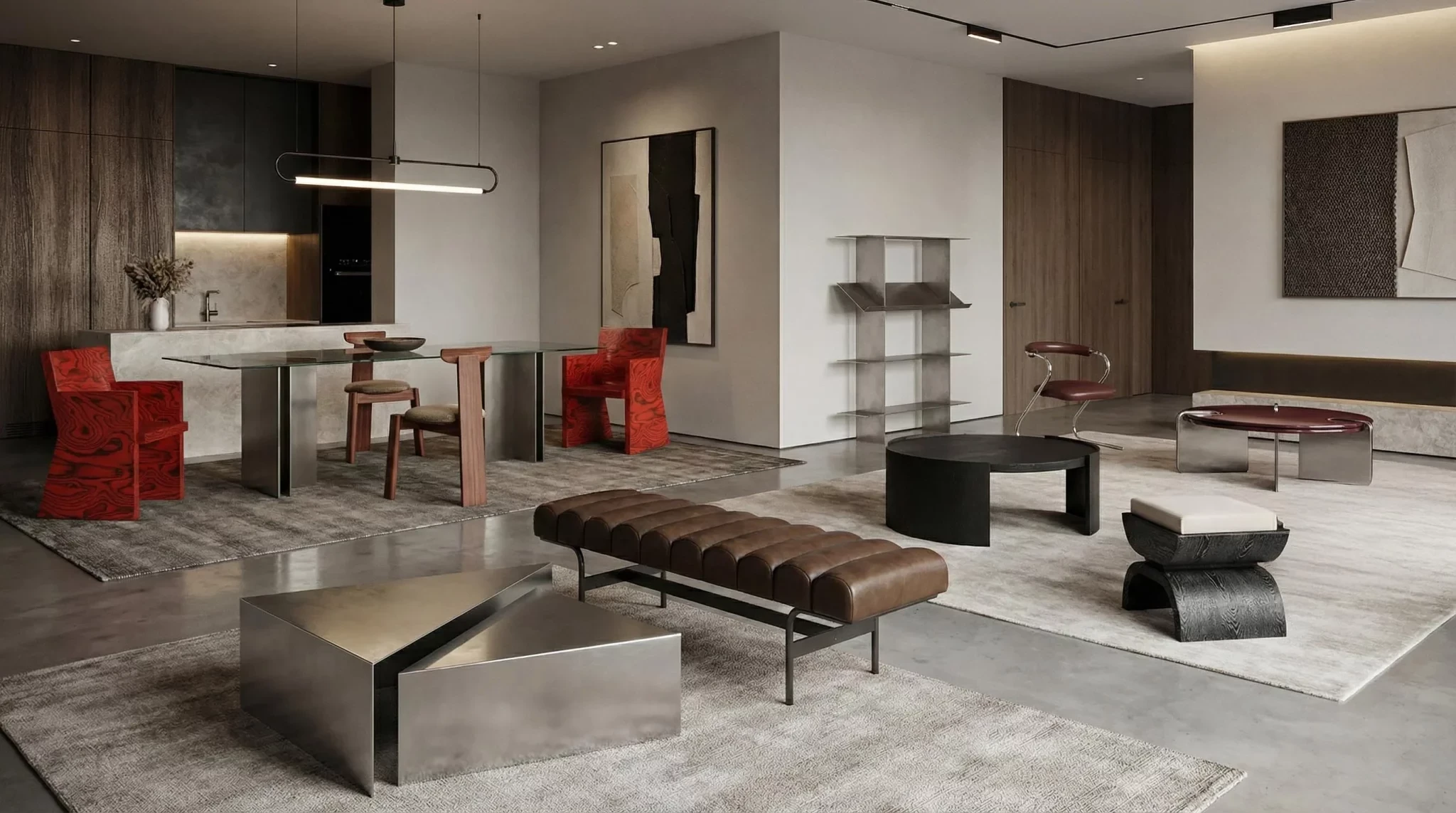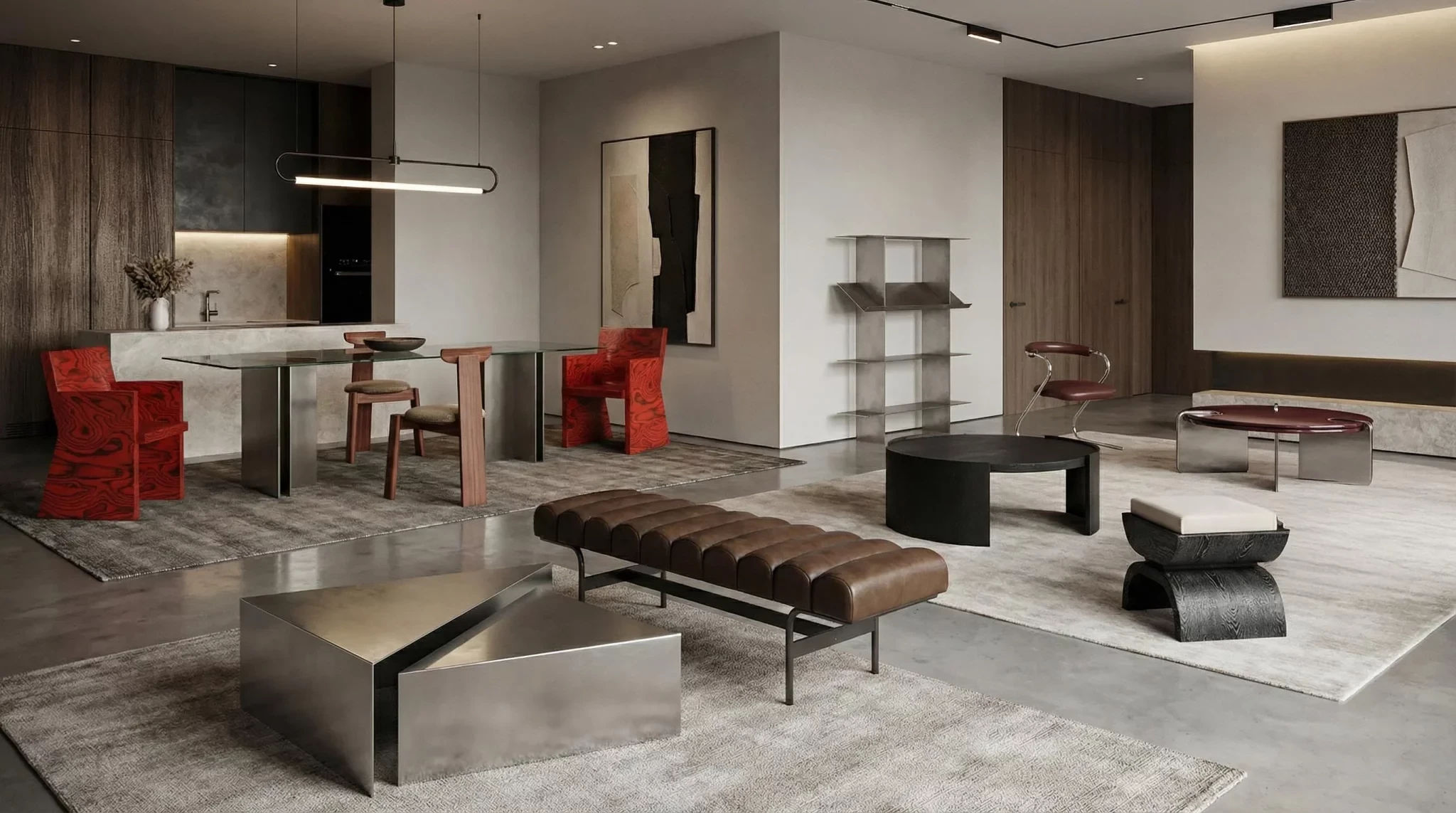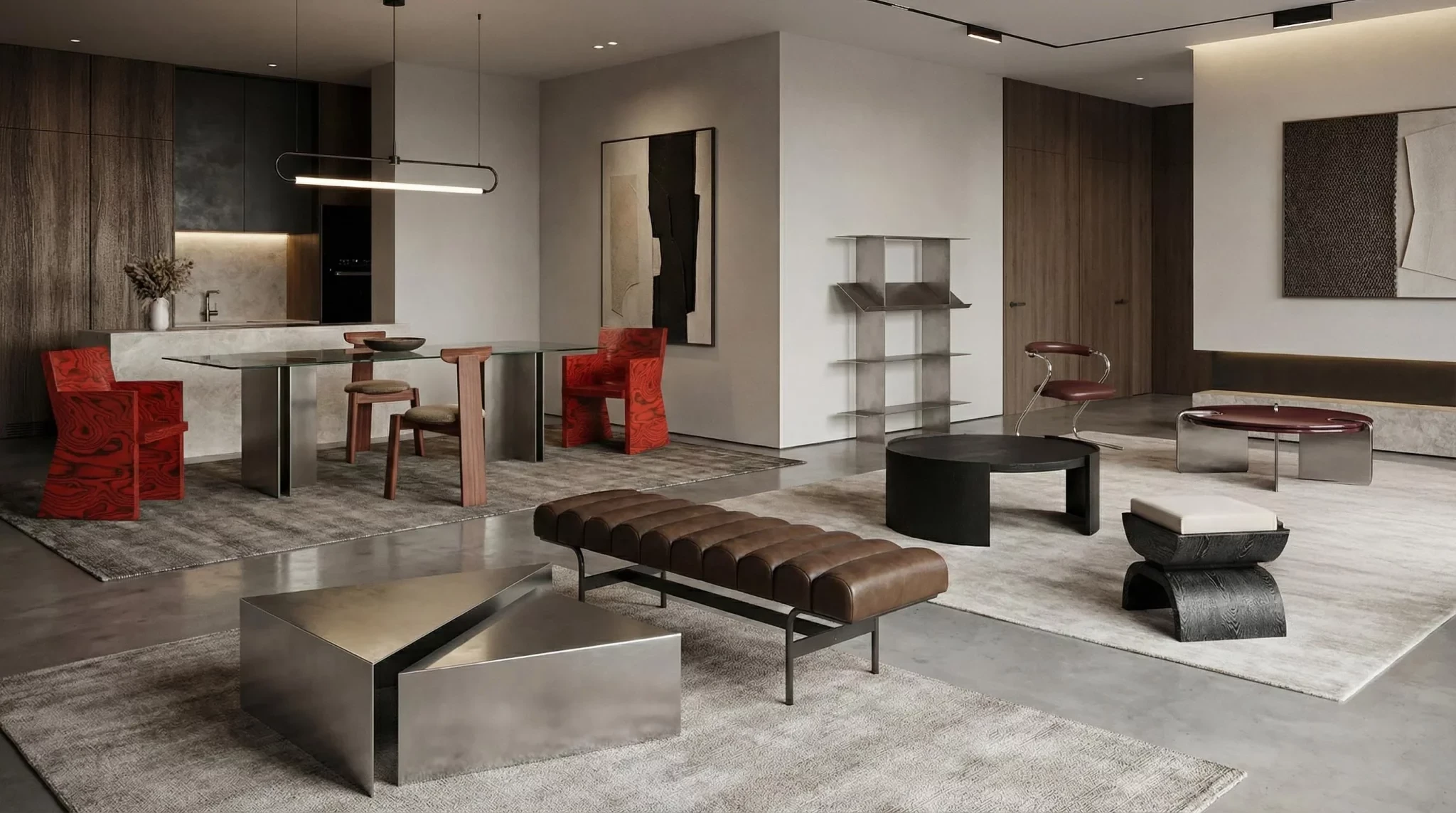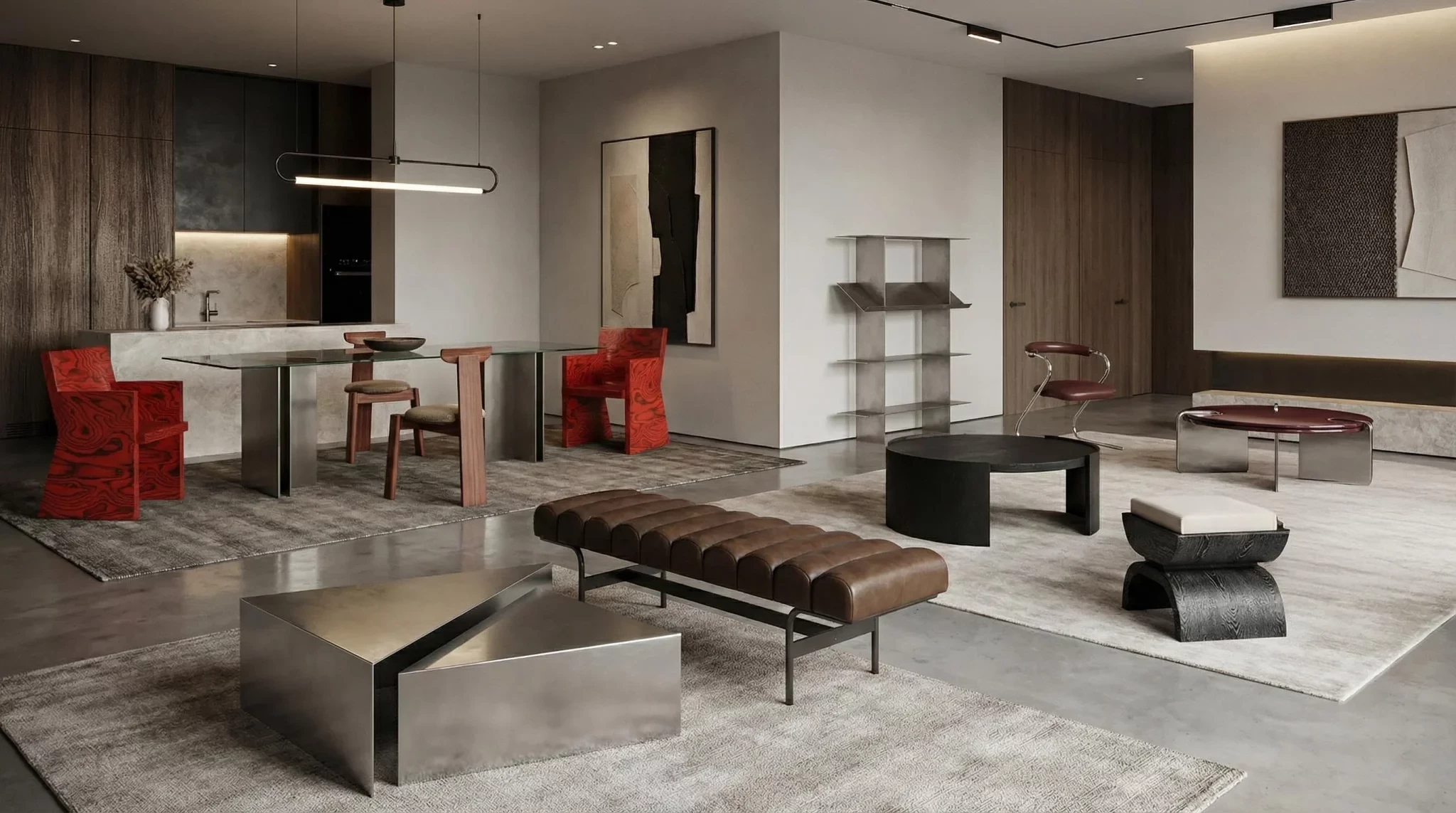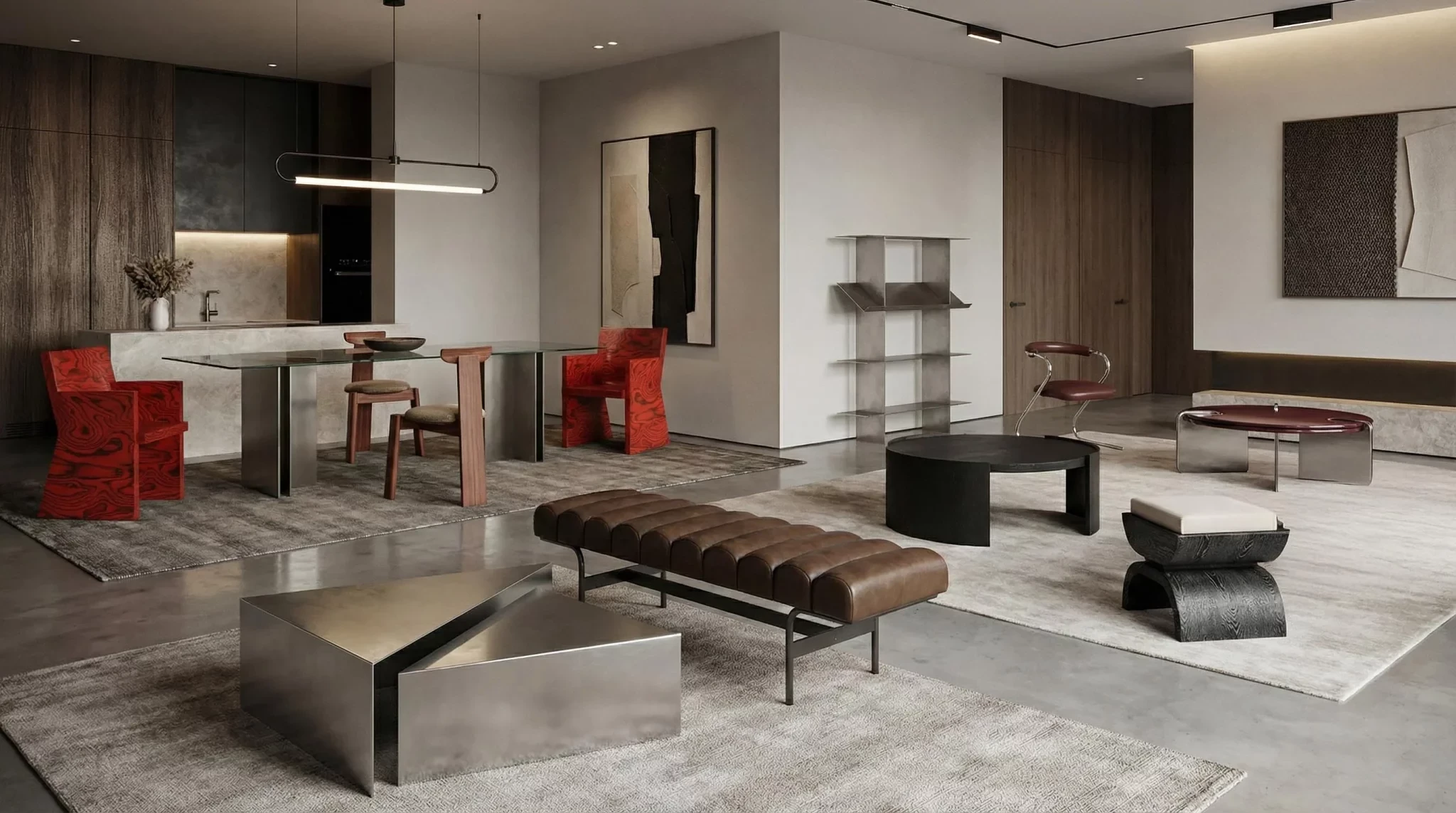
ISTANBUL, TÜRKİYE — In the modern landscape of interior design, hyper-scale manufacturing and fast-paced trend turnover often dominate the conversation. Yet, a quiet counter-movement is taking shape in studios that treat furniture not merely as consumer goods, but as spatial architecture scaled down to a human level. Among the most compelling new voices in this space is Regen Studio, an emerging furniture brand and design practice based in Türkiye. Rooted heavily in architectural sensibilities and unyielding traditional handcraft, Regen Studio represents a synthesis of structural rigor and emotional resonance.
This comprehensive feature explores the origins, design philosophy, artisanal manufacturing processes, and standout pieces—such as the striking Kira chair—that define Regen Studio’s distinctive contribution to contemporary collectible design.
1. Main Facts: The Anatomy of Regen Studio
At its core, Regen Studio is an independent design practice that rejects mass production in favor of made-to-order, highly artisanal craftsmanship. Operating out of Türkiye, the studio collaborates closely with generational local artisans to produce furniture that bridges historical reverence with contemporary minimalism.
- Founding Philosophy: Furniture design viewed as an extension of architecture, driven by proportion, material honesty, and spatial harmony.
- Production Model: 100% made-to-order. No industrial scaling or mass inventory; every piece is crafted individually.
- Geographic Base: Türkiye, utilizing localized supply chains and master artisans.
- Design Influences: Mid-century modern functionalism fused with forgotten historical techniques and materials.
- Flagship Highlight: The Kira chair—a root veneer, custom-polished statement piece measuring 88 × 56 × 63 cm.
- Lead Time: Typically 2 to 4 weeks, reflecting the bespoke nature of the workshops.
2. Chronology: From Architectural Problem-Solving to an Independent Practice
The trajectory of Regen Studio defies the traditional startup narrative. It was never conceived in a boardroom or launched with a heavily funded marketing blitz. Instead, the brand evolved organically through years of spatial problem-solving.
The Incubation Period (Years of Architectural Practice)
Long before Regen Studio had a name, its founder—trained as an architect—was knee-deep in spatial design commissions. In architectural practice, architects frequently encounter bespoke spatial anomalies: awkward nooks, specific lighting challenges, or the need for a particular focal point that commercial catalogs simply cannot satisfy.
To solve these client-specific problems, the founder began designing custom furniture and spatial installations. Over time, these individual commissions began to accumulate a shared design language. Whether designing a dining table for a residential renovation or built-in seating for a commercial project, the same proportional logic, material instincts, and atmospheric sensitivities kept surfacing.

The Turning Point
Eventually, the continuity across these disparate projects became impossible to ignore. The architectural work was no longer just serving individual clients; it was developing an autonomous aesthetic vocabulary. The decision was made to formalize this creative momentum into an independent design practice. Regen Studio emerged not to chase market gaps, but to give an already thriving creative philosophy its own distinct structural home—free from client briefs and liberated to follow its own internal logic wherever it led.
3. Supporting Data & Design Philosophy: The Architecture of Objects
To understand Regen Studio’s output, one must examine the intersection of architecture and furniture design. In the studio’s view, these two disciplines are not separate entities; they are continuous scales of the same creative act.
The Architectural Mindset
"Furniture is not separate from architecture—it is an extension of the same thinking," notes the studio’s design framework. When an architect designs a building, they must calculate structural loads, manage spatial flow, and understand how natural light interacts with surfaces. Regen applies these exact macro-level concerns to micro-level objects.
Every piece is evaluated through three primary lenses:
- Proportion: How the object relates to the human body and the surrounding room.
- Spatial Relationships: How the item commands floor space, either anchoring a room or allowing it to breathe.
- Atmospheric Impact: How the object holds or releases the emotional climate of an interior.
Balancing Mid-Century Modernism and Forgotten Techniques
Aesthetically, Regen Studio draws heavily from the mid-century modern movement, admiring its organic forms, functional clarity, and honest use of raw materials. However, the studio’s gaze is not exclusively retrospective.
Regen is equally fascinated by historical techniques and materials that modern industrial manufacturing has discarded due to inefficiency or high labor costs. By reinterpreting these forgotten methods through a contemporary lens, the studio avoids hollow nostalgia. Instead, they foster an ongoing dialogue between past and present, proving that historical craftsmanship can feel strikingly modern when executed with precision.

4. Official Process: From Contextual Constraint to Finished Object
The production methodology at Regen Studio is deliberate, iterative, and deeply collaborative. It challenges the modern obsession with frictionless, automated manufacturing by embracing constraints as vital creative partners.
Step 1: Context and Spatial Analysis
Every piece begins not with a sketch of the object itself, but with an analysis of context. How will this object live within a room? What kind of emotional or atmospheric tone should it support? The studio establishes the architectural framework—weighing proportion, function, and spatial dynamics—before ever committing form to paper.
Step 2: Material Exploration and Iterative Design
Once the spatial parameters are set, material exploration takes center stage. The studio experiments with textures, finishes, and unexpected combinations of wood, metal, and color. The goal is to design objects that possess both physical presence and visual subtlety.
The design process is intensely iterative. Drawings, physical prototypes, and refinements cycle back and forth until the object achieves structural balance and emotional resonance.
Step 3: Embracing Constraints
Significantly, many of Regen’s most iconic pieces originated under real-world constraints—tight timelines, spatial limitations, or specific material scarcities encountered during architectural projects. Rather than viewing these limitations as obstacles, the studio treats them as engines of precision. Constraints force simpler, more thoughtful, and more exact solutions, anchoring the belief that limitation is an essential ingredient of good design.
Step 4: Artisanal Collaboration
Craftsmanship at Regen Studio is never treated as a final, superficial step applied to a pre-fabricated frame. Master artisans are involved in the dialogue from the earliest conceptual stages. This hands-on collaboration ensures that the final character of each piece is inherently shaped by the capabilities, intuition, and touch of the maker.

5. The Object: A Closer Look at the Kira Chair
If there is a single piece that crystallizes Regen Studio’s philosophy, it is the Kira Chair.
Form and Presence
Constructed with a rich root veneer surface and finished in a bold red polish, the Kira chair immediately captures attention without resorting to loud gimmicks. It is sculptural, confident, and entirely singular in its design language. As the studio describes it, the chair possesses a strong sense of personal style. Yet, this description undersells the immense restraint involved in its creation. The Kira chair does not shout for validation; it simply commands the room through an unwavering refusal to be ignored.
Architectural Scale and Personalization
Handcrafted entirely to order by local Turkish artisans, the Kira chair can be fully customized with alternative polish colors to suit diverse interior palettes. Measuring 88 × 56 × 63 cm, the chair possesses the meticulous proportions of an object designed at an architectural scale. It is a piece built deliberately for a specific room rather than an industrial catalog.
Over time, a piece like the Kira chair ceases to be merely functional seating. It quietly shapes the atmospheric gravity of the space around it, eventually evolving into what Regen describes as "a mirror of the person who lives with it."
6. Implications for the Future of Collectible Design
Regen Studio’s emergence points to a broader, highly encouraging shift within the global design industry. As consumers grow fatigued by homogenized, mass-produced interiors and fast furniture with short lifespans, demand is surging for pieces with narrative depth, provenance, and tactile authenticity.
By anchoring furniture design in architectural principles and empowering local artisanal networks in Türkiye, Regen Studio offers a sustainable, highly sophisticated alternative to industrial scale. Their work proves that true luxury today is not found in speed or ubiquity, but in slowness, uncompromising handcraft, and objects that tell a genuine story. For collectors, interior architects, and design enthusiasts alike, Regen Studio is a name to watch as it continues to redefine the boundaries where architecture and furniture meet.