Long before the advent of digital push notifications, glowing smartphone screens, and standardized Gregorian calendars, humanity’s primary clock hung quietly in the night sky. For millennia, indigenous peoples across North America looked upward, treating the lunar cycle not merely as a celestial spectacle, but as an intricate, living timekeeping system. By tracking the moon’s monthly transformations in tandem with shifting seasonal landscapes, these communities forged a sophisticated calendar rooted entirely in ecological observation.
While modern society largely views names like the "Wolf Moon" or "Pink Moon" as quaint, poetic artifacts or social media buzzwords, these titles carry the weight of ancient scientific observation, cultural wisdom, and survival strategies. Today, as contemporary nature enthusiasts and stargazers increasingly look to rediscover a connection with the natural world, understanding the true origins of full moon names offers a profound journey through time, tribal stewardship, and environmental history.
The Algonquian Foundation and Colonial Adaptation
The full moon nomenclature most widely recognized in contemporary mainstream culture—such as the Wolf, Snow, and Sturgeon moons—derives primarily from the Algonquian language family. Historically, Algonquian-speaking tribes inhabited vast territories stretching from the bleak coasts of New England across the Great Lakes region up to Lake Superior and beyond.
When European colonists arrived in North America, they encountered a continent whose indigenous inhabitants possessed an intimate, generational understanding of local ecosystems. Needing a way to navigate and make sense of their new environment, early settlers frequently adopted and translated the descriptive lunar monikers used by their Indigenous neighbors. This cross-cultural exchange created a lasting bridge, though it also flattened a diverse, hyper-local array of indigenous terminologies into a generalized, pan-American lexicon.
Among the Algonquian-speaking peoples, the Ojibwe (also referred to as the Chippewa) stand out as one of the largest and most influential groups in the Great Lakes basin. Their societal survival relied heavily on a lunar-guided lifestyle, timing crucial ecological milestones—such as the spring maple syrup harvest, the summer gathering of wild rice, copper mining, and trade—with absolute precision according to Grandmother Moon (Nookomis Dibik-Giizis in Anishinaabe tradition).
Chronology of the Moons: A Year Through Indigenous Observation
Unlike the rigid, solar-based Julian and Gregorian systems, traditional Native American lunar calendars were remarkably flexible, typically comprising either 12 or 13 moons divided across four or five distinct seasons. Because environmental cues varied wildly from the southeastern woodlands to the northern plains, naming conventions were fluid, adapting seamlessly to the immediate realities of the local landscape.
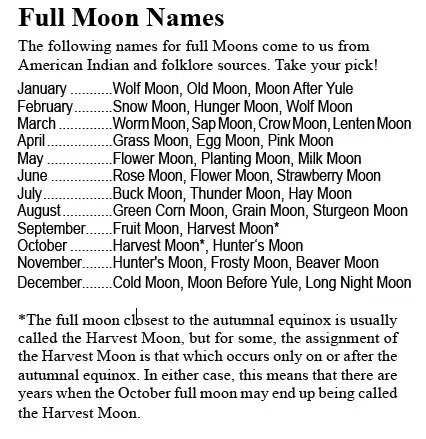
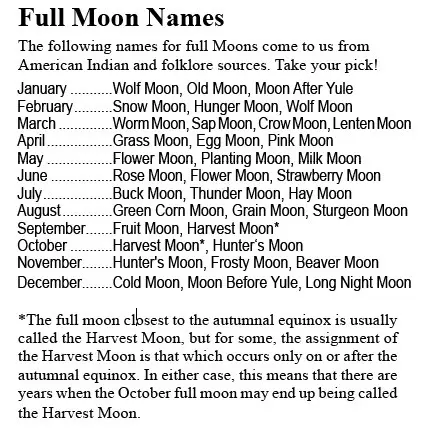
A chronological journey through the seasonal moons reveals a masterclass in ancient environmental science:
Winter Moons: Survival, Endurance, and Scarcity
- January – The Wolf Moon: While popularized in modern times by European folklore regarding howling, hungry midwinter wolves, indigenous communities often referred to this period through lenses of sheer survival, using names like the Severe Moon or the Center Moon, highlighting the bitter heart of winter.
- February – The Snow Moon / Hunger Moon: Reaching the zenith of winter’s intensity, this moon underscored the scarcity of food resources (Hunger Moon), the birth cycle of bear cubs (Bear Moon), or the vital seasonal run of the sucker fish, which provided essential sustenance for tribes like the Ojibwe.
Spring Moons: The Great Thaw and Agricultural Renewal
- March – The Worm Moon: Marking the softening of the earth, this moon signaled the reappearance of earthworm casts and the triumphant return of robins. Northern tribes often tracked it as the Full Crow Moon (signaling winter’s end via cawing birds) or the Sap and Sugar Moon, noting the activation of maple trees.
- April – The Pink Moon: Named for the vibrant carpets of wild ground phlox (Phlox subulata) blooming across North America, April’s moon was also tracked by the Ojibwe as the sap-boiling period, while other groups noted it through environmental markers like the Breaking Ice Moon and The Moon of the Red Grass Appearing.
Summer Moons: Abundance, Harvest, and Activity
- May – The Flower Moon: Signifying spring in its absolute fullness, this moon honored widespread floral blooms and served as a crucial calendar marker for planting corn and other staple crops.
- June – The Strawberry Moon: Coinciding with the ripening of wild strawberries, this moon represented a period of effortless bounty provided by Mother Nature. Coastal tribes frequently called it the Fish Moon, marking the upstream migration of shad.
- July – The Buck Moon / Thunder Moon: Named for the rapid, velvet-covered growth of new antlers on male deer, this moon also coincided with the peak of summer’s volatile electrical storms. (In medieval European traditions, it was alternatively tracked as the Mead Moon or Herb Moon).
- August – The Sturgeon Moon: Centered around the Great Lakes, this moon marked the peak harvesting window for large sturgeon. For the Anishinaabe, it signaled Manoomini-giizis—the sacred, highly ritualized season for harvesting wild rice.
Autumn Moons: Gathering and Preparation for the Deep Cold
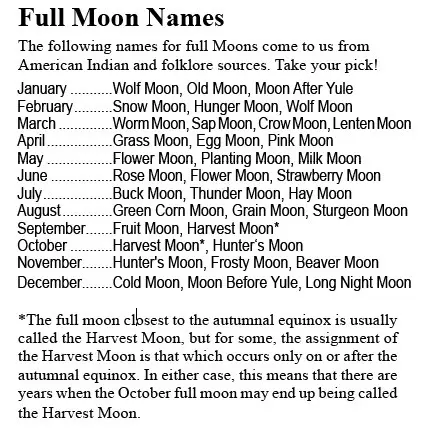
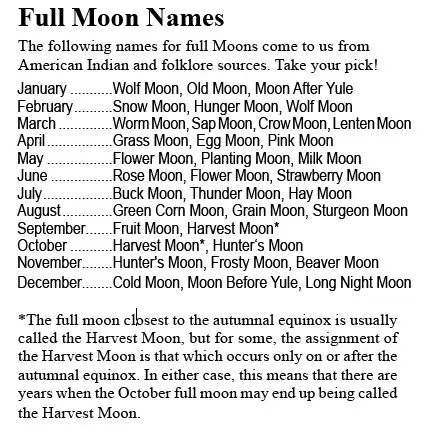
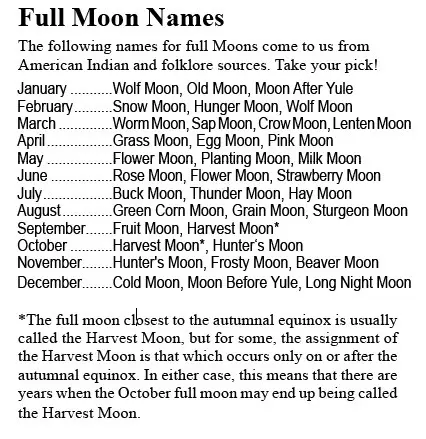
- September – The Harvest Moon: Closest to the autumnal equinox, this moon illuminated the fields just long enough for farmers to gather the critical "Three Sisters" staples: corn, beans, and squash, alongside wild fruits.
- October – The Hunter’s Moon: With fields cleared of crops and deciduous trees shedding their leaves, game animals were easily spotted and heavily fattened from a summer of foraging, making this the optimal month for securing winter meat stores.
- November – The Beaver Moon: Signifying the final push before the swamps froze solid, this moon tracked either the optimal window for setting beaver traps to secure warm pelts or the frantic dam-building activity of the beavers themselves.
- December – The Cold Moon / Long Night Moon: As the longest night of the year arrived alongside punishing snowstorms, hunting ground to a halt, plunging communities back into the stark, demanding realities of deep winter survival.
Supporting Data: Linguistic and Ecological Diversity
To understand the sheer scope of this naming system, one must look at demographic and linguistic data across North America. With more than 576 federally recognized Native American tribes historically inhabiting distinct ecological zones—ranging from arid deserts and subarctic forests to coastal wetlands and rolling prairies—the potential variety of lunar names is virtually limitless.
- Environmental Specialization: A tribe in coastal Washington state experienced completely different seasonal indicators in June compared to a tribe in inland North Dakota. Consequently, while a coastal group might track salmon runs, a plains group would track bison migration or grass maturation.
- The 13-Moon Standard: Many Eastern Woodland and Great Lakes tribes utilized a 13-moon calendar that aligned closely with the lunar synodic month (approximately 29.5 days), resulting in roughly 365 days across 13 cycles. This required occasional adjustments, showcasing an advanced grasp of positional astronomy.
- Institutional Codification: The widespread adoption of these names in modern logistics is heavily credited to publications like The Old Farmer’s Almanac, which began formalizing and publishing these colonial-adapted Indigenous names in the late 18th century, embedding them permanently into Western agricultural folklore.
Official Responses and Cultural Perspectives
In recent years, cultural anthropologists, indigenous historians, and environmental scientists have increasingly weighed in on how mainstream society consumes and interprets traditional knowledge systems.

A spokesperson for the Native Governance Center noted that while popular interest in indigenous moon names is encouraging, it must be accompanied by a conscious effort to move beyond romanticized tropes:
"When people reference a ‘Wolf Moon’ or a ‘Snow Moon,’ they are participating in a very ancient human desire to sync our lives with the rhythms of the earth. However, it is vital that this appreciation doesn’t strip the names of their specific cultural contexts. These were never just aesthetic labels; they were survival metrics, spiritual frameworks, and records of ecological health crafted by distinct nations with sovereign identities."
Furthermore, modern tribal leaders emphasize that these calendars are not historical fossils. They are living, breathing systems. For instance, the Anishinaabe people continue to utilize Gookomisinaan dibik-giiziso-mazina’igan (the traditional lunar calendar) in tandem with community ceremonies, demonstrating an unbroken continuity of ancestral wisdom.
Implications: Climate Change and the Future of Lunar Timekeeping
The resurgence of interest in traditional full moon names arrives at a critical juncture in environmental history. As anthropogenic climate change radically alters seasonal markers across North America, the traditional ecological knowledge embedded within lunar calendars is facing unprecedented disruption.
When unseasonable warmth causes maple sap to run in January instead of March, or prolonged droughts disrupt wild rice yields (Manoomini) in August, the historical predictive power of traditional moon names is challenged. Indigenous communities are currently at the forefront of documenting these ecological shifts, utilizing their traditional calendars to measure environmental degradation and advocate for climate resilience.
For the modern stargazer, adopting a more mindful approach to the lunar cycle carries significant psychological and ecological implications. By shifting focus from a rigid, industrialized 12-month Gregorian grid toward the organic, descriptive rhythms of the moons, individuals can cultivate a deeper awareness of local biodiversity, animal behavior, and seasonal transitions.
Conclusion
The names we assign to the full moons are far more than poetic entries on a modern calendar. They represent an archive of deep ecological intelligence, forged through thousands of years of human observation, trial, and adaptation by Indigenous peoples across North America.
As we look up at the night sky to witness the next lunar phase, honoring these names requires more than casual recitation—it demands a respectful acknowledgment of their tribal origins. By understanding the deep-rooted science, survival, and cultural heritage behind terms like the Wolf, Sturgeon, or Harvest moons, contemporary society can bridge the gap between ancient wisdom and modern ecological consciousness, fostering a renewed, respectful relationship with both the cosmos above and the living earth below.