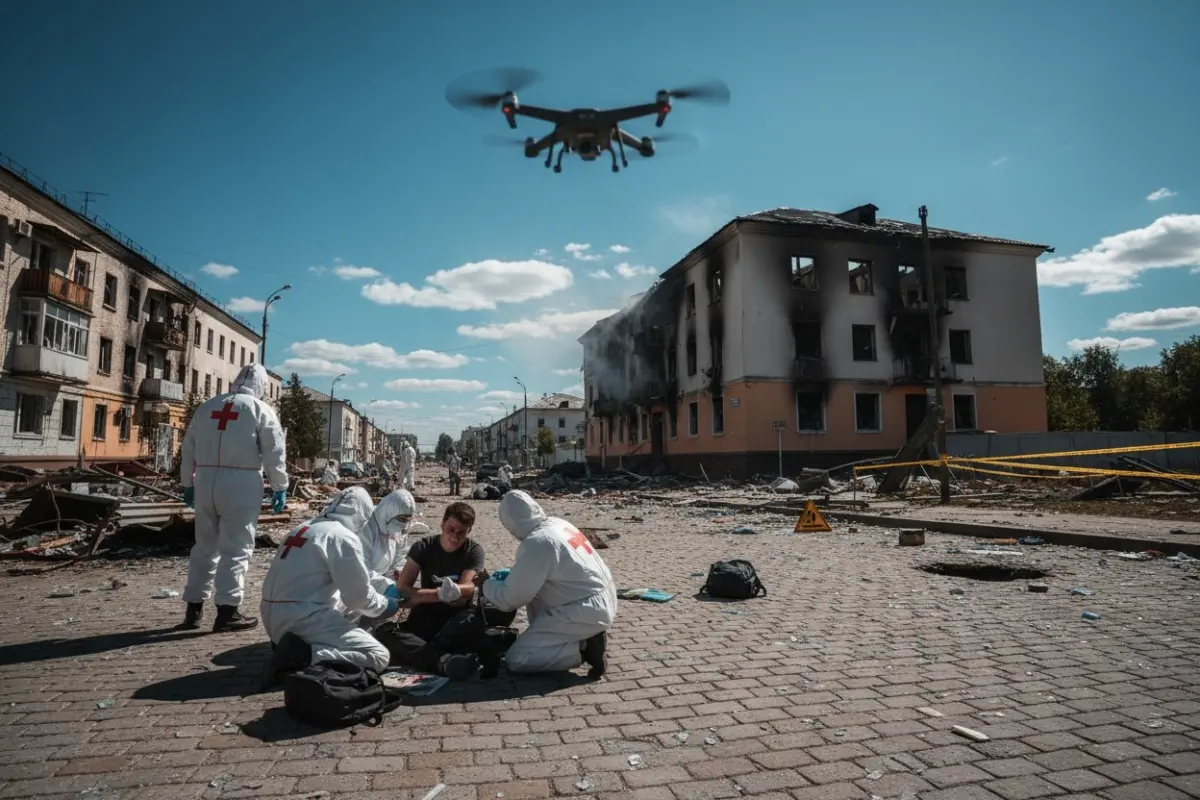
TRUBCHEVSK, RUSSIA — A Ukrainian drone strike hit the Russian border town of Trubchevsk in the Bryansk Region on September 30, 2026, leaving 12 civilians injured, according to local authorities. The attack has reignited concerns regarding the safety of non-combatants in border areas as the protracted war between Russia and Ukraine continues to see intensifying cross-border drone warfare and deep-strike capabilities.
Among the wounded were seven college students, local officials confirmed, with at least one victim reported to be in serious condition. While regional leadership moved quickly to hospitalize the injured and secure the surrounding areas, the incident highlights the persistent dangers faced by civilian populations residing within striking distance of the front lines and contested borders.
Main Facts
The strike on Trubchevsk unfolded on the morning of September 30, 2026, targeting a civilian-populated area in the Bryansk Region, which shares a direct border with Ukraine.
- Casualties and Demographics: A total of 12 civilians sustained injuries in the blast. Notably, seven of the casualties are college students. Medical personnel confirmed that one individual remains in serious condition, while the others are receiving ongoing treatment for various injuries.
- Immediate Response: Acting Governor of the Bryansk Region, Egor Kovalchuk, announced via social media that all victims were promptly evacuated and admitted to local medical facilities, where they are receiving proper care.
- Public Safety Warnings: Following the strike, Governor Kovalchuk issued an urgent public safety advisory. He urged local residents to exercise extreme caution and to refrain from investigating suspicious objects or debris found in the area, warning that such items could be lethal unexploded ordnance left behind by the drone impact.
- Attribution and Verification: Russian authorities have attributed the attack to Ukrainian forces. However, Ukraine has not formally claimed responsibility for the strike—a standard practice regarding incidents deep inside Russian territory. Independent verification of the attack’s exact mechanics, targeting parameters, and origin remains limited.
Chronology of Events
The September 30 strike on Trubchevsk is the latest in an escalating timeline of cross-border drone incidents that have increasingly blurred the lines between active combat zones and civilian infrastructure in western Russia.
Preceding Escalations (Late 2025 – Early 2026)
- November 2025: The lethality and range of Ukrainian drone capabilities were underscored when a deep-strike drone targeted the Sterlitamak Petrochemical Plant located nearly 800 miles inside Russian territory, signaling that no industrial or logistical hub was entirely out of reach.
- May 2026: Violence along the border spiked significantly. In early May, a high-profile cross-border drone strike in the Bryansk Region resulted in the death of well-known Russian adventurer Aleksandr, popularly known as "Sasha the Horse." This incident underscored the constant peril faced by residents and visitors in the region.
- Mid-May 2026: Civilian casualties mounted further when a separate Ukrainian drone strike targeted Ryazan overnight, killing four civilians, including a child. Later that month, a devastating strike hit a college dormitory in Starobelsk, killing 21 students and wounding 44 others, which subsequently triggered an intense diplomatic showdown and an emergency UN Security Council meeting requested by Moscow.
The Trubchevsk Incident (September 30, 2026)
- Morning Hours: A drone struck Trubchevsk in the Bryansk Region, causing sudden explosions and structural damage.
- Immediate Aftermath: Emergency services rushed to the scene to extinguish fires, treat the wounded, and secure the perimeter against potential secondary detonations from unexploded drone components.
- Official Communique: Acting Governor Egor Kovalchuk took to social media to report the casualty figures, detailing that seven students were among the injured and confirming hospital admissions for all 12 victims.
Supporting Data and Strategic Context
The expansion of drone warfare has fundamentally altered the tactical and strategic landscape of the Russia-Ukraine war. Both military commands have increasingly relied on unmanned aerial vehicles (UAVs) to project power far beyond the immediate front lines in the Donbass and southern Ukraine.
The Economics and Logistics of Drone Warfare
- Infrastructure Targets: Over the course of the conflict, hundreds of Ukrainian drone attacks have targeted critical Russian infrastructure, including major oil refineries near Moscow and regional fuel depots, aimed at disrupting the logistical supply lines feeding Russia’s military machine.
- Retaliatory Cycles: Analysts note an entrenched "eye-for-another" dynamic governing the conflict. As Russian long-range missile and drone campaigns target Ukrainian energy grids and urban centers, Ukrainian long-range UAVs have systematically tested Russian air defenses from the border regions to deep within the federation’s interior.
Statistical Overview of Border Vulnerabilities
- Geographic Proximity: The Bryansk Region, situated directly adjacent to Ukraine, acts as a primary buffer and transit corridor, making its towns and transport networks frequent witnesses to intercepted missiles, falling debris, and direct drone impacts.
- Youth and Educational Vulnerability: The fact that over half of the injured in Trubchevsk were college students—echoing the tragic dorm strike in Starobelsk earlier in the year—highlights how educational and residential facilities continue to be caught in the crossfire of modern attritional warfare.
Official Responses and International Reactions
The strike in Trubchevsk has drawn varied responses from regional administrators, national capitals, and international diplomats, occurring against a backdrop of fragile, ongoing diplomatic maneuvers.
Regional and National Statements
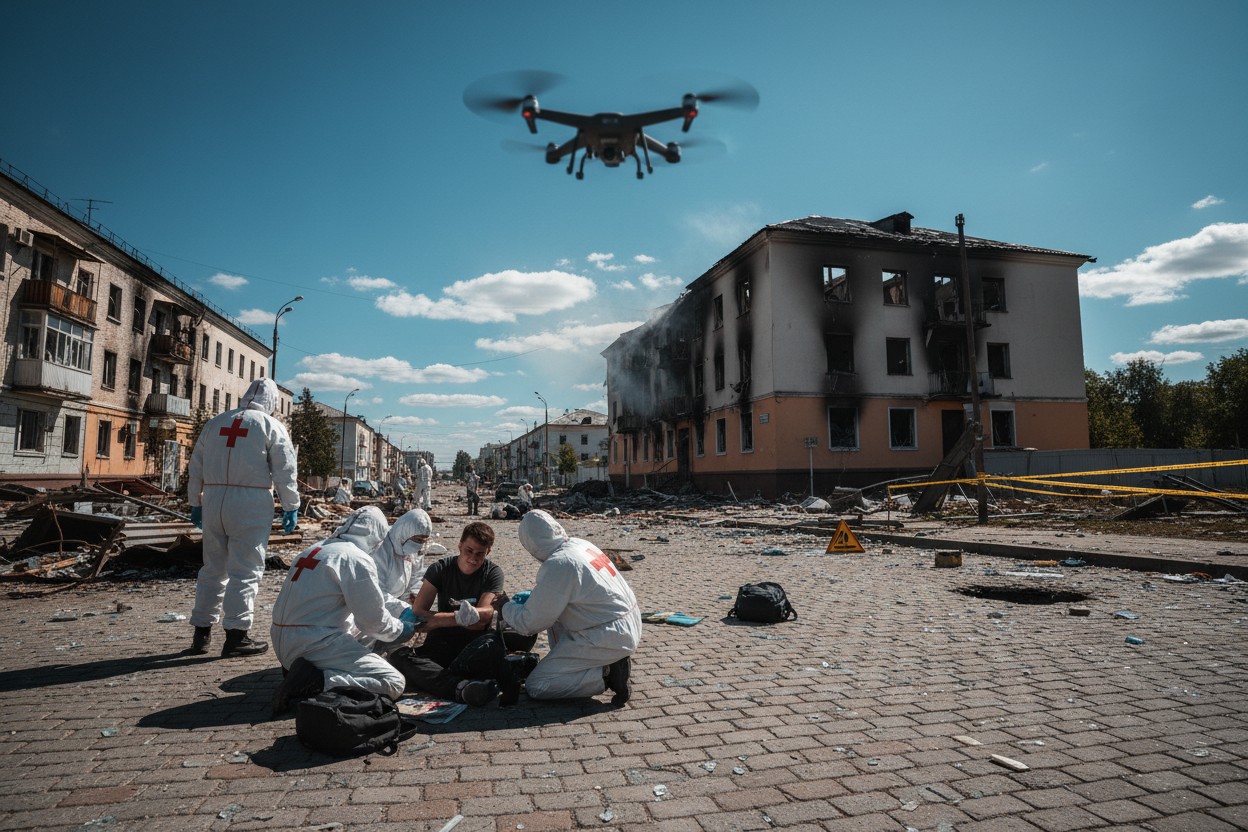
- Governor Egor Kovalchuk’s Appeal: In his public statements, Kovalchuk focused heavily on civilian welfare and safety protocols. Beyond confirming the medical status of the 12 injured individuals, his primary directive was warning the local population about unexploded munitions, reflecting the lingering physical hazards left in the wake of modern aerial strikes.
- Silence from Kyiv: In alignment with its established policy regarding operations on internationally recognized Russian soil, the Ukrainian government and military command have declined to comment on or claim ownership of the Trubchevsk strike.
The Broader Diplomatic Landscape
The incident occurred during a sensitive period of international diplomacy aimed at curbing infrastructural damage.
- U.S. Mediation Efforts: Washington has actively pushed for a limited "energy truce" or cessation of strikes against critical civilian infrastructure between Moscow and Kyiv.
- Shuttle Diplomacy: High-level diplomatic efforts continued through late September 2026, highlighted by discussions between U.S. President Donald Trump and Ukrainian leader Volodymyr Zelensky. Despite these diplomatic interventions, tactical military operations, including drone sorties, have continued unabated on the ground, testing the viability of any potential negotiated de-escalation framework.
Implications
The September 30 drone strike on Trubchevsk carries profound implications for the trajectory of the war and the daily reality of civilians living on both sides of the border.
1. Normalization of Danger in Border Regions
For residents of the Bryansk, Kursk, and Belgorod regions, the boundary line between a peaceful home front and an active war zone has effectively dissolved. The constant threat of cross-border drone incursions means that civilian populations must live under perpetual states of alert, with routine activities—such as attending college or commuting—fraught with danger.
2. The Legacy of Unexploded Ordnance
As Kovalchuk’s warnings underscored, the physical footprint of a drone strike extends far beyond the moment of impact. The proliferation of unexploded submunitions, drone fragments, and active micro-explosives poses a long-term hazard to children, pedestrians, and municipal workers tasked with cleanup and reconstruction.
3. Obstacles to Diplomatic Breakthroughs
Incidents that result in civilian casualties—particularly among students and non-combatants—harden political resolves and complicate ongoing international peace efforts. While Washington and other international actors press for localized ceasefires or energy truces, each civilian casualty on either side deepens grievances, making compromises harder to achieve at the negotiating table.
As investigations into the Trubchevsk strike continue and the injured recover in regional hospitals, the incident serves as a stark reminder of the human cost borne by everyday citizens as the war enters its fifth year of grinding, high-tech attrition.