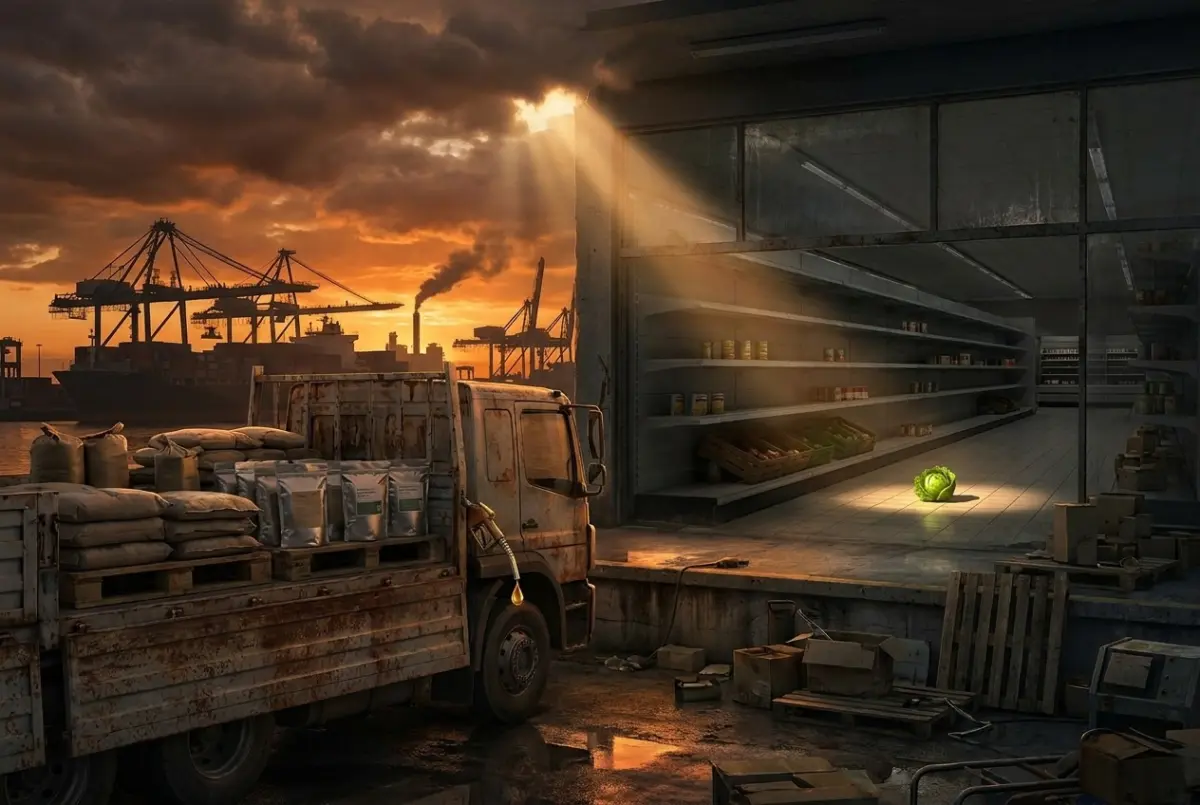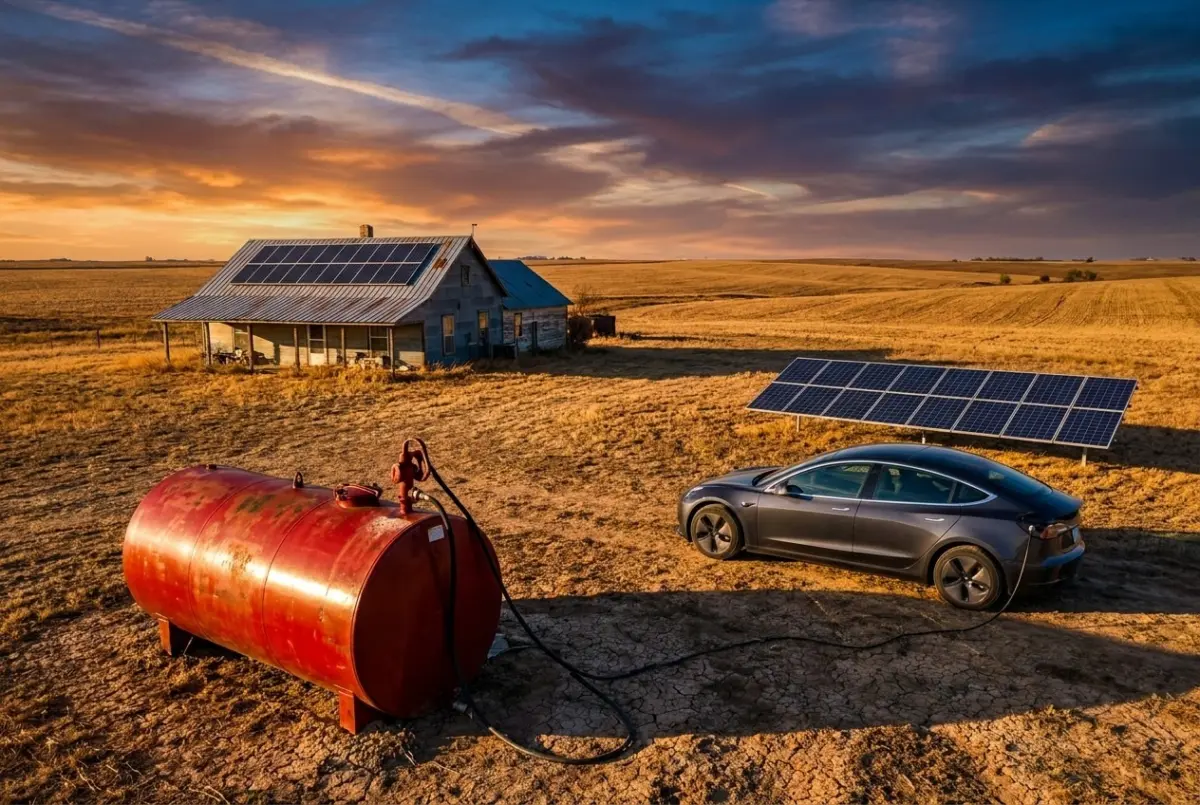
AUSTIN, Texas — In the heart of rural Texas, the hum of heavy machinery is increasingly accompanied by the quiet calculations of survivalists and farmers alike. For years, warnings of a looming energy crunch have circulated in agricultural communities. Now, those warnings have materialized into an acute statewide crisis.
Texas Governor Greg Abbott’s recent statewide disaster declaration over severe diesel shortages has laid bare the vulnerabilities of America’s fossil-fuel distribution network. Yet, for many seasoned homesteaders and independent operators, the state’s emergency response is merely a temporary bandage on a systemic wound.
The unfolding crisis highlights a profound contradiction in modern infrastructure: while policymakers scramble to stabilize a fractured supply chain using emergency executive powers, the ultimate path forward for many rural residents no longer relies on traditional petroleum. Paradoxically, a growing faction of off-grid agriculturalists is looking toward electric vehicles (EVs) and localized solar generation—not out of environmental zealotry, but as a hard-nosed strategy for absolute self-reliance.
Main Facts: The Anatomy of the Texas Diesel Shortage
The core of the current emergency centers on an unprecedented convergence of skyrocketing fuel costs, shrinking refining capacities, and inflexible regulatory frameworks.
National average diesel prices have surged past $6.50 a gallon, placing an immense financial burden on the logistics, agriculture, and transportation sectors. In response, Governor Abbott issued an executive disaster declaration aimed at easing the crunch. Central to this order is the temporary suspension of strict penalties associated with "red diesel"—agricultural, off-road diesel that is chemically dyed and taxed at a significantly lower rate than standard road fuel.
Normally, operating a commercial or passenger vehicle on public highways using red diesel can trigger punitive fines exceeding $20,000 per infraction, as the state aggressively protects its highway tax revenue streams. Abbott’s emergency mandate temporarily lifts these enforcement mechanisms, legalizing the use of off-road fuel in highway vehicles to keep supply chains moving.
However, industry analysts and local operators point out that while the emergency order provides immediate logistical relief, it fails to address the root causes of the shortage. Years of regulatory pressure on domestic refining, combined with international supply chain shocks, have left the United States with a fragile, just-in-time fuel delivery model that leaves little room for error.
Chronology: How the Crisis Unfolded
The road to the current Texas diesel emergency has been paved by a series of geopolitical, economic, and domestic systemic shocks over the past several years:
- February 2021: The catastrophic Texas winter freeze (Winter Storm Uri) exposes the extreme fragility of the state’s independent power grid. Millions lose power, pipes burst, and hundreds die. Many rural residents rely heavily on stored red diesel to fuel generators and forced-air heaters to keep livestock and families alive. The event serves as a wake-up call for localized energy independence.
- 2022–2023: Global energy markets experience extreme volatility following the outbreak of the Russia-Ukraine war and subsequent international sanctions. Refining capacity takes a massive hit globally and domestically, driving diesel and gasoline prices to historic highs.
- Late 2023–2024: The Strategic Petroleum Reserve (SPR) plummets to its lowest level since 1982. Historic drawdowns authorized by federal leadership temporarily pad the market, but fail to stimulate long-term domestic refinery expansion.
- Mid-2026: Geopolitical flashpoints in the Middle East, particularly around the Strait of Hormuz, threaten critical maritime energy corridors. Iranian maneuvers and regional instability spark fears of a complete zero-flow closure of the strait, threatening a cascading global supply failure.
- Present Day: National diesel averages breach $6.50 a gallon. Recognizing an imminent paralysis of agricultural and freight transport, Governor Abbott issues the Texas disaster declaration, temporarily suspending red diesel tax penalties and igniting a fierce debate over energy policy and taxation.
Supporting Data and Market Pressures
The emergency in Texas is not an isolated phenomenon; it is the localized symptom of a globally strained petroleum apparatus. According to market data from ZeroHedge and major energy tracking agencies, the structural integrity of the fuel market has been steadily eroded by multiple compounding factors:
- Refining Bottlenecks: Domestic refining capacity has stagnated due to aging infrastructure, stringent environmental regulations, and a lack of capital investment in fossil fuel processing plants. Proposals to invoke the federal Defense Production Act to force an expansion of refining capacity highlight the extreme measures being considered by policymakers.
- The Strategic Petroleum Reserve Deficit: With the SPR hovering near historic lows not seen since 1982—following emergency releases totaling upwards of 172 million barrels—the federal government’s capacity to artificially buffer future price spikes is severely compromised.
- The Enforcement Loophole: Texas’s suspension of red diesel penalties creates an administrative nightmare. Because red diesel is identified by chemical dye staining on fuel filters, thousands of commercial trucks and agricultural vehicles operating during the emergency will possess stained filters. Once the disaster declaration expires, distinguishing between emergency-sanctioned usage and historical tax evasion will present state inspectors with an impossible enforcement hurdle.
Official Responses and Policy Dilemmas
Reactions to Governor Abbott’s emergency declaration have underscored the deep ideological divisions surrounding American energy policy.
The Texas Railroad Commission praised the move as a "common-sense step towards expanding access to cheaper diesel," emphasizing that immediate relief is vital to prevent grocery store shelves from emptying and agricultural production from halting. State officials maintain that temporary regulatory suspension is a necessary tool of crisis management.
Conversely, free-market critics and rural landowners argue that the crisis exposes the predatory nature of fuel taxation. The existence of a $20,000 fine for using agricultural diesel on public roads during a supply crunch demonstrates that revenue collection has historically taken precedence over public welfare. Critics argue that if the government can effortlessly waive these rules during an emergency, the justification for the taxes in the first place is fundamentally flawed.
Furthermore, proposals at the federal level—such as utilizing the Defense Production Act to mandate refinery output—signal a departure from traditional free-market mechanisms, pushing the energy sector closer to state-managed interventionism.
Implications: The Shift Toward Personal Energy Autonomy
For rural residents, farmers, and long-term planners, the takeaway from the Texas diesel emergency is clear: systemic dependency is a liability.
While storing bulk fuel—such as filling tanks when red diesel traded at $2.50 a gallon—provided a temporary buffer, the long-term trajectory of petroleum points toward sustained high costs and persistent volatility. This realization is driving a quiet revolution in rural communities, where traditional paradigms are being re-evaluated.
Surprisingly, this shift does not involve embracing mainstream climate narratives. Many conservative landowners and agriculturalists remain highly skeptical of federal green energy mandates. Yet, pragmatism is overriding politics. The calculus of survival is straightforward: electricity can be generated locally, stored in residential battery banks, and harvested via independent rooftop solar arrays. Diesel, on the other hand, requires a complex, highly vulnerable global supply chain subject to geopolitical chokepoints, refinery failures, and government regulation.
By transitioning personal fleets to electric vehicles powered by decentralized solar infrastructure, rural operators can sever their reliance on both volatile fossil fuel markets and capricious government intervention.
As the Texas diesel emergency demonstrates, the old systems are breaking down. Whether the crisis is sparked by a winter grid failure, a Middle Eastern shipping blockade, or domestic refining shortages, the ultimate defense against chaos is not a government disaster declaration—it is total, uncompromised personal energy independence.