








Main Facts
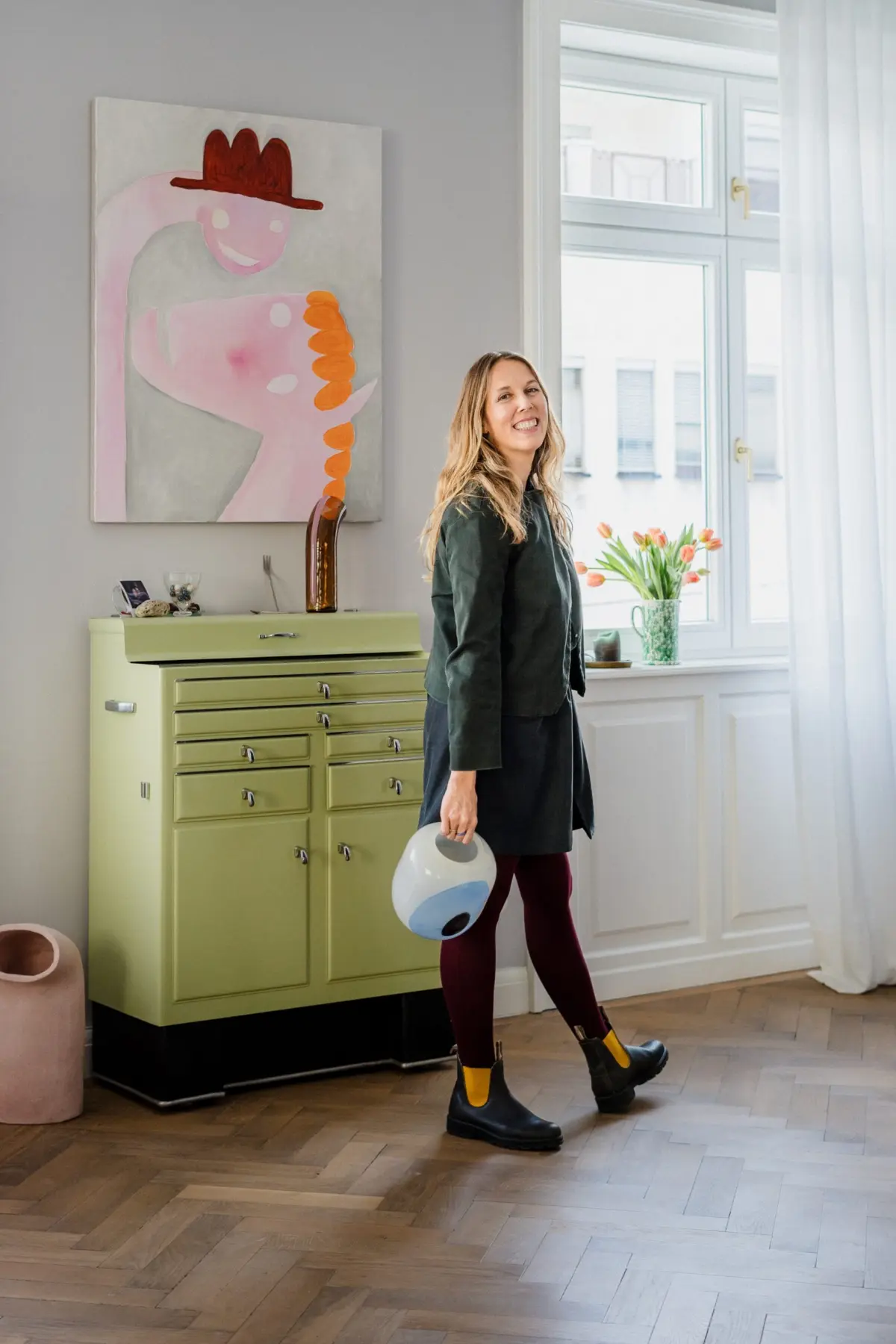
In the vibrant, industrial waterfront neighborhood of Red Hook, Brooklyn, a 7,000-square-foot workshop operates as a living laboratory for contemporary design. At the helm is Natalie Shook, a Midwest-raised, Cuban-American multidisciplinary artist whose journey from painter to master fabricator birthed Piscina—a thriving design studio and collaborative collective.
Piscina is not a traditional art gallery that occasionally dabbles in production; rather, it is a high-energy production space that occasionally opens its doors to exhibit what it creates. Housing woodworkers, ceramicists, metalsmiths, and conceptual designers under one roof, the collective champions a hands-on, cross-disciplinary approach to furniture and object design.
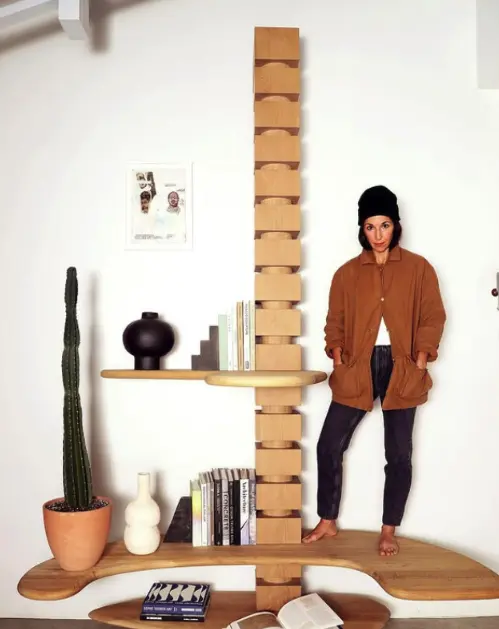
The studio captured the design world’s attention with a sensational debut at the International Contemporary Furniture Fair (ICFF) in 2022, walking away with both Best New Designer and Best in Show honors. Their breakout piece—a commanding, architectural solid-oak shelving unit—exemplified the collective’s ethos: functional objects that carry weight, demand physical interaction, and blur the boundaries between fine art, architecture, and interior utility.
Chronology: The Evolution of Natalie Shook and Piscina
The Formative Years: The Midwest to Cooper Union
Natalie Shook’s dedication to creative practice began early, establishing a daily artistic routine by the age of 14. For the first decade of her creative life, she operated under the firm belief that her medium was painting. Born and raised in the Midwest, Shook eventually relocated to New York City to formalize her education, enrolling in the prestigious Cooper Union to study painting.
The Material Pivot: Discovering Weight and Structure
New York City often acts as a crucible for artists, and Shook’s time at Cooper Union proved to be a turning point. As she engaged with the physical environment of the city and the rigorous conceptual framework of her program, her artistic inclinations shifted. She discovered an unexpected, magnetic affinity for carpentry, fabrication, and structural design.
Instead of two-dimensional canvases, Shook found herself drawn to objects possessing tactile qualities: things that could be touched, sat upon, leaned against, and endowed with physical weight. This realization catalyzed a gradual transition away from painting and into the realm of spatial and material design.
Establishing Roots in Red Hook
Recognizing the need for physical space—a luxury in New York—Shook established Piscina in Red Hook, Brooklyn. The maritime history and industrial grit of the neighborhood provided an ideal backdrop for a heavy-duty workshop. Over time, Shook curated a community of like-minded artisans, transforming the space from a solo workshop into a collaborative collective.
The ICFF 2022 Breakthrough
The culmination of years of quiet, rigorous material experimentation came to fruition at ICFF 2022. Launching onto the global design stage, Piscina swept the exhibition with a debut collection that stunned critics and curators alike. Winning Best New Designer and Best in Show, the collective announced its arrival with a sophisticated lineup of solid oak, ceramic, and cast-iron works that defied easy categorization.
Supporting Data and Creative Methodology
Inside the 7,000-Square-Foot Workshop
Piscina’s Red Hook headquarters is a study in controlled chaos and intense productivity. On any given day, the expansive 7,000-square-foot facility is alive with the sensory details of physical creation:
- The Woodworking Floor: Saws buzz continuously as artisans shape domestic and exotic hardwoods into structural frames and monumental furniture.
- The Ceramic Studio: Bathed in natural light, this zone features whirring pottery wheels and kilns firing experimental glazes.
- The Metal Shop: Here, sparks fly as fabricators weld and cast iron, brass, and steel components that anchor the collective’s hybrid pieces.
This ecosystem fosters a unique cross-pollination of skills. A woodworker might consult a ceramicist on how to integrate a glazed vessel into a wooden credenza, while a metalsmith might advise on load-bearing joints.
The Philosophy of the Primary Sketch
In traditional design pipelines, hand-drawn sketches are treated as ephemeral ephemera—discarded steps on the path to a finished CAD rendering or mass-produced prototype. Piscina inverts this hierarchy.

The collective treats drawing by hand as a primary, intimate document of creative intuition. Rather than translating a sketch into an overly sanitized final product, Piscina seeks to preserve the raw, gestural energy of the initial thought within the physical object itself. The sketches live on inside the objects, giving them a narrative depth that mass-market furniture lacks.
Featured Work Profile: The Oak Shelving Unit
- Creator: Piscina
- Location: Red Hook, Brooklyn, NY
- Materials: Solid oak
- Design Aesthetic: A tower of stacked, geometric forms that bridges the gap between large-scale architecture and domestic furniture. It commands a room, operating simultaneously as a spatial divider and a utilitarian storage system.
- Social/Digital Handle: @piscina.piscina
Official Perspectives and Industry Response
The ascent of Piscina has not gone unnoticed by design critics, interior architects, and curators who have long lamented the homogenization of contemporary furniture through mass manufacturing and dropshipping culture.
Industry insiders have lauded Shook’s ability to foster a collective model that prioritizes human craftsmanship over speed-to-market. When asked about her leadership style and the collective’s sprawling identity, Shook often reflects on her evolution: "She is, it turns out, many people trying to be one person. That’s not a problem. That’s the whole point of Piscina."
By acknowledging the multiplicity of influences within her studio—the diverse backgrounds of the woodworkers, the idiosyncratic styles of the ceramicists, and her own shifting identity from painter to maker—Shook has built a brand that mirrors the complexity of modern urban creativity.
Design critics reviewing the ICFF 2022 debut noted that Piscina’s pieces possessed a "specific, considered" quality that made them "impossible to place in a category." This resistance to categorization is precisely what institutional buyers and high-end residential designers are currently hunting for: authenticity rooted in tactile labor.
Implications for the Future of Independent Design Collectives
Piscina’s success signals a broader, much-needed shift in the American design landscape. As global supply chains face ongoing volatility and consumers increasingly suffer from "fast furniture fatigue," studios operating on the cooperative guild model are proving to be resilient, culturally relevant alternatives.
1. The Revival of Regional Fabrication
Piscina demonstrates that high-end, globally recognized design can be conceptualized, manufactured, and distributed locally. By anchoring their operations in historic industrial zones like Red Hook, Brooklyn, collectives help preserve the physical infrastructure of urban manufacturing, keeping artisanal jobs within city limits.
2. The Death of the Single-Author Myth
For centuries, the design industry has relied heavily on the cult of the singular "starchitect" or master designer, often erasing the contributions of the craftspeople who actually build the prototypes. Piscina’s collective model subverts this dynamic. By celebrating the collaborative friction between woodworkers, ceramicists, and metal fabricators, the studio points toward a more honest, transparent future for design credit.
3. Material Integrity as a Luxury Standard
In an era dominated by flat-pack particle board and synthetic veneers, Piscina’s commitment to solid oak, cast iron, and hand-thrown ceramics redefines luxury. True luxury is increasingly defined by weight, permanence, and the visible evidence of the human hand.
As Natalie Shook and her team continue to expand out of their Brooklyn workshop, Piscina stands as a testament to the power of following an unexpected creative impulse—proving that when you trade the two-dimensional canvas for three-dimensional reality, you just might build a whole new world.