






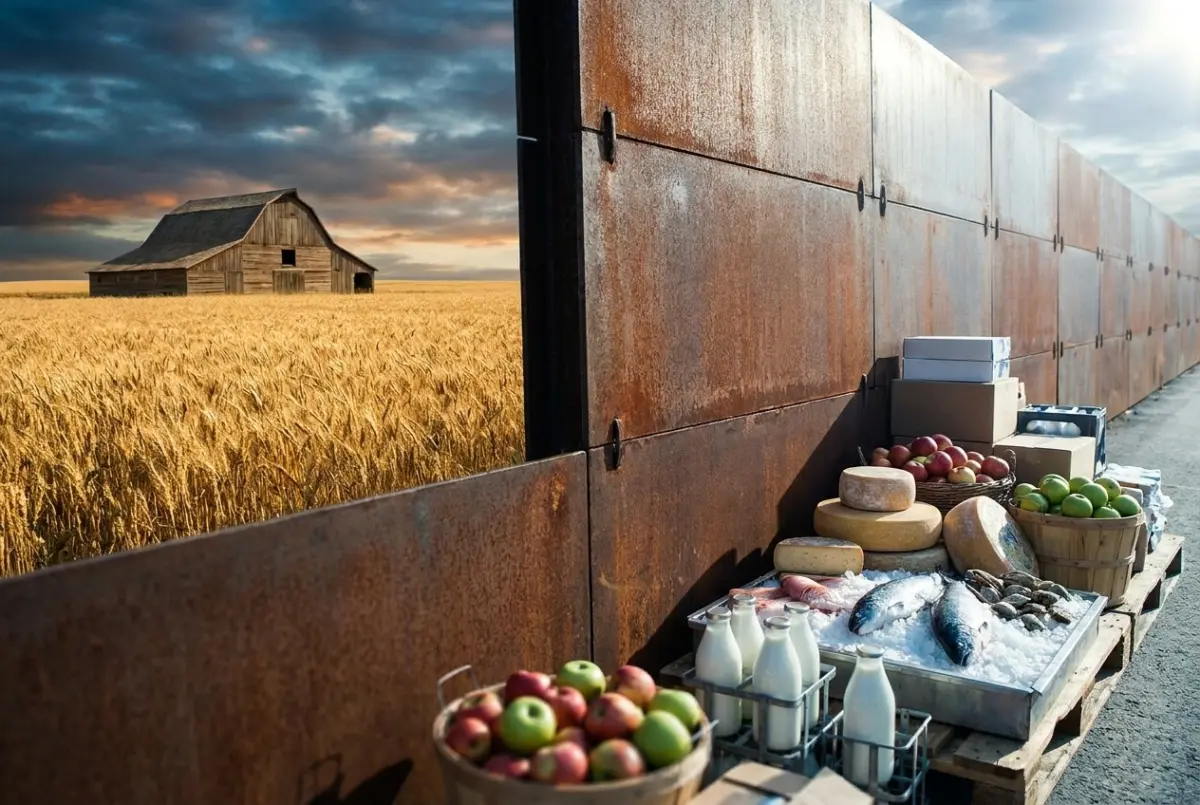
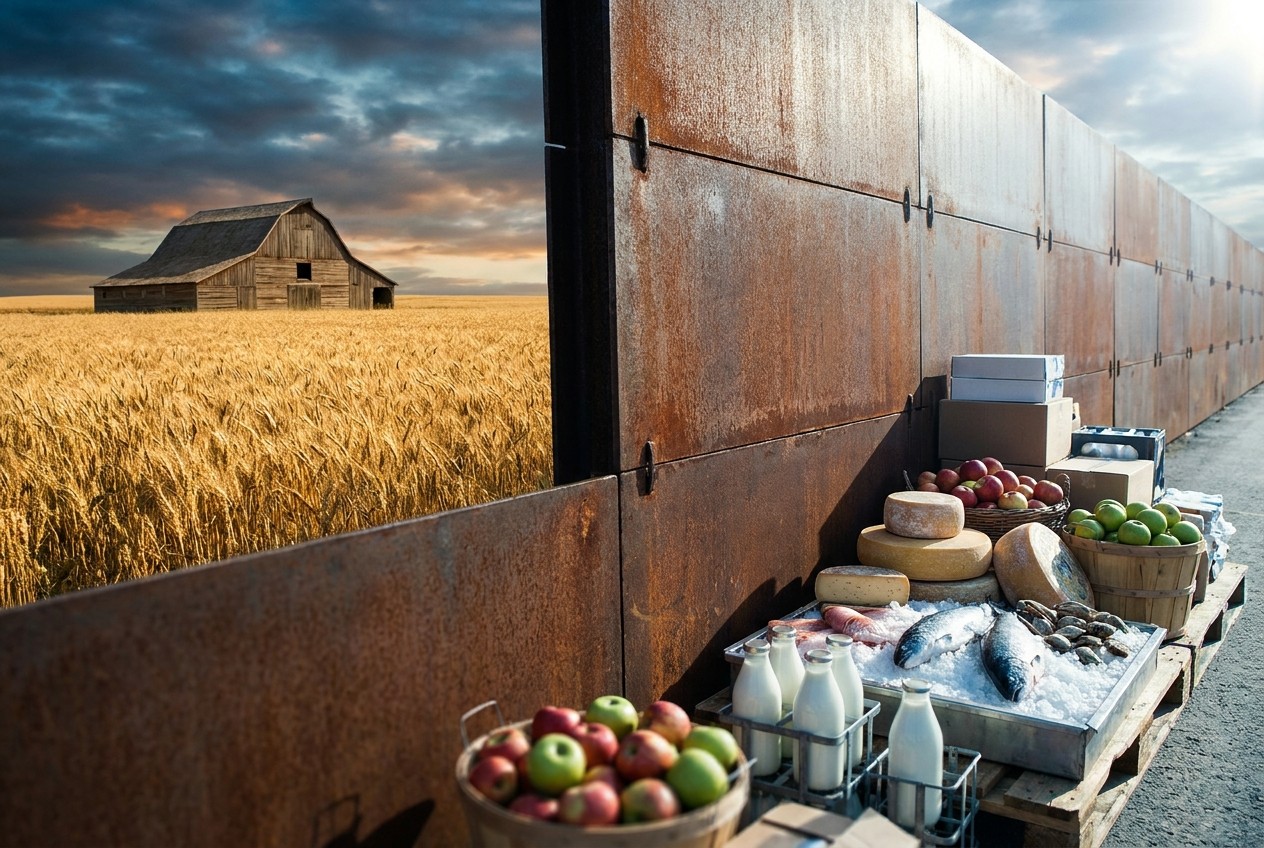
MOSCOW — In a formal decree published Thursday on the official Kremlin website, Russian President Vladimir Putin has extended the nation’s sweeping ban on a wide array of Western agricultural and food products through the end of 2028. This decisive administrative action prolongs a trade barrier that has defined Moscow’s economic defensive posture for over a decade. Originally enacted in August 2014 in direct retaliation against punitive economic sanctions slapped on Russia by Western nations following the crisis in Ukraine, the embargo continues to target a broad coalition of industrialized democracies officially categorized by the Kremlin as "unfriendly."
The latest legislative extension keeps strict prohibitions in place on vital food categories—including meat, seafood, dairy, fruits, and vegetables—originating from the United States, the European Union, the United Kingdom, Canada, Australia, New Zealand, Norway, Ukraine, Albania, Montenegro, Iceland, and Liechtenstein. While the Kremlin’s newly released text offers no additional operational or regulatory details beyond the timeline extension, the move underscores Moscow’s long-term commitment to economic self-reliance, import substitution, and a decisive pivot away from traditional Western trade partners.
This multi-year extension arrives at a turbulent crossroads for international commodities. Agricultural sectors across both North America and Europe are currently grappling with punishing climate conditions, including record-shattering heatwaves and widespread droughts. These environmental strains threaten to compound existing global supply chain pressures, intersecting with a complex matrix of geopolitical trade restrictions, energy price volatility, and evolving food security concerns worldwide.
Main Facts
The prolongation of Russia’s counter-sanctions regime solidifies a trade partition that has fundamentally reshaped the country’s domestic agricultural landscape and grocery supply chains since the mid-2010s.
- The Extension: Signed by President Vladimir Putin and published on the Kremlin’s official portal on Thursday, the decree extends the restrictive measures through December 31, 2028, effectively locking in the food embargo for an additional two years beyond its prior trajectory.
- Targeted Jurisdictions: The restrictions continue to apply uniformly to goods imported from the United States, the European Union, the United Kingdom, Canada, Australia, New Zealand, Norway, Ukraine, Albania, Montenegro, Iceland, and Liechtenstein—nations collectively designated by Moscow as "unfriendly states."
- Prohibited Commodities: The banned product categories remain expansive, covering fresh and processed meats, fish and seafood, dairy products, fruits, and vegetables.
- Stated Policy Rationale: The Russian government maintains that the embargo serves as a powerful catalyst for domestic agricultural growth. Moscow argues the policy has successfully incentivized domestic food production, stimulated rural investments, and paved the way for increased market penetration by non-Western suppliers from friendly nations such as Serbia and various states across Asia and the Middle East.
Chronology of the Embargo
To fully understand the weight of the 2028 extension, it is necessary to examine the historical trajectory of geopolitical friction that birthed and sustained the food embargo over the past decade.
2014: The Catalyst and Retaliatory Response
The foundation of the current trade barrier was laid in early 2014, a period marked by intense geopolitical turmoil in Ukraine. Following a Western-backed political shift in Kiev, the predominantly Russian-speaking Black Sea region of Crimea voted in a referendum to secede from Ukraine and join the Russian Federation. Western governments swiftly refused to recognize the vote, framing the secession as an illegal annexation and responding with targeted economic sanctions against high-ranking Russian officials, financial institutions, and defense enterprises.
In August 2014, Moscow fired back with an asymmetric economic weapon: a sweeping ban on agricultural imports from the countries that had imposed sanctions. What was initially framed as a temporary, one-year counter-measure quickly morphed into a permanent fixture of Russian trade policy.
2015–2021: Institutionalization and Domestic Pivots
As Western sanctions were repeatedly renewed and expanded over subsequent years—particularly following the downing of Malaysia Airlines Flight MH17 and ongoing conflict in the Donbas region—Moscow systematically renewed the food embargo on an annual or multi-year basis.
During this period, the Russian government poured billions of rubles into its domestic agricultural sector, aiming to achieve food independence in staple grains, poultry, pork, and greenhouse-grown vegetables. While cheese connoisseurs and consumers accustomed to imported European delicacies faced higher prices and limited choices, domestic agro-holdings experienced a massive boom, transforming Russia from a major wheat importer into the world’s leading grain exporter.
2022–2026: Total Geopolitical Realignment and the 2028 Extension
The outbreak of the full-scale conflict in Ukraine in February 2022 shattered whatever economic ties remained between Russia and the West. Western nations unleashed an unprecedented tsunami of sanctions, targeting central bank reserves, freezing sovereign assets, decoupling major Russian banks from the SWIFT messaging system, and phasing out purchases of Russian crude oil and natural gas.
In response, Moscow expanded its domestic economic defenses. The classification of "unfriendly nations" was formalized, carrying profound legal, financial, and diplomatic penalties. By locking in the Western food ban through 2028, the Kremlin is signaling that a normalization of trade relations with the U.S. and Europe is not anticipated in the medium term, cementing a permanent structural decoupling of Russia’s food economy from Western markets.
Supporting Data and Market Realities
The timing of the Kremlin’s decree coincides with a precarious period for international agriculture. Climate-induced stresses and overlapping trade barriers are currently testing the resilience of global food systems.
Climate Pressures in North America and Europe
Producers across the Northern Hemisphere are reeling from severe weather anomalies. According to data from the National Oceanic and Atmospheric Administration (NOAA), the contiguous United States suffered through its hottest meteorological summer on record, leaving extensive agricultural zones parched by persistent, widespread drought.
Simultaneously, the European Union’s Copernicus Climate Change Service reported that Europe experienced its hottest summer in recorded history. The consequences for European harvests have been severe. The European Commission’s Joint Research Center noted that successive heatwaves have driven forecasts for key EU summer crop yields as much as 14% below their five-year averages.
Potato growers in Great Britain, Germany, France, Belgium, and the Netherlands have been particularly hard-hit. According to an assessment published Thursday by the UK-based Energy and Climate Intelligence Unit, extreme weather events are projected to inflict staggering losses ranging between €498 million and €818 million on the region’s potato harvest alone.
Overlapping Global Trade Restrictions
The climate-driven squeeze on agricultural yields is unfolding against a backdrop of protective and emergency trade policies enacted by various nations to safeguard domestic food security:
- Ukraine’s Export Bans: In the wake of the ongoing conflict, authorities in Kiev implemented total bans on the export of essential commodities, including wheat, millet, oats, buckwheat, and various meat products, to ensure domestic survival.
- Russian Commodity Controls: Moscow has similarly utilized export controls as a macroeconomic lever. Periodic restrictions on fuel and commodity exports—such as the high-profile diesel export ban instituted in September 2023—demonstrated how swiftly trade policy adjustments in the region can drive global distillate and energy prices higher.
Official Responses and Geopolitical Perspectives
Reactions to the 2028 extension reflect deeply polarized worldviews regarding the root causes of contemporary economic and geopolitical friction.
The Moscow Perspective: Self-Defense and Domestic Growth
From the viewpoint of the Russian leadership, the food embargo and its systematic extensions are not merely punitive tools, but necessary acts of economic self-defense. Moscow argues that the policy has successfully insulated the Russian domestic market from external shocks while fostering a robust, self-sufficient agricultural sector.
Furthermore, Russian state media and official commentary frequently frame these defensive economic policies through the lens of broken historical promises regarding European security architecture. As one prominent political observer noted, referencing the post-Cold War era: "Long forgotten was the U.S. and NATO’s pledge not to expand into Eastern Europe following the deal made during the 1990 negotiations between the West and the Soviet Union over German unification." From Moscow’s perspective, Western economic sanctions and agricultural pressures are the natural extension of a continuous geopolitical encroachment, justifying a permanent decoupling of Russian markets from Western influence.
The Western Perspective: Economic Isolation and Geopolitical Pushback
Western governments and international bodies have largely treated the ongoing extension of the Russian food embargo as an expected continuation of a self-isolating policy. Official capitals in Washington, Brussels, and London maintain that the original 2014 embargo disproportionately harmed Russian consumers by reducing choice, driving up inflation, and restricting access to high-quality specialty goods.
While no immediate, formal diplomatic statements or emergency communiqués were issued by Western trade ministries in direct response to Thursday’s decree, the prevailing Western consensus views Russia’s protectionist measures as a self-inflicted wound that reinforces the country’s economic isolation from the democratic industrialized world.
Implications for Global Markets and Consumers
As the international community digests the Kremlin’s decision to maintain the food embargo through the end of the decade, economists and agricultural analysts are evaluating the broader ripples across global trade networks.
- Permanent Shift in Trade Routes: The consolidation of the ban until 2028 ensures that non-Western agricultural exporters—particularly producers in Latin America, Turkey, China, India, and Central Asia—will continue to enjoy privileged access to the lucrative Russian consumer market, cementing supply chains that bypass Western ports entirely.
- Compounded Supply Pressures: With North American and European agricultural yields depressed by extreme heatwaves and prolonged droughts, global food markets remain sensitive to supply shocks. While Russian grain exports continue to flow heavily to markets in Africa and the Middle East, European crop losses and Western trade restrictions create a fragmented global trade architecture prone to localized price volatility.
- Long-Term Structural Divides: The decree serves as a stark reminder that the economic architecture constructed in the wake of the 2014 crisis is designed to endure. As geopolitical fault lines harden, the prospect of a return to pre-2014 agricultural trade integration between Russia and the West appears increasingly remote, setting the stage for a permanently bifurcated global food economy well into the late 2020s.