





By the Design Desk
Published: May 2026
Main Facts
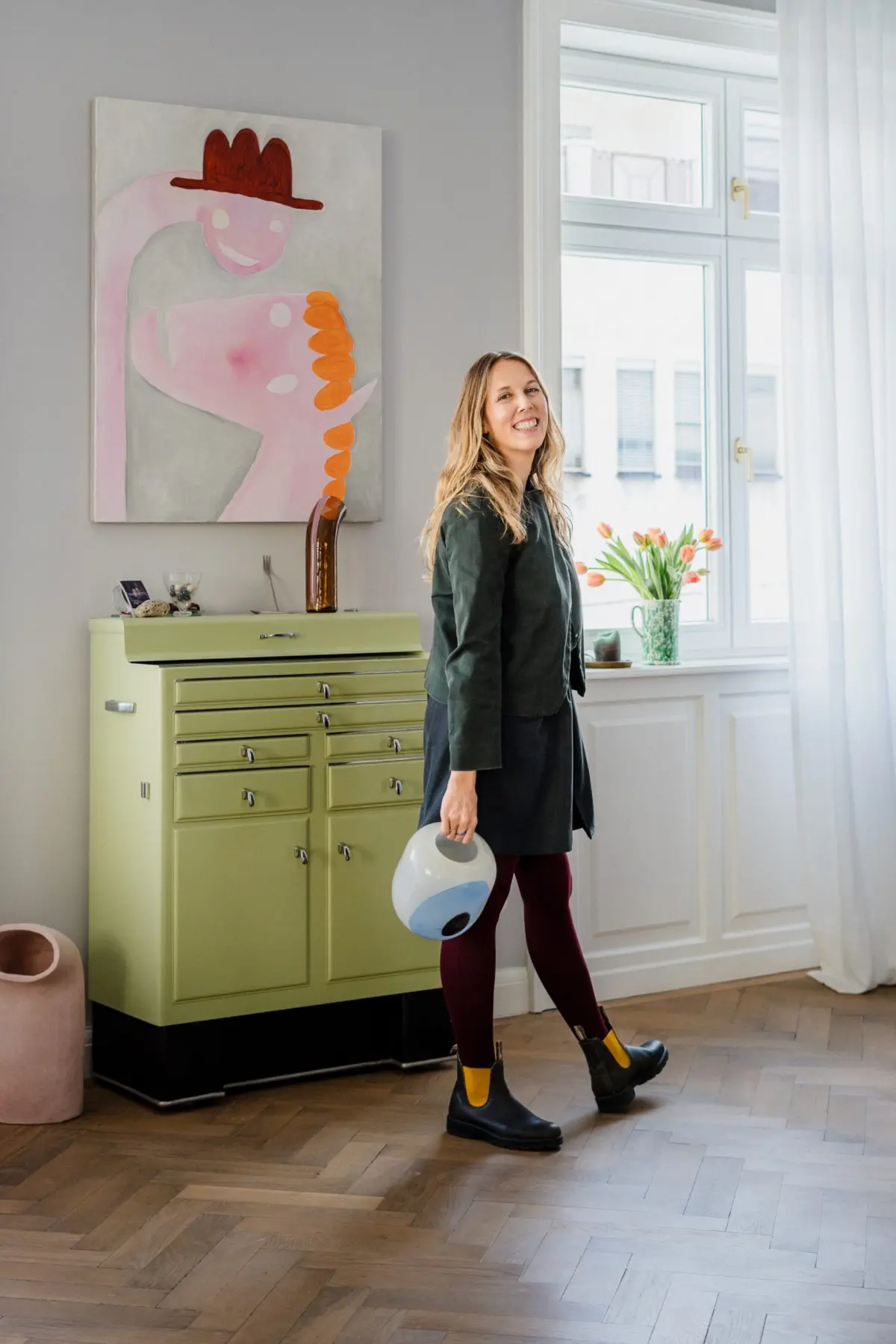
In the quiet, precise craft workshops of Vienna and the storied glass furnaces of Bohemia, a quiet revolution in decorative design is taking place. Ursula Futura—the uncompromising creative alter ego of designer Kathrin Schaden—is challenging the clinical perfection of mass-produced interior objects through handcrafted, mouth-blown glass art.
Rejecting the sterile uniformity of industrial casting, Schaden’s studio embraces the imperfections, fluid dynamics, and emotional resonance of glass. Her signature creations, including sculptural objects like Nessie and Phantom, alongside the mesmerizing Pulsar lamp series, capture the fleeting magic of light, color, and form. Operating at the intersection of fine art and functional design, Ursula Futura’s pieces transform living spaces not merely through illumination or decoration, but by evoking deep, inexplicable emotional responses.
- Core Medium: Mouth-blown colored glass, handcrafted in Bohemia and Vienna.
- Key Philosophy: Celebrating material rebellion—retaining air bubbles, subtle asymmetries, and the physical traces of the maker’s hand.
- Flagship Collection: The Pulsar lighting series (table lamps, with pendants and wall sconces currently in development).
- Core Identifiers: Singular, non-reproducible objects that shift appearance based on viewing angles, lighting conditions, and whether they are powered on or off.
Chronology: The Evolution of an Alter Ego
The genesis of Ursula Futura cannot be traced to a traditional business plan or a corporate design incubator. Instead, its timeline is written through years of personal reckoning, material exploration, and a deliberate rejection of creative self-censorship.
The Formative Years: The Burden of "Too Much"
For years, Kathrin Schaden navigated the conventional design world operating under standard professional constraints. Time and again, her instinct for vivid color combinations, dramatic scale, and emotional storytelling was met with commercial hesitation. She was repeatedly told that her design impulses were "too much"—too loud, too expressive, too unbridled for mainstream interiors.
Rather than diluting her vision to fit commercial parameters, Schaden chose a radical alternative. She built an alter ego. Ursula Futura became the version of the designer who refused to edit herself, giving physical form to ideas that she simply "couldn’t stop thinking about."

The Discovery of Bohemian Glassworks
Establishing the partnership between Vienna—where the conceptualization and final curation take place—and the historic glass-blowing furnaces of Bohemia, Schaden plunged into the physically demanding world of hot glass. She rejected modern industrial shortcuts like machine-pressing or pouring molds in favor of mouth-blowing.
The Debut of the Iconic Objects
As the studio matured, a distinct vocabulary of organic, uncanny shapes emerged. Objects were christened with evocative names reflecting their atmospheric presence:
- NESSIE: A massive, undulating presence that moves through a room with the slow, gentle grace of a mythical creature in deep water.
- PHANTOM: An optical illusion in solid form; once encountered by the eye, its silhouette becomes unforgettable.
- PULSAR: A dynamic exploration of waves, rhythm, and cosmic energy translated into stacked, opaque colored glass.
Present Day: Expanding the Horizon
Today, Ursula Futura stands as a beacon for collectors and interior architects seeking soul in their spaces. With the breakout success of the Pulsar table lamp, the studio is actively expanding its footprint, developing anticipated pendant and wall-lamp iterations that promise to bring fluid, wave-inspired luminescence to vertical and overhead spaces.
Supporting Data & Materiality: The Science of the Unruly Medium
To truly understand an Ursula Futura piece, one must understand the unique physical nature of glass itself. In material science, glass is famously categorized as an amorphous solid—or more poetically, a liquid pretending to be a solid.
[Molten State: Bohemia Furnace]
       ↓ (The Breath & The Pipe)
[Kinetic Transformation: Material Remembers Liquid State]
       ↓ (The Intervention: Air Bubbles & Asymmetry)
[The Freeze: Solidification & Loss of Fluidity]
       ↓ (The Result: A Unique Ursula Futura Object)
When glass is heated inside a Bohemian furnace, it softens and "remembers" its true liquid nature. The glassblower introduces air through a blowpipe, driving the molten material outward. In standard manufacturing, artisans strive to eliminate imperfections, purging every micro-bubble and forcing the material into strict geometric compliance.
Ursula Futura does the exact opposite.

- Material Rebellion: When tiny air bubbles become trapped within the walls of the glass, Schaden and her blowers leave them intact. These bubbles are viewed not as flaws, but as the material "arguing back"—a physical record of the negotiation between human breath and cooling silica.
- Unrepeatable Geometry: Because every piece is hand-blown without automated machinery, no two objects are identical. A curve that leans three millimeters to the left on one Pulsar lamp will differ slightly on the next. This ensures that every collector owns a singular, untamable artifact of human labor.
- The Physics of Light Transmission: The opaque and semi-opaque colored glass used by the studio is specifically formulated to interact with ambient daylight. A room can shift its entire mood when afternoon sunlight strikes an Ursula Futura vessel, scattering unexpected color spectrums across walls and floors.
Official Responses & Design Philosophy
The philosophy underpinning Ursula Futura challenges the minimalist, highly mechanized trends that have dominated high-end interior design over the past decade. In statements reflecting her creative manifesto, Kathrin Schaden has articulated the driving forces behind her work.
On the Emotional Catalyst of Design
"A rainbow appears from nowhere. Light hits glass and the room shifts and you stop and you stare and you feel something you can’t explain. And you don’t want to. That’s where Ursula begins. That’s why she makes anything at all."
This focus on the inexplicable emotional reaction—the moment a user stops scrolling, pauses their day, and simply stares—serves as the primary quality control metric for the studio. If an object does not elicit a visceral, silent pause, it does not leave the workshop.
On the Pulsar Lamp and the Rhythm of Waves
The Pulsar lamp, constructed from softly stepped, opaque colored cones of glass, represents the studio’s meditation on perpetual motion and organic time. Schaden explains the inspiration behind the recurring wave motif:
“I keep coming back to the wave because it never really stops moving, even when it’s frozen in glass. The repetition in the form feels meditative to me. Like breathing, or tides.”
When unilluminated, the Pulsar acts as a minimal, architectural sculpture whose surfaces catch shadows and reflections. Once switched on, the internal light source penetrates the layers of colored glass, completely reorganizing the visual weight of the object and revealing hidden gradients, soft glows, and new tactile textures.

Implications for the Future of Interior Design
The rise of Ursula Futura signals a broader cultural fatigue with algorithmic perfection and hyper-homogenized home decor. As 3D printing and automated manufacturing make flawless duplication cheap and effortless, the pendulum of luxury is swinging aggressively back toward artisanal imperfection, rarity, and material authenticity.
1. The Rehabilitation of "Maximumism" with Soul
For years, designers who favored deep colors, emotional resonance, and dramatic gestures were sidelined by the reign of neutral palettes and stark minimalism. Studios like Ursula Futura prove that emotional maximalism does not have to be chaotic; it can be deeply meditative, sophisticated, and grounded in ancient craft traditions.
2. The Fusion of Art and Utility
Objects like the Pulsar lamp blur the boundary between fine art sculpture and functional household lighting. Consumers are increasingly unwilling to purchase purely utilitarian objects; they demand narrative, provenance, and emotional engagement from the items they invite into their private spaces.
3. Sustainability Through Longevity
In an era defined by fast-furniture culture and disposable home accessories, mouth-blown glass objects crafted by European artisans represent the ultimate form of sustainable design. Built to last generations, carrying the unique fingerprint of human history, these pieces are treated as heirlooms rather than temporary consumer goods.
Room Hints Recommendation
- Featured Object: Pulsar Table Lamp
- Origin: Handcrafted opaque coloured glass, mouth-blown in Vienna and Bohemia.
- Future Outlook: Highly anticipated pendant and wall lamp variations currently in development.
- Discover More: ursulafutura.com