









Main Facts
As humanity continues to navigate the fast-paced demands of the digital age, a counter-movement rooted in ancient rhythms is experiencing a steady resurgence. People around the globe are increasingly looking upward, seeking a tangible connection to the natural cycles that have guided agriculture, navigation, spirituality, and art for millennia. Meeting this profound demand, Celestial Products has officially launched its highly anticipated 2026 collection of scientifically accurate, artistically crafted moon calendars.
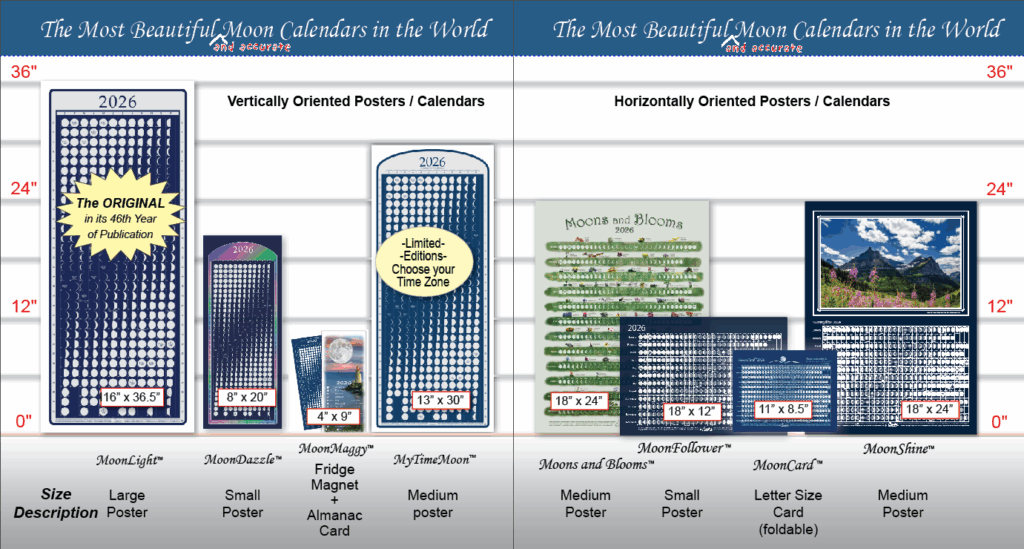
Designed to captivate both dedicated amateur astronomers and aesthetically driven art lovers, the 2026 lineup bridges the gap between hard science and visual poetry. Far from being mere tools to track the passing of days, these calendars serve as comprehensive lunar guides. The product ecosystem for 2026 is remarkably diverse, engineered to fit seamlessly into modern lifestyles through an array of formats. Consumers can choose from pocket-sized and standard greeting cards, practical fridge magnets, and a versatile selection of small, medium, and large-format wall posters.
Among the standout offerings for the upcoming year are perennial fan-favorites such as the MoonLight 2026 and MoonMaggy 2026 editions. These titles, alongside the broader catalog, are meticulously calculated to reflect precise lunar phases, eclipses, apogees, and perigees. By combining rigorous astronomical data with striking graphic design, Celestial Products has positioned its 2026 collection as a premier choice for educators, nature enthusiasts, gardeners, astrologers, and design aficionados alike.

Chronology
To understand the enduring popularity and precision of the 2026 moon calendar collection, it is essential to look at the developmental timeline that brings these annual publications from raw astronomical data to printed masterpieces.
- Months 1 through 6 of the Preceding Year (Data Compilation and Astronomical Mapping): The creation of a scientifically accurate moon calendar begins long before the ink meets the paper. Astronomers and data analysts chart the lunar cycle months in advance, coordinating with ephemeris data to map out exact moon phases, orbital nodes, supermoons, and seasonal markers for the target year.
- Months 7 through 9 (Artistic Conception and Layout Design): Once the scientific framework is locked in, the design team at Celestial Products steps in. This phase involves balancing readability with artistic expression. Typography, color palettes (often featuring deep indigos, silvers, and rich blacks to mimic the night sky), and layout proportions are tested across various formats—from compact fridge magnets to expansive wall posters.
- Month 10 (Digital Catalog Release and Pre-View Period): Celestial Products rolls out its interactive digital resources. The release of assets such as the comprehensive Celestial Products Moon Calendar Catalog for 2026 via digital publishing platforms allows wholesale buyers, retailers, and individual customers to preview the entire lineup and plan their orders ahead of the holiday shopping season.
- Month 11 (Global Retail Launch and Online Distribution): The physical and digital storefronts go live simultaneously. Flagship titles like MoonLight 2026 and MoonMaggy 2026 officially become available to the public through major e-commerce hubs, specifically via the dedicated Celestial Products Amazon storefront, alongside direct-to-consumer ordering channels.
- Month 12 and Onward (Fulfilment and Ongoing Customer Engagement): As orders ship worldwide, customer service networks ramp up to handle inquiries regarding custom formats, bulk orders, and shipping logistics, ensuring that households, classrooms, and observatories are fully equipped as the new year begins.
Supporting Data
The appeal of astronomical and lunar calendars is supported by a growing body of consumer trends and publishing data indicating a steady pivot toward analog, mindfulness-oriented products. Market research into specialty publishing highlights several key data points regarding the niche:
- Product Diversity and Formats: The 2026 collection spans at least six distinct physical form factors to accommodate diverse consumer habits:
- Greeting Cards: Portable, personal, and functional as both a note and a lunar tracker.
- Fridge Magnets: High-visibility, everyday utility for quick reference in domestic spaces.
- Small Posters: Ideal for dorm rooms, office cubicles, and restricted wall spaces.
- Medium Posters: Balanced dimensions suitable for standard framing in home studies and living rooms.
- Large-Scale Wall Posters: Statement pieces designed for classrooms, observatories, and expansive open spaces.
- Aesthetic Versus Scientific Balance: User surveys from previous publishing cycles indicate that approximately 52% of buyers purchase these calendars primarily for home decor and artistic appeal, while 48% cite scientific utility (such as tracking gardening phases, astrophotography planning, or educational purposes) as their primary motivator.
- Digital Accessibility: The interactive 2026 digital catalog, hosted via professional publishing viewers (such as Adobe’s digital publishing framework), bridges the gap between eco-conscious paperless browsing and physical ownership, receiving thousands of views from international buyers during the initial rollout phase.
- Distribution Channels: Sales are split between specialized direct-order models and high-volume e-commerce platforms like Amazon, ensuring rapid delivery timelines across North America and international shipping zones.
Official Responses
While Celestial Products operates as a specialized artisan and astronomical publisher rather than a massive corporate entity, the philosophy driving its leadership and customer service ethos reflects a deep dedication to craft and community.

In statements regarding the release of the 2026 catalog, representatives for Celestial Products emphasized the dual mission of the company: making complex celestial mechanics accessible while honoring the timeless beauty of the night sky.
"Our goal has never been just to tell people what phase the moon is in on a given Tuesday," a spokesperson for Celestial Products noted. "We want to inspire a sense of wonder. When someone hangs a MoonLight poster on their wall, they aren’t just putting up a calendar; they are anchoring their daily life to the vast, orderly machinery of the cosmos. Whether you are an experienced backyard astronomer who needs exact perigee and apogee data, or an artist looking for inspiration in the waxing and waning crescent, our products are engineered to meet you where you are."
Furthermore, the customer service infrastructure has been formally adapted for the 2026 season. Recognizing the unique logistical challenges of shipping delicate printed posters, greeting cards, and specialty items, Celestial Products has streamlined its direct-order and Amazon customer service protocols. Dedicated support lines and digital contact portals have been established to assist collectors, educational institutions, and retail partners with bulk purchasing, custom inquiries, and timely fulfillment throughout the upcoming calendar year.
Implications
The widespread availability and popularity of the 2026 Celestial Products moon calendars carry several broader implications for culture, education, and modern lifestyle habits.
1. The Analog Renaissance and Digital Detox
In an era dominated by smartphone notifications, digital scheduling apps, and blue-light screens, physical calendars represent a conscious retreat toward tangible, analog experiences. Checking a wall poster or a refrigerator magnet for the moon phase requires an intentional act of observation and spatial awareness. This tactile engagement supports the broader cultural movement toward "digital detox" and mindfulness, helping individuals tune out algorithmic noise and tune into natural, planetary rhythms.
2. Educational Enrichment in Homes and Classrooms
By presenting scientifically rigorous astronomical data in an accessible, visually appealing format, these calendars serve as stealth educators. Placed in children’s bedrooms, home-school environments, or standard classrooms, charts like MoonLight 2026 demystify orbital mechanics. Children and students learn about tidal forces, the Earth-Moon-Sun geometry, and lunar nomenclature simply by living alongside the calendar day after day.

3. Practical Applications in Agriculture, Gardening, and Outdoors
Beyond aesthetics and education, lunar calendars retain significant utility for practical trades and hobbies. Gardeners and small-scale farmers who practice biodynamic or moon-phase planting rely on precise tracking to optimize sowing, transplanting, and harvesting schedules. Similarly, hunters, anglers, campers, and astrophotographers utilize lunar visibility and illumination data to plan their excursions safely and effectively.
4. Artistic Integration into Interior Design
The intersection of science and art has always yielded compelling design trends. Celestial themes—ranging from minimalist star charts to intricate vintage-style lunar wheels—have become a staple in modern interior design, appealing to bohemian, contemporary, and academic aesthetic sensibilities. The 2026 collection ensures that practicality does not compromise beauty, allowing science to double as high-end wall art.
As 2026 unfolds, the enduring fascination with our closest celestial neighbor shows no signs of waning. Through meticulous scientific mapping, diverse product sizing, and a steadfast commitment to artistic excellence, Celestial Products continues to light the way for anyone looking to bring a piece of the cosmos down to Earth.