






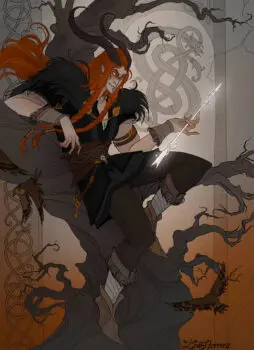
Introduction: The Enigma of the Trickster
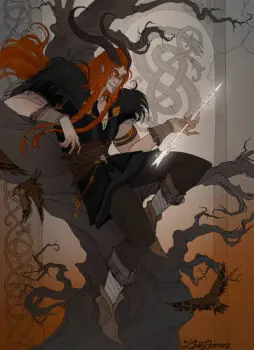
In the vast and often bleak expanse of Norse mythology, few figures command as much fascination, frustration, and academic debate as Loki. While modern global pop culture—largely propelled by comic books and cinematic universes—has cast him as a charismatic anti-hero or misunderstood sibling, the traditional lore paints a far more intricate, volatile, and sometimes terrifying picture.
Loki is neither purely benevolent nor unambiguously evil; he is a catalyst, an agent of inevitable transformation, and a narrative device that repeatedly saves the Æsir (the principal pantheon of Norse gods) from crises of their own making, even as he engineers their ultimate doom.
To understand Loki is to navigate a labyrinth of contradictions. He is simultaneously a blood-brother to Odin, a provider of invaluable divine treasures, a mother to monstrous entities that shatter the cosmos, and a cosmic jester whose malicious pranks cross the line from harmless teasing into cold-blooded murder. This comprehensive examination explores the origins, dual nature, mythical chronology, and lasting implications of one of antiquity’s most enduring archetypes.
Main Facts: Origins, Names, and Elementals
Etymology and True Identity
In the surviving primary texts of Norse mythology—primarily the Poetic Edda compiled in the 13th century and Snorri Sturluson’s Prose Edda—the trickster’s official name is frequently recorded as Lopt or Loptr, which translates directly to "of heaven" or "air." However, he is universally recognized across the sagas as Loki.
Scholars of Germanic and Norse linguistics have long debated the etymology of the name "Loki." The prevailing academic consensus links the name to the Old Norse root for "flame" or "fire." This linguistic connection aligns seamlessly with his mythological persona. As an elemental force, Loki bridges the gap between two volatile natural powers: wind and fire. While his alternative name, Lopt, ties him to the ethereal realm of the sky and air, his fiery temperament, destructive outbursts, and transformative capabilities root him firmly in the destructive yet creative energy of flames.
The Elemental Connection: Fire and Wind
Unlike Thor, whose domain over thunder and lightning is tied to agriculture and protection, or Odin, who rules over war, wisdom, and poetry, Loki lacks a traditional cult following or worshipers in historical Norse religion. He is not a fertility god, nor is he a guardian of the cosmos. Instead, he functions as a liminal deity.
Fire is both a life-giving resource (cooking, warmth, metallurgy) and an uncontrollable hazard (destruction, wildfire). Loki embodies this precise dualism. He can bring warmth and ingenious solutions to the gods, yet his internal combustion of malice inevitably consumes everything in its path. Similarly, wind is invisible, unpredictable, and capable of shifting direction in an instant—qualities that mirror Loki’s mercurial loyalty and constant shape-shifting.
Chronology of Myths: From Ally to Catalyst of Ragnarök
Loki’s narrative arc within Norse mythology follows a distinct chronological trajectory. He begins as a clever, albeit troublesome, asset to the gods, transitions into a dangerous liability, and ultimately culminates in the ultimate antagonist of the pantheon.
Phase One: The Indispensable Fixer
In the early days of Asgard, Loki’s relationship with the Æsir is transactional and occasionally collaborative. Despite his jötunn (giant) heritage—he is the son of Farbauti and Laufey—he is accepted into Odin’s inner circle through a blood-pact.
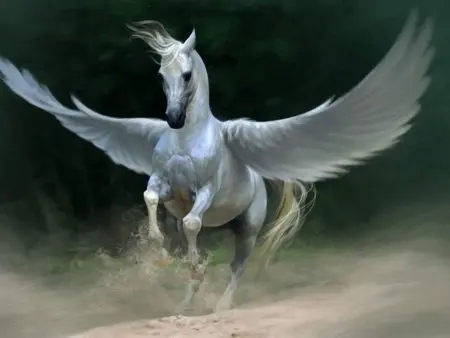
During this phase, Loki frequently acts as the troubleshooter for problems he often created himself. A prime example involves the construction of Asgard’s defensive walls. When a master builder offers to complete the fortifications in record time in exchange for the sun, moon, and the goddess Freyja, the panicked gods turn to Loki. Realizing the builder is a giant in disguise, Loki transforms into a mare, distracts the builder’s magical stallion Svaðilfari, and sabotages the construction. This interference leads to the birth of Sleipnir, Odin’s legendary eight-legged horse, which Loki later presents to the Allfather as a gesture of restitution.
Phase Two: Master Craftsman and Provider
Loki’s intellect is instrumental in outfitting the Norse pantheon with their most iconic magical artifacts. In a famous episode, Loki maliciously shears off the golden hair of Sif, Thor’s wife. Enraged, Thor threatens to break every bone in Loki’s body. Desperate for survival, Loki travels to the subterranean realm of the dwarves (the sons of Ivaldi) to commission replacement hair of pure gold, alongside Odin’s spear Gungnir and Freyja’s ship Skíðblaðnir.
Not content to stop there, Loki wagers his own head with the dwarf brothers Brokkr and Eitri in a contest of craftsmanship. This gamble results in the creation of Gullinbursti (Freyr’s golden boar) and, most notably, Mjölnir, Thor’s devastating war hammer. Although the dwarves ultimately outwit Loki and claim his wager—sparing his life but sewing his lips shut as punishment for his arrogance—Loki’s actions directly equip the gods with the tools necessary to defend their realm.
Phase Three: The Descent into Darkness
The turning point in Loki’s mythological career—and the psychological descent of the character—arises from the murder of Baldr, the god of light, beauty, and goodness. Baldr begins having prophetic dreams of his own death, prompting his mother, Frigg, to exact oaths from every object, element, beast, and plant in creation not to harm him.
Believing Baldr to be invincible, the gods amuse themselves by hurling weapons and stones at him, watching them bounce off harmlessly. Consumed by jealousy and malice, Loki discovers the one vulnerability Frigg overlooked: the mistletoe, which she deemed too young and insignificant to take an oath. Loki crafts a sharp dart from mistletoe and places it in the hands of the blind god Höðr, guiding his aim. The dart pierces Baldr through the heart, plunging all of creation into profound mourning.
When the gods attempt to ransom Baldr from Hel (the underworld), Loki sabotages the effort. Disguised as a giantess named Þökk, he refuses to weep for Baldr, ensuring that the beloved god must remain among the dead until the end of days.
Phase Four: Punishment and Ragnarök
The murder of Baldr marks the absolute breaking point for the Æsir. Abandoning their diplomacy, the gods hunt down Loki, who flees and constructs a house with four doors to watch the world from all angles.
When captured, the gods subject him to a brutal, symbolic punishment. They bind him to three jagged rocks using the entrails of his own son, Narvi (while his other son, Váli, is transformed into a wolf and rips his brother apart). Above Loki’s face, the giantess Skaði places a venomous serpent, whose burning venom drips continuously onto his forehead. Loki’s faithful wife, Sigyn, stands by his side with a bowl to catch the venom, but whenever she must step away to empty the vessel, the venom strikes Loki’s skin, causing him to writhe in agony. In Norse lore, these violent convulsions are the mythological explanation for earthquakes.
Loki remains bound in the subterranean darkness until the dawn of Ragnarök—the twilight of the gods. When the cosmic bonds break, Loki leads an army of the dead and the giants aboard the ship Naglfar, sailing forth to wage the final, apocalyptic war against the Æsir. In the ensuing battle, Loki and the hound Heimdallr slay one another in single combat, fulfilling the tragic, inescapable prophecy of the cosmos.
Supporting Data and Mythological Inventory
To fully grasp Loki’s footprint in Norse literature, historians look at his unique family tree, his various guises, and his role as a transformative agent.
The Monstrous Progeny
Loki’s offspring represent some of the most destructive forces in Norse cosmology, highlighting the darker implications of his chaotic nature:
- Hel: The ruler of the underworld realm of the dead, possessing a body that is half-living and half-corpse-like.
- Jörmungandr (The Midgard Serpent): Cast into the great ocean by Odin, the serpent grows so massive that it encircles the entire world and bites its own tail, becoming Thor’s ultimate nemesis.
- Fenrir: A colossal, terrifying wolf destined to break his magical chains and swallow Odin whole during Ragnarök.
- Sleipnir: Born from Loki’s temporary transformation into a mare, this eight-legged steed is recognized as the fastest and most noble horse in all the nine realms.
Shape-Shifting Capabilities
Loki’s mastery over his physical form underscores his alignment with the wind and fluid elements. Throughout the sagas, he transforms into:
- A mare (to distract Svaðilfari)
- A salmon (to evade the pursuing gods by hiding in a waterfall, leading to his capture via a net he had invented)
- A fly or flea (to steal Brísingamen, Freyja’s golden necklace)
- A falcon (borrowed from Freyja to fly between Asgard and Jötunheimr)
Implications: The Cultural and Literary Legacy of the Trickster
The Anthropological Function of the Trickster
In comparative mythology, Loki fulfills the classic anthropological archetype of the trickster. Figures like Loki—whether Anansi in West African folklore, Prometheus in Greek tradition, or Coyote in Indigenous North American stories—serve a vital societal function.
The trickster breaks the rules, challenges established hierarchies, and exposes the hypocrisy, rigidity, and arrogance of authority figures (in this case, the gods). Without Loki, Asgardian society would stagnate in a state of static perfection. By introducing chaos, danger, and systemic disruption, Loki forces the gods to adapt, innovate, and ultimately face their own mortality. He is the necessary friction that keeps the mythological universe dynamic.
Evolution in Modern Media
The contemporary perception of Loki diverges sharply from medieval Scandinavian sources. While the 13th-century texts depict a spiteful, treacherous figure who orchestrates the death of the universe’s most beloved god, 20th- and 21st-century media has rehabilitated his image.
Through comic book adaptations and blockbuster cinema, Loki has been transformed into a complex anti-hero. This modern reimagining resonates deeply with contemporary audiences, who often find more humanity in a flawed, sarcastic outsider than in virtuous, infallible archetypes like Thor. Yet, this cultural shift represents a significant departure from historical Norse beliefs, where Loki was viewed with a mixture of dark humor, cautionary dread, and theological necessity.
Conclusion
Loki remains an unmatched literary creation. He is the spark that lights the forge, the wind that fuels the wildfire, and the dissenting voice that dismantles divine complacency. Whether viewed as an ancient personification of elemental chaos, a psychological symbol of hidden malice, or a modern pop-culture icon, Loki endures because he taps into the fundamental unpredictability of human nature and the natural world. In the grand tapestry of Norse mythology, he is the thread that threatens to unravel the entire cosmos—and in doing so, ensures that creation, destruction, and rebirth remain bound in an eternal, mesmerizing cycle.