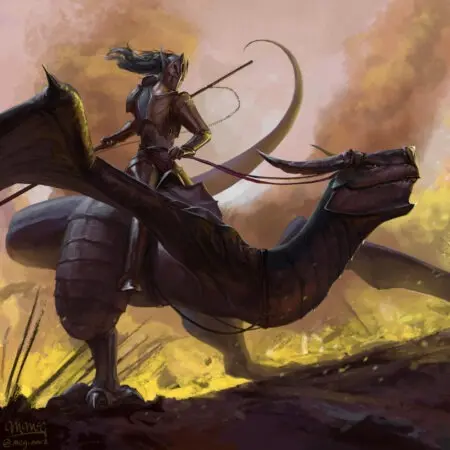
LONDON — Long before the advent of modern paleontology or the widespread documentation of the natural world, humanity sought to explain the inexplicable through myth. Among the pantheon of fire-breathing, treasure-hoarding cryptids that dominated medieval folklore, few creatures occupy as fascinating a taxonomic gray area as the wyvern. Often misidentified as a standard dragon, the wyvern—distinguished by its two-legged stance, bat-like wings, and venomous tail barb—represents a distinct branch of mythological zoology that has captured the human imagination for centuries.
From Anglo-Saxon etymology to medieval bestiaries, alchemical symbolism, and modern heraldry, the wyvern’s journey through history reveals as much about human psychology, medieval fears, and changing environments as it does about the creature itself.
Main Facts: Anatomy, Behavior, and the Dragon Distinction
To understand the wyvern, one must first dismantle the common misconception that it is merely a smaller dragon. While both share reptilian features, pyrotechnic capabilities, and an affinity for hoarding wealth, their anatomical blueprints are fundamentally different.
Anatomical Breakdown
- The Stance: Unlike classical dragons, which are typically depicted with four legs in addition to a pair of wings, the wyvern is built along a bi-pedal chassis. It moves with a bird-like or theropod stance, relying on two powerful hind legs tipped with eagle-like talons.
- The Wings: A wyvern’s wings are its forelimbs, functioning similarly to those of bats or birds. In many depictions, the wing structure doubles as a hand-like appendage, allowing the creature to clasp objects when its wings are folded.
- Jaws and Tail: Equipped with a beak-like jaw optimized for snatching prey and carrying food, the wyvern’s most formidable weapon is not its breath, but its tail. Tip-ended with a deadly, barbed stinger, the tail provides a lethal secondary strike in combat.
Habitat and Diet
Wyverns favor secluded, protected lairs, typically choosing deep caverns nestled within dense forests, thick woods, and remote mountainous terrain. These nesting sites are often betrayed by their stark interior decor: a macabre mix of bleached skeletal debris and glittering valuables.

Much like their larger draconian cousins, wyverns possess an innate attraction to shiny objects. However, "dragonets"—as they are sometimes colloquially called due to their smaller stature—are far less discerning curators. While a classic dragon might demand gold chalices and precious gems, a wyvern’s hoard is just as likely to contain dull metal scraps, polished river stones, and assorted refuse alongside genuine valuables.
Chronology: From Ancient Worms to Medieval Symbolism
The cultural evolution of the wyvern spans millennia, tracking a distinct trajectory from ancient oral traditions to written historical records and Christian allegory.
- Anglo-Saxon Roots: The name wyvern derives directly from the Anglo-Saxon word Wivere, which translates simply to "serpent" or "worm." Early Saxon folklore did not picture winged beasts soaring through the clouds; instead, these fire-monsters were said to fall from the sky like shooting stars (likely a cultural memory of meteorites) to bury themselves deep in the earth, where they remained entombed while guarding subterranean treasures.
- The Renaissance Observation: As populations grew and human encroachment disrupted European ecosystems, sightings of wyverns became rarer, though not entirely dismissed. Even historical luminaries engaged with the mythos; famed polymath Leonardo da Vinci recorded a detailed observation of an encounter between a lion and a wyvern, though historians heavily debate whether da Vinci witnessed the event firsthand or merely transcribed traveler tales.
- The Medieval Church and the Plague: During the Middle Ages, the Christian church integrated the wyvern into its bestiaries, transforming the creature into a potent allegory for Satan, sin, and divine retribution. Wyverns were specifically blamed for spreading war, pestilence, and plague—a terrifying association for a European populace already decimated by successive waves of the Black Death.
- The Alchemical Transformation: Alchemists of the medieval and Renaissance periods utilized the wyvern as a metaphor within their obscure, esoteric texts. In alchemical philosophy, the wyvern represented matter in its basest, most chaotic state. The alchemist was cast as the noble knight destined to conquer the beast, metaphorically transforming base matter into spiritual and literal gold.
Supporting Data and Etymological Evolution
Linguists and historians have long traced the linguistic migration of the term "wyvern." While modern fantasy literature sharply divides dragons, wyverns, drakes, and hydras into distinct species with rigid rule-sets, historical usage was far more fluid.
In England, wyverns were frequently categorized as "dragonets"—diminutive dragons thought to be adolescents. This classification persisted despite anatomical contradictions. Naturalists and antiquarians of the 16th and 17th centuries attempted to catalog these creatures alongside known fauna, struggling to reconcile physical descriptions brought back by explorers.

Furthermore, geographical data suggests a stark contraction of the creature’s alleged habitat. Once reported across Western Europe, the wyvern vanished from British and French folklore as firearms technology advanced and agrarian expansion cleared the ancient wildwood. By the dawn of the Industrial Revolution, the creature had officially transitioned from a living zoological entity to a creature of pure myth.
Official and Historical Responses: Heraldry and Conquering the Beast
As physical encounters dwindled, the wyvern found a permanent home in European heraldry, where it transitioned from a living terror into a symbol of prestige, warning, and might.
The Heraldic Beast
Appearing widely on medieval pennants, shields, and coats of arms, the wyvern was adopted by noble houses across England, France, and Germany. In heraldic tradition, the wyvern came to symbolize:
- War and Conquest: A testament to military prowess and aggressive dominance.
- Envy and Pestilence: A lingering nod to its medieval bestiary associations.
- Unyielding Strength: A warning to adversaries that the bearer of the crest would defend their territory with lethal force.
Cryptozoological Footnotes
While mainstream science regards the wyvern as an entirely mythical construct born of misidentified dinosaur fossils, oversized predatory birds, and human imagination, cryptozoologists occasionally entertain alternate theories. Even today, marginal fringe researchers speculate whether small, highly evasive populations of large, predatory reptiles could have once inhabited—or perhaps still conceal themselves within—the deeply remote, undisturbed mountain ranges and old-growth forests of Eastern Europe and Russia. However, no empirical evidence has ever been recovered to substantiate these claims.

Implications: The Legacy of the Wyvern in Modern Culture
The endurance of the wyvern in contemporary media—ranging from high-fantasy literature and tabletop roleplaying games to blockbuster video games—demonstrates the timeless appeal of mythological zoology.
Culturally, the evolution of the wyvern reflects humanity’s changing relationship with the natural world. Once viewed as literal terrors of the sky that brought plague and misfortune, and later as alchemical metaphors for spiritual purification, these creatures now serve as symbols of untamed fantasy and artistic design.
Whether viewed through the lens of medieval superstition, linguistic history, or modern pop culture, the wyvern remains one of mythology’s most striking creations—a testament to the power of ancient storytelling to outlive the very landscapes that birthed them.