








Main Facts: The Anatomy of a Mythological Icon
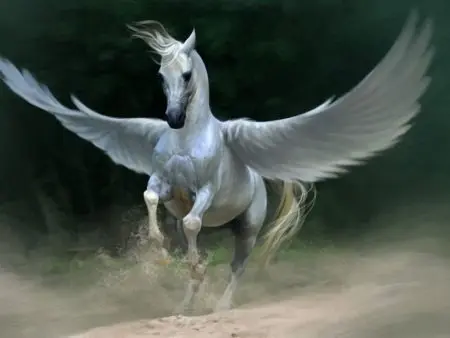
Pegasus, the immortal, winged divine stallion of ancient Greek mythology, remains one of the most recognizable and enduring symbols in human history. Classically depicted as a magnificent, pure white horse gifted with massive, feathered wings, Pegasus is far more than a mere creature of fantasy; he is a cornerstone of Hellenic lore.
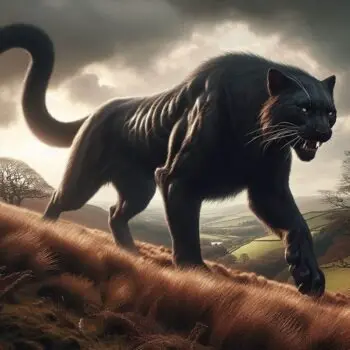
Etymologically rooted in the ancient Greek Págasos (Latinized as Pegasus), the creature’s name is traditionally associated with pēgē, meaning "spring" or "well," a nod to the mythological accounts of his birth and his legendary ability to create water sources with a strike of his hoof. While classical antiquity cast him as a singular, snow-white beast born from the divine union of the sea god Poseidon and the Gorgon Medusa, modern interpretations have significantly expanded this palette. Contemporary fantasy literature, digital art, and cinema frequently depict pegasi as vast herds roaming celestial landscapes, appearing in hues ranging from midnight black to golden brown, and occasionally endowed with fantastical variations such as curling horns or leonine tails.
Despite modern cinematic liberties—such as those taken in Hollywood blockbusters like Clash of the Titans, which often streamline or alter traditional lineages for dramatic effect—the fundamental identity of Pegasus as a creature of grace, raw divine power, and untamed freedom has remained remarkably consistent across millennia.
Chronology: From the Blood of Medusa to the Constellations
The timeline of Pegasus spans from his miraculous, violent genesis in antiquity to his ultimate ascension into the night sky, charting a trajectory from mythic birth to eternal celestial monument.

- The Birth at the Shore (Antiquity): According to Hesiod’s Theogony, Pegasus did not experience a traditional birth. Instead, he sprang forth fully grown from the neck of the Gorgon Medusa when the hero Perseus decapitated her. Simultaneously, his brother, Chrysaor—often envisioned as a formidable warrior bearing a golden sword—emerged from the fallen monster. Because Medusa perished at the exact moment of his birth, classical mythology separates Pegasus from any early rearing by his biological mother.
- The Creation of Hippocrene: In his wild and untamed state, Pegasus roamed the earth freely. During his travels on Mount Helicon, the mountain sacred to the Muses, Pegasus struck the ground with his hoof. The impact miraculously birthed the Hippocrene spring, a body of water believed by the ancient Greeks to be a primary source of poetic inspiration.
- The Taming by Bellerophon: For years, the winged stallion evaded mortal control. However, the hero Bellerophon, aided by the goddess Athena, received a magical golden bridle while sleeping near the goddess’s temple. Upon waking, Bellerophon successfully bridled Pegasus, forging a legendary partnership that allowed the hero to triumph over numerous earthly threats.
- The Defeat of the Chimera: Armed with the flight and agility of Pegasus, Bellerophon engaged and defeated the Chimera—a monstrous, fire-breathing hybrid of a lion, goat, and serpent—by dropping a block of lead down the creature’s throat, which melted under the beast’s fiery breath.
- The Fall and the Stars: Emboldened by his success, Bellerophon attempted to ride Pegasus up to Mount Olympus to join the gods. Angered by this mortal hubris, Zeus sent a gadfly to sting Pegasus, causing the stallion to buck and throw Bellerophon back to earth. While Bellerophon lived out his days crippled and shunned, Pegasus continued his flight to Olympus, where Zeus welcomed the majestic beast, employing him to carry thunder and lightning. Eventually, Zeus placed Pegasus among the stars as the constellation bearing his name.
Supporting Data: Historical Context and Archaeological Evidence
To understand the cultural footprint of Pegasus, historians and classical mythologists look to extensive archaeological and literary records from ancient Greece and Rome.
- Epigraphic and Numismatic Evidence: The image of Pegasus was not merely a campfire tale; it was a powerful political and civic emblem. The most notable historical usage is found on the silver staters of Corinth, minted from the 6th century BCE onward. Corinth, the city-state most closely associated with Bellerophon and Pegasus, stamped the winged horse onto the obverse of its currency, which circulated widely throughout the Mediterranean basin, serving as a primary instrument of international trade.
- Literary References: The earliest surviving accounts of Pegasus appear in the works of Hesiod (circa 700 BCE) and Pindar (5th century BCE). Pindar’s Olympic Odes detail the arduous process of taming the beast with Athena’s golden bridle, highlighting the intersection of divine grace and human endeavor. Later, Roman poets such as Ovid immortalized the myth in his Metamorphoses, ensuring the legend’s survival through the Middle Ages and into the Renaissance.
- Iconographic Evolution: Archaeological excavations across Magna Graecia (southern Italy and Sicily) have uncovered thousands of terracotta plaques, vase paintings, and sculptural fragments depicting Pegasus. These artifacts reveal that while the motif of the winged horse was standardized early on, regional artists frequently experimented with anatomical proportions—sometimes emphasizing the equine power of the chest and shoulders, and other times accentuating the avian majesty of the wings.
Official Perspectives: Mythological Scholarship and Cultural Interpretation
Modern classicists, anthropologists, and literary scholars view the myth of Pegasus through various academic lenses, analyzing how ancient societies rationalized the supernatural and how these narratives continue to resonate in contemporary culture.
- The Academic View on Origins: Classical historians suggest that the myth of Pegasus may have evolved from ancient Near Eastern motifs of winged animals, which filtered into Greek culture through trade and artistic exchange. However, the unique integration of Pegasus into the Cult of the Muses points to an indigenous Greek desire to personify the sudden, soaring nature of artistic inspiration.
- Psychological and Symbolic Interpretations: Jungian psychologists frequently analyze Pegasus as an archetype of the collective unconscious. The winged horse represents a synthesis of earthly instinct (the horse) and spiritual aspiration (the wings). According to psychological frameworks, taming Pegasus—as Bellerophon did with Athena’s golden bridle—symbolizes the ego’s ability to master primal drives and channel them toward higher creative or moral purposes.
- Literary Symbolism: Across centuries of literature, Pegasus has been codified into four primary pillars of meaning:
- Inspiration and Creativity: Directly linked to the Hippocrene spring, Pegasus remains the ultimate patron symbol for poets, writers, and artists seeking the "spark" of genius.
- Heroism and Victory: Through his association with Perseus (in popular modern retellings) and Bellerophon, the winged horse signifies triumph over insurmountable odds and the physical realization of heroic ambition.
- Transcendence and Freedom: The ability to lift off the earth and soar into the heavens embodies the human yearning to break free from mortal limitations, physical boundaries, and earthly gravity.
- Nobility and Purity: The classic depiction of the pure white stallion reinforces ideals of unblemished virtue, regal bearing, and untamable wildness tamed only by divine grace.
Implications: The Modern Resonance of a Timeless Myth
The legacy of Pegasus extends far beyond the dusty pages of classical texts or the shattered pottery of archaeological digs; it occupies a vital, active space in modern culture, science, and technology.
- Pop Culture and Cinematic Adaptations: From Ray Harryhausen’s legendary stop-motion animation in the 1981 film Clash of the Titans to modern CGI-heavy fantasy epics and beloved animated series like My Little Pony, Pegasus remains a staple of visual storytelling. These modern adaptations ensure that younger generations continuously re-engage with ancient mythological concepts, adapting the creature to fit new narratives of empowerment and fantasy adventure.
- Scientific and Industrial Nomenclature: The enduring cultural resonance of the winged horse is vividly demonstrated in the aerospace industry. The European Space Agency (ESA) and various aviation pioneers have frequently invoked the name and imagery of Pegasus to symbolize speed, altitude, and technological transcendence. Most notably, Orbital Sciences Corporation developed the Pegasus rocket, an air-launched space booster designed to deliver small satellites into low Earth orbit. By naming their craft after the mythical beast that bridged earth and sky, engineers explicitly linked their modern engineering triumphs to humanity’s oldest dreams of flight.
- The Ongoing Quest for Inspiration: Ultimately, the implications of Pegasus lie in his psychological and philosophical utility. In an era dominated by rapid technological advancement and rationalism, the enduring appeal of the winged horse suggests an immutable human need for wonder. Whether viewed as a constellation guiding sailors across the night sky, a muse whispering verses to a poet, or a sleek rocket piercing the stratosphere, Pegasus endures as a timeless reminder that humanity’s reach has always exceeded its grasp—and that the imagination, like the legendary stallion, refuses to be tethered to the ground.