







By Alan U. Dalul
September 19, 2026
Main Facts: Expanding the Folktale Universe
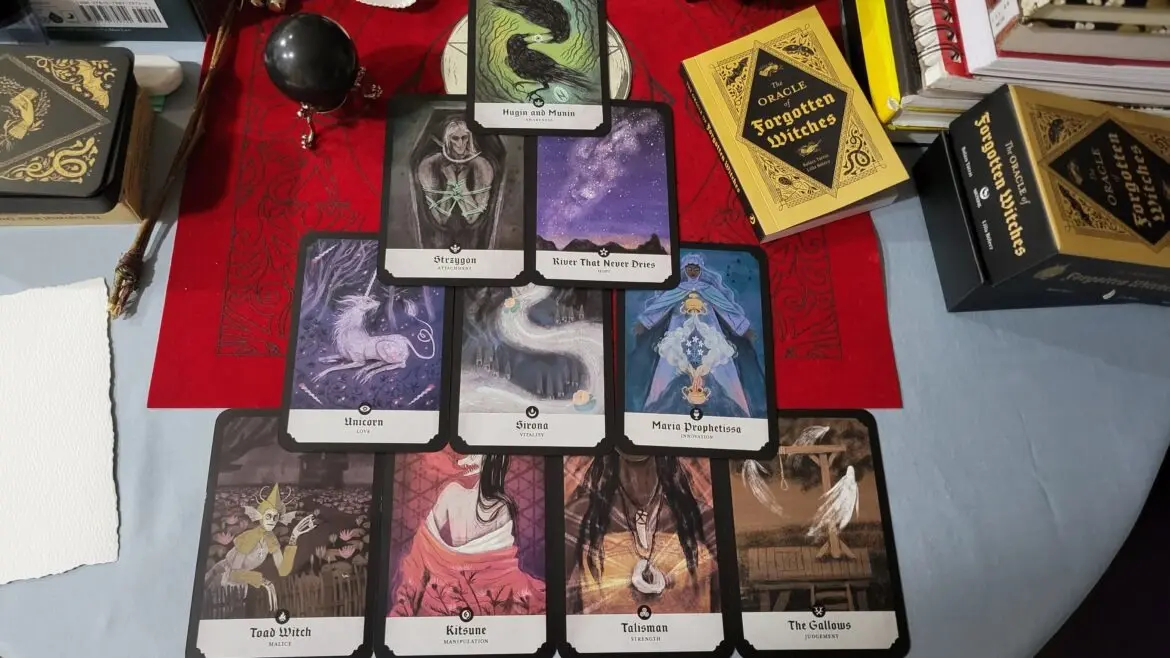
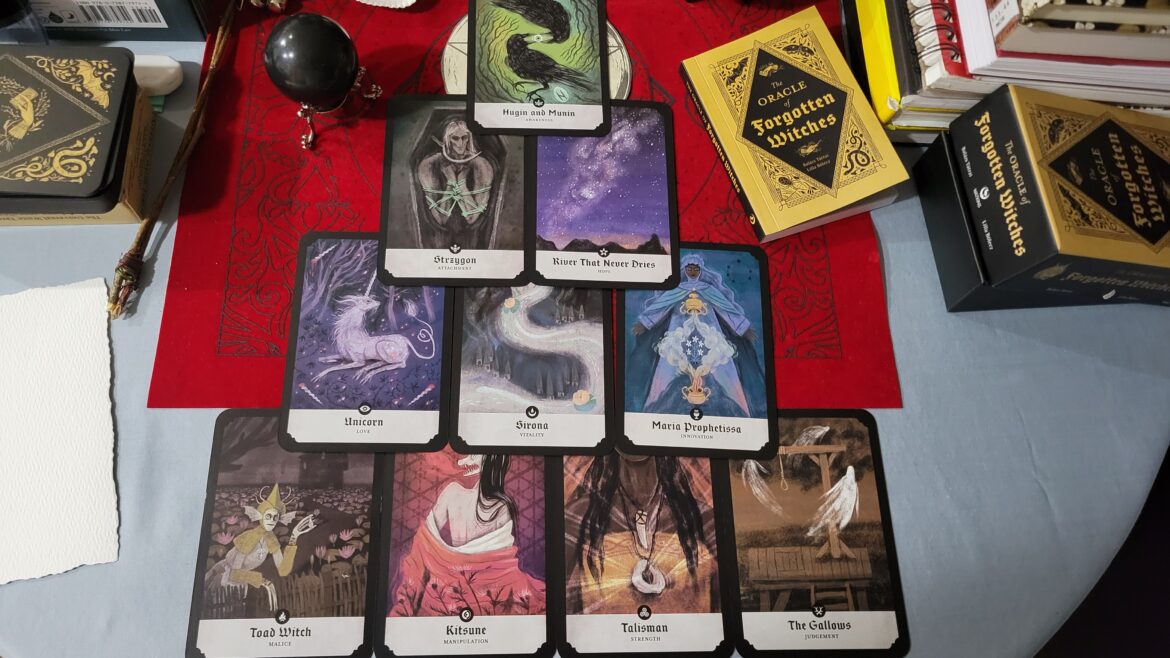
The intersection of folklore, historical reclamation, and modern esoteric divination has found a striking new champion in The Oracle of Forgotten Witches. Published by Watkins Publishing and crafted by the creative duo of author Balázs Tátrai and illustrator Lilla Bölecz, this sixty-card oracle deck marks a major expansion of the rich, mythic universe established in their critically acclaimed 2024 book, The Book of Forgotten Witches.
Designed as both a standalone cartomancy tool and a companion piece to the authors’ previous literary work, the deck invites users into a realm populated by historical and legendary practitioners of magic. Far from limiting itself solely to human spellcasters, The Oracle of Forgotten Witches casts a wide net across global folklore, featuring cards dedicated to curse-bringers, fate-turners, spirit familiars, deities, enchanted artifacts, and sacred places.
Unlike traditional tarot decks that rely on structured suits of cups, swords, wands, and pentacles, this sixty-card oracle utilizes a unique divinatory framework inspired by the esoteric principles of spiritual alchemy. The deck is divided into ten distinct suits that mirror the alchemical transmutation of base metals into gold, serving as a metaphysical map for personal evolution, psychological shadow work, and spiritual maturation. Accompanied by four core spreads—alongside an innovative "Storyweaving Spread" designed to help practitioners construct their own folk narratives—the deck offers a deeply immersive sensory and intellectual experience for modern witches, folklorists, and divination enthusiasts alike.
Chronology: From Printed Page to Divinatory Deck
To fully appreciate the arrival of The Oracle of Forgotten Witches, it is helpful to trace the developmental timeline of Tátrai and Bölecz’s collaborative creative output within the modern pagan and esoteric literary landscape.
Phase 1: The Literary Foundation (Late 2024)
The genesis of this expansive magical universe began with the publication of The Book of Forgotten Witches. The text sought to unearth marginalized, overlooked, and vilified figures from global folklore and historical archives, restoring their narratives with nuance, respect, and poetic prose. Reviewers and readers alike lauded the book for breathing new life into oral traditions that had been sanitized, forgotten, or intentionally erased by historical shifts. It was during this period of critical reception that esoteric reviewers, such as Alan U. Dalul, first began engaging with the authors, recognizing the fertile potential for these stories to transcend the printed page and enter active magical practice.
Phase 2: Conceptualization and Design (2025 – Early 2026)
Buoyed by the success of their literary debut, Tátrai and Bölecz partnered with Watkins Publishing to adapt the ethos of The Book of Forgotten Witches into a tactile, visual medium. Translating complex historical archetypes and localized myths into a cohesive sixty-card oracle deck required a meticulous balancing act. Bölecz was tasked with visualizing figures spanning diverse cultural traditions, ensuring that the artwork avoided monolithic tropes while capturing the distinct atmospheric weight of ancient lore. Concurrently, Tátrai structured the accompanying guidebook around the philosophical framework of spiritual alchemy, transforming the physical act of drawing cards into a mirrored journey of internal transformation.
Phase 3: Publication and Public Release (September 2026)
By mid-September 2026, The Oracle of Forgotten Witches officially hit shelves worldwide. Early promotional materials highlighted its sixty-card count, its ten alchemical suits, and its unique layout options, including the intricate Magnum Opus spread. As review copies circulated among prominent voices within the contemporary witchcraft and esoteric communities, the deck quickly generated buzz for its uncompromising, candid tone—noted for offering the kind of loving, direct "tough love" more commonly associated with an honest confidant than a polite divination tool.
Supporting Data: Structure, Aesthetics, and Methodology
A thorough examination of The Oracle of Forgotten Witches requires looking closely at its structural components, artistic design, and divinatory mechanics.
The Alchemical Framework
At the heart of the deck’s design is its adherence to spiritual alchemy. The sixty cards are organized across ten distinct suits. Rather than categorizing cards by elemental forces alone, the suits follow the metaphorical stages of transforming lead into gold. This organizational choice elevates the deck from a passive fortune-telling apparatus into an active psychological and spiritual toolkit. When users shuffle and draw from these ten suits, they are subconsciously (or consciously) engaging with their own internal cycles of dissolution, purification, and integration.
Component Breakdown
- Card Count: 60 fully illustrated oracle cards.
- Publisher: Watkins Publishing.
- Key Creators: Balázs Tátrai (Author) and Lilla Bölecz (Illustrator).
- Thematic Scope: Global folklore, witchcraft history, spirit familiars, sacred geography, magical artifacts, and deities.
- Provided Spreads:
- The Magnum Opus Spread (focused on deep, transformative personal work).
- The Pentagram Spread (grounding and elemental alignment).
- The Hecate Spread (navigating crossroads, choices, and liminal spaces).
- The Storyweaving Spread (narrative generation and folkloric composition).
Visual and Textual Aesthetics
Lilla Bölecz’s illustration style avoids the hyper-glossy, digital aesthetic common in mass-market oracle decks. Instead, the artwork leans into an organic, evocative style that feels simultaneously ancient and immediate. Each card functions as a window into a specific mythos, utilizing color palettes that shift subtly across the alchemical spectrum.
Complementing the imagery is Balázs Tátrai’s prose within the companion booklet. Far from offering brief, generic keyword lists, the guidebook provides rich folkloric context for every entry, detailing the cultural origins, historical weight, and spiritual lessons of each witch, spirit, or artifact.

Official Responses and Endorsements
The release of The Oracle of Forgotten Witches has drawn significant praise from established authors, critics, and cultural commentators within the modern esoteric community. The collaborative nature of the project has fostered a strong sense of shared enthusiasm among those who champion the preservation of oral traditions and marginalized histories.
In his official endorsement—which is featured prominently at the conclusion of the deck’s companion guidebook—reviewer and writer Alan U. Dalul noted:
"With captivating prose and charming art, this deck brings the wisdom of yesterday into today’s world with the warmth of an old friend. Both Balázs and Lilla have crafted a unique oracle deck that honours the power in folklore found in diverse cultures."
Expanding upon this endorsement in his formal review, Dalul emphasized the psychological depth of the cards. Addressing the common dichotomy within cartomancy—where tarot decks are stereotypically viewed as harsh truth-tellers and oracle decks as uniformly gentle or overly sweet—Dalul positioned The Oracle of Forgotten Witches as a fascinating outlier:
"Despite the common discourse of tarot decks roasting you and oracle decks being sweet and kind, The Oracle of Forgotten Witches was the exception. I felt called out, even if still completely understood. I could compare this to when you speak to a friend that doesn’t hold back and doesn’t sugar coat anything as an expression of love."
Representatives from Watkins Publishing have similarly highlighted the deck’s ability to bridge historical education with contemporary spiritual practice, noting that pre-orders and early reception reflect a growing appetite among modern practitioners for tools rooted in authentic, culturally diverse mythologies rather than homogenized New Age tropes.

Implications: The Cultural and Magical Impact
The publication of The Oracle of Forgotten Witches carries several noteworthy implications for the fields of contemporary witchcraft, folkloric studies, and modern cartomancy design.
1. Revitalizing Oral Tradition and Marginalized Lore
For decades, popular representations of witchcraft in media and commercial divination tools have relied heavily on sanitized, European-centric tropes—most notably the figure of the medieval Western witch or the classic Wiccan duotheistic framework. By deliberately centering forgotten practitioners, regional spirits, and diverse cultural mythologies, Tátrai and Bölecz contribute to a broader decolonial movement within modern esoteric spaces. Practitioners are encouraged to look beyond mainstream grimoires and reconnect with the complex, sometimes contradictory, and deeply human oral histories of those who practiced magic on the margins of society.
2. Shifting the Function of Oracle Decks
Historically, oracle decks have occasionally faced skepticism from traditional tarot readers who view them as lacking systemic rigor or psychological depth. By anchoring their sixty-card system in the rigorous, structured framework of spiritual alchemy and offering advanced spreads like the Magnum Opus, the creators challenge this preconception. The Oracle of Forgotten Witches demonstrates that an oracle deck can possess both accessible narrative charm and profound, shadow-work capabilities.
3. The Power of "Tough Love" in Divination
The observation that this deck does not hesitate to "call out" its users points to a broader cultural shift in how modern seekers approach spiritual tools. Rather than seeking passive validation or comforting affirmations, contemporary practitioners increasingly turn to divination as a mirror for accountability, personal responsibility, and psychological growth. By framing uncompromising honesty as an expression of folkloric kinship—akin to the candid advice of a trusted elder or friend—the deck fosters a deeper, more resilient relationship between the reader and the cards.
Conclusion
Whether utilized as a standalone system for daily reflection or integrated alongside The Book of Forgotten Witches for comprehensive historical and magical study, The Oracle of Forgotten Witches stands out as a triumph of collaborative artistry and esoteric design. It transforms historical reclamation into an active, living practice, ensuring that the whispers of those who came before are not only heard, but actively integrated into the spiritual landscapes of today.