









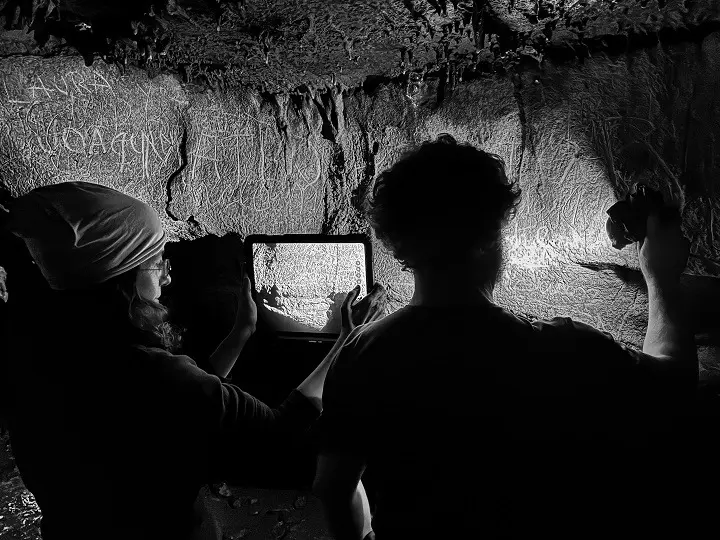
MILLARES, Spain — Deep within the labyrinthine limestone chambers of Cova Dones in eastern Spain, a team of international archaeologists has unearthed breathtaking evidence of a structured, 2,000-year-old Roman-era religious cult. Centered around women, ritual deposits, and a mysterious female deity known only by her authoritative title, Domina—"The Lady"—the discovery represents the largest collection of Latin inscriptions ever found within a Roman cave sanctuary across the entirety of the former empire.
The ongoing excavations, led by researchers from the University of Alicante and the University of Zaragoza, are drastically reshaping our understanding of ancient underground worship, provincial religious practices, and the prominent, active roles that women played in sacred spaces during the early centuries of the Roman Empire.
Main Facts: The Sanctuary of Domina
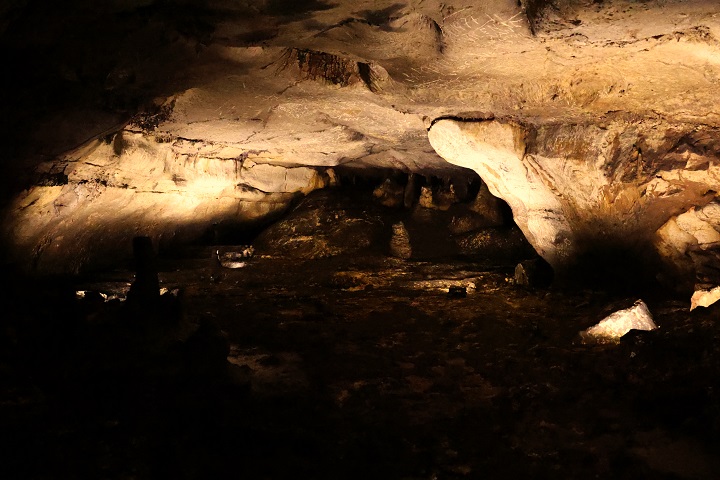
Situated more than 200 meters into the subterranean depths of Cova Dones near the municipality of Millares in Valencia, the recently authenticated Roman sanctuary is a masterclass in ancient ritual topography. The chamber, first identified by researchers in 2024, features walls and ceilings covered in Latin epigraphy, alongside natural pools known as gours that naturally collect mineral-rich groundwater on the cavern floor.
Key facts regarding the sanctuary include:
- Unprecedented Epigraphy: Following intensive fieldwork in May and June 2026, the count of documented Latin inscriptions has surged to at least 120, marking the largest corpus of cave-based Roman epigraphy ever discovered.
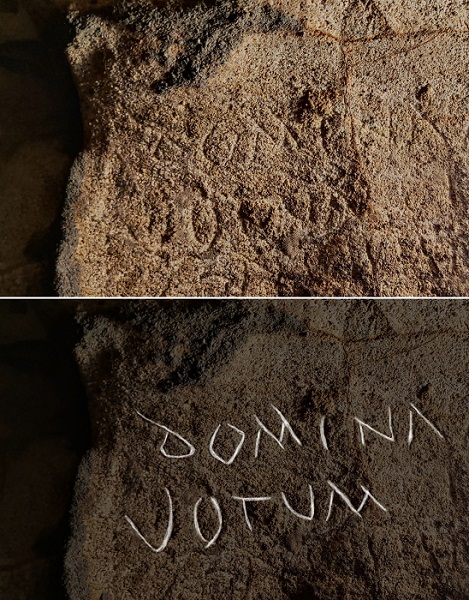
- The Deity: Five votive inscriptions are explicitly dedicated to a goddess addressed as Domina. Three of these inscriptions additionally feature the term Malaci, which epigraphers believe may be an unrecorded epithet linking the goddess to water or an otherwise unknown regional aspect of her divinity.
- Material Offerings: Archaeologists have recovered a rich array of artifacts, including spindle whorls (traditionally linked to ancient women’s textile work), chalice-shaped vessels, ceramic fragments, animal bones, rings, a bracelet, and a silver-to-bronze Roman coin dating to the reign of Emperor Claudius (41–54 C.E.) deliberately wedged into a ceiling crevice.
- Female Participation: The integration of female names within the inscriptions, combined with the abundance of domestic and crafting tools like spindle whorls, strongly indicates that women were not merely attendees but active organizers and participants in the subterranean cult.
Chronology of Discovery and Exploration
Cova Dones is no stranger to historical significance; human footprints have echoed through its halls for millennia. However, the timeline of its modern academic exploration reveals a layered history spanning tens of thousands of years:
- Prehistoric Era (Over 24,000 Years Ago): Paleolithic humans utilize the cave, leaving behind more than 100 paintings and engravings, as well as intentionally modified stalagmite formations. For early hunter-gatherers, the cave serves as a site of profound cultural and spiritual importance.
- The Roman Era (1st–2nd Centuries C.E.): Worshippers, including organized groups of women, journey deep into the pitch-black recesses of the cave. They carve Latin prayers into the rock, deposit jewelry and coins into natural water pools, and pay homage to Domina.
- 2023: The launch of the DONARQ project—a multidisciplinary, international research initiative financed by the Generalitat Valenciana and the British Academy—begins systematically surveying the cave system.
- 2024: Researchers officially identify the Roman sanctuary deep within the cave, initially documenting roughly 15 Latin inscriptions and the Claudius-era coin acting as a votive offering.
- May – June 2026: A major excavation and documentation campaign dramatically scales up the site’s inventory. Researchers log at least 120 Latin inscriptions, cementing Cova Dones as the premier Roman cave sanctuary of its kind in the Mediterranean.
Supporting Data and Archaeological Findings
The material culture recovered from Cova Dones provides a rare window into the sensory and ritual environment of Roman provincial religion. Underground sanctuaries—known as nymphaea or subterranean shrines—were often chosen for their liminal qualities, where the boundary between the mortal world and the chthonic divine blurred.
The data gathered by the multidisciplinary team—comprising specialists in archaeology, ancient history, epigraphy, and geomorphology—underscores the deliberate nature of the site:
+---------------------------+-------------------------------------------------------------+
| Artifact / Feature        | Archaeological Significance                                 |
+---------------------------+-------------------------------------------------------------+
| 120+ Latin Inscriptions   | Largest collection of cave-based Roman epigraphy in Empire. |
| Claudius-Era Coin         | Dates the active usage window to the mid-1st century C.E.   |
| Spindle Whorls            | Points strongly to female-centric textile rituals/offerings.|
| Natural Water Gours       | Focal point for liquid offerings, linking the goddess to H2O.|
| Rings, Bracelets, Chalices| Indicates personal devotion and communal ritual feasting.   |
+---------------------------+-------------------------------------------------------------+
The physical placement of these items is equally telling. Sergio García-Dils, director of the Spanish School of Speleology, emphasizes that the tight concentration of dedications points away from random, sporadic tourism and toward a highly organized, intentional cult. Worshippers navigated pitch-black passages with oil lamps—traces of which are still being analyzed—to commune with a power they addressed with immense respect.

Official Responses and Expert Analysis
The gravity of the Cova Dones excavations has drawn reactions from leading European historians and classicists, who note that the terminology used by the worshippers carries heavy sociopolitical weight.
In classical Latin, Domina is the feminine counterpart to dominus (master or lord), historically signifying the female head or mistress of a household. Within the Roman domestic sphere, a domina held absolute authority, including command over enslaved individuals. Scholars argue that applying this title to a divine entity was far more than an affectionate signifier like "lady"—it was an explicit recognition of supreme, unyielding divine power and hierarchy.
"Thanks to a quintet of votive inscriptions, we know for certain that in Roman times a goddess was worshipped in the cave whom they reverentially called Domina, ‘the Lady,’ and that women actively participated in her cult," noted Silvia Alfayé, Professor of Ancient History at the University of Zaragoza.
Alfayé and her colleagues are currently studying the linguistic nuances of Malaci, the enigmatic term found alongside Domina in three inscriptions. While its exact translation remains under academic peer review, it is widely suspected to be a localized epithet tethered to the underground waters of the cave.

The project coordinators, including Virginia Barciela (University of Alicante) and Aitor Ruiz-Redondo (University de Zaragoza), highlight that the cave’s very name may hold a faint, lingering historical echo:
"Each new finding points to the fact that Cova Dones has been a place of reference for the human groups that inhabited this territory for millennia, perhaps due to the permanent presence of water, the characteristics of the underground landscape or its easy access."
Barciela points out that the modern Valencian name Cova de les Dones—literally "Cave of the Women"—may preserve an ancient folk memory of the female-centric rituals practiced there under Roman rule, though direct cultural continuity cannot yet be definitively proven.
Implications for Ancient History and Modern Research
The revelations at Cova Dones carry significant implications for multiple fields of study:
- Re-evaluating Women’s Roles in Roman Religion: While traditional historical narratives often spotlight male-dominated priesthoods and public state cults in ancient Rome, Cova Dones provides tangible, material proof of autonomous, organized female religious practice in provincial subterranean settings. The combination of female names, domestic tools (spindle whorls), and personal jewelry paints a vivid picture of women taking charge of their spiritual lives away from the urban center.
- The Nature of Syncretism and Provincial Cults: Because Domina is a title rather than a distinct mythological name (like Venus, Juno, or Minerva), historians are forced to reconsider how local populations conceptualized divinity. Was Domina an indigenous pre-Roman Iberian goddess whose native name was suppressed or translated under Roman rule, or was she a distinct Roman numen invoked strictly by her attribute of power? Future analysis of Malaci may crack open this mystery.
- Deep-Time Sacred Landscapes: The continuity of human visitation—stretching from Paleolithic artists 24,000 years ago to Roman devotees in the 1st and 2nd centuries C.E.—demonstrates that certain natural landscapes possess a persistent magnetism across radical shifts in human culture, language, and economic systems.
As the DONARQ project pushes forward, researchers will continue translating fragmented inscriptions, analyzing soil samples, and mapping the deep chambers of Cova Dones. Though the personal name of the goddess may remain lost to the sands of time, her presence is undeniable. Deep within the stone and dripping water of Spain, Domina still commands attention, her authority preserved in stone nearly two millennia after her worshippers laid down their lamps and whispered their prayers.