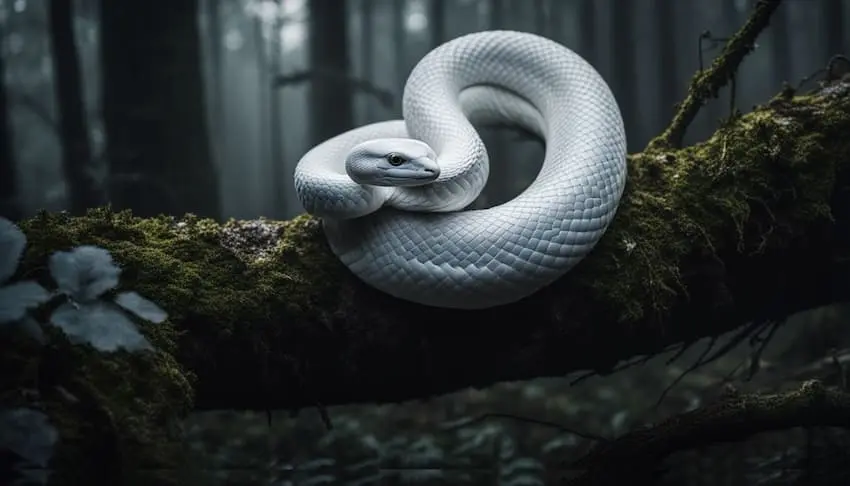
By the Behavioral & Cultural Analysis Desk
Published: October 24, 2023
Main Facts: The Phenomenon of the White Snake Dream
In the realm of oneirology—the scientific and psychological study of dreams—few nocturnal visions carry the striking dichotomy, visual intensity, and cultural weight of the white snake. While standard dreams involving serpents typically elicit primal reactions of fear, transformation, or hidden treachery, the introduction of a pristine white coloration fundamentally alters the semiotic landscape.
According to contemporary sleep researchers and analytical psychologists, dreaming of a white snake bridges the gap between purity and raw instinct. It is a rare, multi-layered motif frequently associated with spiritual awakening, profound personal transition, the clearing of subconscious blockages, and—paradoxically—subtle warnings of hidden vulnerabilities. Unlike its darker counterparts, which often telegraph straightforward anxieties or external threats, the white snake functions as an ethereal messenger from the deepest corridors of the psyche.
Data compiled from dream-interpretation databases indicate that individuals who report dreaming of white serpents are disproportionately undergoing major life transitions, existential questioning, or intensive periods of self-reflection. Far from being a mere random firing of neurons during REM sleep, these visions demand a structured, multifaceted investigation into the dreamer’s waking life, emotional equilibrium, and spiritual trajectory.
Chronology: The Evolution of Serpent Symbolism in Human Consciousness
To fully understand why the white snake commands such deep reverence and psychological intrigue today, one must trace the historical chronology of how humanity has interacted with serpent symbolism across millennia.
Ancient Roots and Mythological Archetypes
- Pre-History and Indigenous Traditions: Long before the written word, snakes were viewed as keepers of the earth, representing fertility, rebirth, and the cyclical nature of time due to their ability to shed their skin. White or albino variants were routinely treated as sacred omens—often viewed as earthly avatars of weather gods or celestial ancestors.
- Eastern Philosophies and Hinduism: In various Asian traditions, white serpents or dragons are tied to profound spiritual power, hidden wealth, and divine protection. They are rarely seen as purely malevolent; instead, they command respect as gatekeepers of esoteric knowledge.
- The Rise of Western Psychoanalysis (Early 20th Century): With the advent of Sigmund Freud and Carl Jung, the interpretation of dreams shifted from prophetic divination to an internal mapping of the mind. Jung, in particular, categorized the snake as a primordial manifestation of the "shadow"—the unconscious part of the personality that the conscious ego does not want to acknowledge.
Modern Psychological Integration
In the latter half of the 20th century and into the digital age, dream research evolved into an empirical study of cognitive processing, emotional regulation, and stress mitigation. Today, clinicians utilize dream analysis not to predict literal futures, but as a diagnostic tool to help patients navigate suppressed emotions, unresolved trauma, and personal enlightenment.
Supporting Data: Psychological Perspectives and Subconscious Mapping
Modern psychiatric frameworks—particularly those rooted in Jungian archetypes and somatic psychology—provide empirical context for why certain symbols manifest during periods of acute psychological stress or growth.
1. The Intersection of Purity and Primal Fear
In clinical settings, dreams are increasingly recognized as simulated environments where the brain processes emotional debt. The juxtaposition of a white snake—combining the innocent, calming hue of winter white with the predatory, coiled anatomy of a reptile—creates a cognitive dissonance. This visual contradiction forces the dreamer’s waking mind to confront two opposing forces: the desire for peace and simplicity versus the terror of unmitigated change.
2. Chakra Alignment and Somatic Energy Flow
Holistic practitioners and somatic therapists often map dream imagery directly to the body’s energy centers. The behavior of the white snake serves as an immediate diagnostic indicator of energy distribution:
- The Root Chakra (Muladhara): A calm, coiled white snake frequently signifies that the dreamer feels grounded, secure, and balanced.
- Energy Blockages: Conversely, an aggressive, striking, or frantic white snake typically correlates with hyper-vigilance, unaddressed anxieties, and a severe disruption in emotional homeostasis.
Official Responses: What Jungian Analysts and Sleep Experts Say
To gain authoritative insight into the phenomenon, we turn to contemporary experts in analytical psychology and sleep science.
"When a patient dreams of a white snake, they are rarely witnessing a simple nocturnal hallucination. They are witnessing the psyche attempting to synthesize high-level spiritual awareness with raw, instinctual shadow material," explains Dr. Elena Vance, a Zurich-trained analytical psychologist specializing in dream analysis. "The white hue strips away the primitive panic associated with black or brown snakes, replacing it with an urgent demand for enlightenment, truth, and radical self-honesty."
Sleep researchers at prominent cognitive institutes emphasize that nocturnal imagery functions as an evolutionary warning system. Dr. Marcus Thorne notes: "While cultural interpretations vary, the neurological reality remains consistent. Dreams featuring striking anomalies—such as an albino serpent—trigger heightened electrical activity in the amygdala and prefrontal cortex. This forces the individual to wake up and evaluate aspects of their waking life they have actively neglected, suppressed, or mismanaged."
Comprehensive Breakdown of White Snake Dream Scenarios
To help individuals decode their specific nocturnal experiences, analysts categorize white snake dreams into several distinct archetypal scenarios:
1. The Pure Intentions and Spiritual Awakening Motif
Seeing a serene white snake often means the dreamer is shedding old, obsolete belief systems just as a serpent sheds its skin. It acts as an invitation to purge toxic relationships, unnecessary emotional baggage, and draining habits to align with one’s highest truth.
2. The White Snake Attack: Innocence Meets Aggression
When a white snake launches an attack, the dreamer experiences a jarring collision between innocence and hostility. This scenario suggests that a profound truth or life-altering realization is forcing its way into the conscious mind, arriving in a manner that feels unsettling, abrupt, or intimidating.
3. The Encounter with a Massive White Snake
Size matters in dream analysis. A giant white snake indicates that a monumental transition is on the horizon. The sheer scale of the creature amplifies the gravity of the change—signifying that while the potential for personal rebirth is immense, the associated fear of the unknown is equally powerful.
4. Surviving a White Snake Bite
In the language of dreams, a bite is an undeniable wake-up call. Being bitten by a white snake implies that the dreamer has been actively avoiding a crucial issue. Because the snake is white, the challenge—though potentially frightening—stems from a place of ultimate good, offering an opportunity for deep emotional healing and psychological cleansing.
5. The Black and White Serpent: Navigating the Yin-Yang Balance
Encountering a snake marked in contrasting black and white highlights the eternal push-and-pull of opposing forces within the human psyche: fear versus courage, self-doubt versus absolute confidence. It is a visual mandate to integrate both light and shadow to achieve inner harmony.
6. The White Cobra: Danger Coupled with Supreme Wisdom
The inclusion of a cobra hood introduces an extra layer of cultural reverence. The white cobra represents a potent mixture of danger and sagacity. It demands deep respect, warning the dreamer against superficial judgments and urging vigilance in complex, seductive life situations.
Implications: Translating Vision into Real-World Growth
What do these nocturnal visions mean for the individual navigating the complexities of modern life? The implications are both profound and actionable.
Embracing Shadow Work
By acknowledging the white snake as a manifestation of the unconscious shadow, individuals are challenged to stop running from uncomfortable truths. Confronting personal flaws, unhealed wounds, and repressed fears without compromising one’s core ethical foundation is the cornerstone of psychological maturity.
Cultivating Vigilance Amid Tranquility
Just as the deceptively gentle color of a white snake can mask its predatory nature, individuals must learn not to take surface-level tranquility at face value. Developing emotional intelligence means remaining grounded and vigilant, ensuring that one is never caught off guard by sudden shifts in personal or professional environments.
Questions for Personal Reflection
To distill meaning from a white snake dream, psychologists recommend asking the following introspective questions upon waking:
- What specific emotion did I feel when I first saw the snake—terror, peace, curiosity, or awe?
- What area of my life currently requires radical cleansing or the shedding of old habits?
- Am I ignoring a warning sign because the situation or person appears harmless on the surface?
- How can I better balance the opposing forces of fear and courage in my daily routine?
Ultimately, whether viewed through the lens of ancient spiritual traditions or modern analytical psychology, the white snake remains one of the most powerful catalysts for self-discovery. By listening to the unique language of the subconscious, dreamers can transform nocturnal visions into blueprints for lifelong personal evolution.