






By Cultural & Mythological Desk
Published: October 2023
Main Facts: Who Was Loki in Norse Mythology?
In the vast and frost-bitten tapestry of Norse mythology, few figures command as much fascination, controversy, and literary complexity as Loki. Often pigeonholed by modern pop culture as a straightforward villain or a comical anti-hero, the traditional mythological Loki is an infinitely more layered entity. He is simultaneously an indispensable ally to the Aesir—the principal pantheon of Norse gods—and the ultimate catalyst for their undoing.
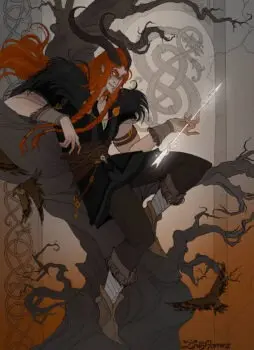
At his core, Loki is the Norse god of mischief, trickery, chaos, and transformation. Unlike Zeus, Odin, or Thor, Loki does not rule over a domain of natural order or martial prowess; rather, he embodies the volatile, unpredictable elements of nature itself. Etymologically and mythologically, Loki is deeply tied to the primal forces of wind and fire.
Scholars note that his alternative name, Lopt or Loptr, translates directly to "of heaven" or "air," linking him to the atmospheric expanses. Conversely, his primary name is historically connected to Germanic root words signifying "flame." This dual association leads many historians to theorize that Loki originated as an independent fire spirit or personification of atmospheric combustion before being woven into the broader Norse genealogical and narrative fabric as a blood-brother to Odin.
Key defining traits of Loki within the primary sources—such as the Poetic Edda and the Prose Edda compiled by Snorri Sturluson—include:
- The Shapeshifter: Loki possesses an uncanny ability to alter his biological form, transforming at will into a mare, a salmon, a fly, an elderly woman, and various other beasts and personas.
- The Problem Solver and Creator: Ironically, while Loki frequently creates existential crises for the gods, his cleverness and trickery are almost always required to clean up the messes—often resulting in the acquisition of iconic divine treasures, including Thor’s hammer, Mjölnir, Odin’s spear, Gungnir, and Sif’s golden hair.
- The Outsider Within: Though accepted among the Aesir due to his blood-pact with Odin, Loki is fundamentally an outsider. He is the son of the giant Fárbauti and the goddess (or giantess) Laufey, placing him squarely between the worlds of the divine gods and their ancestral enemies, the Jotunn (giants).
Chronology: From Blood-Pact to Binding—The Arc of the Trickster
To understand Loki’s trajectory within Norse mythology is to trace a slow, agonizing descent from mischievous nuisance to cosmic traitor. The chronology of his mythological existence outlines a shifting dynamic between the gods of Asgard and the unpredictable forces of chaos.
1. The Genesis and Blood-Brotherhood with Odin
Long before the events that would shake the cosmos, Loki established a unique relationship with the Allfather, Odin. According to the Lokasenna and other Eddic poems, Loki and Odin partook in a blood-brotherhood ritual, mingling their blood together. This sacred pact legally and magically bound the Aesir to protect Loki, no matter how disruptive his behavior became. It is the sole reason Loki is tolerated in Asgard long after his malicious tendencies become apparent.
2. The Golden Age of Pranks and Divine Artifacts
In the earlier epochs of his mythological timeline, Loki’s trickery is largely non-lethal, though deeply inconvenient. He cuts off the golden hair of Thor’s wife, Sif, just to be malicious. When threatened with death by an enraged Thor, Loki travels to the underground realm of the dwarves, securing wondrous treasures—including Mjölnir—to appease the thunder god. During this era, Loki acts as a vital, if exasperating, fixer. When the gods lose their fortress wall or need to trick towering giants, Loki’s cunning always saves the day.
3. The Murder of Baldr: The Turning Point
The definitive turning point in Loki’s chronology—and the effective death knell of the cosmos—is his orchestrating the murder of Baldr, the god of light, beauty, and goodness. Baldr has prophetic dreams of his own death, prompting his mother, Frigg, to extract oaths from every object, element, and creature in the universe not to harm him—forgetting only the humble mistletoe.
Consumed by jealousy and malice, Loki crafts a dart from mistletoe and tricks Baldr’s blind brother, Höðr, into throwing it, striking Baldr dead. This act plunges all of creation into profound grief and strips Loki of any remaining goodwill among the gods.
4. The Binding and Twilight (Ragnarök)
Realizing that their blood-pact prevents them from executing Loki within the halls of Asgard, the gods hunt him down as he hides in a remote mountain dwelling, transforming himself into a salmon to escape. Thor captures him, and the gods enact a grim punishment. Using the entrails of Loki’s own son, Narfi, they bind him to three jagged boulders inside a dark, subterranean cavern. Above him, a venomous serpent is placed, dripping corrosive acid onto his face.
Loki’s loyal wife, Sigyn, stands by his side with a bowl to catch the venom, but whenever she must empty the vessel, the burning poison strikes Loki’s flesh, causing him to writhe in agony—an act the Norse used to explain earthquakes. There he remains until the shackles of fate finally snap at the onset of Ragnarök. Freeing himself, Loki sails to the final battlefield aboard the ship Naglfar, leading an army of the dead and the giants to wage war against the Aesir, ultimately meeting his doom in a mutual slaying with Heimdall.
Supporting Data: Linguistic, Archaeological, and Literary Evidence
Studying Loki requires navigating a sea of fragmented historical records. Unlike Greek or Roman mythology, where classical texts provide standardized accounts, Norse mythology survived primarily through oral traditions before being written down centuries later by Christian scholars in medieval Iceland.
| Source Material | Approximate Date | Description & Significance regarding Loki |
|---|---|---|
| The Poetic Edda | c. 13th Century (based on earlier oral traditions) | An anonymous collection of Old Norse poems. Contains Lokasenna (Loki’s Flyting), where Loki insults all the gods at a feast, and Völuspá, which details his role in Ragnarök. |
| The Prose Edda | c. 1220 AD | Authored by Snorri Sturluson. Serves as a comprehensive textbook of Norse mythology, organizing the scattered poems into cohesive narratives regarding Loki’s origins, exploits, and punishment. |
| The Snaptun Stone | c. 1000 AD | An archaeological artifact discovered in Denmark depicting a face with scarred lips—widely interpreted by historians as a rare visual representation of Loki from the Viking Age. |
| Runestones & Visuals | Viking Age (8th–11th Century) | Depictions of Loki are remarkably scarce in physical Norse art compared to Thor or Odin, suggesting his prominence grew significantly in late literary traditions. |
Linguistic Analysis of the Name "Loki"
Comparative mythology and philology offer deep insights into Loki’s background. Scholars like Jacob Grimm initially connected his name to the Old Norse word logi (flame), reinforcing his identification as a fire god. However, modern linguists also point to the possibility of a root word meaning "knot" or "tangle," reflecting his role as a weaver of complex plots and chaos. This linguistic ambiguity reinforces his liminal status: he is neither fully ordered like the gods nor fully destructive like the primal giants; he is the knot that holds and strains the fabric of the cosmos.
Official Scholarly & Cultural Perspectives: How Experts View the Trickster
Academic interpretations of Loki have evolved dramatically over the last two centuries. In the 19th century, romantic nationalists frequently mischaracterized Loki as a pure, demonic "evil deity" introduced into Norse culture through Christian contamination—a local equivalent to Satan.
Modern scholarship, however, overwhelmingly rejects this simplistic binary.
The Catalyst of Progress
Prominent mythologists and historians argue that Loki represents a vital structural necessity in myth-making. Without Loki, the Norse pantheon would exist in static perfection—a narrative dead end. Loki introduces friction, conflict, and crisis. He forces the gods to adapt, invent, and evolve. As folklorists often point out, the trickster archetype is the ultimate engine of narrative progression. Without Loki’s treachery, Thor would never acquire his hammer, the walls of Asgard would never have been built, and the cosmic cycle of renewal through Ragnarök would never be initiated.
The Psychology of the Outsider
Psychological interpretations, notably influenced by Carl Jung’s archetypal frameworks, view Loki as the personification of the "Shadow"—the hidden, repressed, yet necessary parts of the collective psyche. Loki says what the other gods only think; he breaks taboos that the orderly society of Asgard suppresses. By exploring Loki, ancient Norse storytellers examined the dangerous allure of cleverness untethered by morality.
Implications: The Enduring Legacy of Loki in the Modern World
While the Viking Age ended over a thousand years ago, Loki’s cultural footprint has never been more vibrant. The implications of his character stretch far beyond dusty medieval manuscripts, deeply embedding themselves in modern global consciousness.
1. The Pop Culture Renaissance
In contemporary media, Loki has undergone a radical transformation. Through global franchises—most notably Marvel’s Cinematic Universe (MCU) portrayed by actor Tom Hiddleston—Loki transitioned from a mythological terror into an empathetic, deeply nuanced anti-hero. This modern reimagining taps into the ancient roots of the character: his fluidity, his charm, his deep-seated insecurities regarding his identity, and his eternal struggle between chaos and redemption.
2. The Trickster Archetype in Literature and Gaming
Loki’s enduring blueprint can be seen across modern fantasy literature, video games (such as God of War: Ragnarök), and tabletop roleplaying games. He remains the definitive archetype of the rogue, the master manipulator, and the agent of delightful chaos.
3. Philosophical and Existential Reflections
Ultimately, Loki serves as an ancient mirror for humanity’s complex relationship with order and disorder. In an increasingly complex and unpredictable world, the figure of Loki reminds us that chaos is not merely an external threat to be vanquished, but an intrinsic, unavoidable component of existence. Whether viewed as a god of wildfire, a master of words, or the harbinger of the end times, Loki remains one of human storytelling’s most brilliant, unsettling, and immortal creations.