




By: Cultural & Mythological Desk
Published: October 2023
Main Facts: Who is Loki in Norse Mythology?
In the vast and frost-bitten tapestry of Norse mythology, few figures command as much fascination, controversy, and literary complexity as Loki. Often pigeonholed by modern popular culture—largely through the lens of comic books and cinematic blockbusters—as a straightforward villain or a misunderstood antihero, the authentic mythological Loki is a far more mercurial and elusive entity. He is neither purely good nor irredeemably evil; rather, he occupies a dangerous, liminal space between the divine order of the Æsir and the destructive chaos of the giants.
Formally known in ancient texts as Lopt or Loptr—a name translating to "of heaven" or "air"—Loki’s primary mythological domains are wind and fire. Etymological and historical scholarship links his name to the Germanic root for "flame," cementing his elemental association with destructive yet transformative heat. Conversely, his alternative moniker, Lopt, ties him intimately to the atmosphere and the sky. This dual dominion over volatile elements makes him a physical manifestation of nature’s unpredictability: a force that can warm a hearth or reduce an entire settlement to ash without warning.
Unlike Odin, the Allfather, or Thor, the thunder god, Loki possesses no dedicated cult of worship in historical Scandinavian religion. He is not a fertility deity, nor is he invoked for military victory. Instead, he functions as a narrative catalyst—a structural device within the sagas and the Poetic Edda that drives the plot forward through deception, wit, and catastrophic error. His mother was Laufey (sometimes called Nal), and his father was the giant Fárbauti. Through this lineage, Loki holds a unique hybrid status: though counted among the primary gods of Asgard by virtue of his blood-brotherhood pact with Odin, he remains fundamentally tied to the Jötnar (giants), the primordial enemies of the Norse cosmos.
Chronology: From Blood-Brotherhood to Ragnarök
To understand Loki’s trajectory within the Norse sagas, one must trace his mythic timeline from his integration into Asgardian society to his ultimate, catastrophic role in the end of the world.
1. The Integration into Asgard and Early Exploits
Loki’s entry into the pantheon is marked by his blood-brotherhood pact with Odin, a solemn ritual that bound the trickster to the leader of the Æsir. In the early days of Asgard, Loki’s cunning was frequently an asset rather than a liability. He served as both a problem-solver and a troublemaker, often engineering solutions to crises that he himself had inadvertently triggered.
A prime example of this dynamic is the tale of how the gods acquired their greatest treasures. After Loki maliciously sheared off the golden hair of Thor’s wife, Sif, a furious Thor threatened to break every bone in the trickster’s body. Desperate for survival, Loki journeyed to the subterranean realm of the dwarfs (the sons of Ivaldi and the brothers Brokkr and Eitri) to commission substitute hair of pure gold, alongside other legendary artifacts such as Odin’s spear Gungnir and Thor’s hammer, Mjölnir. Through sheer verbal agility and a hazardous wager involving his own head, Loki secured these divine instruments, demonstrating that his chaotic nature could paradoxically yield immense benefits for the gods.
2. The Murder of Baldr and the Turning Point
The defining tragedy of Loki’s mythological career—and the absolute turning point in his relationship with the Æsir—is the murder of Baldr. Baldr, the god of light, purity, and beauty, was beloved by all living things. When Baldr began experiencing prophetic nightmares foretelling his death, his mother, Frigg, extracted oaths from every object, element, beast, and plant in the cosmos not to harm him.
Believing him invincible, the gods took to throwing weapons and stones at Baldr in sport, marveling as the items harmlessly bounced off him. Envious and malicious, Loki disguised himself as an old woman and tricked Baldr’s blind brother, Höðr, into throwing a dart made of mistletoe—the one plant Frigg had overlooked because she deemed it too young to take an oath. The mistletoe pierced Baldr’s heart, plunging Asgard into profound mourning and setting in motion the irreversible decline of the cosmos.
3. Capture, Punishment, and Binding
Following Baldr’s funeral, Loki attempted to evade the wrath of the gods by fleeing into the mountains, where he built a house with four doors to watch for pursuers. He even invented the first fishing net, tossing it into a fire when he saw the Æsir approaching, thereby inventing the art of knitting and net-making.
Kvasir and the other gods, however, deciphered the burnt imprint of the net and used it to capture Loki in the guise of a salmon. Bound to three jagged rocks using the entrails of his own son, Narfi—while his other son, Váli, was transformed into a wolf and tore his brother apart—Loki was subjected to excruciating torment. Above his head, the giantess Skaði placed a venomous serpent, whose dripping venom burned Loki’s flesh. Though his loyal wife, Sigyn, faithfully held a basin to catch the poison, she had to empty it whenever it filled; during those brief moments, the venom struck Loki’s face, causing him to writhe in agony. In Norse tradition, these convulsions were believed to cause earthquakes.
4. Ragnarök and the Final Battle
Loki’s bondage was absolute, but it was not permanent. The prophecies of Ragnarök foretold that the cosmos would eventually fracture, breaking the bonds of the monsters and the wicked. When the twilight of the gods arrived, Loki broke free from his subterranean prison.
He sailed to the battlefield of Vígríðr aboard the ship Naglfar—constructed entirely from the unpared fingernails of dead men—leading an army of frost giants and the denizens of Hel. In the final, apocalyptic clash, Loki faced off against Heimdallr, the vigilant guardian of the Bifröst bridge. In a brutal duel of mutual annihilation, the trickster and the watchman struck each other down, dying together upon the ashes of a burned world.
Supporting Data: Etymology, Genealogy, and Cultural Parallels
Scholarly analysis of Loki reveals deep roots in comparative mythology, linguistics, and pre-Christian Scandinavian sociology.
Etymological Debates
The etymology of "Loki" has long vexed philologists. While Jacob Grimm famously attempted to link the name to the Old Norse word logi (flame), modern linguists point out phonetic difficulties in this derivation. Alternative theories suggest a connection to luka (to lock or close) or lokkr (spider), aligning with Loki’s invention of the fishing net and his web of deceptions. Despite these academic debates, the popular association with fire remains deeply entrenched in both historical reception and modern interpretation.
The Problem of Sources
Unlike Greek or Roman mythologies, which possess extensive contemporary literary records, Norse mythology was preserved centuries after the conversion of Scandinavia to Christianity. The primary sources—Snorri Sturluson’s Prose Edda (written in the 13th century) and the anonymous Poetic Edda—were compiled by Christian scholars or within a Christianized cultural milieu.
Scholars frequently debate whether Snorri Sturluson amplified Loki’s role, drawing parallels to the Christian devil, Satan, to make the pagan myths more palatable or narratively cohesive. While Loki does exhibit traits reminiscent of a tempter and a torturer, comparative studies of Indo-European folklore suggest that the "trickster" archetype is an ancient, native feature of storytelling that predates Christian influence entirely.
Comparative Mythology: The Trickster Archetype
Loki belongs to a universal pantheon of mythological tricksters, sharing structural DNA with figures such as:
- Prometheus (Greek): A culture-bringer who stole fire for humanity and suffered eternal, agonizing punishment bound to a rock with an agent of torment (an eagle eating his liver).
- Maui (Polynesian): A clever shapeshifter who defies the gods, steals fire, and pulls up islands with a magical fishhook.
- Coyote or Raven (Indigenous North American traditions): Boundary-crossers who disrupt established order, often acting as both creators and fools.
Official Responses and Scholarly Interpretations
Modern academic and cultural institutions view Loki not merely as a mythological relic, but as a lens through which ancient Germanic societies processed the ambiguities of human nature, social taboos, and the fragility of order.
Historians of religion, such as Georges Dumézil and Hilda Ellis Davidson, have analyzed Loki’s function within the tripartite ideology of Indo-European societies (sovereignty, war, and fertility/production). Loki distinctly belongs to none of these classes; he is an outsider who disrupts them all. He exposes the hypocrisy of the gods, challenges established laws, and forces the pantheon to confront their own moral failings.
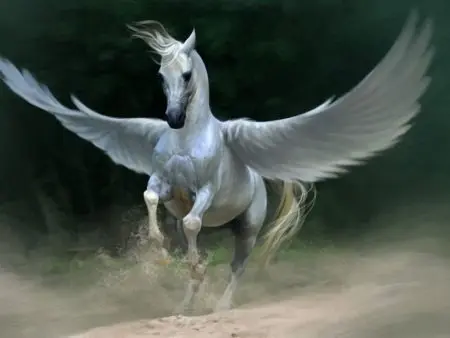
In contemporary media and literary criticism, "official responses" to Loki have shifted dramatically. Once viewed exclusively as a cautionary tale against deceit, Loki has become a patron figure for marginalized identities, non-conformity, and fluid gender roles. In mythological texts, Loki’s shapeshifting abilities are not limited to animal forms; on multiple occasions, he transforms into female beasts—most famously when he mates with a stallion while disguised as a mare, subsequently giving birth to Sleipnir, Odin’s eight-legged steed. This radical fluidity has positioned Loki in modern discourse as a remarkably progressive, gender-fluid icon centuries ahead of his time.
Implications: The Enduring Legacy of the Norse Trickster
The legacy of Loki extends far beyond the parchment pages of medieval Icelandic manuscripts. His survival into the 21st century—fueled by academic research, fantasy literature, and global entertainment franchises—highlights humanity’s enduring fascination with the archetype of the necessary evil.
1. Philosophical and Moral Implications
Loki forces an uncomfortable philosophical question upon both the Norse gods and modern readers: Can order exist without chaos? In the narrative structure of Norse mythology, the Æsir frequently rely on Loki’s cunning to escape existential threats, even as they condemn his methods. He is the grit in the oyster of Asgard; without his disruptive influence, the divine realm would stagnate into complacency. His presence serves as a constant reminder that destruction and creation are two sides of the same cosmic coin.
2. Cultural and Artistic Impact
From Richard Wagner’s foundational nineteenth-century operatic cycle Der Ring des Nibelungen (where Loki serves as the structural prototype for the fire-demiurge Loge) to modern pop culture monoliths like the Marvel Cinematic Universe, Loki has proven to be an infinitely malleable character. Portrayed by actors like Tom Hiddleston, the modern incarnation of Loki has captured the global imagination, transforming an obscure, bloodthirsty mythic catalyst into a symbol of emotional vulnerability, redemption, and charismatic rebellion.
Summary
Ultimately, Loki remains the ultimate paradox of Norse mythology. He is the architect of Asgard’s greatest triumphs and its absolute ruin. He is a shapeshifter who defies categorization, a fire that warms the hall and burns it to the ground, and a literary masterpiece of ambiguity. As long as humanity grapples with the tension between order and chaos, law and rebellion, creation and destruction, the complex shadow of the trickster god will continue to stretch across the cultural landscape.